Praying with Our Past: Lights and Thanksgiving

As we pray with our past, we may see with new eyes:

2) We may begin to see a pattern in certain events of our lives, or recognize how blessed we have been—a recognition we may not have had at the time. We may remember moments that we had dismissed where God touched us deeply.

As a sister, I make an annual retreat every year. People tell me that they admire sisters for making silent retreats—but making retreat is no hardship. Usually, my retreat is one my favorite weeks of the year because I get to spend quality time with my Beloved! Still, if I come to the retreat from a time that is busier or more distracted than usual, sometimes it can take me a couple of days to settle into the deep silence.

One particular year, I remember struggling a bit more than usual to get into the silence and deeper prayer of the retreat. As usual, I prayed with a passage of the Bible, and later in the day went to speak with the retreat director. I talked about what happened during my prayer time, and then moved on to how I was struggling to get into the retreat. After a few minutes, the director stopped me. “Tell more more about your prayer time with that passage,” he encouraged me. “It seems to me that God was speaking to you very powerfully there.”

Startled, I was quiet for a few minutes, then I recalled my prayer and spoke about it. As I spoke, I realized he was right. Several days later, I thanked him for helping me to pay attention to this profound moment where God spoke to me—a moment that I had overlooked because I was distracted by something else! That moment of prayer became the key to my entire retreat.

Praying with our past can be a powerful experience of God’s saving love:

  • We better realize how faithful and intimate God is in our life
  • We grow in trust
  • We come to understand our relationship with God better: how God seems to work in our lives
  • We grow in being able to recognize how God is working in our lives right now

When we pray with our past, we can always conclude our prayer with an act of thanksgiving for how God has revealed his faithful love in our lives.

To Pray With
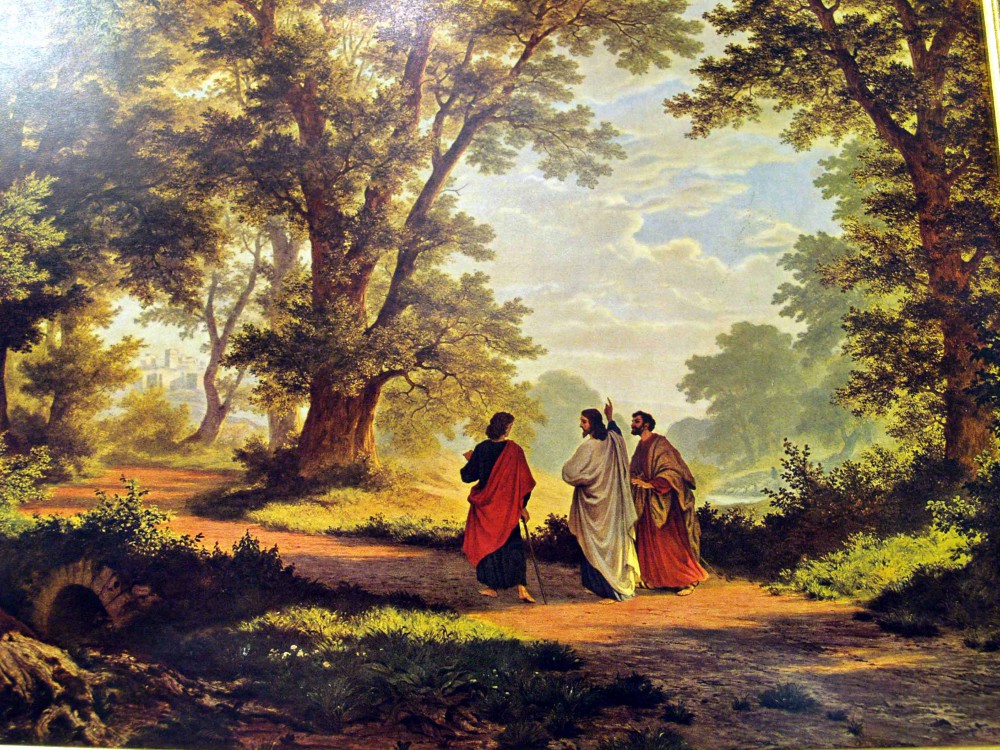
Luke 24:13-35

After Jesus’ death, the two disciples who left Jerusalem to go to Emmaus needed to share their sorrow and confusion with Jesus. As they unknowingly shared and retold their story to the Risen Jesus, Jesus opened their hearts to the mystery of grace at work in their lives to the point that they were able to understand their time with Jesus in a new way, and eventually recognize Jesus with them in the breaking of the bread.

Follow the steps for Lectio Divina in praying with the beautiful story of Jesus’ Resurrection appearance to the disciples on the way to Emmaus. After your prayer, you may find the following reflection questions helpful:

1. Imagine that you are one of the disciples walking on the road to Emmaus, and you are joined by a mysterious, trustworthy Stranger. Share with him your most recent experience of being angry, betrayed, discouraged, grieving, or lost. How does it feel to tell Jesus how you feel? Does Jesus say something to you?

2. Have you ever had an experience of prayer that set you on fire? How have you allowed that fire to burn, grow, and set your life alight?    

3. The disciples didn’t recognize Jesus on the road. When have you been surprised by God? Where might God be standing in your life right now, or walking alongside you, but unrecognized?

Praying with Our Past: Shadows & Mercy

“Salvation history” is how God is at work in the lives of the People of God. Each of us has our own personal salvation history. From time to time, we need to genuinely bring our history to God because our past is such an important part of who we we have become. Praying with our history is not about remembering our past for its own sake, but so that we can discover God’s faithful presence throughout our lives.

When we reflect on our personal history, two things are likely to happen: we experience resistance, and/or we begin to see patterns in our life.

1) We may experience resistance. Perhaps we fear we will be overwhelmed by the pain, suffering, or sinfulness of our lives. It may be too difficult to think about certain times in our lives. If we find great resistance, offer that resistance to the Lord. We need to be gentle with ourselves—we can do this a little at a time, or perhaps simply leave aside the most difficult part of our personal history until we feel ready to bring it to prayer.

Our favorite Old Testament story can be helpful at this point. Very often, the best stories from the Old Testament are about a time of failure, weakness, or infidelity on the part of God’s people. And yet in this darkness, God reveals over and over again his faithful love for his people.

When we have the courage to face the pain or darkness of our past, we receive the grace to experience God’s love, mercy, and forgiveness. Along with many spiritual writers, Father Rupnik agrees that the experience of God’s mercy is the foundational spiritual experience. It is God’s love that shapes us into his people, that places us in his story of salvation. When we recognize that we are truly unworthy, we can discover that God loves us as we are!

Looking back on our life’s journey can help us to see our past more clearly, but the goal isn’t to get lost—or stuck—in our past. Instead, we seek to discover and cherish the ways God has worked in our lives, our own sacred memories. Praying with our past—even the difficult moments—we can allow our  foundational experiences with God to take root in us, nurture our spiritual lives, and build our relationship with God.

When we are praying with difficult experiences in our past, it’s helpful to remember:

* Be gentle with ourselves. If something is too painful to remember, we can wait until we’re ready, until it’s the right time. We can also choose to pray with it with the help of someone we trust, whether a friend, mentor, or counselor.

* God doesn’t will evil for us or for anyone. If we were sinned against, or chose to sin against others—these were not and are not God’s direct will for us. But, just as God turned the most evil and tragic event in all of human history (the crucifixion of his only Son) into the means of the Redemption of all humanity, so God can take any circumstance of our lives—no matter how bad—and bring good out of it. When we pray with painful events from our past, we do so in the hope of discovering (or re-discovering) God’s faithful love. If we cannot see his love, we can make an act of trust in his love, and then pray for the grace to see how God has loved us.

* Focus not on the suffering but on God’s presence. We survived it—how? How we have healed or grown from it? How have we learned from it? Is God inviting us to heal further? Might God be inviting me to use that painful circumstance to remember that God is also mysteriously present in the pain or difficulty that we’re undergoing right now?

To Pray With

  • Pray with Psalm 139.
  • After you have prayed with Psalm 139, write your own version of the psalm. How would you describe how God has been with you and saved you in your life? (For an unusual example, read Francis Thompson’s famous poem, “The Hound of Heaven.”) What image would you use to describe how God acts in your life?

Praying with Your Story

Rembrandt [Public domain], via Wikimedia Commons. (One of my favorite stories from the Old Testament: Jacob Wrestling with the Angel)

Rembrandt [Public domain], via Wikimedia Commons. (One of my favorite stories from the Old Testament: Jacob Wrestling with the Angel)

Just as it is important to “begin where you are,” it can also be helpful from time to time to look back over your life and pray with where you have come from. Even if you are just starting to seek a relationship with God, God has been with you up to this point, even though you may not have recognized his presence. To understand God’s invitations, it is helpful to understand how he has been at work in your life so far.

Every day promises a new revelation of God’s love, yet our God of surprises is also consistent in the ways he works with us. God knows us better than we know ourselves, and so he works with us and within us in the ways that help us to grow, to live in always greater love and greater freedom.

In the powerful film, Freedom Writers, a new teacher at a poor inner-city high school tries to create a learning environment for the students whose worlds have been constantly rocked with racial violence. To help the recalcitrant students recognize their common humanity, she creatively has them share their stories by playing a simple “line game:” If something she says is true about them, they step toward the line that runs down the center of the classroom. Gradually, she leads them from the ordinary (who likes a particular song) to the painful: How many have lost a loved one to gang violence. As the students start to share bits of their stories with their teacher and with each other—simply by stepping toward the line—everything begins to change. The classroom is transformed from a tense potential war zone into a place of community, sharing, learning, and friendships.

Imagine how powerful it would be for us to share our stories with God. The next few posts will encourage us to do just that.

Pen_UncappedTo Journal

A) What is one of your favorite stories from the Old Testament? Why is it a favorite?

B) Can you see a connection between your story and the Old Testament story that you chose? How do you identify with the people in the story? What touches you about the action of God in the story?

God in the Plot of Our Lives

04H 1choiceWhen I’m writing a story, one of my first concerns is plot. There are many ways storytellers describe plot:

  • A storyline
  • A story that has a beginning, a middle, and an end
  • A character’s journey
  • What happens next
  • A linked series of events
  • A series of events that have meaning

Often we choose to watch a film or read a book because the beginning “hooks” us with a compelling situation and we want to find out what happens. Although in this blog I’m comparing the events of our lives to the plot of a story, our lives are rarely so neat. The bonus of storytelling art is that seemingly random or disparate events are linked together by the storyteller in a way that gives them meaning. Small events are seen in the context of the overall story or the character development of the protagonist; events and choices of the major characters—protagonist, antagonist, supporting characters—have major consequences in the story’s development. Although stories with surprise endings might require a second viewing or reading, in most stories we have the satisfaction of being able to clearly trace the progression of events, which gives meaning to the story.

Typically, when we look for the deeper meaning in a good film or book, we might say, “Where is God in this story?” Most people will look for God in a particular character. For example, in some movies, the hero (or heroine) is a Christ-figure who sacrifices his or her life for others (Luke Skywalker or Superman). Or perhaps the mentor character, who shows the way to the protagonist or blocks the antagonist, can seem like God’s providence in the story (Obi-wan Kenobi or Superman’s biological father). Sometimes the community will become an image of the Church as the members of the community minister to each other and begin to transform the world beyond themselves (in The Dark Knight, Batman must decide whether to trust in the goodness of the people on the ferryboat. Together, they act in a Christ-like way.) All of these ways of looking at stories can be helpful in discerning the meaning of a story and connecting it to our own lives. Reflecting on the stories that we watch and read can help us to see patterns more clearly: the presence of God in our loved ones, or in the people who take action on our behalf, or in a dynamic and loving faith-community, whether it’s our parish or a circle of friends.

Life, of course, is not usually so neat and clear as a well-told story. It’s one of the gifts that the arts give us—a clarity or insight that we can relate to our seemingly muddled lives.

Narrative theology offers us another option: to go a step further and look for God in the plot of the story. In other words, the actual events of the story—what happens to the characters—is the action of God or represents God in the story. This way of looking at a story is more like discerning God’s presence in real life. And it can be difficult, just as it can be troubling to try to find God’s action and purpose in the painful events of our lives. But this less obvious way to think of God’s presence—as the plot of the story—can help us to discern and accept God’s action in the events of our lives. It can also help us to see our lives not just as separate events where God is randomly present, but as actually directed by God, even when we do not understand how or where God is directing us.

garden-path-59151_1280

As an example, let’s look at a simple parable from the Gospel: the parable of the seed and the sower in Matthew 13:1-23.

Take a moment, if you can, to read the entire parable. 

In this parable, Jesus talks about a sower that throws seed on various soils, with varying results. The seed on the pathway was eaten by birds; the seed on rocky ground grows up fast but is scorched by the sun; the seed on thorny soil is choked by weeds; the seed planted in rich soil grows and bears fruit. Where are we in this parable? Most people would respond that we are the soil. If we ask, Where is God in this parable?, some simplistic answers could be: God is the sower; or God is the good ground; or God is in the good seed that bears fruit.

But if take the approach of narrative theology, we may reflect further that God is in the events of the parable. Each action or event is allowed or provided by God. So the seed being sown is where God is present. What the seed does with being sown, and where it finds itself sown—that seems to be where Jesus puts the emphasis when he interprets the parable for the disciples. Jesus describes the soil and the behavior of the seed. The response of the seed to being sown and to the soil seems to be the heart of this parable. (In other words, maybe one good way to pray with this parable is with the question: how do we respond to the action of God in our lives?)

One of the blessings of living in a spirit of discernment is to be able to trust that God is at work in the events of our lives as they are—even in the thorny or rocky moments when we cannot see it. When we trust and believe with all our hearts that God is the plot of our lives, then we can follow where God is guiding us, and we can respond in faith and bear fruit.

To Pray With

Take a quiet walk in or near a garden, and closely observe the garden. During your next prayer time, pray with the parable of the Sower in Matthew 13:1-23. (Or perhaps you can can pray with the parable in the garden.) What does the “garden” of your life look like? How is God at work in the garden of your life?

Sharing the Treasure of Pauline Spirituality in NYC This Week

Just a reminder for any New Yorkers that I’ll be visiting this week for two special events:

1. Manhattan’s very own #Soul of Christ talk and book-signing at our Pauline Book & Media Center at 64 West 38th St. on Thursday evening (June 4) at 6:00 PM

NewYorkPromoFinal


2. Daughters of Saint Paul Centenary Day of Recollection and Centenary Mass on Saturday, June 6th, from 10 AM to 6:30 PM, at Holy Family Church, where I will be giving one of two talks and will lead the Eucharistic Hour of Adoration:

Flyer for Holy Family event

How To Discover the Holy Spirit in the “Setting” of Our Lives

If God wants us to begin our discernment where we are, then another helpful thing we can do is to reflect a bit about the “setting” of our lives, our particular world—the concrete circumstances in which we live.

There will always be some things about the circumstances of our lives that we cannot change:

  • Aspects of our own  personality
  • Our families and the people we share our lives with—our primary commitments
  • Our history (although we can change the way we understand our past)

But even though we cannot change them, it’s helpful to consider our situation, to accept where we are, and to actively seek the Lord’s invitations within this “setting” of our lives that he shares with us.

Other circumstances of our lives may be relatively permanent, or we may be able to change them over time, if we want to or feel we are called to:

  • The responsibilities that we have committed to
  • Where we live
  • Our relationships with the people we share our lives with
  • Our training/the kind of work we do/our vocational commitments

Finally, there are many things in our lives that we can change—our behavior, attitudes, and choices; how we interact with others; how much time we spend in certain activities; what we give priority to each day, etc. But before making any changes, it’s helpful to first understand and acknowledge where we are, what’s going well and what we’re struggling with or longing for.

04G

When we pray to the Most Holy Trinity, we often do so by distinguishing the roles of the Persons of the Most Blessed Trinity in our world. If we praise the Father as Creative Love, the Son as the Beloved Word of the Father, then we might pray to the Holy Spirit as the Embrace between Father and Son. This holy, eternal Embrace, the Holy Spirit, extends outside the Trinity into the lives of God’s beloved people. The Holy Spirit embraces us in our lives, in the concrete situations in which we live. When Saint Paul tries to explain God’s presence in the world to non-believing Greeks, he speaks of God as the One in whom we live and move and have our being (Acts 17:28). Isn’t that an apt description of the Holy Spirit as the One embracing us, within and through the context of our lives?

A. To Pray With

Below is a series of questions about the setting or circumstances of your life that you may wish to journal about or pray with. As we pray with these questions, we want to remember that this setting of the story of our lives is the realm of the Holy Spirit, who works in and through all the particulars and details of our life. God is active in the moments, in the day-to-day, in the concrete details of our lives. These questions can help us to recognize how the Spirit is at work in our lives as they are—where are his invitations, his signs of faithful love, his challenges? As we begin to pray with the circumstances of our lives, we ask for the light of the Holy Spirit so that we can contemplate our lives with the eyes of Christ, with his loving gaze.

Here are some questions to pray over:

  • Where am I?
  • What are the circumstances in which I find myself?
  • What do I love about my life?
  • What do I struggle with or find not working for me?
  • What do I long for?
  • How is God present in my life?
  • How might God be speaking to me through the circumstances of my life?

B. To Pray & Journal About

While there are some things about my life that I cannot change, there are many ways that I can improve my circumstances to grow spiritually, to be healthier, to foster personal growth, to more fully live the mission God has entrusted to me. In another time of prayer, reflect on these two questions, praying the second question especially in the light of the Holy Spirit, and asking for his light and for clarity:

1. What insights have I received about myself and my life?

2. How is God speaking to me through the circumstances of my life right now: encouraging me, blessing me, inviting me, challenging me to grow?

Free in Christ: Lectio Divina for Discerners

St. Paul in Prison by Rembrandt

St. Paul in Prison by Rembrandt

Free in Christ

Discerning with the Word: A Guided Lectio Divina for Discerners

Introduction: Freedom is essential to making a good discernment. But it is often misunderstood, seen solely as the elimination of all constraints. In this lectio divina, Saint Paul will guide us to reflect on and pray for the gift of interior freedom.

Lectio: Acts 16:16-40 and Galations 5:1, 13-14

Acts 16:16-40
Though flogged, chained, and imprisoned, Paul and Silas sang for joy

The passage from Acts is too long to quote, but you can find it in your Bible or here: http://bible.oremus.org/?ql=297400123.

“About midnight Paul and Silas were praying and singing hymns to God, and the prisoners were listening to them” (Acts 16:25).

Galations 5:1, 13-14
For freedom Christ has set us free. Stand firm, therefore, and do not submit again to a yoke of slavery… For you were called to freedom, brothers and sisters; only do not use your freedom as an opportunity for self-indulgence, but through love become slaves to one another. For the whole law is summed up in a single commandment, “You shall love your neighbour as yourself.”

Read through both readings slowly and attentively, taking your time with them. 

Meditatio

How would you describe freedom?

We often pray to God for happiness; how often do we pray for the gift of freedom! And yet, Paul says here that Christ died to set us free!

Sometimes we equate freedom with a lack of external constraints–such as rules, or walls, or consequences. But for Paul, freedom is a lack of inner constraints–from unhealthy attachments and addictions, from anger, and from fear; above all, from sin.

Freedom is not an escape from, but an ability to choose for. Freedom truly is the ability to “Love, and do what you want,” but the key is that “what you want” is a pure desire, free from self-love and directed towards God.

Saints such as Saints Paul, Silas, and Mother Teresa are truly free persons–giving themselves completely in love to others because they are confident in God’s love for them. In the Garden of Gethsemane, Jesus broke out of the prison of fear to be fully free: he freely chooses to do the will of his Father, out of complete confidence in his Father and out of the love for humanity which he shares with his Father.

What is your vision of freedom? Does it include the “slavery” of love? Can you imagine being in prison, but glowing with trust and joy, as Paul and Silas were when singing in prison?

Contemplatio

Thrown in prison for the sake of Christ, Paul and Silas are interiorly free. They sing and praise God; they are unafraid in the earthquake; they reach out to their jailer who is so fearful of the future that at one point he attempts to take his own life. Because Paul is looking at his circumstances with the eyes of Christ, he can see how even his imprisonment has led to the Gospel being proclaimed to more people (see Phil. 1:12-13).

  • How do I desire to grow in greater interior freedom?
  • What and who has God used to “form” me into the person I am today? How do I trust that God will continue to “form” me in the circumstance of my life?

Oratio

Love is the greatest freedom. Pray for the gift of freedom to love fully, without holding back:

Inflame My Heart with Love – by Blessed James Alberione

Jesus, Divine Master, I thank and bless you most meek Heart, which led you to give your life for me.  Your blood, your wounds, the scourges, the thorns, the cross, your bowed head tell my heart: “No one loves more than he who gives his life for the loved one.”  The Shepherd died to give life to the sheep.  I too want to spend my life for you.  Grant that you may always, everywhere, and in all things dispose of me for your greater glory and that I may always repeat: “Your will be done.”  Inflame my heart with holy love for you and for my brothers and sisters.

Actio

Today, notice the many occasions where you have the freedom to choose, and thank God each time for the gift of freedom. During the week, as you read the news, watch TV, listen to music, interact with others, consider: “What are some ways that people today long to be free?” Offer a prayer for them.

“Supporting Characters” in Our Discernment

02K  (GSReduced)In any story, we find supporting characters. In our discernment—actually throughout our entire spiritual journey—we also have “supporting characters”—people in our lives who walk with us on our journey, even if just for a time. It’s important to remember that not everyone shares our same goals.

When we write a story, we are need to be reminded that each character has:

          Their own goals, wants, and needs

           Their own arc or story of growth

This means they may or may not share our goals, which will affect the support they are able to give us on our discernment journey. In some cases, someone who is important to us may not be able to offer us any direct support, but their input or their care for us may still help us in our discernment.

From a story perspective, here are some of the key roles that people take on a hero’s journey (which is akin to a discernment journey):

  • Mentor or guide. (Think: John Newton to William Wilberforce in Amazing Grace, or Jor-El—Superman’s father—to Superman in any Superman films. In the TV series Smallville, the very human Jonathan Kent is an awesome mentor to the teenaged Clark Kent, aka Superman-in-the-making.) A mentor with a lot of spiritual experience, who know how to share both human and spiritual wisdom, can be invaluable in our discernment: their guidance, their support of our pursuing a spiritual path, and the gift of their wisdom and insights as applied to our lives.  Ideally, when we realize that we are entering a period of discernment about something “big” in our lives—a career shift, a move, a vocation—we would seek out a spiritual director to accompany us. (I already posted some helpful tips when looking for a spiritual director here.) One of the best things about a mentor is the freedom from pressure and expectations that they offer because they do not have a vested interest in our decision. But others can also hold the role of mentor, offering us guidance and spiritual wisdom, such as our parents, a trusted teacher or counselor, or a wise friend.
  • Friend/Sidekick. (Think: the Scarecrow, Tin Man, and Lion to Dorothy in The Wizard of Oz.) We all need friends who support us. The ideal friend in our discernment would also be a person of faith, but any close friend who knows us well and wants our happiness can be a tremendous support to our discernment. Good friends can support us in so many ways: they encourage us to take a step forward when we feel intimidated, listen to our confidences without betraying our trust, or even “cover” for us if we go away for a weekend retreat. A true friend will put aside his or her own ego and needs and let our journey and needs take center stage for a while. (A good sidekick does the same, and actively helps us on our journey.)
  • Trickster. (Think: Captain Jack Sparrow in any Pirates of the Caribbean film; the monkey is a great trickster too!) This is someone whose response to us is unexpected, who doesn’t share our goals and doesn’t necessarily want our happiness. A trickster may seem to oppose us or our goals and may actually be an antagonist, but often the trickster simply has an agenda and point of view that’s very different from ours. We can usually learn something about ourselves from the trickster, who is usually different from what he or she appears to be, and can “stir things up” that we may find frustrating or annoying, but ultimately can help us to come to a better understanding of ourselves and our inner resistance, and can sometimes even help us move forward on our journey.
  • Threshold Guardian. (Think: the cave on Dagobah in The Empire Strikes Back where Luke faces Darth Vader, or Shifu in Kung Fu Panda.) Especially for stories that follow the pattern of the hero’s quest (which finds some of its roots in Christianity), the “threshold guardian” is sometimes a person, a test, or an obstacle that tests the protagonist’s resolve, preparing them for the challenges that he or she  will face during the rest of the journey. This “initial resistance” can even be interior.
  • Rival. (Think: Eric Liddell and Harold Abrahams in Chariots of Fire, or Woody and Bud Lightyear in Toy Story) If we are in a discernment situation with rivals (such as vying for the same position), our rival(s) can be very helpful in pushing us to do our best, to reach beyond our perceived limits. In a healthy rivalry, our rivals seek the same goals as we do and thus have a unique perspective about our situation. They may occasionally offer a valuable insight or appreciation of our efforts, and may even offer help. (Of course, rivalry is not always a healthy approach to achieving a goal, and is not usually a helpful approach to discernment. It’s always helpful to remember that rivalry is very different from enmity…and especially important to remember that as a follower of Christ.)

Pen_Uncapped

To Journal About

Take a moment to think about the people in your life.

  • Do you have support for your life of faith?
  • Who is supporting you on your discernment journey?
  • What kind of support might you still need to seek?


To Share or Not To Share? Finding Support for Our Discernment

04FCompressedAs we grow in the spiritual life, it’s important to find a community of people who can support us on our journey towards holiness. St. Paul’s image of the Church as the Body of Christ is relevant here—we make our journey towards heaven together. Discernment—coming to know God’s will for us—is a part of our journey, and it’s not easy. Friends or companions who also view life through eyes of faith, and who can share their discernment with us, can be invaluable.

That doesn’t mean we cut off our relationships with everyone else, but it does mean that we develop ways to support our discernment, which includes finding people who share our perspective of faith.

The  more important our discernment is to our life, the more thought we should give to whom we share it with and when. In early stages, we may wish to keep our discernment mostly to ourselves, sharing it only with a spiritual director or other trusted mentor, and perhaps a really close friend. Knowing that an important part of discernment is to become free—free of the pressures that could prevent us from hearing or following God’s call—should shape when and how we decide to share our discernment. Early on, everything feels very tentative. Because we haven’t “worked through” even our own desires and thoughts, we can be more easily influenced by the strong reactions of others. We may even be influenced to prematurely end our discernment.

Sadly, I’ve personally witnessed this when a young person expresses a desire to discern religious life or the priesthood. Parents—sometimes even faithful Catholics—immediately put pressure on their child to give up any idea of following a vocation to religious life or priesthood. In some cases, the parents might clearly see that their child isn’t called to the consecrated or priestly life. But most of the time, the parents are reacting because of their own desires, and this impinges on their child’s freedom. Ideally,  a young person would share their vocational discernment (or any other big discernment) with their parents at an early stage—because of their youth and need for guidance, and because of their parents’ knowledge of them. But sometimes,  to feel truly free, the young person has to discern without their parents’ support, and share their discernment journey only as they receive more clarity, as it nears its conclusion.

The further we go in our discernment, the stronger our desire grows to do God’s will in this particular regard. Even though we do not know how we are called, this time of strength and greater commitment to God’s will is a helpful time to share our discernment with a wider circle. Our friends and family know us well, and they may be able to articulate things about us or our situation that we find helpful to our discernment. Their expressions of support can also be invaluable as we come face-to-face to our own inner resistance.

If a friend or family member truly loves us, they will try to understand what is important to us. They won’t demand that we follow their path, but our own. A friend who truly loves us wants what’s best for us, and gives us the freedom to seek it. This kind of friend can be a tremendous support on our journey of discernment even if they don’t have any faith in God at all.

When we look back at people who have accomplished great things in history, we discover that they were often surrounded by other notable people. For example, great writers often hang out with other great writers. (Look at the Inklings.) Great artists know other great artists. And the more I’ve researched the lives of the saints, I’ve discovered how often great saints know—or are even good friends with—other great saints.

On our spiritual journey, we don’t want to underestimate the importance of spiritual friendship and spiritual support. We may find it at our parish, in a prayer group or lay movement, on a retreat, in a particular ministry, or in an affiliation with a religious community. Our spiritual director may be able to recommend a group that can nurture us spiritually. We all need spiritual support—not just for this discernment but for your entire spiritual journey.

Antagonists in Our Discernments

04E 2 choiceAs we look through our life with a storytelling lens, we might ask ourselves: do good followers of Jesus have antagonists?

Yes, we do!

Keep in mind that antagonist doesn’t mean villain or enemy, although in a story they might be. Rather, an antagonist is anyone or anything that stands in the way to the protagonist achieving his or her goals. An antagonist can be an enemy, but doesn’t need to be, as an antagonist can oppose our goal for many reasons (their reasons may be good or bad or neutral). An antagonist may not even be a person but force, and have no reason at all. In my experience, many of us have antagonists but few of us have the kinds of real enemies or villains that we see in the movies.

It’s helpful to think about how we, as followers of Jesus, may want to respond to those people in our lives who, in some way, distract us from or stand in the way of our discernment. (Later, we’ll look at other obstacles to discerning.)

In addition to a loving relationship with God, the most important condition for a genuine discernment is freedom: freedom to hear God’s invitation, and freedom to choose how to respond. The people in our lives can either help us towards freedom, or block our journey to freedom. Yet, even when someone seems to “block” our discernment and our freedom, their antagonism may be the resistance we need to discover a deeper freedom. Their resistance may also push us to a new level of commitment in seeking God’s will.

For example, Joe, a husband and father, is discerning if God is calling him to move from his current stable job to a new kind of work—perhaps as an entrepreneur doing the kind of work that has always been his dream. The people in Joe’s life will be important in his discernment. His wife, his parents, his friends, his children, his co-workers—each person will have his or her own idea about what Joe should do. Their ideas may be motivated by love for Joe, selfish concerns, or a mix of any number of motives, ranging from the desire for support and stability for his family, to fear of the new or unknown, doubts in an unproven ability, a desire to maintain the status quo, etc. Most likely Joe’s wife will have the most important role and influence—she has a unique prominence in Joe’s discernment as his wife. Ideally, Joe and his wife will discern God’s will for their family together.

Let’s suppose that, while Joe’s wife is fearful of how a change of work will affect their family’s financial stability, she loves Joe and shares his faith, so she supports his discernment. But a close friend—perhaps someone who has always been Joe’s strongest support—is adamant that Joe should continue doing exactly what he’s doing. Joe respects his friend’s opinion, and owes him alot for the support he has given to Joe and his family in the past. What does Joe do with the friend’s unhelpful advice and expectations?

It’s pretty clear that, as an adult responsible to God, his wife, and his children for living his life and call, Joe cannot simply listen to his friend blindly, even though their friendship means a lot to him. This friend is not just not helping Joe discern; the friend is antagonistic to Joe’s discernment, and has become a force against discerning at all. How does Joe handle this so that he can freely discern?

Depending on their friendship, Joe may use his friend’s negative response to explore his own feelings and motivations—whether during or after their conversations. After several attempts at discussion—perhaps after his second or tenth conversation—Joe might simply want to close this topic with his friend until he has completed his discernment. He may even call or visit his friend a little less frequently so that he is able to detach somewhat from the pressure of his expectations. Note that the friend’s resistance to Joe’s desire to discern can actually help him to focus and deepen his own reflection.

(Also note that it’s not the relationship itself that ends; Joe simply tries to put an end to fruitless discussion about his discernment. While there may be cases where we decide that it’s better to end a relationship or put it on hold so that we can freely discern, this usually has more to do with how the relationship has been developing, rather than the discernment itself. The discernment just becomes the “breaking point” where a shift or end of a relationship is recognized is inevitable.)

In any discernment, we want to choose carefully when and with whom we share our journey. We need the input of others, but we also need to be free to hear and listen to the other ways that God might be speaking to us—especiallyl interiorly. This is especially true for a young person discerning a vocation to marriage, religious life, priesthood, or single life, as pressures are sure to arise from all directions. Many people don’t understand well the vocation to priesthood or religious life, which makes it hard for them to be supportive even when they want to be.

For a number of reasons, I didn’t share my discernment journey with too many people—just several sisters and a few family members. But afterwards, when I shared my decision to enter religious life with family and friends, I was sometimes surprised by their reactions. Some friends whom I thought wouldn’t understand were supportive, pleased at how happy I was. Others—relatives who were faithful Catholics—surprised me by strongly opposing my decision, expressing concern that I was “wasting my life” by choosing religious life. Some of them tried to pressure me to change my mind.

Everyone with whom we are connected can influence our discernment. People can be supportive, cautionary, resistant, encouraging…the responses are as varied as the people you know. Choosing how and when to share our discernment, and with whom, is what we will explore next.