Connecting Lent & Discernment: 2 Amazing Journeys

sand-768783_1280Today is Ash Wednesday, the first day of an amazing six-week opportunity for a spiritual “makeover,” for deepening our relationship with God, for experiencing anew God’s great mercy.

So many connections between our discernment journey and our Lenten journey are immediately obvious. Any time that we focus on renewing, revitalizing, and deepening our relationship with God, our ability to discern is also going to grow. This Lent, in addition to making the 7 Qualities of Mercy online mini-retreat, I have decided to focus my Lent around listening. Listening is a wonderful quality that is a prerequisite for genuine communication—with God first of all, but also with self and with others.

Pope Francis talks about the importance of listening in our relationships in this year’s Message for the 50th World Communications Day:

Communicating means sharing, and sharing demands listening and acceptance. Listening is much more than simply hearing. Hearing is about receiving information, while listening is about communication, and calls for closeness. Listening allows us to get things right, and not simply to be passive onlookers, users or consumers. Listening also means being able to share questions and doubts, to journey side by side, to banish all claims to absolute power and to put our abilities and gifts at the service of the common good.

Listening is never easy. Many times it is easier to play deaf. Listening means paying attention, wanting to understand, to value, to respect and to ponder what the other person says. It involves a sort of martyrdom or self-sacrifice, as we try to imitate Moses before the burning bush: we have to remove our sandals when standing on the “holy ground” of our encounter with the one who speaks to me (cf. Ex 3:5). Knowing how to listen is an immense grace, it is a gift which we need to ask for and then make every effort to practice.

You might have noticed that Pope Francis talks about listening as a form of self-emptying love, similar in a way to Jesus’ kenosis in taking on our human nature and in dying on the cross. Listening can be a sort of martyrdom. In truly listening, we can imitate Jesus’ self-giving, sacrificial love for us, by putting ourselves and our agendas aside and becoming deeply receptive to whomever we are listening to. Deep listening enables us to become aware of the sacredness of the other. Even if we are just having an ordinary, everyday conversation, deep listening takes us beyond the surface to glimpse the depth of someone else’s humanity and thus, how beloved they are by God.

Lent is a time to die to ourselves so that we can rise with Christ. Learning to listen better is a concrete way to die to self and to welcome the other in a genuine encounter of love and mercy. When we really hear one another, we are more likely to respond to them with compassion, gentleness, and mercy. As attentive listeners, we can discover God speaking to us—not just in prayer and in his Holy Word, or within ourselves in the depths of our own hearts—but especially in the words and unspoken longings and vulnerabilities of others with whom we relate.

Deep listening will enrich our discernment journey, eventually becoming more and more foundational to our prayer and our daily seeking the will of God.

* * *

Join me in making the 7 Qualities of Mercy Online Mini-Retreat.

7 QUALITIES FB

When and How To Share Our Vocational Discernment with Family

We continue exploring how we can best share our vocational discernment with our family, continuing from our last post. 

people-mother-family-father

3) Our previous and current role in our family is part of our vocational discernment. Praying about our previous role in our family helps us to understand ourselves better. Praying about our current role in our family enables us to see how our vocational choice will affect our family, and how God might be calling us through our family.

For example, if our family relies on us for food and shelter, or one particular family member relies on us for day-to-day care, this is a special circumstance that we need to take into account. If the obligation or need is temporary, then we can discern after we are no longer needed (for example, after a younger sibling turns 18). If instead the need is permanent or ongoing, then the discernment might include looking at other ways the family’s needs can be met. For example, if someone is an only child with an elderly parent who is suffering from a severe medical condition, God may indeed be calling that person to to take care of their elderly parent, which is their mission at this time in their lives. Or, if we are discerning marriage, perhaps staying close to one’s parents—even including our parents in our new living arrangements—can become an important part of our discernment.

If we are supporting the family by providing, or helping to provide, food and shelter, that could be another indication that God is calling us to take care of our family, at least for now. But if the burden of the family’s support is resting solely or primarily on our shoulders, and others in our family could contribute but aren’t doing so, then that becomes part of our discernment too.

Being an only child highlights one’s responsibility towards elderly parents in our vocational discernment. Rather than ignore this, we bring it into our active discernment. (For example, someone who is an only child may discern to enter a religious community that is physically near their parents and allows frequent visits, rather than becoming a missionary on another continent.) Many “only children” are called to priesthood, religious life, or marriage. Whatever our relationship and role in our family, we need to discern how God is calling us.

God doesn’t call us to turn our back on genuine familial obligations, but Jesus speaks very strongly in the Gospel about the primacy of God’s call in our life—that God comes first. (See Matthew 8:18-22; Matthew 10:34-39; Matthew 12:46-50; Matthew 19:27-30; Mark 1:16-20; Mark 10:24-32; Luke 2:41-52; Luke 9:57-62; Luke 14:25-27. ) If we are struggling to understand our responsibility to our families during our vocational discernment, we may want to pray with some of these specific passages, as well as consult especially about this with our spiritual director.

4) Involving our family in our discernment doesn’t mean living up to their expectations. However, it does mean being sensitive to their concerns and needs, especially when we initially talk to our family members about our discernment. Their feedback and advice can be helpful, especially when we know they, too, are seeking God’s will. But even in the best of families, parents or other family members may resist our following our vocation, especially at the beginning. Perhaps they don’t like our chosen future spouse. Or perhaps they simply don’t want to lose daily or close contact with a loved child/sibling. To help our family accept our vocation, we can:

a. Explain our motivations
b. Explain what is truly involved (especially when aspects of our vocation are unfamiliar to them, such as priesthood or religious life, or our future spouse lives outside the country)
c. Talk about the next steps we will take to follow our vocation

Being open and explaining our motivation can help our family to see that we have considered and discerned well, that we are convinced that God is truly calling us in this way, and to understand what our following our vocation means for them.

In some cases, one or more family members may simply be opposed to our vocation. Once we have truly discerned our vocation, we cannot let  their opposition prevent us from doing God’s will. Discussion and further explanation may not be helpful in some cases. Although our path may feel lonely and hard without the support of our family, above all, we want to seek God’s will. When we do this, God will not just bless us, but God will bless our family as well.

Checklists for Discerning Our Vocation

Many of us discern our vocation informally through the years. When we enter more intentionally or deeply into vocational discernment, we need a few things already in place in our lives. If we aren’t currently trying to live these already, we will find them of immeasurable help in our discernment. But before I post my list, I want to share about another list, found in a book that I highly recommend:

GeekpriestCover

In his book, Geekpriest: Confessions of a New Media Pioneer, Father Roderick Vonhögen shares the story of his vocational discernment in chapter 2, “Spider-Man’s Day Job.” He compares discerning our vocation with the typical superhero story, and shares a checklist for what we can learn from superheroes in discerning our vocation. (How cool is that! I wish I’d had this checklist when I was discerning!)

Father Roderick’s “Superheroes Checklist” is insightful and a great deal of fun for those with geekish tendencies (like myself) who enjoy superhero stories, but it also makes discernment very accessible to anyone who has seen even one superhero film. Included in his checklist are: seek solitude, study and read, discover your strengths and acknowledge your weaknesses, be humble, listen to your friends, do not fear, and persevere.

Geekpriest is a great, fun read and I highly recommend it for young people, as it offers a fascinating and entertaining “inside look” at the life of a dedicated priest, as well as offering helpful ways for living as a Catholic amid our social-media-inundated world. If you are discerning a vocation to the priesthood, the whole book is a fun read that will also get you thinking and praying! (You can read my full review here.)

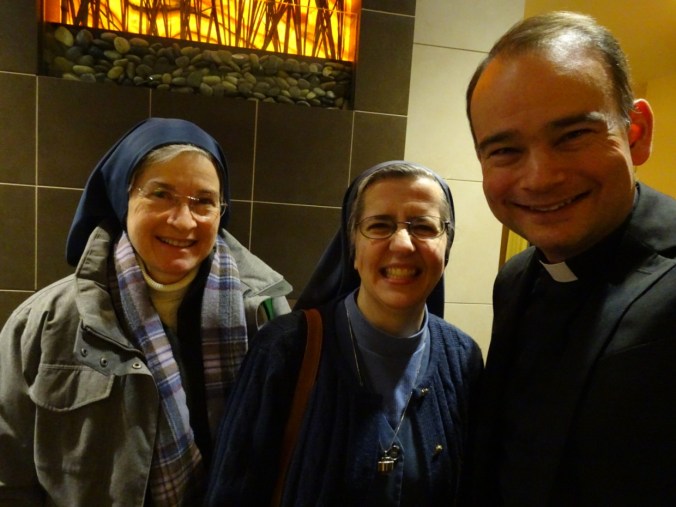
At a recent meeting with Father Roderick. (With me is Sr. Anne Flanagan aka @Nunblogger)

I was excited and thrilled this week to meet Father Roderick. (Sr. Anne Flanagan aka @Nunblogger is with us)

Below is my less-fun, not super-hero related list of essentials to put in place in your life as you begin or continue to discern your vocation. (Notice that my list intersects with Geekpriest’s SuperHeroes Checklist in more than one place!) This list also sums up a whole slew of my previous blog posts.

1. A dynamic prayer life and sacramental life. Have a real relationship with God that is living and growing. This means a regular prayer life, not just a “hit or miss” approach, or only praying “when I feel like it.” If you haven’t already, commit to daily prayer.

Becoming an “expert” in prayer is a lifelong journey, but having a genuine relationship with God when we are seeking his will is essential. How better to learn how to recognize God’s invitation in the big decisions we have to make, than to listen to God every day?

The sacraments are the privileged ways that the Church offers us an encounter with Christ. Frequently participating in Holy Mass (Sunday Mass is the minimum) and regular reception of the Sacrament of Reconciliation are the ordinary means for growing in our relationship with God. They might seem “ordinary,” but both sacraments are really hidden miracles in our midst.

At Mass, we adore, thank, offer ourselves with, and receive Jesus himself, who delights in sharing himself with us and inviting us into his own relationship with the Father. In the Sacrament of Reconciliation, all of the obstacles that we put between God and ourselves—our sins, woundedness, and flaws—are forgiven and healed in a sacred encounter with Jesus’ merciful love.

2. Strive to live a good moral life. All of us are called to holiness, to grow in union with God here on earth, a union that will be fulfilled in perfect communion with God in heaven. Every vocation is a call to profound holiness. Constantly living in a state of serious sin means we are putting obstacles between us and God. All sin is a roadblock for our discernment, because sin is turning away from God’s will and choosing our will over God’s. Instead, discernment is striving to know and live God’s will. We do not need to be sinless to discern because we are all sinners, but we want to be striving to be upright, sincere about our journey of growing in virtue.

3. Trust in God. We can grow in trust in God by pondering and praying with these truths:

  • God loves us
  • God knows us better than we know ourselves
  • God has a plan for us that will bring about our greatest happiness and in which we will help others in a way that no one else will.

4. Get to know ourselves. This includes not just getting to know our gifts and weaknesses, but also discovering our motivations, which helps us to know what is most important to us. Including a daily examination of conscience in our prayer helps us to discover any area in our life—an attachment to a particular sin, for example—that might prevent us from seeking God’s will. Why are we entering into this discernment? What is in our hearts, what are we seeking? How can we more singleheartedly seek God’s will?

5. Active engagement with the Church. Our vocational state in life determines our role in the Church, as well as in life. Discernment doesn’t just involve God and us; it also involves the Church, the People of God within whom we will live and serve. In order to discern our role in the Church, we must already know the Church from the inside by being actively engaged with our parish or a church group. If we have not been involved with our parish, or other form of ministry, now is the time to get involved!

Especially for those discerning religious life or priesthood, or between one of these and marriage, it is essential to take part in the ministry and missionary life of the Church; otherwise we will not have the experience of sharing our gifts in ministry and the Church’s mission. Without this experience it’s hard to know what it would be like to share our gifts in this way as a lay person, sister, brother, or priest. We don’t always have to do this through our parish—there are other church groups that we can become involved in—but we need to find some way to get really involved in the Church’s ministry and mission.

6. Regular spiritual direction. [For more about spiritual direction—what it is, how to find a director, and what to expect for the first time, visit here and here.] A spiritual director may not be necessary as we begin discerning our vocation, but once we start to get serious, we should definitely start seeing a spiritual director regularly.

The first five areas are so important for discerning that they are, in a way, “prerequisites” to seriously discerning one’s vocation. If any of these are lacking, it might be a good idea to make that our “next step” in discerning our vocation.

A Simple Daily Prayer for the Year of Mercy

Slide1

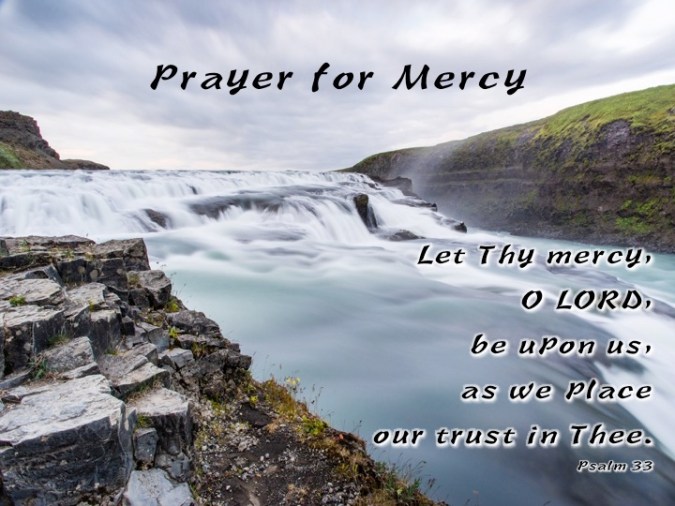
Psalm 33:22 is one of my favorite passages from the Bible, because it describes so eloquently in just a few words our relationship with God. On God’s side, ever-faithful mercy. On our side, ever-growing trust.

As we  begin 2016 and continue our journey into the Year of Mercy, my hope is to discern how God’s mercy is at work in my life right now, and to renew my commitment to trusting in his loving goodness. This will be the daily prayer that I plan to rise with every morning.

A True Story: Discerning During Midlife

A few years ago, a wonderful wife and mother named Catherine came to see me.

dawn-nature-sunset-woman

Catherine is a loving and generous woman who has inspired the many people at her parish who know her. She constantly seeks God’s will amidst the usual and sometimes unusual challenges of married life, and puts herself at the service of the needs of her parish. But recently, she underwent a particular experience of change, accompanied by darkness: her children were growing up and leaving home and didn’t seem to need her as much; her relationship with her husband felt routine; her daily life gave her little satisfaction. At one point, Catherine confided to a friend, “I was attracted to religious life when I was younger, and being a sister is so much more peaceful and holy. Maybe I missed my vocation. What if God really called me to religious life?”

This thought that she might have “missed” her vocation was a scary one for Catherine (and for anyone serious about seeking God’s will–more on that later). However, because she still had commitments to her husband and children, it was clear that God’s will for Catherine was to continue in her vocation as a loving mother and wife. If Catherine had indeed chosen a path other than what God originally willed for her, God’s will for her at his point in her life was clear: to continue in her vocational commitments. Her doubts were almost certainly not a call to switch vocations in midlife. But at her age, repeatedly experiencing these doubts could be an important part of Catherine’s midlife journey: she may have needed to re-evaluate certain decisions and how she was living her vocation. Rather than something to discourage or scare her, Catherine could use these troubling questions as an invitation to reflect on her life, bringing them to prayer and spiritual direction.

When we talked together, I encouraged Catherine to consider these possibilities:

A) It was possible her doubts were a temptation, especially because the doubts seemed to be making Catherine lose some of her interior peace. Perhaps the devil wanted to distract this loving, goodhearted woman from her true vocation—that of being a loving mother and wife. By putting the “holier” life of a religious sister on a pedestal and entertaining doubts about her own vocational discernment, Catherine could have been letting the devil gain a foothold in her thoughts, blurring her perception of the unique beauty of her call and gradually weakening her commitment to her vocation.

Instead of allowing these doubts to distract her, Catherine could use them as an opportunity to recommit more deeply to her life of self-giving love as a mother and wife, perhaps discerning new ways in which she can express her love in her changing situation.

B) Catherine might have been going through a time of desolation where, through her doubts and longing for “more,” God was inviting her to purify her motivations and deepen how she lives her true vocation. Catherine could take time to examine how she was living her vocation and how she could grow in her call to love as a wife and mother.

C) Perhaps God was inviting Catherine to dig deeper into what attracted her about religious life. Catherine’s feelings of dissatisfaction could have been reflecting a desire placed in her by God for greater union and intimacy with him—something that she previously thought was reserved only for sisters. God could have been using her feelings of desolation to call her to a deeper spiritual life of union with him. Perhaps deep within her restless longing, God was calling Catherine to offer herself to him in a special way: for example, in a particular ministry or consecrated lay institute.

Every person’s individual experience and discernment has specific details that God uses to lead them. Catherine never shared the fruits of her prayer after we talked, but she chose to continue in her vocation of love. She is now a happily devoted grandmother.

How Do We Avoid Discouragement?

landscape-mountains-nature-mountainIn times of deep desolation, what can we do? St. Ignatius encourages us to be faithful to our commitments,  to rekindle our prayer and our longing for God, and to wait until the Lord lifts the fog. As our time of deep desolation passes, we will gain a renewed perspective to see the beauty and potential for love, even in the suffering we are undergoing; we will be able to recognize how God is inviting us and how God makes even times of desolation bear fruit. But in the meantime…

How To Avoid Becoming Discouraged by the Darkness
When we are going through great desolation and the darkness is so intense that we really want to give up, this is the time to pull out and use the tools that our Catholic spiritual tradition—especially the tradition of discernment—have given us.

* Continue to pray—be faithful to your usual prayer time. Even if it feels like your prayer is “wasting time,” and that you’re “not getting anything out of it”, remember that times of dryness or desolation in prayer are often the times when God can do the most work in us. If you aren’t doing anything or getting anything out of your prayer, and you continue to faithfully show up and trust in God, God will take over…and work within you in ways that you cannot imagine. (And you may only recognize this afterwards, sometimes years later.) You may wish to vary your prayer if it’s dry: one day, pray the Rosary, another day simply sit quietly with the Lord in Eucharistic adoration.

* Hold fast to your convictions, and the resolutions or course of action you made when you weren’t experiencing such profound desolation. A time of deep discouragement is not usually the time to make big changes in your life. Instead, if you are overwhelmed by the challenge of staying with your convictions and way of living, make small changes in how you live your long-held convictions. Experiment with how you live your convictions, rather than giving up on your actual convictions.

* Don’t get discouraged—or at least, don’t let discouragement grip you too tightly. To gain insight on desolation and darkness, you may want to read what Saint Ignatius has to say about desolation and consolation. (I recommend Discernment of Spirits by Father Timothy Gallagher, OMV)

* Don’t be afraid of the unknown. God is already there. If you are receiving new—even uncomfortable—insights about your life, evaluate them one by one. Could these be possibilities for growth or invitations from God? If you feel your values are shifting, take time to pray with these new insights and desires so that gradually you can discern if or how to act on them. Perhaps take some time to go back to and re-visit your first real encounter with God. Remember his love for you, his invitations to you, his affirmation of who you are. Rest in his loving gaze, and renew your commitment to him, wherever he is leading you.

* Read and pray about God’s love for you and how trusting in God—who is almighty, who loves us, who is faithful—is the best choice you can make every day. Because you are in a spiritually dark or even dry place, find resources that you can read more easily. Read a favorite book of the Bible or a spiritual writer whose insights resonate with you.

*  Seek advice from your spiritual director or other mentors; go back to the spiritual wisdom you have already received and have striven to live by. What does it tell you about your current situation?

* Seek support from good friends you trust who share your values, might understand your struggles, and always want what is best for you. Seeking support and comfort can strengthen us in the deep loneliness and suffering that accompanies desolation.

* Make the time to do something that you love to do, that you feel drawn to doing now. Doing something you truly enjoy can give you a place to find a break or comfort from the darkness that you are undergoing. Truly enjoying something can relax you and also give you a safe place to “process” or “connect” the pieces of what you are undergoing.

Discerning in Transition: Prayer in Emptiness

emptynotebook-731212_1280As we continue to mature (and our perspective also matures), we have the opportunity to give and nurture life in new ways. But sometimes we experience change as more of an ending than a beginning, more of a loss than a gift.

And in every big change we do lose something. Specifically in the transition of midlife, we lose or are forced to let go of certain life-giving aspects of our life that we’ve given a great deal to. Perhaps our children have all left home, and we have “empty nest” syndrome. Or perhaps we no longer have the energy it takes to run marathons. Perhaps we let go of our dream of becoming an astronaut (or ___________ ) because it’s no longer realistic.

Loss leaves a hole, and that hole can make us aware of a more pervasive emptiness within us. Missing our friends at our old job can open us up to suddenly realizing how lonely we are. From feeling the emptiness of our home after our last child has moved out, we can start wondering if our inner emptiness means that we missed our vocation in life.

Potential for New Ways of Giving Life

Although feeling empty doesn’t feel good, it is something to rejoice in—because God can only fill us if we are empty! When we feel an inner emptiness, when we recognize our insufficiency, we give God room to enter and to fill us with his gifts.

Sometimes God seems to let the emptiness grow—from a small loss to a gaping hole. It’s not that God want us to suffer. What he is really doing is letting our emptiness and longing for him build—either so that he can make us a greater gift, or so that we have the capacity to truly receive what he wants to give us.

Emptiness is a daunting feeling, but it’s actually a part of being human. We are made for God, we are made for eternal beatitude. Living in the “not yet” of life here on earth helps us to prepare our hearts to receive God more fully. Becoming aware that we are incomplete, that there are “holes” in our lives that we long to have filled, enables us to depend or “lean” more on God and to receive fully what he wants to give us.

crucified20

When we experience a sense of inner emptiness, we may wish to pray with the Canticle of Philippians (2:5-11)—that celebrates Jesus’ self-emptying in order to redeem us. We might find it helpful to pray with the sentiments of the following prayer.

Prayer in Emptiness (A Kenosis Prayer)

Jesus, I come to You today empty. 

I don’t feel I have anything to bring to You except my poor self.

And today, that doesn’t feel as if it’s enough.

I feel helpless and vulnerable, lost and desolate.

This sharp-edged emptiness reminds me

how dependent I truly am on You,

that I am not self-sufficient,

that I need to learn to trust You always more.

You experienced this emptiness while You were here on earth.

You let go of not just the fullness of divinity but even of the human respect You deserved,

in order to be with us, to teach us, to serve us, and to save us. 

You emptied Yourself for me, so that I can offer my emptiness to You to be filled.

Divine Master, fill me with what I need most:

Your love and Your grace.

Hold me close to Your Merciful Heart

until the day that I am made whole in You,

immersed in the loving embrace of the Most Holy Trinity. Amen.

Midlife & Discernment: Learning To See with God’s Eyes

eye-211610_1280Learning To See with God’s Eyes

Whether it’s transition, gradual growth, or crisis, midlife offers wonderful opportunities to grow in doing God’s will, above all because we start to see with new eyes, with new awareness. Any time we are “shaken out of” a routine or habitual way of seeing or doing things, we become more open to hearing God’s unexpected invitations.

One characteristic of midlife is that we may become tired of doing things the way we’ve always done them. We may start reacting to things in unfamiliar ways—even ways that are the opposite of how we used to react. While earlier in life, we may have put the emphasis on “doing,” now we may feel that “being” is more important. We recognize how unrealistic our earlier high ideals are, and we become more accepting of the reality of human nature. In our 20s, we might have focused our energies on how much we’ve achieved and will achieve; now we may feel that it’s more important to focus on who we are, or becoming a better person, because accomplishment flows from who we are. We might shift our focus from being overly preoccupied with what others think of us to simply seeking to act with integrity. We might feel less patience with things that we consider nonessential, like others’ emotional drama over inconsequential things, or competitive behavior, so we simply ignore them.

The shift in our perspective might be so great that we might even feel that we’re becoming our opposite, because our new perspective is encouraging us to make new and different choices. In midlife, as at any time in life where we are facing big changes, moderation is a good basic principle and practice to keep in mind. If we can bring a discerning attitude into our new awareness, the uncertainty and excitement can help us to find new opportunities for seeking and living God’s will.

Taking Advantage of the Precious Moments of Our Lives

Midlife often brings with it strong new desires—desires that might make us feel less sure of ourselves. We can sense change within, and we might worry that certain values that had been so important to us are not as important any more. As at any time in life where we are facing big changes,  moderation is a good basic principle and practice to keep in mind during midlife.

Because we are increasingly aware that our lives are finite, we may suddenly start to feel that obstacles that used to stand in our way aren’t really obstacles any more. Our thought may be: if I don’t do this now, when will I?

My shyness makes a small personal example, although I don’t know if it’s just a natural maturing process or connected to midlife.

I’m a very shy person. In the past, it was hard-to-impossible to strike up conversations with people I didn’t know. In addition, I’m a small woman raised in the suburbs who had no experience with inner-city life. So perhaps it’s understandable—although certainly not desirable—that during my first couple of years in any big city, if I was walking alone on a city street and was approached by tall, large men who seemed homeless, I would smile, say “God bless you,” and walk away as fast as I could. (I would also pray for them, but they didn’t know that.) I’d feel guilty that I didn’t stop to really talk with them, but my timidity was very strong if I was alone.

Over the years, I’ve interacted with many people “on the street.” I started to realize how deceptive appearances are. I grew in my conviction that as a sister who practices seeing others through the eyes of God, I also wanted to try to respond with God’s heart. But I still had to struggle to overcome my shyness each time. Finally, one day I was out with a friend and witnessed how fearless she was when a someone on the street asked her for money. At that moment, I thought to myself, “I don’t need to let my shyness stand in the way of real encounters with people any more. These encounters are just too precious to let my fear get in the way!”

I don’t know if that was a “midlife” change of perspective, or just a natural maturing process, but I still remember the first time it just seemed natural to stop to talk to a man who was homeless who greeted me. We chatted for about five minutes—about how he was doing and about God. As I was leaving, the man asked me, “Sister, please bless me!” I didn’t even hesitate. I can’t remember now if he bowed his head so that I could put my hands on his head, or if I simply grasped his hands. But I prayed from my heart for him. And I walked away feeling that I was blessed; that I had received more than I’d given. That evening, as I was praying over my day, I was astonished to realize that I hadn’t felt a twinge of shyness–it  just felt that responding to him was the thing I was supposed to do at that moment.

My shyness is not completely gone. I still feel it at times, but fear is much less likely to stop me when I meet people for the first time. The real connection that can happen—even in a two-minute encounter on the street—is too important to miss. Ironically, now people tell me that they can’t believe that I’m shy. I’m grateful that my priorities have shifted through God’s grace and my life experience.

Discerning in Crisis or Desolation

1024px-Mono_Lake_Serenity

By Sam Garza from Los Angeles, USA (Mono Lake Serenity) [CC BY 2.0 (http://creativecommons.org/licenses/by/2.0)%5D, via Wikimedia Commons

Discernments about making big changes in our lives, such as discerning our vocation, changing jobs, or moving across country, are best made when they are coming from a place of relative peace in our lives. This is true because we can best hear God’s invitation when we have a certain amount of serenity. For example, if our life is so chaotic that we can’t make time for prayer and we are deeply distressed and unhappy, it might be hard to discern our vocation because we cannot get past our own inner turmoil to be able to hear how God is calling us.

It’s not that our lives have to be perfect or happy for us to discern well, but the best discernments often presuppose a certain foundational security/freedom. Otherwise, we may think we are discerning, but actually we are simply trying to survive and running from our pain.

Sometimes crises include with them a call from God to make an immediate and big change in our lives. But sometimes crises are times when we need to “sort through” the meaning of the crises and its effects on our lives before we can discern making a big change in our lives.

Tragedy can include within it a call from God in which God invites us to something more. Certain difficult or painful events, like the death of a loved one, change our lives forever. We may need to take time to discover what these painful events mean for us before we can start to discern another big change. Losing a job can become a crisis when it happens in a way that’s unfair, unexpected, and financially unmanageable.

If we find ourselves in crisis, in a place of unmitigated darkness, turmoil, and chaos, God may be inviting us through this darkness to grow in our relationship with him. When we are calmer, having had some time to resolve some of the distress and immediate challenges that the crisis precipitated, we may have the focus and freedom we need to begin a larger discernment, even if we are still in a time of suffering and desolation. When we are going through a crisis or a deep spiritual darkness, a spiritual director is a valuable guide who can help us decide whether this is the time to discern a big decision in our lives, or whether it might be better to wait.

Below is a beautiful reflection that can be very helpful during a time of discouragement or desolation. This reflection is taken from a book I highly recommend: Secrets of the Spirit: Wisdom from Luis Martinez, edited and with a foreword by Germana Santos, FSP, published by Pauline Books & Media.

Another online resource you may want to check out is this article that briefly describes how Saint Ignatius of Loyola recommends dealing with desolation.

SecretsoftheSpiritCover

Meditation on God’s Action in Our Lives

by Servant of God Archbishop Luis Martinez

I have a special place in the thought of God. I occupy a post of honor in his heart. I am the unique object of his providence and his action. God is singularly present in my life and in my soul. God is for me a God present and hidden. Not for a single instant does the action of God fail to touch me—not only his power that preserves and moves all creatures, but more especially, his exceedingly gentle action that keeps guiding me along unknown paths toward my perfection and happiness.

I do not understand how much God loves me nor how immense, constant, and active is the love he has for me. Not for one instant does he fail to draw me toward himself with the force of his love of predilection. My life is God’s work, my life with its alternations of joy and grief, fear and hope, activity and rest, and with all its variable and innumerable circumstances. It is the fruit of his love. God foresees everything in my life, and he directs and disposes of it for my good. Only when I separate myself from him by sin does my life cease to be the fruit of his action. Yet God permits even my faults, then returns to convert me and to repair the damage caused by sin.

Beneath all external happenings, God is always present and hidden. Joy and sorrow are equally God’s messengers coming to accomplish in my soul the work of his love. They are instruments of his action, veils that cover his presence. If only I would continue to discover this God hidden in my own life! If I would always let myself be led by his gentle hand, my life would be his action, my soul, a temple, and I, a saint. – Secrets of the Spirit: Wisdom from Luis Martinez, edited & foreword by Germana Santos, FSP

A Mid-Discernment Meditation on Trust

imag0218A meditation for those who want to grow in trust in God’s loving care for us during our discernment…

A Mid-Discernment Meditation on Trust

We begin our meditation by remembering God’s power, love, and mercy for us with a short aspiration, like “God, come to my assistance!” “Jesus, Son of David, have mercy on me.” Or pray to Our Blessed Mother to offer our intentions and concerns to her Son.

Begin where we are: what are we worried about?

Although I haven’t completed my discernment yet, it seems to be leading me to do something that is hard and new, something that I haven’t done before. I’m worried about how it will turn out. If I make this choice, will I be happy? What if doing this new thing is too hard, or I don’t like doing it? What if I take this “leap of faith,” but it really isn’t God’s will for me? What if something happens that I don’t expect, and it really doesn’t work out?

Confront our lives—in this case our fears—with Scripture

Psalm 62 is a powerful prayer of trust. In the Revised Standard Version, Psalm 62 is entitled: “Song of Trust in God Alone.” We prayerfully read Psalm 62 slowly, letting the words sink deep into our hearts. You can find it online in any number of translations or pull out your own Bible. Below are the first two verses.

Psalm 62

For God alone my soul waits in silence; from him comes my salvation.

He alone is my rock and my salvation, my fortress; I shall never be shaken.

Apply the Scripture to my situation

Psalm 62 lists reasons to trust in God, and also encourages us to take certain actions. What are the reasons that Psalm 62 gives for trusting God? Because…

  • From God comes salvation
  • God is a refuge, a mighty rock, an unshakable fortress
  • The things that make us feel secure—like riches, or the subservience of others—are just a delusion
  • God is our salvation
  • Power and steadfast love belong to God…etc.

Heart-to-Heart  with God

Psalm 62 encourages us to “trust in God and pour out our hearts to him.” “Pouring out your heart” to someone is a profound act of trust. We take a few minutes to do exactly this with God: talk to God about what is happening in our life right now, including our fears and uncertainties about the future, and why we hesitate to put our future completely in his hands. We ask him for what we need most! Remembering the imagery of Psalm 62—safety, fortress, salvation—thank him for “being there” for us always. Surrender all of our concerns into his loving care. Take a few moments of silence to listen to God’s response or invitation. (If we are not sure how to pray in the silence, we can listen quietly to our heartbeat, realizing every heartbeat is God’s love in action, sustaining us.)

Pray Psalm 62 again

This time, truly pray the psalm. Which “word” or “phrase” of this psalm resonates most deeply with you? Stay with that word or phrase. You may want to note it down on a piece of paper or on your smartphone, to remember throughout the day.

Anchor for Our Day

As we come to the end of our prayer, we review it briefly. What happened during our prayer time? Has something shifted inside of us? What is our deepest desire now? We might wish to conclude by praying the “Our Father,” offering our deepest desire to God, and asking for the grace to live his will in our lives today. As we return to every day life, we take with us the word or phrase from Psalm 62 that most deeply touched us, using it as an anchor or shelter any time today that we feel worried or anxious.