Discernment Opportunities with the #MediaNuns

As we conclude the Year for Consecrated Life tomorrow (February 2, 2016), I wanted to share a few things about my community, the Daughters of Saint Paul, for those of you reading this blog and discerning religious life.

First, here’s a little video about our community and our spirit:

Secondly, our annual #Discernment Retreat during Holy Week is coming up, if you’d like learn more about our Pauline life and mission:

HolyWeekRetreat2016

Third, if you are interested in learning more about the Daughters of St. Paul, you can connect with us in many ways, including our website, which has many discernment resources: www.daughtersofstpaul.org/vocations

Checklists for Discerning Our Vocation

Many of us discern our vocation informally through the years. When we enter more intentionally or deeply into vocational discernment, we need a few things already in place in our lives. If we aren’t currently trying to live these already, we will find them of immeasurable help in our discernment. But before I post my list, I want to share about another list, found in a book that I highly recommend:
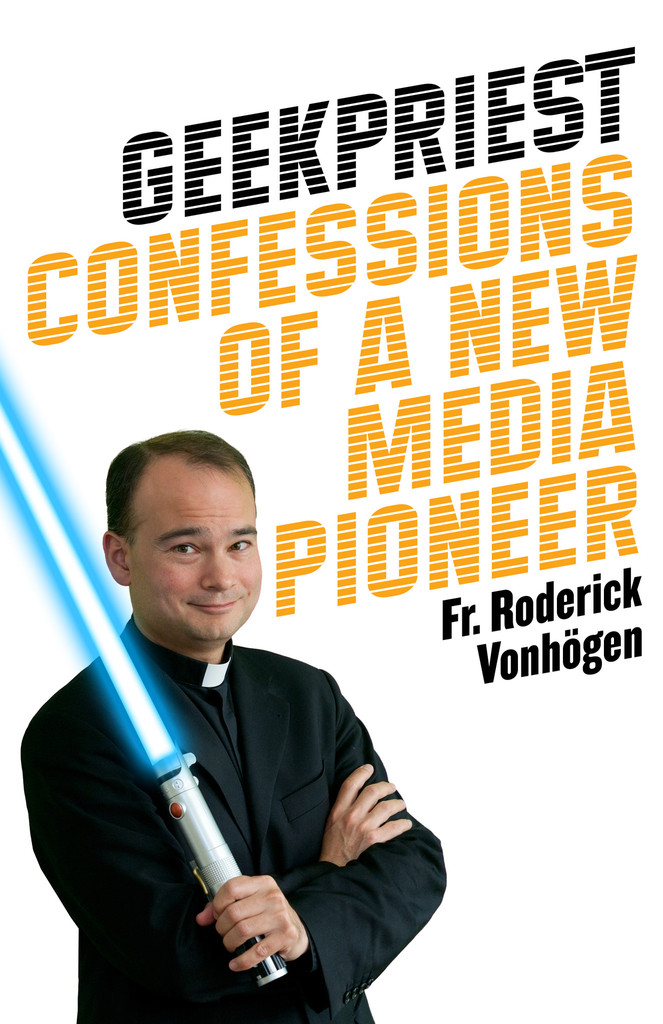
GeekpriestCover

In his book, Geekpriest: Confessions of a New Media Pioneer, Father Roderick Vonhögen shares the story of his vocational discernment in chapter 2, “Spider-Man’s Day Job.” He compares discerning our vocation with the typical superhero story, and shares a checklist for what we can learn from superheroes in discerning our vocation. (How cool is that! I wish I’d had this checklist when I was discerning!)

Father Roderick’s “Superheroes Checklist” is insightful and a great deal of fun for those with geekish tendencies (like myself) who enjoy superhero stories, but it also makes discernment very accessible to anyone who has seen even one superhero film. Included in his checklist are: seek solitude, study and read, discover your strengths and acknowledge your weaknesses, be humble, listen to your friends, do not fear, and persevere.

Geekpriest is a great, fun read and I highly recommend it for young people, as it offers a fascinating and entertaining “inside look” at the life of a dedicated priest, as well as offering helpful ways for living as a Catholic amid our social-media-inundated world. If you are discerning a vocation to the priesthood, the whole book is a fun read that will also get you thinking and praying! (You can read my full review here.)
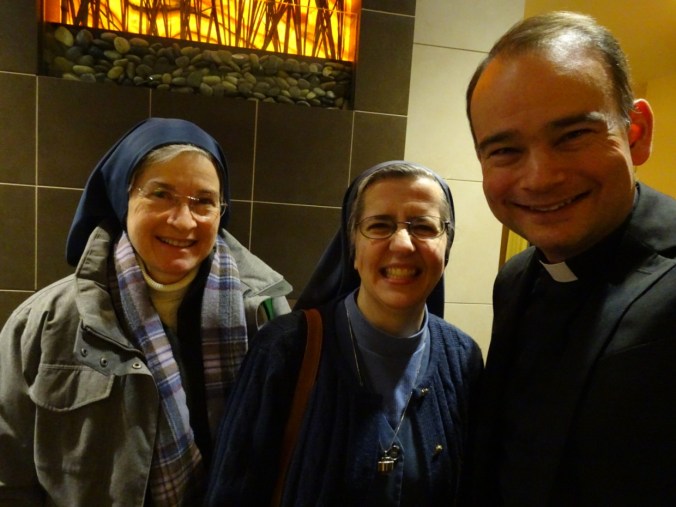
At a recent meeting with Father Roderick. (With me is Sr. Anne Flanagan aka @Nunblogger)

I was excited and thrilled this week to meet Father Roderick. (Sr. Anne Flanagan aka @Nunblogger is with us)

Below is my less-fun, not super-hero related list of essentials to put in place in your life as you begin or continue to discern your vocation. (Notice that my list intersects with Geekpriest’s SuperHeroes Checklist in more than one place!) This list also sums up a whole slew of my previous blog posts.

1. A dynamic prayer life and sacramental life. Have a real relationship with God that is living and growing. This means a regular prayer life, not just a “hit or miss” approach, or only praying “when I feel like it.” If you haven’t already, commit to daily prayer.

Becoming an “expert” in prayer is a lifelong journey, but having a genuine relationship with God when we are seeking his will is essential. How better to learn how to recognize God’s invitation in the big decisions we have to make, than to listen to God every day?

The sacraments are the privileged ways that the Church offers us an encounter with Christ. Frequently participating in Holy Mass (Sunday Mass is the minimum) and regular reception of the Sacrament of Reconciliation are the ordinary means for growing in our relationship with God. They might seem “ordinary,” but both sacraments are really hidden miracles in our midst.

At Mass, we adore, thank, offer ourselves with, and receive Jesus himself, who delights in sharing himself with us and inviting us into his own relationship with the Father. In the Sacrament of Reconciliation, all of the obstacles that we put between God and ourselves—our sins, woundedness, and flaws—are forgiven and healed in a sacred encounter with Jesus’ merciful love.

2. Strive to live a good moral life. All of us are called to holiness, to grow in union with God here on earth, a union that will be fulfilled in perfect communion with God in heaven. Every vocation is a call to profound holiness. Constantly living in a state of serious sin means we are putting obstacles between us and God. All sin is a roadblock for our discernment, because sin is turning away from God’s will and choosing our will over God’s. Instead, discernment is striving to know and live God’s will. We do not need to be sinless to discern because we are all sinners, but we want to be striving to be upright, sincere about our journey of growing in virtue.

3. Trust in God. We can grow in trust in God by pondering and praying with these truths:

  • God loves us
  • God knows us better than we know ourselves
  • God has a plan for us that will bring about our greatest happiness and in which we will help others in a way that no one else will.

4. Get to know ourselves. This includes not just getting to know our gifts and weaknesses, but also discovering our motivations, which helps us to know what is most important to us. Including a daily examination of conscience in our prayer helps us to discover any area in our life—an attachment to a particular sin, for example—that might prevent us from seeking God’s will. Why are we entering into this discernment? What is in our hearts, what are we seeking? How can we more singleheartedly seek God’s will?

5. Active engagement with the Church. Our vocational state in life determines our role in the Church, as well as in life. Discernment doesn’t just involve God and us; it also involves the Church, the People of God within whom we will live and serve. In order to discern our role in the Church, we must already know the Church from the inside by being actively engaged with our parish or a church group. If we have not been involved with our parish, or other form of ministry, now is the time to get involved!

Especially for those discerning religious life or priesthood, or between one of these and marriage, it is essential to take part in the ministry and missionary life of the Church; otherwise we will not have the experience of sharing our gifts in ministry and the Church’s mission. Without this experience it’s hard to know what it would be like to share our gifts in this way as a lay person, sister, brother, or priest. We don’t always have to do this through our parish—there are other church groups that we can become involved in—but we need to find some way to get really involved in the Church’s ministry and mission.

6. Regular spiritual direction. [For more about spiritual direction—what it is, how to find a director, and what to expect for the first time, visit here and here.] A spiritual director may not be necessary as we begin discerning our vocation, but once we start to get serious, we should definitely start seeing a spiritual director regularly.

The first five areas are so important for discerning that they are, in a way, “prerequisites” to seriously discerning one’s vocation. If any of these are lacking, it might be a good idea to make that our “next step” in discerning our vocation.

What is vocational discernment?

LoveisHumanVocationFor the next few posts, we’ll be focusing on one of the most important discernments that we can ever make: our vocational discernment.

In his apostolic exhortation, The Role of the Christian Family in the Modern World, St. John Paul II wrote, “Love is therefore the fundamental and innate vocation of every human being” (no.11).  Every person has a unique, unrepeatable vocation to love. Discerning one’s vocation means discerning how God is calling us to love, how God is calling us to bring life into the world.

Several understandings of the word “vocation” have arisen even in Catholic circles, which could cause a bit of confusion.


Possible meanings a Catholic would give to “vocation”:

1) a person’s call to priesthood or religious life

2) how God is calling a person to live their call to love throughout their entire life

3) how God calls a person to live their call to love through a specific state in life


Let’s look closer at these three meanings:

1) Using the word “vocation” only to mean a person’s call to priesthood or religious life is too restricted a meaning. Every human being has the vocation to love. The vocation to marriage is just as important as the call to priesthood or religious life.

2) The concept of “personal vocation” is important and still developing. Our personal vocation includes—but is more comprehensive than—our vocation to a specific state in life. Our personal vocation animates how we live in every aspect of our lives. Every human being has a vocation to love, which is strengthened and specified when we receive the sacrament of Baptism.

Father Herbert Alphonso, in his small but powerful book Discovering Your Personal Vocation: The Search for Meaning Through the Spiritual Exercises, talks about our personal vocation as the unique God-given meaning of our lives, and as God’s call to us to reveal through our lives a particular aspect of the face of God. In an article in “America” magazine, author Russell Shaw describes personal vocation as “an unrepeatable call from God to play a particular role in his redemptive plan and the mission of the Church.”

(If you are interested in exploring the concept of personal vocation further, I highly encourage you to read Father Herbert Alphonso’s book, Discovering Your Personal Vocation: The Search for Meaning Through the Spiritual Exercises, and Personal Vocation: God Calls Everyone by Name by Germaine Grisez and Russell Shaw.)

3) The most common understanding of “vocation” in its Catholic sense, is how God calls a person to live their call to love through a specific state in life. “Discerning one’s vocation” traditionally refers to discerning whether one is called to Holy Orders, consecrated life, marriage or the single state. This is how I have been and will continue to use the word, “vocation.”

Discerning one’s vocation, understood as discerning one’s state in life, is potentially the most important discernment one can make, because this one choice “sets the course” of our entire lives to be most in accord with God’s plan for us. Living God’s will as closely as we can is the surest way to finding deep happiness and fulfillment. Living according to God’s plan for us means that we are seeking to fulfill the unique mission God has given us—and others’ happiness could easily depend on whether and how we fulfill our specific mission.

Discernment: A Call within a Call

silhouette-691522_1280Many women saints—like Jane Frances de Chantal, Elizabeth of Hungary,  Rita of Cascia, and today’s saint, Elizabeth Ann Seton—were wives and mothers who, after the death of their husbands, entered religious life. They did so after a period of grieving, discernment, and taking care of their children.  Their midlife discernment of God’s call to enter religious life was dramatic.

Whether or not we face such dramatic change in our life circumstances, we may still receive a new call from God that transforms our lives into something new: “a call within a call.”

“A Call within a Call”

Born the youngest child of her parents, she lost her father when she was eight years old. By the time she was twelve, she felt the call to become a missionary. When she turned 18, she left behind her beloved family and traveled to a foreign country to join a missionary community of teaching sisters. A year later she was sent as a missionary to another country, professed her vows, became a teacher and eventually principal of the school where she taught. Loved by her students, she experienced great joy as a religious sister and was respected by her community for her profound spirit of prayer, generosity, and compassion.

When she was thirty-six, on her way to making her annual retreat, she received another inspiration from God, what she called “a call within a call.” During her retreat and afterwards during her prayer, she became urgently convinced that Jesus was calling her to radiate his love in a new mission to those in the slums. She shared her inspiration with her spiritual director and her superior. Although eager to begin, she waited obediently for two long years for the Church to confirm her inspiration and new mission. Finally, she began her new mission all alone, choosing to wear the native dress of the local women rather than a traditional religious habit. She had to learn by trial and error how to best help the people in the slums, always seeking to discover Jesus in the unwanted, the unloved, and the uncared for.

Perhaps by now you recognize that this missionary sister was Blessed Mother Teresa of Calcutta, soon to be canonized. (The second miracle attributed through her intercession has been recognized as truly miraculous.)

The new film, The Letters, beautifully shows the story of Blessed Mother Teresa’s discernment. It’s not unheard of for a sister to begin a new congregation, but it’s very difficult and almost always very painful. Note that Mother didn’t change her vocation, but discovered that God was calling her in another direction within her calling, even though she was a perpetually professed sister in the Sisters of Our Lady of Loretto.

All of Mother Teresa’s life is inspiring, but this particular aspect of her story can give courage to us who—because of or despite our already-existing commitments—feel God’s invitation to “something more,” or “something new,” especially when we’re not sure how to go forward.

Those with the benefit of some years of life experience have some advantages in discernment that younger people don’t have:

* We know ourselves well, and so we may be able to discern more easily between the voice of self-deception and God’s voice. With greater self-knowledge, it might be easier to discern how God is calling us. With greater experience, we can respond to God’s invitation with insight and perhaps greater resolution. Already knowing what it means to make a commitment, it’s less likely we will be  easily discouraged.

* We already have mentors who know us well and can offer us their advice and wisdom from the years that they have known us

* We have a lived history of our relationship with God, and so we can more easily perceive continuity between how God has called us in the past and how God is calling us now. (For example, Mother Teresa always felt called to be a missionary. Beginning the work of the Missionaries of Charity wasn’t really a change from her fundamental vocation of being a religious missionary, but extended that call further.) This continuity in how God works in our lives is another sign to look for that can help affirm that the call we are receiving is truly from God.

* * *

If you didn’t catch The Letters in U.S. theaters this December, keep an eye out for its release to DVD. I’ll try to post when it comes available again.

TheLettersPoster

Midlife: Opportunity To Discern More Deeply

balikpapan-190894_1280The time of midlife offers many opportunities for discernment. As we gain life experience, we grow in many ways and see ourselves and our lives differently. Our discernments can therefore be richer and deeper. In midlife, people may experience or receive these gifts:

  • Spiritual and human maturing
  • New awareness of the preciousness and fragility of their lives
  • Awakening or deepening sense of what is important and what we want to accomplish in life

As we grow in maturity and reflect on our life experience, we grow in wisdom. We know ourselves better: both our strengths and our weaknesses, and we understand human nature better. If we are growing spiritually, our capacity to love in a fuller and freer way is probably growing. As we pass the “midpoint” of our lives, we recognize the giftedness and limits of our lives: we see more clearly that we only have a certain number of years in which to change the world for the better. We might feel a greater urgency to make difference in the world, or we may wonder if we are truly fulfilling God’s mission for us. Often, we  decide that we will no longer let fear or others’ opinions prevent us from saying or doing what we think is right. We may lose patience with the noise and nonsense that surround the nonessentials of life, such as: office politics, unhealthy rivalries (whether at work or in our personal lives), or doing things just for the sake of preserving reputation.

Midlife is sometimes talked about as if it’s a crisis, and it certainly can become one. As our perspective shifts in midlife, we see our lives and our responsibilities in a new light. Sometimes we can become depressed about the physical limitations that our age has or will bring, or the reality that our time here on earth no longer seems unlimited. (Recognizing the shortness of our lives can feel like a punch in the gut, even though we’ve always known this theoretically.) In midlife, our change in our point of view means we evaluate our lives differently, because we have more experience, and hopefully, more wisdom. We might look at our lives more from a spiritual perspective, rather than from the perspective of accomplishment, status, or early dreams. We may feel we have wasted our lives on nonessentials and become discouraged at what we haven’t accomplished, or that we haven’t fully lived up to our ideals.

The three big gifts of midlife mentioned above make this a rich time for discerning God’s invitations and for living God’s will more deeply and fully in our lives. These gifts—maturity, new awareness of the giftedness of our lives, and a deepening sense of what is truly important to us—shape our perspective so that we see in a new way. Less constrained by fears or conventions, we open ourselves more fully to God’s will.

What do you see as the gifts of midlife that can lead us into a deeper following of God’s will?

Discerning in Crisis or Desolation

1024px-Mono_Lake_Serenity

By Sam Garza from Los Angeles, USA (Mono Lake Serenity) [CC BY 2.0 (http://creativecommons.org/licenses/by/2.0)%5D, via Wikimedia Commons

Discernments about making big changes in our lives, such as discerning our vocation, changing jobs, or moving across country, are best made when they are coming from a place of relative peace in our lives. This is true because we can best hear God’s invitation when we have a certain amount of serenity. For example, if our life is so chaotic that we can’t make time for prayer and we are deeply distressed and unhappy, it might be hard to discern our vocation because we cannot get past our own inner turmoil to be able to hear how God is calling us.

It’s not that our lives have to be perfect or happy for us to discern well, but the best discernments often presuppose a certain foundational security/freedom. Otherwise, we may think we are discerning, but actually we are simply trying to survive and running from our pain.

Sometimes crises include with them a call from God to make an immediate and big change in our lives. But sometimes crises are times when we need to “sort through” the meaning of the crises and its effects on our lives before we can discern making a big change in our lives.

Tragedy can include within it a call from God in which God invites us to something more. Certain difficult or painful events, like the death of a loved one, change our lives forever. We may need to take time to discover what these painful events mean for us before we can start to discern another big change. Losing a job can become a crisis when it happens in a way that’s unfair, unexpected, and financially unmanageable.

If we find ourselves in crisis, in a place of unmitigated darkness, turmoil, and chaos, God may be inviting us through this darkness to grow in our relationship with him. When we are calmer, having had some time to resolve some of the distress and immediate challenges that the crisis precipitated, we may have the focus and freedom we need to begin a larger discernment, even if we are still in a time of suffering and desolation. When we are going through a crisis or a deep spiritual darkness, a spiritual director is a valuable guide who can help us decide whether this is the time to discern a big decision in our lives, or whether it might be better to wait.

Below is a beautiful reflection that can be very helpful during a time of discouragement or desolation. This reflection is taken from a book I highly recommend: Secrets of the Spirit: Wisdom from Luis Martinez, edited and with a foreword by Germana Santos, FSP, published by Pauline Books & Media.

Another online resource you may want to check out is this article that briefly describes how Saint Ignatius of Loyola recommends dealing with desolation.

SecretsoftheSpiritCover

Meditation on God’s Action in Our Lives

by Servant of God Archbishop Luis Martinez

I have a special place in the thought of God. I occupy a post of honor in his heart. I am the unique object of his providence and his action. God is singularly present in my life and in my soul. God is for me a God present and hidden. Not for a single instant does the action of God fail to touch me—not only his power that preserves and moves all creatures, but more especially, his exceedingly gentle action that keeps guiding me along unknown paths toward my perfection and happiness.

I do not understand how much God loves me nor how immense, constant, and active is the love he has for me. Not for one instant does he fail to draw me toward himself with the force of his love of predilection. My life is God’s work, my life with its alternations of joy and grief, fear and hope, activity and rest, and with all its variable and innumerable circumstances. It is the fruit of his love. God foresees everything in my life, and he directs and disposes of it for my good. Only when I separate myself from him by sin does my life cease to be the fruit of his action. Yet God permits even my faults, then returns to convert me and to repair the damage caused by sin.

Beneath all external happenings, God is always present and hidden. Joy and sorrow are equally God’s messengers coming to accomplish in my soul the work of his love. They are instruments of his action, veils that cover his presence. If only I would continue to discover this God hidden in my own life! If I would always let myself be led by his gentle hand, my life would be his action, my soul, a temple, and I, a saint. – Secrets of the Spirit: Wisdom from Luis Martinez, edited & foreword by Germana Santos, FSP

A Mid-Discernment Meditation on Trust

imag0218A meditation for those who want to grow in trust in God’s loving care for us during our discernment…

A Mid-Discernment Meditation on Trust

We begin our meditation by remembering God’s power, love, and mercy for us with a short aspiration, like “God, come to my assistance!” “Jesus, Son of David, have mercy on me.” Or pray to Our Blessed Mother to offer our intentions and concerns to her Son.

Begin where we are: what are we worried about?

Although I haven’t completed my discernment yet, it seems to be leading me to do something that is hard and new, something that I haven’t done before. I’m worried about how it will turn out. If I make this choice, will I be happy? What if doing this new thing is too hard, or I don’t like doing it? What if I take this “leap of faith,” but it really isn’t God’s will for me? What if something happens that I don’t expect, and it really doesn’t work out?

Confront our lives—in this case our fears—with Scripture

Psalm 62 is a powerful prayer of trust. In the Revised Standard Version, Psalm 62 is entitled: “Song of Trust in God Alone.” We prayerfully read Psalm 62 slowly, letting the words sink deep into our hearts. You can find it online in any number of translations or pull out your own Bible. Below are the first two verses.

Psalm 62

For God alone my soul waits in silence; from him comes my salvation.

He alone is my rock and my salvation, my fortress; I shall never be shaken.

Apply the Scripture to my situation

Psalm 62 lists reasons to trust in God, and also encourages us to take certain actions. What are the reasons that Psalm 62 gives for trusting God? Because…

  • From God comes salvation
  • God is a refuge, a mighty rock, an unshakable fortress
  • The things that make us feel secure—like riches, or the subservience of others—are just a delusion
  • God is our salvation
  • Power and steadfast love belong to God…etc.

Heart-to-Heart  with God

Psalm 62 encourages us to “trust in God and pour out our hearts to him.” “Pouring out your heart” to someone is a profound act of trust. We take a few minutes to do exactly this with God: talk to God about what is happening in our life right now, including our fears and uncertainties about the future, and why we hesitate to put our future completely in his hands. We ask him for what we need most! Remembering the imagery of Psalm 62—safety, fortress, salvation—thank him for “being there” for us always. Surrender all of our concerns into his loving care. Take a few moments of silence to listen to God’s response or invitation. (If we are not sure how to pray in the silence, we can listen quietly to our heartbeat, realizing every heartbeat is God’s love in action, sustaining us.)

Pray Psalm 62 again

This time, truly pray the psalm. Which “word” or “phrase” of this psalm resonates most deeply with you? Stay with that word or phrase. You may want to note it down on a piece of paper or on your smartphone, to remember throughout the day.

Anchor for Our Day

As we come to the end of our prayer, we review it briefly. What happened during our prayer time? Has something shifted inside of us? What is our deepest desire now? We might wish to conclude by praying the “Our Father,” offering our deepest desire to God, and asking for the grace to live his will in our lives today. As we return to every day life, we take with us the word or phrase from Psalm 62 that most deeply touched us, using it as an anchor or shelter any time today that we feel worried or anxious.

What If I Don’t Make the Right Decision?

"The Scream by Edvard Munch, 1893 - Nasjonalgalleriet" by Edvard Munch - [1]. Licensed under Public Domain via Commons - https://commons.wikimedia.org/wiki/File:The_Scream_by_Edvard_Munch,_1893_-_Nasjonalgalleriet.png#/media/File:The_Scream_by_Edvard_Munch,_1893_-_Nasjonalgalleriet.png

The Scream by Edvard Munch, 1893 – Nasjonalgalleriet

In discerning God’s will for us in ways that will shape our future in a big way, it’s easy to become anxious about making “the right” decision. If we find ourselves so afraid of making the wrong choice that, even after taking significant time to discern, we swing like pendulums back and forth from one choice to the other, discounting the experience and insights we have gained thus far in our discernment, then we might need to “lighten up” on the pressure and the scruples: we need to take ourselves less seriously and trust more that God is guiding us. Here are a couple of things that might help us to think about our discernment in a new, less-anxious way that takes the focus off of ourselves and puts it back on God:

Define “the right decision” that we are so concerned about making. Are we truly concerned that we are doing God’s will, or are we afraid of making a mistake? Making a mistake doesn’t mean we aren’t seeking God’s will. In fact, never making a mistake means that we are probably not taking enough risks in our discipleship of Christ.

Often the bigger the decision, the more small steps it takes to implement it. Each of these small steps gives us an opportunity to test out and affirm our conviction that this is God’s will for us. For example, if we are discerning whether to go back to school, there is an application process that will help resolve our doubts. And, at any point in the process, we can stop or change direction.

Have we created a false timeline or expectations about our discernment? If we honestly cannot hear God’s invitation in the particular regard we are discerning, maybe we are missing what we are supposed to be discerning about. Truly seeking God’s will often brings about a certain interior peace. If instead we find ourselves growing in anxiety, perhaps instead of discerning our vocation, God is inviting us to be more active in our  parish, and we need to discern how to do that. Talking about our expectations for the results of our discernment with a spiritual director at this point could be very helpful.

Especially if we have been discerning for a significant amount of time and we feel stuck (we don’t feel we are making progress), we can deliberately take a break away from this particular discernment. (This would be something to talk over ahead of time with our spiritual director.) For several weeks, we don’t allow ourselves to think about it at all. At the end of this time, we can evaluate our experience. Beyond a sense of relief, what was our experience during this time?

1) If we experienced a sense of newness, light, and joy while taking a break from discerning, then we may need to make a major shift in either what we are discerning, or how we are discerning. Discernment is seeking the will of God. Although parts of the process can be painful and difficult—especially in facing our motivations—discernment is ultimately meant to bring us to a greater freedom, peace, and joy.

2) If, instead, the break filled you with new conviction and clarity to continue discerning, then you can continue discerning with a renewed focus.

Whatever the fruits of our “break,” we will want to bring them to our spiritual director.

Best Attitude for “Big” Discernments: Do Not Be Afraid!

Loantaka_Brook_Reservation_bikeway_horse_path_and_stream_and_reflectionsLiving in a spirit of discernment is a wonderful spiritual attitude to cultivate and grow in daily. One of the benefits of living with a discerning heart is that, when the time comes to make a big decision in our lives, we have the tools of discernment at hand to help us discover God’s will for us.

(Just a note: if you are jumping into this blog/book and starting directly here because you are in the midst of a big discernment, you may wish to go back and read a couple earlier posts, especially “Four Essentials Principles for Discernment,” which give a context to the exploration of specific kinds of discernment that follows.)

In books and classes about writing, writers are taught how every good story has key moments, or turning points, when the protagonist must make a choice that will change the direction of the entire story.

In our lives, we have—or will come to—the same kind of moments. Choosing a course of study, taking a new job, finding a place to live, following our vocation, committing to our marriage partner, or any other big change in our lives—these are key turning points that will affect our lives from this point on. As disciples of Christ, we want to seek God’s will at these important moments. But how do we do that?

Growing in our relationship with God and living in a spirit of discernment are the best long-term preparation we can make, but there are also concrete things we can do in the short-term that will help us at these key moments of life. Additional concerns or constraints bind us in these moments, especially when we are facing a big decision that could require big changes. In these next few posts, we’ll look at turning points of our lives, and then specifically at vocational discernment, since discerning our vocation is likely one of the most important discernments we will ever make.

* * *

Pope St. John Paul II often repeated Jesus’ words, “Do not be afraid!” We do not need to be afraid because, if we are seeking God’s will, God will guide us. In the Scriptures, God might seem to withdraw from his people but only to teach them a lesson. God never actually abandons his people who seek him. Certainly if we are trying to live God’s plan for us, God will be with us, giving us all the help that we need. We can take courage, knowing that God has a loving plan for us. When we are in the midst of the stress of making a big decision, the most important attitude to have is trust in the Lord. As we allow the Lord’s love for us to banish our fear, we become even more free to hear clearly God’s loving call.

New Discernment@the Movies Guide: Inside Out!

InsideOutInside Out is a delightful animated film that stands up to repeated viewings by children and adults. (I got more out of the film the second time I watched it!) The themes of feelings, integration, and getting to know our inner life make this film an interesting way to reflect on feelings and discernment.

I’ve posted up a new Discernment@theMovies Guide to the film here. I hope you have a chance to watch the film and to reflect on it. If you do, please share your comments here!