Discernment: Listening with Our Hearts

Slide1Thank you for your patience with me while I’ve been “absent” online. Initially, I planned to take a three-week hiatus from blogging, but events conspired to keep me from getting back here for much longer—I haven’t really blogged since February. In addition to trying to complete a draft of the book, I’ve been focused on other things, such as leading a seven-day retreat, etc.

With the end of the Year of Consecrated Life and the almost-completion of the book’s content, I’m going to blog in a way that I can keep up with; I’ll start with a weekly post. I have a few more posts from the book to put up here, but I also want to simply update the blog with new insights, and respond to your discernment questions. (I have a few still to answer—thanks for the patience of those of you who have emailed me!)

Hopefully, starting this week, I can make my weekly posts fairly consistent. I am excited about “being back” online—I’ve missed blogging about discernment! I will be traveling over the next three weeks, but I will try to get a weekly post up.

* * *

Yesterday’s Gospel (for the 4th Sunday of Easter) is particularly relevant for those of us who seek to discern the Lord’s invitations in our lives:

“My sheep hear my voice. I know them, and they follow me. I give them eternal life, and they will never perish. No one will snatch them out of my hand. What my Father has given me is greater than all else, and no one can snatch it out of the Father’s hand. The Father and I are one” (John 10:27-30).

This past Sunday—Good Shepherd Sunday—was also the World Day of Prayer for Vocations, during which Pope Francis offered a beautiful reflection on Sunday’s Gospel about listening with our hearts to the voice of the Good Shepherd, which you can find here. In it, the Pope offers perhaps the best definition of discernment: Listening to Jesus with our hearts.

Listening as a way of encountering the Lord and each other has been a strong theme in Pope Francis. In this year’s Message for World Communications Day (which is celebrated every year on the Sunday before Pentecost—this year falling on May 8), Pope Francis has beautiful words about how we are to listen to each other. But we can apply it also to how we listen to God:

Listening is much more than simply hearing. Hearing is about receiving information, while listening is about communication, and calls for closeness. Listening allows us to get things right, and not simply to be passive onlookers, users or consumers. Listening also means being able to share questions and doubts, to journey side by side, to banish all claims to absolute power and to put our abilities and gifts at the service of the common good.

Listening is never easy. Many times it is easier to play deaf. Listening means paying attention, wanting to understand, to value, to respect and to ponder what the other person says. It involves a sort of martyrdom or self-sacrifice, as we try to imitate Moses before the burning bush: we have to remove our sandals when standing on the “holy ground” of our encounter with the one who speaks to me (cf. Ex 3:5). Knowing how to listen is an immense grace, it is a gift which we need to ask for and then make every effort to practice.     –    Message for 50th World Day of Communications

Yesterday, Pope Francis concluded his remarks with a special invitation to young people to consider if God is calling them to consecrate their lives to the Lord’s service, in the  priesthood or in consecrated life.

May God bless each of us in these days with a heart that is open, that attentively listens, that draws us close to the heart of the Divine Master.

National Catholic Sisters Week & Cinema Novena: The Young Messiah

Last week, I was away working on finishing the first draft of my book. Now that I’m back, I’m busy catching up with the stuff that piled up while I was away.

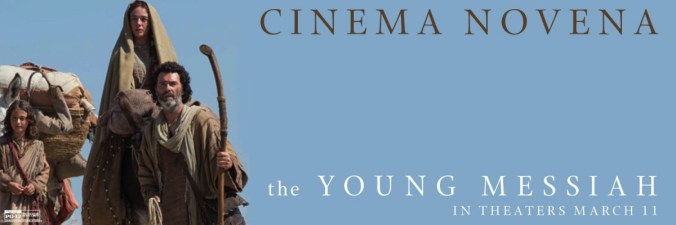
1500x500-cinema-novenaOne of the things that I’ve been helping with is getting the word out about the new film opening on Friday (March 11), The Young Messiah (you can find my review here), and also inviting people to make the online Cinema Novena: The Young Messiah, either as a novena to St. Joseph (if you start on March 11th and finish on March 19th, the feast of St. Joseph), or as a novena to the Holy Family which you can make anytime. The novena uses clips from the film, a Scripture reading, a reflection question, and a prayer. You can sign up here!

Since this is National Catholic Sisters Week,  through the week I’ll try to post and tweet interesting resources for those discerning religious life as I find them. My favorite so far is Sr. Clare Hunter’s Top Ten Reasons “I could never become a nun”,  a wonderful article that briefly addresses some of the reasons I’ve heard most often.

If you’re looking for a Lenten Discernment Retreat, it’s not too late to sign up for our Holy Week Retreat at the Daughters of Saint Paul in Boston, MA.

HolyWeekRetreat2016

Considerations on Discerning Consecrated Life

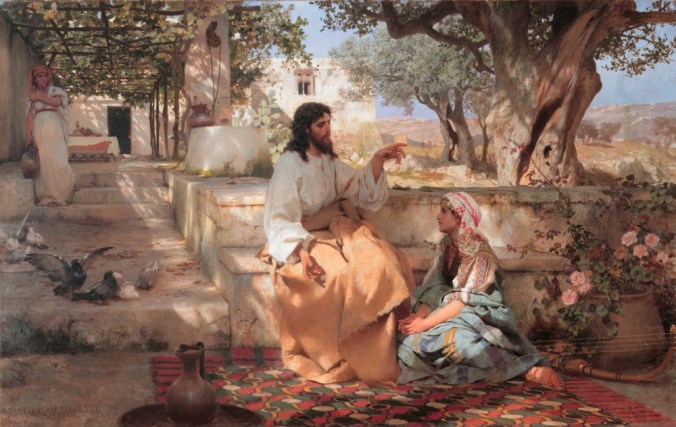
Christ with Martha and Maria by Henryk Siemiradzki, Public Domain

Christ with Martha and Maria by Henryk Siemiradzki, Public Domain

“In the unity of the Christian life, the various vocations are like so many rays of the one light of Christ…. It is the duty of the consecrated life to show that the Incarnate Son of God is the eschatological goal towards which all things tend, the splendor before which every other light pales, and the infinite beauty which alone can fully satisfy the human heart… By professing the evangelical counsels, consecrated persons not only make Christ the whole meaning of their lives but strive to reproduce in themselves, as far as possible, ‘that form of life which he, as the Son of God, accepted in entering this world….’

“By embracing chastity, they [religious] make their own the pure love of Christ and proclaim to the world that he is the Only-Begotten Son who is one with the Father (cf. Jn 10:30, 14:11). By imitating Christ’s poverty, they profess that he is the Son who receives everything from the Father, and gives everything back to the Father in love (cf. Jn 17:7, 10). By accepting, through the sacrifice of their own freedom, the mystery of Christ’s filial obedience, they profess that he is infinitely beloved and loving, as the One who delights only in the will of the Father (cf. Jn 4:34), to whom he is perfectly united and on whom he depends for everything. By this profound ‘configuration’ to the mystery of Christ, the consecrated life…acknowledges with wonder the sublime beauty of God, Father, Son and Holy Spirit, and bears joyful witness to his loving concern for every human being” — Vita Consecrata by Pope St. John Paul II, #16.

The Vocation to Consecrated Life

Consecrated life is a vocation in which the person commits themselves to Christ in a radical way—by vowing chastity, poverty, and obedience as a way of following Jesus more closely and more fully living their baptismal consecration. In Vita Consecrata #16, Pope St. John Paul describes religious life as “conforming one’s whole existence to Christ in an all-encompassing commitment.” For religious men and women, this total dedication of self to God through prayer and the service of others is lived together in community, sharing everything in common. Consecrated life also means that one’s love for God extends to God’s people: a religious must have the gifts of generosity and a universal heart, as the consecrated person is called to become a spiritual father or mother of many people.

To sum up: Consecrated life is a lifestyle of deep faith and a closer following of Christ, where one offers one’s whole self to God, serving others wholeheartedly without expectation of reward on this earth, living a poor, chaste, and obedient lifestyle which has its reward in heaven.

Diverse Forms of Consecrated Life

Consecrated life has many diverse forms, from cloistered religious nuns and monks, to active communities of religious men and women, to less familiar forms such as consecrated virgins and secular institutes. Some male religious communities are priests; others are a mix of  priests and brothers. The Catechism of the Catholic Church briefly describes each form of consecrated life, which I’ve referenced below according to paragraph numbers.  A more complete description of the different forms of consecrated life can be found in Pope St. John Paul II’s Vita Consecrata, paragraphs 6-12.

Secular institutes are lay people who live in and evangelize the world by living the evangelical counsels of poverty, chastity, and obedience, acting as “leaven of the Gospel” in the world. (See CCC #928-929)

Consecrated virgins and widows are called to serve the Church in a life of consecrated virginity or celibate chastity for the sake of the Kingdom of Heaven. This was an ancient way of life in the Church that was recently restored. (See CCC #s 922-924)

Hermits may or may not live the evangelical counsels but strictly separate from the world in order to live in union with Christ. (See CCC #s920-921)

Religious life has a variety of forms but each has the following characteristics: religious make a public profession of the vows of chastity, poverty, and obedience, live community life together, and witness to the spousal union of Christ with his Church. (See CCC #s925-927)

The Vocation to Religious Life

Religious life is the more common and visible form of consecrated life. There are two basic kinds of religious life—although they are not always clearly divided. Cloistered nuns and monks live a monastic religious life, usually structured around praying the full Divine Office. Their main apostolate or mission is to pray for the world, but they often take on certain tasks or apostolates that they can carry out on the side, in order to evangelize and to support themselves while still giving priority to the liturgy. “Cloistered” means that they live a hidden life, separated from the world, in order to pray and offer their lives for the salvation of others.

Active religious life includes the communities of sisters, brothers, and priests who are more visible and active in serving the world and the Church. These communities usually structure their prayer and life in common around their mission. Communities that dedicate themselves to nursing, teaching, and social work are usually active communities.

Some communities—like my own, the Daughters of Saint Paul—seek to blend the contemplative aspects of monastic life with the active apostolate of the active communities. Their prayer lives are similar to those of a nun or monk, but their days are dedicated to apostolic service. It’s a particularly beautiful and demanding expression of religious life.

Discerning which congregation or community God calls us to is part of the discernment for religious life. People realize that they are called to religious life in different ways: some will recognize the call and then start to look for a community or congregation. Other people meet a congregation, and on the basis of their attraction to that community’s way of life, will begin to discern a vocation to religious life. Some people are attracted to a particular mission; others focus on a community’s spirituality. What’s important to recognize is that a vocation to religious life includes a call to a particular community. Discerning religious life includes discerning which community God calls us to. In a future post, we’ll look a bit further at some practical steps that can be taken to discern which community one is called to.

In the meantime, browse www.vocationnetwork.org to see the huge variety of religious life and of consecrated life.

Particular Graces & Strengths of Religious Life

The framework for consecrated life, especially religious life, is being dedicated to God for the sake of humanity, being an apostle of God’s love sent to serve all humanity in the particular spirit of one’s community. The service may be primarily that of prayer (for a cloistered contemplative) or a combination of prayer and action. To live a genuine religious life a universal heart is needed: that is, the desire and ability to generously embrace and serve all people—not restricted to one’s family or neighbor or parish. With the vows of chastity, poverty, and obedience, a religious is called to be a spiritual mother or spiritual father to everyone. This universal love is well-expressed in religious who become missionaries, who go wherever they are needed.

Through their vows, religious men and women live a closer following of Christ with a special intensity. Obedience is a “deep listening” to God together that frees religious from their own egos and wills and unites them to the will of God. (Obedience sometimes requires a deeper faith to see the will of God in the superior’s decisions.) The vow of poverty frees a religious from material goods so that he or she can depend entirely on God, putting all of his or her trust in God, and proclaiming with a poor and simple lifestyle that God is the greatest Treasure. With the vow of chastity, a religious offers his or her heart completely to God. God’s intimate love that the religious contemplates daily becomes the source and impetus for enthusiastic, loving service of others.

Religious live their intense radical following of Christ together, sharing everything in common. “Little” virtues that help life together blossom—such as humility, generosity, patience, and living in ongoing conversion—can make community life a tremendous support on the journey.

As a lifestyle on a human level, religious life seems to include many sacrifices and fewer satisfactions. But the joys of belonging to Christ completely, of knowing the love of God so fully, and sharing the love of God with others, overshadows the sacrifices. This special witness to joy is a frequent characteristic of authentic religious life, and it’s a reminder to all Christians—including the religious—that the joy of heaven is the only true lasting joy.

Some Reflections on Religious Life

“Poverty is the greatest wealth, chastity is the greatest love, obedience is the greatest freedom.” — Blessed James Alberione

“Religious life is a life of more vivid faith.” — Blessed James Alberione

“Religious life has its roots deep in the Gospel… The religious state, which is a perfecting of the Christian life and the integral practice of the Gospel, seems all the more a paradox: the sacrifice of one’s own life in order to save it, giving up everything in order to gain everything. And in culmination of this paradox, poverty becomes wealth; abasement leads to exaltation; virginity bears life; servitude becomes freedom; sacrifice, beatitude; service, apostolate; death, life. “I have been crucified with Christ, and if I am alive, it is no longer I who live but Christ who lives in me.” The mystic crucifixion of the religious is accomplished by the three nails of poverty, chastity and obedience. And this, after the Mass and martyrdom, is the greatest and most meritorious act.” — Blessed James Alberione

“Invited to leave everything to follow Christ, you, consecrated men and women, no longer define your life by family, by profession, or by earthly interests, and you choose the Lord as your only identifying mark. Thus you acquire a new family identity.” —St. Pope John Paul II, Homily at the Jubilee of Consecrated Life, February 2, 2000

“To have your heart, affections, interests and feelings centered on Jesus is the most important aspect of the gift that the Spirit works within you. He conforms you to the chaste, poor and obedient Jesus. And the evangelical counsels, far from being an impoverishing renunciation, are a choice that frees a person for a fuller realization of his potential.” —St. Pope John Paul II, Homily at the Jubilee of Consecrated Life, February 2, 2000

“The life of prayer and contemplation founded on the Eucharistic mystery is also at the heart of the vocation of consecrated people who have chosen the path of the “sequela Christi,” to give themselves to the Lord with an undivided heart in an ever more intimate relationship with him. By their unconditional attachment to Christ and to his Church, they have the special mission to reminding everyone of the universal vocation to holiness … Consecrated men and women proclaim that God alone can give fullness to human existence.” —Pope Benedict XVI, 2006 Address to Canadian Bishops

“Is Jesus really our first and only love, as we promised he would be when we professed our vows? Only if he is, will we be empowered to love, in truth and mercy, every person who crosses our path. For we will have learned from Jesus the meaning and practice of love. We will be able to love because we have his own heart.” —Pope Francis, Apostolic Letter to All Consecrated People for the Year of Consecrated Life

“Be men and women of communion! Have the courage to be present in the midst of conflict and tension, as a credible sign of the presence of the Spirit who inspires in human hearts a passion for all to be one (cf. Jn 17:21). Live the mysticism of encounter, which entails ‘the ability to hear, to listen to other people; the ability to seek together ways and means.’ Live in the light of the loving relationship of the three divine Persons (cf. 1 Jn 4:8), the model for all interpersonal relationships.” —Pope Francis, Apostolic Letter to All Consecrated People for the Year of Consecrated Life

“We are called to know and show that God is able to fill our hearts to the brim with happiness; that we need not seek our happiness elsewhere; that the authentic fraternity found in our communities increases our joy; and that our total self-giving in service to the Church, to families and young people, to the elderly and the poor, brings us life-long personal fulfillment.”—Pope Francis, Apostolic Letter to All Consecrated People for the Year of Consecrated Life

Scripture Passages To Pray With:

  • Genesis 12:1-9 Call of Abraham
  • Matthew 19:16-30 The Rich Young Man
  • Luke 1:26-56 The Annunciation
  • Luke 5:1-11 “Put out into the deep”
  • John 1:35-51 “Come and see”
  • John 15:1-17 “You did not choose me but I chose you”

Considerations on Discerning Priesthood

 A Saintly Priest: Father Damien of Molokai Photo credited to Sacred Hearts Archives, Rome - http://www.hawaiimagazine.com/images/content/Damien_Hawaii_Saint_Molokai_Kalaupapa_canonization/Damien%20p1.jpg, Public Domain

A Saintly Priest: Father Damien of Molokai
Photo credited to Sacred Hearts Archives, Rome – In Public Domain

“In the unity of the Christian life, the various vocations are like so many rays of the one light of Christ, whose radiance “brightens the countenance of the Church….’  Sacred ministers, for their part, are living images of Christ the Head and Shepherd who guides his people during this time of “already and not yet”, as they await his coming in glory.” (Vita Consecrata, #16)

“The priestly vocation is essentially a call to sanctity, in the form that derives from the Sacrament of Holy Orders.  Sanctity is intimacy with God; it is the imitation of Christ, poor, chaste and humble; it is unreserved love for souls and self-giving to their true good; it is love for the church which is holy and wants us to be holy, because such is the mission that Christ has entrusted to it.  Each one of you must be holy also in order to help your brothers pursue their vocation to sanctity.” — Pope St. John Paul II, Rome, Italy, Homily on October 9, 1984

“His calling is a declaration of love. Your response is commitment, friendship, and love manifested in the gift of your own life as a definitive following and as a permanent sharing in his mission and in his consecrations.  To make up your mind is to love him with all of your soul and all of your heart in such a way that this love becomes the standard and motive of all your actions.  From this moment on, live the Eucharist fully; be persons for whom the Holy Mass, Communion, and Eucharistic adoration are the center and summit of their whole life.  Offer Christ your heart in meditation and personal prayer which is the foundation of the spiritual life.”  —Pope St. John Paul II, Valencia, Spain, November 8, 1982

“The world looks to the priest, because it looks to Jesus!  No one can see Christ; but everyone sees the priest, and through him they wish to catch a glimpse of the Lord!  Immense is the grandeur of the Lord! Immense is the grandeur and dignity of the priest!” —Pope St. John Paul II, Rome, Italy, October 13, 1979

The Vocation of Priesthood

Priesthood is the vocation of men who are ordained and consecrated to serving the People of God in persona Christi, or “in the person of Christ” who is Teacher, Priest, and King. Priests share in Christ’s ministry, building up the People of God as the Body of Christ and the Temple of the Holy Spirit.

Priests take the vow of celibacy, in order to be more closely configured to Christ and so that they can completely dedicate themselves to their priestly ministry. They also take a vow of obedience to their bishop (in whose priestly ministry they share). The primary areas of priestly ministry are teaching, governing and sanctifying the People of God. Key aspects of priestly ministry include:

  • administering the sacraments, especially celebrating the Eucharistic Sacrifice and absolving sins in the sacrament of Reconciliation
  • preaching the Word of God and explaining it
  • shepherding the People of God,  accompanying them on their journey

Because they are called to lead the People of God on the way of salvation, priests have a special obligation to a life of holiness. Their vocation to love is that of service, but rather than an exclusive service dedicated to their own family, priests are called to be fathers and shepherds to everyone. Their vocation can be summed up thus: A priest is called to be Christ for all whom he meets.

FrMark2sme

Here is an excerpt from Vatican II’s document on the priesthood, Presbyterorum ordinis, describing the purpose of the priesthood:

The office of priests, since it is connected with the episcopal order, also, in its own degree, shares the authority by which Christ builds up, sanctifies and rules his Body…. Priests, by the anointing of the Holy Spirit, are signed with a special character and are conformed to Christ the Priest in such a way that they can act in the person of Christ the Head…

The purpose, therefore, which priests pursue in their ministry and by their life is to procure the glory of God the Father in Christ. That glory consists in this—that men working freely and with a grateful spirit receive the work of God made perfect in Christ and then manifest it in their whole lives. Hence, priests, while engaging in prayer and adoration, or preaching the word, or offering the Eucharistic Sacrifice and administering the other sacraments, or performing other works of the ministry for men, devote all this energy to the increase of the glory of God and to man’s progress in the divine life. (#2)

To sum up, priests are called, ordained, and consecrated to God’s service, sharing in the very ministry of Christ himself, and continuing Christ’s presence in the world through celebrating the sacraments, proclaiming the Gospel, and shepherding the People of God throughout their lives. They are dedicated in a particular way to the service of the Church.

Particular Graces & Strengths of Priesthood

The framework for priesthood is a celibate life dedicated to ministry. Presbyterorum ordinis highlights several virtues or characteristics that are especially helpful for priestly ministry:  goodness of heart, sincerity, strength and constancy of mind, zealous pursuit of justice, and affability. In talking to priests, Pope Francis often highlights the importance of the priest’s relationship to Christ, the priest’s closeness to the people he serves, his dedication to service, and personal integrity and humility as key aspects of what it means to be a priest.

Pope Francis’s recent reflections on the priesthood are helpful in understanding how important human formation and the family, closeness to Christ and his flock, and the call to serve, are to the life and vocation of every priest. You may wish to bring his thoughts, as well as the Scripture passages below, to prayer.

A good priest, therefore, is first of all a man with his own humanity, who knows his own history, with its riches and its wounds, and who has learned to make peace with it, reaching an underlying serenity, that of a disciple of the Lord. Human formation is therefore a necessity for priests so that they learn not to be dominated by their limitations, but instead to build on their talents…

We priests are apostles of joy, we proclaim the Gospel, that is, the “good news” par excellence; it is certainly not we who give strength to the Gospel — some believe that —, but we can either help or hinder the encounter between the Gospel and people. Our humanity is the “earthen vessel” in which we safeguard the treasure of God, a vessel which we must take care of, in order to properly pass on its precious content.

A priest cannot lose his roots; he always remains a man of the people and of the culture that engendered him. Our roots help us to remember who we are and where Christ has called us.

Answering God’s call, you become a priest to serve your brothers and sisters. The images of Christ that we take as a reference for the ministry of priests are clear: He is the “High Priest”, close in the same way to God and to mankind; he is the “Servant”, who washes feet and who becomes a neighbor to the weakest; he is the “Good Shepherd”, who always has as his goal the care of the flock.

There are three images that we should look to when thinking about the ministry of priests: sent to serve men, to help them obtain the mercy of God, and to proclaim his Word of life. We are not priests for ourselves, and our sanctification is closely linked to that of our people, our unction for their unction; you are anointed for your people….The good that the priests can do is born mainly from their closeness and their tender love for people. They are neither philanthropists nor officials; priests are fathers and brothers. The fatherhood of a priest does so much good.

Closeness, the depths of mercy, a loving gaze: to experience the beauty of a life lived according to the Gospel and the love of God, which is also made concrete through his ministers. God never refuses. —Address of Pope Francis, Nov. 20, 2015

Resources for Prayer and Reflection About the Vocation to Priesthood

Here are a few Scripture passages to pray with, that could be helpful for someone  discerning his vocation to the priesthood.

  • Exodus 3:1-15 Call of Moses
  • Isaiah 42:1-7 “I have given you as a covenant to the people, a light to the nations”
  • Matthew 9:35-38 “The harvest is plentiful, but the laborers are few”’
  • John 13:1-15 Jesus washes the feet of the disciples
  • 1 Peter 2:4-10 “Let yourselves be built into a spiritual house, to be a holy priesthood”
  • Hebrews 4:12-16 “Let us confidently approach the throne of grace to receive mercy and favor”
  • Hebrews 5:1-10 “You are a priest forever”

If you are reading this blog but not discerning priesthood, join me in taking a few moments to  pray for future priests: those currently discerning, and those who have not yet received Jesus’ invitation to become a priest. 

Connecting Lent & Discernment: 2 Amazing Journeys

sand-768783_1280Today is Ash Wednesday, the first day of an amazing six-week opportunity for a spiritual “makeover,” for deepening our relationship with God, for experiencing anew God’s great mercy.

So many connections between our discernment journey and our Lenten journey are immediately obvious. Any time that we focus on renewing, revitalizing, and deepening our relationship with God, our ability to discern is also going to grow. This Lent, in addition to making the 7 Qualities of Mercy online mini-retreat, I have decided to focus my Lent around listening. Listening is a wonderful quality that is a prerequisite for genuine communication—with God first of all, but also with self and with others.

Pope Francis talks about the importance of listening in our relationships in this year’s Message for the 50th World Communications Day:

Communicating means sharing, and sharing demands listening and acceptance. Listening is much more than simply hearing. Hearing is about receiving information, while listening is about communication, and calls for closeness. Listening allows us to get things right, and not simply to be passive onlookers, users or consumers. Listening also means being able to share questions and doubts, to journey side by side, to banish all claims to absolute power and to put our abilities and gifts at the service of the common good.

Listening is never easy. Many times it is easier to play deaf. Listening means paying attention, wanting to understand, to value, to respect and to ponder what the other person says. It involves a sort of martyrdom or self-sacrifice, as we try to imitate Moses before the burning bush: we have to remove our sandals when standing on the “holy ground” of our encounter with the one who speaks to me (cf. Ex 3:5). Knowing how to listen is an immense grace, it is a gift which we need to ask for and then make every effort to practice.

You might have noticed that Pope Francis talks about listening as a form of self-emptying love, similar in a way to Jesus’ kenosis in taking on our human nature and in dying on the cross. Listening can be a sort of martyrdom. In truly listening, we can imitate Jesus’ self-giving, sacrificial love for us, by putting ourselves and our agendas aside and becoming deeply receptive to whomever we are listening to. Deep listening enables us to become aware of the sacredness of the other. Even if we are just having an ordinary, everyday conversation, deep listening takes us beyond the surface to glimpse the depth of someone else’s humanity and thus, how beloved they are by God.

Lent is a time to die to ourselves so that we can rise with Christ. Learning to listen better is a concrete way to die to self and to welcome the other in a genuine encounter of love and mercy. When we really hear one another, we are more likely to respond to them with compassion, gentleness, and mercy. As attentive listeners, we can discover God speaking to us—not just in prayer and in his Holy Word, or within ourselves in the depths of our own hearts—but especially in the words and unspoken longings and vulnerabilities of others with whom we relate.

Deep listening will enrich our discernment journey, eventually becoming more and more foundational to our prayer and our daily seeking the will of God.

* * *

Join me in making the 7 Qualities of Mercy Online Mini-Retreat.

7 QUALITIES FB

Considerations on Discerning Marriage

“Every Christian vocation becomes a revelation of Christ
and his love for humanity.”

Discernment: Acquiring the Heart of God by Father Marko Ivan Rupnik

“In the unity of the Christian life, the various vocations are like so many rays of the one light of Christ, whose radiance brightens the countenance of the Church. ‘The laity, by virtue of the secular character of their vocation, reflect the mystery of the Incarnate Word particularly insofar as he is the Alpha and the Omega of the world, the foundation and measure of the value of all created things.’ ” (Consecrated Life by Pope St. John Paul II, #16)

marriage-451596_1280

The Vocation of Marriage

Marriage is a beautiful vocation which is “written into” our human nature. Most human beings are called to marriage, because as humans we find our fullest human completion in that covenant of love, that special union between a man and a woman. This mutual love of a man and a woman is an image of God’s love for humanity and of Christ’s love for the Church. The purpose of marriage is twofold: the mutual support of the spouses and the procreation and raising of children.

The Sacrament of Matrimony has a special dignity as a sacrament. Husbands and wives are called to live out their baptismal call to holiness through their self-giving love to each other and to their children. Their “way” to holiness is with and through each other. By virtue of their Baptism, married couples are lay members of the Church. They are called to: “seek the Kingdom of God by engaging in temporal affairs and directing them according to God’s will…. The laity consecrate the world itself to God, everywhere offering worship by the holiness of their lives” (Lumen gentium, #31).

Here is the full paragraph from Vatican II’s Lumen gentium, comparing the “mission” of priests, those in consecrated life, and the laity:

What specifically characterizes the laity is their secular nature. It is true that those in holy orders can at times be engaged in secular activities, and even have a secular profession. But they are by reason of their particular vocation especially and professedly ordained to the sacred ministry. Similarly, by their state in life, religious give splendid and striking testimony that the world cannot be transformed and offered to God without the spirit of the beatitudes. But the laity, by their very vocation, seek the kingdom of God by engaging in temporal affairs and by ordering them according to the plan of God. They live in the world, that is, in each and in all of the secular professions and occupations. They live in the ordinary circumstances of family and social life, from which the very web of their existence is woven. They are called there by God that by exercising their proper function and led by the spirit of the Gospel they may work for the sanctification of the world from within as a leaven. In this way they may make Christ known to others, especially by the testimony of a life resplendent in faith, hope and charity. Therefore, since they are tightly bound up in all types of temporal affairs it is their special task to order and to throw light upon these affairs in such a way that they may come into being and then continually increase according to Christ to the praise of the Creator and the Redeemer.                 -Lumen gentium, #31

To sum up, married spouses are called to find salvation and help each other to grow in holiness, to give life their children and then to raise their children with love, educating them in their faith. An essential part of their vocation is to sanctify the secular—to bring Christ into every aspect of human life and work in which they are engaged.

Particular Graces & Strengths of Marriage

The framework for married life is, of course, the family. At the beginning of his apostolic exhortation on the family, St. John Paul encourages us to discover “the beauty and grandeur of the vocation to love and the service of life.”

The love of spouses and parents requires great generosity, patience, and self-sacrifice. A mother and father’s love is exclusive and particular: centered on God, that love is to be primarily expressed through love of one’s spouse and children. In his general audience addresses, Pope Francis lists the virtues that spring from a family spirit—virtues which are especially nurtured in the family and which our world desperately needs—loyalty, sincerity, trust, cooperation, and respect.

Pope Francis has a particularly direct and grounded way of speaking about the vocation of the family. He reminds us frequently that the family is called to forgiveness and to share its love beyond itself, to be inclusive: to extend the mercy of God to all of those who are abandoned, who do not have a home, who do not “belong.” He encourages families to live their vocations because in so doing, these family values “spill over” into the world.

Resources for Prayer and Reflection About the Vocation of Marriage

From Scripture:

Genesis 1:26-31 “God created humankind in his image”

Genesis 2:18-25  “Therefore a man leaves his father and his mother and clings to his wife, and they become one flesh.”

John 2:1-11 “Jesus and his disciples had also been invited to the wedding.”

Ephesians 5:21-33 “ ‘For this reason a man will leave his father and mother and be joined to his wife, and the two will become one flesh.’ This is a great mystery, and I am applying it to Christ and the church.”

* * *

Pope Francis speaks simply and eloquently about the gift of and vocation of the family. Perhaps these gems from his recent talks–especially at the 2015 World Festival of Families–can help us reflect further on the beauty of the vocation of marriage and family:

God’s Special Love for the Family
“All the love God has in himself, all the beauty God has in himself, all the truth God has in himself, he entrusts to the family. A family is truly a family when it is capable of opening its arms to receive all that love.”

The Family Gives Us Hope
“In families, there are difficulties. In families, we argue; in families, sometimes the plates fly; in families, the children give us headaches. And I’m not even going to mention the mother-in-law. But in families, there is always, always, the cross. Always. Because the love of God, of the Son of God, also opened for us this path. But, in families as well, after the cross, there is the resurrection. Because the Son of God opened for us this path. Because of this, the family is — forgive the term I’ll use — it is a factory of hope, of hope of life and of resurrection. God was the one who opened this path.”

The Family: God Does Not Want Us To Feel Alone
“The family is the great blessing, the great gift of this ‘God with us,’ who did not want to abandon us to the solitude of a life without others, without challenges, without a home. God does not dream by himself, he tries to do everything “with us”. His dream constantly comes true in the dreams of many couples who work to make their life that of a family.”

The Family is God’s Dream for Humanity
“That is why the family is the living symbol of the loving plan of which the Father once dreamed. To want to form a family is to resolve to be a part of God’s dream, to choose to dream with him, to want to build with him, to join him in this saga of building a world where no one will feel alone, unwanted or homeless. As Christians, we appreciate the beauty of the family and of family life as the place where we come to learn the meaning and value of human relationships… We learn to stake everything on another person, and we learn that it is worth it.” – Pope Francis, remarks at Prayer Vigil for the Festival of Families

The “Little Way of Love” in the Family
Love is shown by little things, by attention to small daily signs which make us feel at home. Faith grows when it is lived and shaped by love. That is why our families, our homes, are true domestic churches. They are the right place for faith to become life, and life to grow in faith.

Jesus tells us not to hold back these little miracles. Instead, he wants us to encourage them, to spread them. He asks us to go through life, our everyday life, encouraging all these little signs of love as signs of his own living and active presence in our world…. At home do we shout at one another or do we speak with love and tenderness? This is a good way of measuring our love. – Pope Francis, Homily at Mass for the Festival of Families

The expressions…“may I?”, “thank you”, and “pardon me”…open up the way to living well in your family, to living in peace. – Pope Francis, General Audience, May 13, 2015

A marriage is not successful just because it endures; quality is important. To stay together and to know how to love one another forever is the challenge for Christian couples. What comes to mind is the miracle of the multiplication of the loaves: for you too, the Lord can multiply your love and give it to you fresh and good each day. He has an infinite reserve! He gives you the love that stands at the foundation of your union and each day he renews and strengthens it. And he makes it ever greater when the family grows with children. On this journey prayer is important, it is necessary, always: he for her, she for him and both together. Ask Jesus to multiply your love. In the prayer of the Our Father we say: “Give us this day our daily bread.” Spouses can also learn to pray like this: “Lord, give us this day our daily love,” for the daily love of spouses is bread, the true bread of the soul, what sustains them in going forward. And the prayer: can we practice to see if we know how to say it? “Lord give us this day our daily love” – Pope Francis, Address to Engaged Couples Preparing for Marriage, February 14, 2014

Reflection questions:

  • God creates each person in his image, but it is in the union between one man and one woman that God’s image is most clearly made visible. How do I understand the beauty, strengths, and challenges that are inherent in married life? Do I feel invited to reflect the love of God through marriage with…?
  • “It is not good that the man should be alone.” I am not called to live my vocation to love alone. How is Jesus inviting me to bring forth new life and to build communion in the world?

The best vocation is…

Ruth Sharville [CC BY-SA 2.0 (http://creativecommons.org/licenses/by-sa/2.0)], via Wikimedia Commons

Ruth Sharville [CC BY-SA 2.0 (http://creativecommons.org/licenses/by-sa/2.0)%5D, via Wikimedia Commons

What is the best vocation?

That’s a trick question. Of course, the best vocation is the vocation God calls us to.

But is any vocation—objectively speaking—a higher or better calling than the others? This is a fascinating question that has been hotly debated through the ages. Especially in the Middle Ages, where people were preoccupied with order and hierarchy of importance even in spiritual matters, consecrated life was sometimes described as a higher calling. At least since the Council of Trent (and even in Saint Paul’s letters), various Church documents state that consecrated life should be considered a “higher” calling: living the evangelical counsels of poverty, chastity, and obedience is the closest way to imitate Jesus during his life on earth. Living these evangelical counsels also prepares us to anticipate eternal life in heaven.

Personally, it seems to me that if any vocation could be considered a “higher” calling, it would be priesthood, because the priest celebrates the Eucharist every day. However, most comparisons are between religious life versus either married life or diocesan priesthood. Even recent documents refer to the “objective superiority” of the consecrated lifestyle that more clearly and closely reflects Christ’s way of life while here on earth. (You can check out St. John Paul II’s Consecrated Life, paragraph #32). In many ways, it’s helpful to highlight the beauty and importance of consecrated life because it is a more hidden vocation, and marriage is the vocation we are all inclined to. Even those called to religious life may sometimes not consider religious life unless they receive special encouragement.

However, all of this discussion about the “higher” calling is academic at best, and for some it can be deceptive. Idealistic young people might be tempted to search for the “best” vocation, and can make a superficial conclusion that they should follow the “highest” calling—consecrated life—simply out of a desire to be the best.

All of us want to live the “best” vocation. We need to remember:

  • Objectively, a “higher” vocation is different from which vocation is subjectively the best for us. (There’s even a difference between the meaning of the words, “higher calling,” and “best calling,” but we won’t go into that here.)
  • While striving for excellence and greater closeness to Christ is praiseworthy, truly the “best” vocation for each of us is the vocation God calls us to. (Obedience to God is better than the biggest sacrifice. If you need convincing, read 1 Samuel 15:22.)
  • All vocations are beautiful; all vocations are calls to great holiness. Each vocation has different graces, challenges, and gifts.

The Catechism of the Catholic Church clearly supports the approach that the best vocation for us is the one God calls us to. The Catechism (CCC) makes it clear that every vocation is not only important and necessary in God’s plan, but that every vocation has equal dignity. In addition, each vocation faithfully lived  supports the other vocations. (See The Catechism of the Catholic Church  (CCC), #s 871-873.) The Catechism specifically talks about all of the vocations as coming from God, who gives them meaning and gives us the grace to live whichever vocation he has called us to (CCC #1820). Here are a few highlights:

  • The priest is to make the presence of Christ visible and to serve the faithful, helping all believers to grow in the grace of their Baptism (CCC #s1536ff).
  • Religious life is a more intimate expression of the consecration of our Baptism (CCC #916).
  • Marriage is written in our nature as human beings, was created by God and raised to the dignity of a sacrament (CCC #s1601ff).

In our next few posts, we’ll explore some of the general graces, beauties, and challenges of the three vocations of marriage, priesthood, and religious life.  The Church offers a lot of resources to reflect on these three, and I’m hoping that highlighting some of the beauty and gifts of each vocation will be helpful for those who are either just beginning their vocational discernment, or are struggling to move forward.

At this point, I couldn’t possibly cover all the variations of vocations, so these are the three I’ll focus on for now.  Because the post for each vocation is quite lengthy, I might be posting a little less frequently. Later, or perhaps in my book, I hope to include reflections from individuals who are living each vocation. 

Partners in Our Discernment

By Photographes du National Geographic (http://natgeofound.tumblr.com/) [Public domain], via Wikimedia Commons

By Photographes du National Geographic http://natgeofound.tumblr.com/ Public domain, via Wikimedia Commons

We may begin our vocational discernments on our own. But at some point, hopefully early on in our discernment, we start discerning with our partners in our discernment.

Discerning with others who share our call is important because we do not have a right to any vocation: a vocation is a gift, a call from God, a gift. Those who share our calling discern with us if God is calling us to this particular vocation.

If we are discerning marriage, we can only discern on our own up to a certain point. Even if we are pretty sure that we are called to marriage, we cannot truly discern our vocation to marriage until we meet a possible future spouse, with whom we discern our marriage together. Marriage is a vocation undertaken together with our spouse, and that spouse has an equal voice in the discernment. The other person, too, needs to discern if God is calling him or her to marriage with this particular person. The Sacrament of Matrimony is a covenant made with a spouse before God and the Church. The spouse, therefore, has the duty and privilege to discern their call from God as well. And the Church has a responsibility to bless, confirm, and witness to that covenant, ensuring that both spouses are freely entering into this covenant with full understanding of what it means.

If we are discerning priesthood or religious life, the Church is our co-discerner, with equal say in our discernment. At first, this may surprise us. Aren’t we supposed to follow God’s call no matter what? Yes, but priesthood and consecrated life are calls from God to a specific ministry or mission within the Church. The Church helps us to discern if God is indeed truly calling us to this vocation, and entrusts this task to certain people: the bishop and director of the seminary in the case of diocesan priesthood, the superior and vocation director of the community in the case of consecrated life.

Priesthood and consecrated life are gifts, just as marriage is a gift. Having the Church as our partner or co-discerner is a great source of strength and support in our vocation. When the Church, through the vocation director, confirms our understanding of God’s call, this confirmation can help anchor us in God’s will during times of darkness, doubt, and struggle.

When we are concerned about “making a mistake” in our vocational discernment, our partners in discernment offer necessary reassurance. Our vocational discernment is something we are responsible for, and we need to take it seriously, but it’s not all up to us. Our vocation is a call from God, and God will give us every help in discovering and following our vocation, including the support of the Church—through our potential spouse, the bishop or superior, our vocation director, and our spiritual director.

Discernment Opportunities with the #MediaNuns

As we conclude the Year for Consecrated Life tomorrow (February 2, 2016), I wanted to share a few things about my community, the Daughters of Saint Paul, for those of you reading this blog and discerning religious life.

First, here’s a little video about our community and our spirit:

Secondly, our annual #Discernment Retreat during Holy Week is coming up, if you’d like learn more about our Pauline life and mission:

HolyWeekRetreat2016

Third, if you are interested in learning more about the Daughters of St. Paul, you can connect with us in many ways, including our website, which has many discernment resources: www.daughtersofstpaul.org/vocations

When and How To Share Our Vocational Discernment with Family

We continue exploring how we can best share our vocational discernment with our family, continuing from our last post. 

people-mother-family-father

3) Our previous and current role in our family is part of our vocational discernment. Praying about our previous role in our family helps us to understand ourselves better. Praying about our current role in our family enables us to see how our vocational choice will affect our family, and how God might be calling us through our family.

For example, if our family relies on us for food and shelter, or one particular family member relies on us for day-to-day care, this is a special circumstance that we need to take into account. If the obligation or need is temporary, then we can discern after we are no longer needed (for example, after a younger sibling turns 18). If instead the need is permanent or ongoing, then the discernment might include looking at other ways the family’s needs can be met. For example, if someone is an only child with an elderly parent who is suffering from a severe medical condition, God may indeed be calling that person to to take care of their elderly parent, which is their mission at this time in their lives. Or, if we are discerning marriage, perhaps staying close to one’s parents—even including our parents in our new living arrangements—can become an important part of our discernment.

If we are supporting the family by providing, or helping to provide, food and shelter, that could be another indication that God is calling us to take care of our family, at least for now. But if the burden of the family’s support is resting solely or primarily on our shoulders, and others in our family could contribute but aren’t doing so, then that becomes part of our discernment too.

Being an only child highlights one’s responsibility towards elderly parents in our vocational discernment. Rather than ignore this, we bring it into our active discernment. (For example, someone who is an only child may discern to enter a religious community that is physically near their parents and allows frequent visits, rather than becoming a missionary on another continent.) Many “only children” are called to priesthood, religious life, or marriage. Whatever our relationship and role in our family, we need to discern how God is calling us.

God doesn’t call us to turn our back on genuine familial obligations, but Jesus speaks very strongly in the Gospel about the primacy of God’s call in our life—that God comes first. (See Matthew 8:18-22; Matthew 10:34-39; Matthew 12:46-50; Matthew 19:27-30; Mark 1:16-20; Mark 10:24-32; Luke 2:41-52; Luke 9:57-62; Luke 14:25-27. ) If we are struggling to understand our responsibility to our families during our vocational discernment, we may want to pray with some of these specific passages, as well as consult especially about this with our spiritual director.

4) Involving our family in our discernment doesn’t mean living up to their expectations. However, it does mean being sensitive to their concerns and needs, especially when we initially talk to our family members about our discernment. Their feedback and advice can be helpful, especially when we know they, too, are seeking God’s will. But even in the best of families, parents or other family members may resist our following our vocation, especially at the beginning. Perhaps they don’t like our chosen future spouse. Or perhaps they simply don’t want to lose daily or close contact with a loved child/sibling. To help our family accept our vocation, we can:

a. Explain our motivations
b. Explain what is truly involved (especially when aspects of our vocation are unfamiliar to them, such as priesthood or religious life, or our future spouse lives outside the country)
c. Talk about the next steps we will take to follow our vocation

Being open and explaining our motivation can help our family to see that we have considered and discerned well, that we are convinced that God is truly calling us in this way, and to understand what our following our vocation means for them.

In some cases, one or more family members may simply be opposed to our vocation. Once we have truly discerned our vocation, we cannot let  their opposition prevent us from doing God’s will. Discussion and further explanation may not be helpful in some cases. Although our path may feel lonely and hard without the support of our family, above all, we want to seek God’s will. When we do this, God will not just bless us, but God will bless our family as well.