#Discerning Obedience: Path To Freedom

riding-768586_1280Freedom

“No one else can tell me what to do: I value my freedom too much.”

Obedience is not popular today, although everyone is called to practice this virtue. In terms of religious life, it’s probably the hardest vow to understand in our individualistic culture when resistance to or rebellion against authority is so often seen as a virtue. Mistrust of institutions and of authority, due to a heightened awareness of the abuse of power, makes it hard to see the value of promising to obey any superior. In addition, true freedom is often misunderstood, equated with no limitations.

Genuine freedom is not:

  • living without restrictions or constraints
  • the ability to cater to every personal whim
  • doing whatever we feel like doing whenever we feel like doing it.

Genuine freedom is the ability to make choices in accord with our deepest identity as God’s beloved one, no matter what our situation is. Real freedom is choosing to love, no matter what external constraints or inner pressures we face.

The Paradox of Obedience

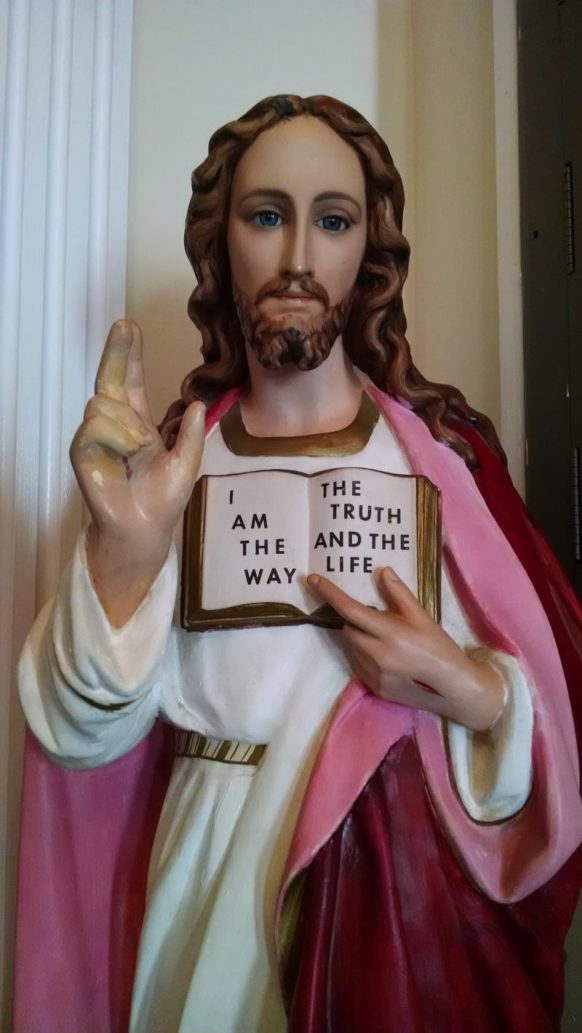
The vowed obedience of priests and religious conforms us to Christ, who sought only to do the will of the Father. With this vow, we, like Christ, seek to live God’s will.

Ironically, the greatest limits to our freedom often come not from outside of us, but from within us. We are driven by self-serving needs and wants, often without knowing it. We say we’re doing something because “it’s what God wants,” or “it’s the right thing to do,” but actually most of what we do is at least partly self-serving. I may pray and work really hard to prepare a retreat or book that can change lives, and this is mostly a labor of love. But sometimes I find I also have a few motivations “on the side,” including a desire for appreciation. To want a little appreciation is a normal human desire. But when this desire is exaggerated so that we become driven by it to the  point that it shapes our choices, we have become enslaved by our need for the good opinions of others.  Our sinfulness, our pride, our weakness, our greed, the need to be right or useful or to dominate others often drive us to take certain actions. In reality, these interior forces are chains binding us, preventing us from living full freedom!

The paradox of obedience is that, in “giving up” our will, or seeking to align our will to God’s will, we become most fully free.

Obedience frees priests and religious from both external and internal constraints that would prevent us from fully living God’s will. With the vow of obedience, God’s will becomes ours.
JesusMasterCAIMG_20150128_115949266Conformity to Christ

Like the other vows, obedience is a journey, freeing the priest and religious to follow Jesus more wholeheartedly, to do God’s will completely, in every aspect of his or her life. In a most profound way, the vow of obedience enables the religious to live in union with God, completely offering their whole being—including their will—to God.   

In popular culture, a sister’s, brother’s, or priest’s obedience to God directly or through religious superiors is often portrayed as mindless. But mindless obedience is not genuine obedience, which is the submission of our whole being to God–mind, will, heart, and strength! However it is true, as any believer can attest, that God’s ways don’t always make sense to us. Human beings will always experience an element of mystery in God’s plan for creation. In his Letter to the Romans, Saint Paul wrestles with the question of why his fellow Jews rejected Christ, but he concludes his two chapters of anguish and attempts to understand with one of the most beautiful hymns of praise to God’s inscrutable wisdom.

“O the depth of the riches and wisdom and knowledge of God! How unsearchable are his judgments and how inscrutable his ways! ‘For who has known the mind of the Lord? Or who has been his counselor?’ ‘Or who has given a gift to him, to receive a gift in return?’ For from him and through him and to him are all things. To him be the glory forever. Amen” (Romans 11:33-36).

It’s also true that obeying God through human authority sometimes doesn’t seem to make much sense. I have to confess that, even after 25+ years of vowed obedience, my opinions and way of doing things almost always seem better to me. The vow of obedience of priests and religious often takes more faith to live, because many aspects of our lives are decided by superiors who speak with the authority of God.* More than once, my transfer or apostolic assignment made no sense to me until later. I’ve also  found that when I’ve obeyed in something that I’ve been asked to do, it may not have been easy, but I’ve learned more and been pushed to be more creative and industrious than I would have otherwise. And, I often see that it brings great spiritual fruit to others.

Finally, there are also the times when the faith and suffering that accompany obedience become a means God uses to bless others. We are the Mystical Body of Christ, and obedience to God is always blessed.

Obedience is still the hardest vow for me to live well. But it’s also the vow that gives me the greatest freedom. And I treasure this vow in a special way because of how directly it helps me to live in union with Christ who said, “My food is to do the will of him who sent me and to complete his work” (John 4:34).

*As I’ve covered elsewhere, if a superior tells a sister or priest to do something wrong or sinful, they are obviously not speaking with God’s authority.

#Discerning the Vow of Poverty

“I couldn’t do without my…car, own place, movie collection, ____________.” In the poll I ran recently, this statement was checked off by a number of people as a main reason that they don’t consider religious life. That’s not surprising in our culture, which is materially obsessed.

pexels-photo-house-106399

When I entered the convent, I was too young to own a house or a car. But I did give away my music collection, my books, and pretty much everything I owned except a few clothes and some holy cards which I brought with me. Was it easy? Not at first. But it was incredibly freeing. I see the vow of poverty as an amazing trade: as religious, we “trade in” the right to possess material goods, and we receive the gifts of a unique intimacy with and a closer following of Christ.

(As an aside, poverty has many practical benefits for a religious too—for example, poverty helps me to be available to be sent on mission anywhere, because I’m not tied to personal possessions or particular places.)

I think that the vow of poverty is perhaps the easiest vow to understand today. People are more aware of the extremes in the lifestyles of the minority who are wealthy and the vast numbers of people who are poor. The stats for global hunger and poverty are shocking:

  • nearly half of the world’s population (3 billion people) live in poverty
  • over 1 billion of the people living in poverty are children
  • 22,000 children die every day because they are too poor to receive what they need
  • hunger is the #1 cause of death in the world today
  • more than 750 million people do not have adequate access to clean drinking water*

* These statistics are taken from the website: https://www.dosomething.org/us/facts/11-facts-about-global-poverty, accessed June 9, 2016.

person-homeless-woman-sitting-old

Sharing what we have with others is the only way that everyone will have what they need. Choosing to make sacrifices—giving up material possessions—in order to provide necessities of life for others is fairly common, but it needs to become part of the everyday life of every Christian—actually, of every person in the world who has a secure place to live, and enough to eat and drink. Religious life is not just a helpful witness to encourage others to share like this, but as religious, we live in genuine solidarity with those who live in material and spiritual poverty.

Other easily-understood motivations for living a poor or simple lifestyle are:

  • Living the vow of poverty is a way of life that preserves or restores the resources of the earth, which is part of the Church’s official social teaching.
  • Pop culture today advocates the wisdom of simplifying or de-cluttering our lives as helpful in living with greater focus and purpose.

The Religious Vow of Poverty

Sr. Carly Paula, FSP, making her first profession

Sr. Carly Paula, FSP, making her first profession

The main reason a religious takes the vow of poverty is to more closely imitate Christ, the Poor One, both in his poverty and in his absolute trust in the Father. For me, the vow of poverty is not always easy, but I have found it helpful and freeing on so many levels:

  • A religious has nothing of his or her own, but shares everything in common with his or her community. The community then provides for the needs of each religious. It’s not that I’m completely free of financial concerns, because I am a responsible member of the community. Rather, it’s that I share this burden with my superiors and my community in discerning expenses together.
  • Most of my community’s resources go into our mission of evangelization with the media, but we share whatever we can with those who suffer from genuine want. With my vow of poverty, I live in solidarity with those who are “on the margins” of life—those suffering from spiritual and material poverty.
  • There’s a certain comfort and security in possessing materials goods, but this very security can become like a fog blinding me, preventing me from taking risks, and restricting my freedom. The vow of poverty clears away the “fog” of  today’s materially obsessed culture and enables me to focus on Christ as my Treasure.
  • On a spiritual level, poverty helps me to continually renew my trust in God, so that I learn to rely on God for everything, in every situation.
  • Poverty is very freeing spiritually: it frees my heart from possessions, from the need to possess, from greedy grasping for stuff, and from attachment to even interior things like my opinions and pride. Poverty helps me to be grateful for the most valuable things in life—which are certainly not material possessions—but my relationship with God, the sacraments, the people in my life, and my vocation.

My Personal Confession

My two biggest ongoing struggles with living authentic poverty are books and tools for our mission. Books—especially books of theology and spirituality—are a real weakness of mine. Not only do I love to read, but we are encouraged to have a shelf or two of books—the writings of our Founder, the resources we need to do our mission, books that we have used in our studies that we foresee using again in the near future. With my work of writing and giving workshops on a variety of subjects, it’s handy to have a large library. So every couple of years I need to re-discern the choices I’ve made with regard to books, and give away what is truly not needed.

By Jorghex (Own work) [ CC-BY-SA-3.0 (http://creativecommons.org/licenses/by-sa/3.0/)], via Wikimedia Commons

By Jorghex (Own work) [ CC-BY-SA-3.0 (http://creativecommons.org/licenses/by-sa/3.0/)%5D, via Wikimedia Commons

Because our mission of evangelization involves the media, using technology is essential. Our Founder wanted us to have “the latest means” so that we could reach the greatest number of people with the Gospel. But sometimes certain aspects of our mission would be easier with the “latest gadget.” For example, a smart phone is essential for my work in social media. But do I really need the latest iPhone model? The discerning answer to this for me is: I need a solidly functional smart phone to effectively use social media, but I certainly don’t need the latest model.

The Vow of Poverty in 5 Words:

Blessed James Alberione, the Founder of the Pauline Family, said, “Poverty is the greatest wealth.” I have found this to be true because living the vow and virtue of poverty enables me to consistently focus on Christ Jesus as my greatest Treasure—my only Treasure—and to dedicate all my efforts to living my vocation of growing in union with Christ and in serving his people.

Inspiring Vocation Story from a Daughter of Saint Paul

I’m delighted to share with you this lovely vocation story of Sr. Maria Kim, FSP, who recently made her perpetual profession in the Daughters of Saint Paul. Not only is she very open about the steps of her discernment, but there are “tips” and feedback from other young women who  witnessed Sr. Maria Kim’s perpetual profession while discerning religious life.

As you enjoy her inspiring story, pray for young people discerning their vocations, that they may have the same openness and joy to Christ’s call of love.

http://www.youtube.com/watch?v=SQMHexekBrs

#Discernment: Is the Vow of Chastity Too Hard To Live?

In the responses to the poll about obstacles to considering priestly or religious life, the obstacles that came up repeatedly were the vows.  Although we looked at them briefly in the post about religious life, I thought that perhaps sharing some personal experience of living these vows could show the beauty and value of consecrated life.

Religious life is meant to be a life directed towards a closer following of Christ—carrying the cross with Jesus here on earth, trusting in God’s loving providence to draw us closer to himself, both here and in eternity. Every vocation has its call to sacrifice and heroism, but the constancy of the sacrifices in religious life have led some to call it  “a slow martyrdom.” That has less to do with the conspicuous sacrifices of the vows, and more to do with laying down lives in service to others. It’s the vows that give religious the freedom to love with an undivided heart.

“Celibacy is too hard.”

Celibacy is hard. I don’t deny it. Every human being is created for the intimacy of spousal love, and celibacy is giving up the physical expression of spousal love. Renouncing the physical intimacy of sex for the sake of Christ and his kingdom is a real sacrifice. Celibacy means not having the unconditional support of one’s spouse, nor having someone in your life who is always there for you. Celibacy (or consecrated chastity as it is often called) means times of loneliness.

However, celibacy doesn’t mean giving up all emotions and relationships. It  mean that our exclusive relationship is with God. So the wise celibate is attentive to nurturing meaningful relationships with other people in his or her life—with family, community, and friends—so that they remain emotionally healthy and can rely on a certain level of human companionship. For me personally, sharing life with my sisters in community is one of my greatest joys and supports in living religious life and the vows.  

IMG_0590What does it mean to have an exclusive relationship with God? It means that the “Someone” whom we go to first, the One is always there for us, the One to whom we give ourselves completely, is God.  As we grow in our exclusive relationship with God, we find ourselves falling more and more deeply in love with him: we rely always more on him, becoming more aware of his presence in the tiny details of our day; our desire to do God’s will and to serve God’s people always more deepens; and our love continually grows. A special intimacy develops between us and God.

For priests and men religious, the “spouse” is the Church. For women religious, our spouse is Christ himself. For both men and women religious, spousal love is expressed primarily in loving all of God’s children, and especially Christ in his members, the Church.

One key aspect of spousal love is fruitfulness. Just as married love is to be open to the creation of new life, so the love of religious and priestly life is to be fruitful, as spiritual fathers and mothers of God’s People. This spiritual parenthood is expressed in countless ways.

I was recently at a faith sharing with a number of other Catholic women who were talking about the joys and challenges of being married. I’m sure they just thought I was listening, but I added my comment in the end—a comment that I borrowed from Sr. Helena Burns. “My Spouse is perfect. The only problem is that, when we disagree about something, he’s always right.”

Our Founder, Blessed James Alberione, called chastity the greatest love. I think part of what he meant by that is that our spouse is the perfect Lover; but perhaps he also meant that chastity is a very self-sacrificing love, with fewer tangible rewards here on earth. For me, chastity is a treasure that keeps my gaze and my attention focused exactly where it should be: on God and his People.

careforvocation

Nurture your vocation

FYI: #RisenMovie DVD Giveaway

Risen_Static_728x90_Faith_60k_pre

Just wanted to let you know that on my other blog, Windows to the Soul, I’m running a free DVD giveaway for 3 copies of the film RISEN, which released digitally last week and releases to DVD on Tuesday, May 24th. It’s a beautiful film with many openings for reflecting on and sharing about faith: coming to faith, searching for Jesus when he seems absent, and how we choose to live our faith.

On May 27th, I’ll post a lectio divina guide for the film, and also choose the winners.

If you’re interested in participating in the giveaway, just click on the image below to enter!

Screen Shot 2016-05-20 at 8.23.10 AM


“I can’t discern consecrated life because I don’t want to be tied down”

Dlamp1

When I took a poll to discover what prevents readers from considering religious life or priesthood, I was surprised by some of the results. I was especially surprised to see that over 1/3 of those who answered felt unworthy, and so I immediately addressed that in this blog post. I also addressed some of the issues regarding family (about 9% were concerned either about family responsibilities, or the disapproval of family members if they seriously considered religious life or priesthood).

Another obstacle that came up repeatedly (13%) was the fear of commitment (“I can’t be tied down”).

Fear of Commitment
Making a commitment is perhaps harder today than ever before. With massive technological and cultural changes that continue to sweep over our lives, constantly changing the ways we think and do things, combined with a hectic pace of everyday life that makes it difficult to reflect and process our experience, the future seems to be ever-shifting, insecure, and unstable. How can we possibly commit to something in such a shifting environment? Won’t we need to adapt in order to survive?

Commitment might seem like tying ourselves to a tornado, which can ultimately end in our destruction.

But commitment is not tying ourselves to something that is unstable. Commitment is, ultimately, to a person. To ourselves, to another, or, in the case of one’s religious or priestly vocation, to God. In a world that is endlessly changing, God is the Steady, Faithful One whose love we can always count on.

Truly committing allows us to deepen and to grow
in ways that we cannot before we commit.

I had a personal taste of this during my years as a temporary professed sister. The Church only allows religious to profess their first vows as temporary vows—usually for one year at a time. This is to give the religious the opportunity to really experience the life before making a definitive commitment. In our community, the period of temporary profession lasts from five to six years. I remember vividly during the last years of my temporary vows how I felt something was missing. I longed to go deeper, but because every year I discerned whether to renew my vows, I felt I was starting over every year. When I was finally blessed to be able to make my perpetual profession, I deeply rejoiced. And afterwards, I could feel my commitment, my relationship with the Lord as a religious sister, deepen and strengthen in a way that was not possible as a temporary professed. To fully embrace my vocation, I needed to make a lifelong commitment.

Perhaps fear of commitment is really another way of admitting that we cannot yet trust ourselves: we’ve been so busy adapting and responding to our changing world, we do not yet have a deep sense of ourselves and what we truly want. What will we do in ten years if our desires change? What if we grow tired of the life we are living and want to try or do something new?

Just because we make a vocational commitment doesn’t mean that all the doubts and struggles disappear. And making a vocational commitment doesn’t mean we stop changing and growing, but we do so within the gift of our commitment.

Photo: Sr. Mary Emmanuel Alves, FSP. © Daughters of St. Paul

Photo: Sr. Mary Emmanuel Alves, FSP  © Daughters of St. Paul

Limits and Freedom
There is a paradox within the creative life that may be helpful here. Most of the time, artists are seen as “free spirits” who rebel against boundaries and limits. And there is a lot of truth to that. Gifted with seeing reality shaped by their special relationship with truth and beauty, artists are often free of conventional restrictions.

At the same time, art is only created within the boundaries of a specific art form. The boundaries of an art form restrict the artist in a very real sense—and it’s in that very specificity of the restriction that often elicits the greatest creative expressions. Think of the sonnet. One of the most structured of poetic form, the sonnet has precise rules. Yet some of the most beautiful and timeless poetry are sonnets. Pushed to their limits by the sonnet’s rules, poets have been brilliantly creative and expressive. (If you have any doubts, read William Shakespeare’s 154 sonnets. I have my favorites, but each one is an exquisite masterpiece.)

How many of us have witnessed the “flowering” of a married couple into parents when their first child is born? And yet, their lives are now defined by taking care of an infant, 24 hours a day, seven days a week.

Our society often views vocational commitments as a restriction of a person’s freedom. But if we truly believe that love is the fulfillment of the human person, then our true vocation—which is when we will give ourselves the most fully in love—is the gift that will give us the greatest freedom.

Our true vocation is not a burden or a restriction,
but a gift and a path to love, joy, and freedom.

Everyone has times when they feel burdened by the challenges of their vocation. It is then that we need to rely on the gift of commitment to strengthen us. First, the power of the commitment encourages us to persevere. It also allows us to discern: what is the essence of our commitment, and what are the nonessential “trappings” that I have added “on top of” that commitment”? Are we perhaps being called to change or let go of some of these nonessentials? How is God calling me now to live my vocation in all its fullness?

* * *

One last thought for those who are fearful of a possible commitment. In discerning a priestly or religious vocation, we aren’t yet making a commitment, but simply trying to discover how God is calling us. The future is impossible to predict. While it is possible that we will make a commitment that we will someday have regrets about, it is also possible that the same commitment will become a source of great joy, strength, and fulfillment. Wouldn’t it be sad if the fear of commitment would prevent us from discovering the deep joy and fulfillment of living God’s call to us?

How Do I Find the Community I’m Called To?

StTheclaArches

(Here is the second in a three-part series of posts about discerning religious life. You can find the first post about discerning religious life here.)

People discover their call to religious life in different ways. Every vocational journey is unique, as we are each unique, and God’s relationship with us is unrepeatable.

Sometimes someone will realize that they are called to religious life and then they will start to look for a congregation. Other people encounter a congregation or order, and on the basis of their attraction to the community’s way of life will begin discerning a vocation to religious life.

Both ways are fine. However, what’s important to recognize is that discerning which congregation or order is part of one’s discernment of his or her vocation to religious life. It’s not that a person receives a generic vocation to religious life in the abstract. A vocation to religious life includes a call to a particular community.

* * *

If someone feels the call to religious life but doesn’t know any religious, or doesn’t think they have met the congregation they’re called to, how do they discern which congregation God is calling them to?

Prayer is essential as always, first and foremost. There are many ways to get to know various congregations. As a discerner browses websites and youtube videos, meets different communities, and starts to read up on them, it’s most important to keep bringing one’s experience to the Lord, always seeking the Lord’s direction.

Tips for Finding an Order or Congregation

* If there is a vocation fair in your area, go to it. Many dioceses have a vocation fair every year or every other year.

* Attend events in your diocese that will have religious men and women present.

* Contact the vocation director for the diocese, or the vicar for religious for the diocese, and ask them if there are any discernment groups meeting in the diocese.

* If there are no religious in your area, visit www.vocationnetwork.com, pick a couple of communities that you feel drawn to, and write, email, or call them.

* Browse the websites and available literature about different communities.

* Ask for and listen to recommendations of vocation directors, spiritual directors, and others who know various religious communities (and you) well.

* Look for priests, brothers, and sisters on social media, and contact them there.

* Once you have found a couple of communities you are drawn to, try to connect over the phone, letters, or email. If your interest persists, arrange for a visit.

How To Discern Between Communities

How does one approach looking for a religious congregation in a discerning way? You may wish to make a list of essential characteristics that you are looking for in a community, such as fidelity to the Church’s teaching, or a particular mission, or a specific way of praying.

It may be helpful to look at the orders or congregations by dividing what you see or experience into three key elements: spirituality, mission, and lifestyle. Many religious congregations seem very similar on the surface, or share particular characteristics, but the Church has approved the rule of life of each order or congregation because it is unique.

lamp2

* Spirituality

A congregation’s spirituality is more than their practices of prayer; it’s their whole approach to God, to Christ, to the Blessed Mother and the saints; it’s how they approach the journey to holiness. You can usually get a strong sense of how a congregation’s spirituality is well-expressed by how the community prays together.

Every community approaches prayer a bit differently and emphasizes different mysteries of faith—for example, different mysteries or events in the life of Christ. A community usually fits in with a particular school of spirituality. If you are not familiar with various spiritualities—such as Franciscan, Jesuit, Benedictine, etc.—you may wish to become familiar with them, even trying out a few different prayer styles. You may wish to ask your spiritual director what “school” of spirituality might be a good fit for you. Or perhaps you already know that you are especially drawn to Eucharistic adoration, or to praying the Liturgy of the Hours, or to praying in nature. This affinity may guide your initial choice of visiting a community. (You can also find books and other resources on these different schools of spirituality. Sister Kathryn Hermes has written a wonderful book that I highly recommend.)

Although a community’s way of praying may be new or unfamiliar, if you are called to this community, you will most likely feel deeply drawn to it over time.

* Mission

Every congregation has a particular mission. To be fully engaged in mission is a dynamic sign of the health of a community. The mission of each community has a certain urgency, because the members are aware that no one else will fulfill the mission God has entrusted to them; God’s people need what the community offers, and are counting on them! Usually the mission will entail certain spiritual and corporal works of mercy, done in a particular way. Caring for spiritual needs by teaching, counseling, evangelizing, guiding, instructing, praying, etc., and/or caring for physical needs by providing health care, material sustenance or resources, visiting those who are on the margins—either physically, spiritually, socially, morally, or some combination.

Perhaps you have particular gifts or training that will help you to carry out this community’s mission. Or perhaps you share the urgency of the congregation to respond to the needs of the world in this particular way. Sometimes it helps if you can imagine yourself doing what you see the full members doing. Other times, it’s unimaginable but you still feel deeply drawn to the community.

A visit during which you share in the mission of the community can be invaluable for your discerning for this particular community.

* Lifestyle

The unique way that the community integrates their spirituality, prayer, vows, community life, and mission is a concrete expression of their charism—the gift of the Spirit that animates the community in its life and mission. A congregation’s “lifestyle” is hard to define, in part because it’s a combination of a lot of factors, but it can be the most powerful witness for a visitor discerning that community.

Some communities live a more formal, structured lifestyle. Other communities might have similar structure but more simplicity and expressions of individuality. Some communities could be characterized as having a “family spirit.” Some communities will focus on living poverty in a very strict way; other communities will focus more on hospitality or outreach. Some communities will have a more structured schedule; others will be structured more flexibly around the needs of individuals encountered in the mission.

Every congregation will have its own particular way of living the vows, prayer, and mission. A community’s unique way of life may draw you to feel particularly at home. If you have an experience of feeling that you are “coming home,” this is an important aspect of your discernment to bring to prayer.

bank-511901_1280_pixabay

Questions To Reflect on When Visiting a Community

When preparing to visit a community, bring these questions with you, and make sure to take the time to reflect on them daily during your visit and overall afterwards.

  • How did your day go?
  • What happened today that impressed you?
  • What was your experience in prayer today?
  • How did you feel today?
  • What did you find challenging?

DISCERNMENT TIP: Don’t look for the “easy” fit, but for the “deep fit.” Remember to keep bringing your experiences to prayer. It’s not just that someone can picture themselves in this particular community, doing what the members of this community do. No, it’s in discovering or knowing that in this community or this congregation, God is calling us closer to himself.

Often, before someone enters a community, they will recognize certain things about religious life in the community that they know they’ll have a hard time with. But that cannot discourage us from following our vocation. Following God’s call means we are challenged on the deepest levels of our being. Another community may feel “comfortable,” or welcoming, but the community to which we are called should make us feel at home to give our all, to try our very utmost, and to be challenged in ways we never expected or dreamed of.

New Discernment@theMovies Guide: Entertaining Angels

EntertainingAngelsCoverThe next couple of movies that I will be posting a “Discernment@theMovies Guide” are among my favorite movies! The 1996 biopic, Entertaining Angels: The Dorothy Day Story,  is a wonderful portrayal of the life of an amazing woman who might be canonized some day. You might remember that Pope Francis spoke about her to the U.S. Congress on his recent visit:

“In these times when social concerns are so important, I cannot fail to mention the Servant of God Dorothy Day, who founded the Catholic Worker Movement. Her social activism, her passion for justice and for the cause of the oppressed, were inspired by the Gospel, her faith, and the example of the saints.”

Dorothy_Day_1934

Dorothy Day in 1934

Paulist priest Father Ellwood “Bud” Kieser produced two of my favorite biopics as part of his mission of evangelization: Entertaining Angels: The Dorothy Day Story,  and Romero. Both are wonderful movies and biographies that are not only enjoyable and moving to watch, but also portray the profound spirituality of the protagonists. Both films are also very helpful to watch from the perspective of discernment. This week, I’ve posted up the Discerning@theMovies Guide for Entertaining Angels. This movie stands the test of time because of the genuine way it shows Dorothy wrestling with God and her idea of God, her vocation, and her mission. Those of us attentive to the spiritual art of discernment will appreciate the gradual way that Dorothy found her mission, and then how God confirms her mission for her in moments of crisis.

To get the most out of the film, you might want to read a short biography ahead of time. You can find much more information about Dorothy Day at the Dorothy Day Guild website. Note that Cardinal Dolan of the Archdiocese of New York recently announced that Dorothy’s cause for canonization is taking its next step forward with a “canonical inquiry” into her writings and the testimony of witnesses.

You can find the Entertaining_Angels_Discernment@MoviesGuide here.

Connection Between Divine Mercy and Vocation

I usually enjoy the messages for the World Day of Prayer for Vocations, but this year’s message by Pope Francis struck me in a particular way because of its connection to the Year of Mercy.

I am very grateful to God for the gift of my vocation—a gift that I never felt that I  deserved, but one that I have always joyously cherished. Before this year, I wouldn’t have described my vocation in terms of mercy, but that’s the exact point that Pope Francis makes in his Message for the 53rd World Day of Prayer for Vocations, which was celebrated April 17th:

The Lord’s merciful action forgives our sins and opens us to the new life which takes shape in the call to discipleship and mission. Each vocation in the Church has its origin in the compassionate gaze of Jesus. Conversion and vocation are two sides of the same coin, and continually remain interconnected throughout the whole of the missionary disciple’s life. – Pope Francis, Message for 53rd World Day of Prayer for Vocations

Isn’t that beautiful? If our relationship with God is shaped by mercy, then our vocation, too, is a gift of God’s mercy. Our conversion and vocation are so connected that Pope Francis calls them two sides of the same coin!

Brooklyn_Museum_-_The_Return_of_the_Prodigal_Son_(Le_retour_de_l'enfant_prodigue)_-_James_Tissot

By James Tissot – Online Collection of Brooklyn Museum

If we think of our vocation in terms of gratefully receiving the mercy of God, then the question of being worthy or deserving one’s vocation disappears, because mercy is gratuitous by definition. (If we deserved mercy, it wouldn’t be called “mercy,” it would be called “justice.”) Whatever love we are able to share in our vocation becomes an expression of God’s mercy for others.