Our Lives–Part of God’s Story

03B 1 choice (GS) stylizedJesus often told stories. Stories are how we make sense of the world, and they are also how God gives us a sense of his presence in the world.

There are many ways of listening to God. One of the most important is praying with the Scriptures. (Read this easy guide to begin praying with the Scriptures through Lectio Divina.)  Yet many of the saints prayed with a text that was not a book—they prayed with the “book of their life”—all the circumstances that made up their lives. If God truly is everywhere, then wouldn’t he most especially be found in the lives of his beloved ones?

What is your story? How has God been at work in your life? In his book on discernment, Marko Ivan Rupnik says:

“Discernment is the art of the spiritual life in which I understand how God communicates himself to me, how God saves me—and this is the same thing—how God brings about redemption through the life, death, and resurrection of his Son, and how the Holy Spirit communicates to me the salvation won for me by Jesus Christ.  Discernment is an art, therefore, in which the realities in creation, the realities in the persons around me, the realities within me, and the realities in my personal history and history itself cease being mute in order to begin to communicate to me God’s love” (Discernment: Acquiring the Heart of God, p. 17).

Friday Q & A: Should I delay entering religious life when I feel called?

Here are a couple of great questions from another young woman discerning her vocation to religious life:

“It’s been a year since I discovered my call to religious life, and even though I’ve had a few ups and downs, It has mainly been all the time upwards, and I’ve been maturing the idea, thinking it through and everything seemed to work out well.

The things I have to discern about are mainly two. Firstly, I was thinking of entering a congregation next summer (2015) once I was 18. But my family has advised me and asked If I could delay it one or two years in order to be able to experience and live those first years of university outside of the congregation, in a “normal lifestyle”. I am really looking forward to entering and I’m not sure what I should do, experience life and “freedom” and then enter into a congregation or start straight away. It’s something I’m trying to discern. The next decision I have to make is which congregation apply to; the school I’m in is run by nuns, and I’ve always thought that I would like to be one of them…but lately I’ve been wondering if It’s the correct decision or I should look for another one. I like their mission and how they work, I also like the nuns; on the other hand sometimes I feel I don’t agree in certain aspects with them and It would be difficult for me to follow their instructions.

I would really appreciate if you could throw some light into those decisions and help me understand what God wants me to do. Any advice on how to listen to his call and his plans for me would be great.”

First of all, I just want to thank you for your courage in seeking to do God’s will in your life, and I encourage you to continue to be open to the Lord as he calls you!

With regard to your first question about whether to enter after you turn 18 or wait a year or two, there is wisdom in doing both, so it really depends on how God is inviting you in the concrete circumstances of your life. Obviously, if you have already gone through a significant discernment process, and both the community and you feel that God is inviting you to take the next step to enter the community, that is definitely the best choice.

But a significant discernment process requires a number of elements, just a few of which I’ll list here:

  • Taking the time to prayerfully discern God’s will in a way that you are not rushed or pressured. Above all, this means sufficient maturity, interior freedom from expectations, pressures, etc., and freedom from external pressures (such as financial, security, etc.)
  • Accompaniment by a spiritual director
  • A full understanding of what religious life entails
  • Dialogue (or discussion) with close family and friends
  • Discerning which community you are going to enter—which usually means visiting at least two other communities besides the one you plan to enter
  • Getting to know the community you are planning to enter well with (ideally) several live-in experiences of a weekend to a week—not just for you to get to know them, but for them to get to know you.
  • After making a decision, taking the time to evaluate it and continue to pray with it.

This can take six months…but it can also take two or three years. It requires an attentiveness not just to external events, but to the ways the Holy Spirit is working within the person discerning.

Since we are seeking God’s will in our discernment, if we truly discover it is God’s will that we enter sooner rather than waiting a year, then that is best.  But there are good reasons to wait for a year or even two:

  • To make sure our discernment isn’t rushed; to more fully understand and purify our own motivations so that our decision is fully free
  • To journey with our family and friends in our discernment when possible, so that they can be at peace and continue to support us on our journey
  • To be ready for the transition and challenges that we will face as we enter religious life
  • To discern well to which community we are called, and to get to know it well. (We are not called to “generic” religious life, but to a particular community. If we only visit one community, we may not realize whether the attraction is for religious life in general, or for that particular community.)
  • To grow in maturity to be ready to give a fuller gift of ourselves when we enter

Growing in maturity can include living certain life experiences. For example, if a young person has just turned 18 and has led a very sheltered life and never lived away from home nor had any experience in ministry, that might be a situation where gaining some life experience would enrich her discernment or clarify it (e.g. spend a year studying or working, being more involved in her parish or another form of ministry). This is not so that she experiences the “freedom” of doing her own thing, but so that her discernment is colored less by a decision to leave home for the first time and more about how God is calling her. But it depends on each young person’s circumstances. I entered the convent as a teenager with relatively little life experience and I have no regrets: I was eager to get started in my new life! But I know others whose time after entrance would have been easier if they had waited a year to enter. Every situation and every person is unique. And the requirements of each community are different as well. The important question is: How might God be inviting you through your circumstances?

We’re always seeking God’s will…and if we’re not sure of the course of action, it can be wiser not to rush in. But when we are discerning a big step such as entering religious life, we also want to make sure that we’re not using a good reason as an excuse to delay.

For your second question about which community to apply to, I think answering that question may influence the length of time you feel you need to discern. You could be called to the community which has taught you for years; but it’s also possible that you are simply drawn to their goodness and consecration, and you need to find the community to which God is calling you.

A lot of information is available online about different communities’ missions and spiritualities. (For those in the USA, www.vocationnetwork.org is a great resource for many communities! For those in Canada, www.vocations.ca is a great online resource.) You might want to spend some time browsing these sites and see where it leads you. Pick a few communities that attract you and research them. Email them with questions you have. Then, when you’ve narrowed your choices down, make arrangements to visit a couple of them—I’d recommend at least two; perhaps even three. Every religious community is made up of human beings—none of them are perfect!—so what you’re looking for is a community where you feel at home, living a lifestyle where you feel God is calling you to follow him more closely.

I hope this is helpful! You will be very much in my prayers as you continue your discernment!

The Story of God’s Saving Love

Young Preschooler Reading A BookI love stories. I can’t remember how old I was when I finally started to read “real books” on my own (readers with big type weren’t “real” books), but once I started, I couldn’t stop. One summer, my mom got so tired of telling me to stop reading and go play with my brothers and sisters, that she made a rule: I could read only one book a day. I was devastated until I decided that I would live according to the spirit (not the letter) of the rule: I would read only two books a day. I’m sure some bibliophiles will understand that this compromise was still a big sacrifice for me.

But my love for stories is not the only reason I chose to look at discernment through the lens of storytelling. Storytelling is a helpful framework for exploring discernment because we often see patterns in our lives as stories. We seek to give meaning to the events in our lives by looking at them as part of a larger story. While it’s possible to see our days and weeks as if they are made up of discrete, disconnected events, when we step back to look over our lives, we group different events together, giving them a context or a framework that connects them to a larger purpose or meaning: the story of our lives.

When I first started studying theology, I was impressed that my teachers would repeatedly talk about the centuries of biblical times as salvation history. With eyes of faith, the history of the world—the World’s Story—must also be salvation history, and I think we will recognize in heaven that all of earth’s history is one big revelation of God’s saving love for all humanity. And all of our unique and individual stories will fit within the overarching Story of God’s saving love.

* * *

Pen_Uncapped

To Journal:

Do I intuitively look at my life as a story?

How do I see events in my daily life? As random, fragmented, disconnected events? Or as a series of events that are leading towards something? Why?

New Discernment@theMovies Guide: Amazing Grace

MV5BMTI5MTkxMDA4M15BMl5BanBnXkFtZTcwNjA4Mjg0MQ@@._V1._SY317_An inspiring and wonderful film to watch in its own right, Amazing Grace (2007, directed by Michael Apted, written by Steven Knight and starring Ioan Gruffud) is also a wonderful portrayal of discernment. Amazing Grace is based on the true story of  the struggle of William Wilberforce to abolish slavery in England, and is an inspiring watch at any time, but particularly so with Lent with its multi-layered theme of overcoming slavery. The guide is now posted up on the Discerning@theMovies Page.  Enjoy!

Soul of Christ Book Tour Continues: St. Louis, MO

I’m visiting St. Louis, MO, for the next 10 days, to teach some classes and talk about the Eucharist and the Anima Christi prayer. If you are in the area, I’d love to see you at one of the following events! (If you’d like more details about any of the events, just give the Pauline Books & Media Center a call.)

Soul of ChristflyerStLouis

Friday Q & A Discerning Religious Life: After You Enter the Convent

stairs-96937_1280My response to the second part of a question from a reader who is preparing to enter a religious community:

2. What does discernment look like once you’re in the convent? I’m sure it’s different for each community and individual but it’s just been interesting taking this ‘big step’ but also knowing that God could just be calling me to the convent for a time (though I do think He is calling me forever). Is it normal to assume that I’ll be there forever, or do you think there’s prudence in speaking of it as ‘the next step’ on a long journey?  I’ve just been curious about that…how does one look at the vocation once they’ve been accepted or once they’re in the order?

Discernment is a step-by-step journey and God works with us as individuals. Each of us gains more and more clarity through each stages of our vocational discernment and formation. While it is extremely helpful to do most of our discernment before we enter a religious community, the initial stages of formation are meant to be times of continued, deepening discernment—both for the individual and for the community. (The “initial” or beginning stages of formation, when we prepare to make perpetual vows of poverty, chastity, and obedience, are: postulancy, novitiate, and, to some extent, the years of temporary profession. Each stage offers a confirmation of God’s will, through the growing desire of the person discerning, and through the continued acceptance of the person into the community—usually expressed through the superiors). Our novices, for example, always add the phrase “God willing” when they talk about making their vows, because they are still discerning God’s will for them, and they also trust in the community’s discernment.

In part, this time of discernment is needed because only now can the community truly get to to know the person who is discerning. Religious life requires a deep faith, an ability to grow spiritually, in self-awareness and maturity, a compatibility to live in harmony with others in close quarters, and an intense dedication to a specific mission. Religious life is really a completely different style of life that most people can’t experience until after they’ve entered, and thus a lived exerience is ordinarily required for a full discernment. For example, you don’t choose where you live, who you live with or what you do. This lived experience of sharing life with the community is really helpful in confirming one’s vocational discernment—both for the individual and for the community.

However, living in a spirit of discernment doesn’t mean that we enter a community casually, ready to leave at the first difficulty or struggle. That’s why the formation process and spiritual direction are essential: they help us understand the nature of the difficulties we face. All vocations have particular struggles and gifts; having a difficulty doesn’t mean that we are not called. (There will always be some aspects of religious life that will be hard for me to live fully! Just as married couples can never stop working at their marriage.) Those called to religious life are called to live a very radical faith that sees and obeys God’s will in very ordinary things, even such human things as a superior’s seemingly arbitrary decision. The call to live a radical poverty requires detachment and deep trust that the Lord will provide for us in every circumstance. Living the vow of chastity requires a human maturity that can cope with loneliness as well as open one’s heart to spiritual parenthood. Living in community means that we need flexibility, openness to to others, the ability to grow in self-knowledge, etc.

With the help of their formator, a postulant or novice will examine not just their individual struggles, but also their overall experience of religious life, noticing whether they are thriving and whether they are at peace even amid challenges.  As the individual discerning goes forward in the formation process, both the individual and the community become more and more sure of God’s will for the person. On my journey, I had moments of clarity and grace—even amid times of darkness—where God clearly invited me to go forward to the next step.

As I was going through the formation process, I didn’t assume that I would become a Daughter of Saint Paul, but I always greatly desired and hoped that God truly was calling me. And this great desire helped along the way—especially when I hit “bumps” on the road where I doubted or wondered if Pauline religious life was truly God’s call. My consistent, deep desire to be a Daughter of Saint Paul forever was key throughout my entire discernment.

This discernment process was not just helpful to me in discovering my vocation, but also to live that vocation more fully. One of the most wonderful things about my discernment journey is how it helped me prepare to say a much fuller “yes” to God’s call—not just when I made my vows—but also every day since.

Spiritual Direction

Another way to help us to listen to God in our prayer and in our lives is to seek out spiritual direction. Speaking regularly to a spiritual director is a time-honored practice, especially when someone is discerning their vocation, making a major life-choice, or a week-long retreat.

How can a spiritual director help us? Ideally, a spiritual director accompanies us on our journey, helping us to recognize God’s action and invitation in our lives. As we share our prayer and experiences with a spiritual director, the director helps us to understand more clearly how God is speaking to us in our prayer and our lives. The more honest we are, the more insight the spiritual director can offer to us. An essential part of spiritual direction is our openness about our lives and what is happening interiorly. At first, it can be difficult or feel awkward to speak about our spiritual lives, our deeper thoughts and feelings, and what happens in our prayer life, but it is important to be open with a spiritual director.

Finding a good spiritual director can take time but is worthwhile. Here are some characteristics to look for in a spiritual director:

—Approachable—someone you can honestly speak to

–Available–a spiritual director only has time to meet with so many directees, and in many places, spiritual directors are in short supply. If a spiritual director tells you that they are not available right now, or it becomes too difficult to arrange a meeting, it is probable that they are already directing too many people to fit in another person. You can ask them for a recommendation for another director.

—A good listener—a good spiritual director offers guidance and direction, but most often listens to our experiences and then points us towards what is significant about that experience

—Spiritual experience and maturity—someone who is faithful in living their faith, is proficient at prayer, and growing in their own spiritual life. Ideally, a spiritual director has significant experience in the spiritual life and also training in spiritual direction.

—Accompanies rather than leads.

How can we find a good spiritual director?

  • Look for a priest whose homilies or personal conversations you find helpful. (Parish pastors can often be too busy to offer spiritual direction, but sometimes an associate pastor may be available.)
  • Ask for a recommendation from your pastor or another priest you trust.
  • Call a Catholic retreat house and ask for recommended spiritual directors in your area.
  • Make a retreat and follow up with the retreat director, or with someone the retreat director recommends.
  • Connect with a religious community that offers spiritual direction: Jesuits, Benedictines, Oblates, etc.

Having a good spiritual director accompany us on our spiritual journey helps us to learn the principles of the spiritual life, recognize God’s unexpected action in our lives, avoid obstacles and self-deception, and go beyond being stuck in a rut or discouragement. However, while finding a good spiritual director to be very helpful, our true Spiritual Director is Jesus Christ, who guides us in hidden ways through the action of the Holy Spirit. And Jesus is always with us, guiding us.

Spending Quality Time with Our Co-Author

02G choice 1If we’re serious about co-authoring our life with God, then we will seek ways to spend quality time with God. Perhaps the easiest—or most direct—form of spending time with God is prayer.

Sometimes we may think of prayer in the ways that we learned to pray as a youngster—e.g., primarily vocal prayer such as the Rosary or the Divine Mercy chaplet, or a litany of petitions that we present, etc. These are beautiful forms of prayer that may include listening, but sometimes they include more of our talking than listening.

I’ve heard some people make the distinction that in vocal prayer, we talk to God, and in contemplative prayer, we listen to God speaking to us. This is too rigid of a distinction, but there is some truth to it.

So how do we nurture our ability to listen to God in prayer?

If we find that our prayer is full of our own agendas, or “noisy” with many distractions, or simply that we haven’t been spending much time listening, then we might want to start small and work our way up to a quieter or more contemplative form of prayer. Jumping from a daily Rosary prayed on our commute to a full silent hour of Eucharistic Adoration might be too much, and even discouraging. Instead, we can build our prayer life up gradually. How? Pray a decade of the Rosary in a more contemplative manner by focusing on the mystery of the Rosary. Add a silent 10-minute daily meditation on the Scripture to our prayer routine. Or perhaps add 20 minutes of Eucharistic adoration weekly to our daily Rosary.

The more we practice listening in prayer, the better we will become at it. Just as we need to intentionally spend quality time with family and friends to build our relationships, the same is true with our relationship with God. If we try to listen to God every day, we will eventually become proficient in listening to God throughout our daily life.

Wonderful resources on prayer can help us to grow in contemplative prayer. A few recommendations:

161305Cherished by the Lord: 100 Meditations  by Sr. Kathryn J. Hermes, fsp. Short Scriptural meditations that connect you to God’s love.

BeginningContemplativeCoverBeginning Contemplative Prayer by Sr. Kathryn J. Hermes, fsp. A practical guide to contemplation that explores various prayer methods and spiritualities.

MeetingJesusChristCoverMeeting Jesus Christ by J. Brian Bransfield: personal encounters with Jesus through Scriptural meditations, guided by Monsignor Bransfield.

and my newest book:

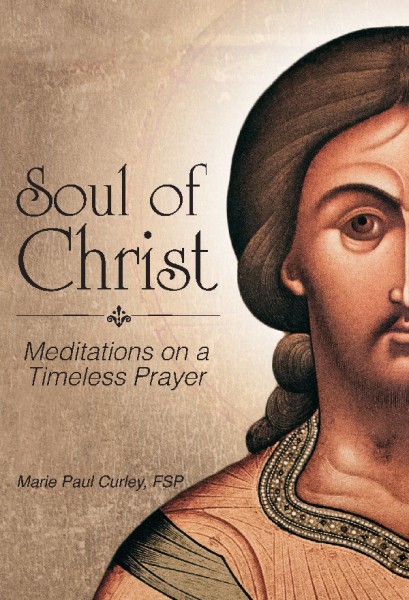
SOUL_CHRIST_cover_smallSoul of Christ: Meditations on a Timeless Prayer by Sr. Marie Paul Curley, fsp. Encountering Jesus in the Word of God and in the Eucharist through the “lens” of the familiar and beautiful Anima Christi prayer. Includes 12 guided hours of adoration.

Pen_Uncapped

To Journal: What is my prayer like? How much time do I spend “talking” to God? How much time do I spend “listening” to God?

To Share: Email or post a question or a tip you have about prayer

Friday Discernment Q & A: What’s It Like To Enter a Convent?

For those of you who have sent in questions, thank you for your patience! For now, Friday will be a Q & A day. Feel free to email me your questions, or contact me through the blog’s contact page.

530am Beach and Sunrise 049A young woman who was recently accepted into a community and will enter the convent in nine months asked the following.

“I’m interested in any tips or stories you have for either of these two things: 1. the upcoming months of saying goodbye/getting rid of material things/getting increasingly excited and probably lots of other emotions  (I bet there are some good stories here!) and 2. what does discernment look like once you’re in the convent? I’m sure it’s different for each community and individual but it’s just been interesting taking this ‘big step’ but also knowing that God could just be calling me to the convent for a time (though I do think He is calling me forever). Is it normal to assume that I’ll be there forever, or do you think there’s prudence in speaking of it as ‘the next step’ on a long journey?  I’ve just been curious about that…how does one look at the vocation once they’ve been accepted or once they’re in the order?”

Congratulations on your acceptance! You will be in my prayers—and I suspect in the prayers of all those who read this post. Since you asked a few different questions, I’ll split my answer into two parts.

The months between acceptance and entrance into a religious congregation are just as you describe: a whirlwind of emotions. For me, I experienced the dizzying joy of God’s profound love for me in inviting me to take the next step toward an exclusive, spousal relationship with him; I was also looking forward to an adventure that would be filled with the support of a loving community. Overall, I had so enjoyed visiting the sisters that at the end of each visit when it came time to go home, I didn’t want to leave. A couple people told me that after I’d made the decision to enter, they could see me “glow,” I was so happy. (A funny footnote here: I was so thrilled to enter that I actually became excited when my mom and I bought the un-stylish black “nun” shoes I was supposed to wear as a postulant. Definitely not the kind of shoe I was used to wearing.)

Alternating with the incredible joy, I experienced great fear: fear of the unknown; fear of the sacrifices I knew I’d be making, fear of being asked to do something I didn’t enjoy or couldn’t do, fear that I might not “measure up” to being a religious and the expectations of the sisters.

In addition to my fears, I very much dreaded the separation from my family. Until I made the decision to enter, I shared my discernment journey with just a few close family members. Telling my family that I was entering the convent was not easy. Almost everyone was supportive, but a couple of times I was surprised by remonstrances or regrets from a close family member–someone I’d been sure would understand. While I didn’t expect everyone to be supportive, it was harder than I expected when someone close to me didn’t understand or agree with my decision.

In looking back in those months before I entered, two things gave me great joy and/or peace:

  • In discerning my vocation and in the aftermath of experiencing such a strong joy and peace by which God confirmed my decision to enter, God communicated such tremendous love for me that it was easier to trust that God would be with me every step of my journey. The whole experience of being called and so greatly loved really strengthened me through my fears. (And this joy has continued to be strengthen me throughout my journey as a sister.)
  • My greatest fear and source of suffering before I entered the convent was leaving my family. My vocation director encouraged me to remember two things: a) Leaving home was part of growing up, so eventually I would leave home even if I didn’t enter the convent now; and b) God would take care of my family better than I could, and our love would continue to grow. It helped that I knew that my congregation encourages us to stay in touch with our families, to call and write regularly. Now, with the internet that’s even easier. I truly believe that God blesses my sacrifice of leaving my family to dedicate my life to him by sending special blessings on my loved ones.

In many ways, my vocation to become a sister has shaped my relationships with my loved ones. Especially when I’m sent to carry out our mission in a place far away from my family, my less-frequent visits home become very focused and conversations can go deep—we talk about the important things because we may not have the luxury of another long conversation for a while. So, despite often living far from my family and missing the daily details, I’ve still been able to stay close.

Coincidence or God?

If God speaks to us in all these ways, how do we know when it’s God speaking to us, and when it’s just coincidence?

  • For a person of faith, there are no coincidences, only Providence. Providence can be defined as God acting in our world, in our lives. It doesn’t mean that every circumstance of our life is a direct call from God, but the overall circumstances of our lives are an important context in which we are called to listen and to act.When someone is a good writer, there are no coincidences in the stories they write. If it’s included in the story, it serves a purpose for the overall story. Likewise in God’s story for us, there are no coincidences. But sometimes we may need to pray with what an event means before we understand it; sometimes we may not understand God’s purpose until years later; sometimes we may need to simply trust in God’s loving purpose for us.
Cassatt_Mary_Nurse_Reading_to_a_Little_Girl_1895

Nurse Reading to a Little GIrl by Mary Cassatt (Public Domain)

We cannot limit how God speaks to us; rather, we want to use all the resources we have at our disposal to listen. God gave us intelligence, a heart with the potential to be compassionate, the community in which we live and work, mentors or wise people in our lives, our gifts and limitations, and our circumstances, in addition to faith and the gift of prayer… Just as God will use all of these to communicate his love, to draw us to himself, and to invite us to live our mission, God wants  us to use our heads as well as our hearts, the advice of mentors as well as self-knowledge, to listen to him.

  • Many of us share the same circumstances, but the call or invitation from God can be different for each person. For example on a city street, dozens of people pass a homeless person. One person may be called to pray for that person; another to offer a kind greeting or a smile, or to initiate a conversation; another to offer a sandwich or a hot coffee; another person may be called to start volunteering at a soup kitchen; another person may be called to donate more generously; another person may be called to be grateful for the gift of a home. The truth is that probably every person who passes someone who is homeless on the street is called to do something, but it requires discernment to discover what.
  • Just as a writer “listens” to everything in his or her life to inform the story that he or she is writing, so we are called to be attentive to our entire lives to discover God’s presence, action, and invitations, so that the “plot” of our life follows God’s lead.

Pen_Uncapped

To Journal:

At the end of each day this week, take a quiet moment at the end of one day to look back over your day with this question: How did God reveal his presence and his love to you today?