Key Discernment Questions: Who am I & What do I want?

We continue to use the storytelling lens to reflect on the importance of coming to know ourselves and our motivations.

hand-534867_1280Our God-given identity is often expressed in our deepest desires and needs, as well as by our choices and actions. Knowing that we are made in the image of God as well as weak and sinful, it’s crucial that we come to know ourselves and our inner life well. This includes knowing our motivations, too. For example, if we are kind to someone, we can have any of the following motivations—or a mix of them—for that one act of kindness:

  • trying to please the person who is with us
  • hope to get something back from the person we are being kind to
  • a sense of duty
  • the genuine virtue of love

Many times, if we are honest with ourselves, our motivations will be mixed. No matter how simple or complex they are, when we know our motivations, we are better able to freely choose what will make us deeply happy.

* * *

Here is a rather extreme example. In the Middle Ages, sometimes women entered religious life because it seemed a path to greater independence in a time when women’s equality with men was not commonly understood or respected, especially married women. Circumstances often pushed women to seek the relative freedom of religious life even if they weren’t called. And a woman in such a situation might feel attracted to life in the convent. If she didn’t know herself well, she might have thought her attraction to the convent was a call from God rather then her own need to escape a loveless marriage or oppressive circumstances. Trapped in difficult situations, many women who weren’t called opted for religious life. As a result, some convents became quite lax because many of the sisters were not following a call from God but seeking escape.

Our deepest needs and desires—the ones that have been placed in us by God—will motivate us and shape our entire lives.

* * *

My own personality was and still is shaped by a deep need for meaning and purpose in my life. I think I’ve always been this way, and to this day, my need for purpose and meaning continues to be very important to me. I know that this need can even make me see, a bit more serious than other people—at least on the surface. When I visited the sisters as a teenager, I was drawn to them partly because I thought that living their apostolate of contemplative prayer and active mission would give my life more meaning.  (When I got home, I tried to live a little bit of a convent schedule, and ended up frustrated and discouraged!)

Ultimately, my need for meaning and purpose in life became one of my main motivations for entering religious life, and I think it continues to influence me—even in difficult moments— because I can find joy as long as I continue to feel that I’m living my life’s purpose—drawing closer to Christ and sharing his love with the world.

Pen_Uncapped

To Journal About

Think back on some of the major choices you’ve made in your life. If you can, pick three. For each one, reflect on the following questions:

* What was the driving factor or motivation in each decision that you made?

* What inner needs or desires were you seeking to fulfill by making that decision?

What’s the connection between deep desire and discernment?

Anna_Brassey_438-victorian-woman-writing-jornalThe driving force of any story is the protagonist’s deepest needs and desires, because they determine what the protagonist chooses and does. Think of Will Smith’s character in the film The Pursuit of Happyness. Or Elizabeth Bennet in Jane Austen’s Pride and Prejudice. 

Whenever we are discerning, we want to become more mindful of our deepest needs and desires. (Deep desires go much deeper than a passing urge, such as our appetite for chocolate or ice cream. “Deep desire” means desires that well from deep within our soul, such as the longing for happiness, etc.)  Just like in a movie, our needs and desires drive our choices—often without our knowing it. So the more aware we can become of what we want and need, the more honest and free our discernment becomes.

When writing a story, the writer has to write two stories that are deeply connected: the outer story with events, plot, obstacles, and other characters; and the inner story of the protagonist’s growth with the protagonist’s desires, needs, and choices. In a good story, these two stories are so deeply connected that it’s the resolution of both the inner and outer challenges that make a powerful ending.

Just as a good story has both an inner and outer story, so does a good discernment. In our world today, it’s easy to spend time focusing on the outer story: What are the needs of the world today? What do my family and friends tell me about myself? What does this spiritual book tell me? What is Pope Francis saying about the needs of the Church and how to live our Christian vocation?

All of these are important and critical when we discern. Yet the most critical place to listen to the voice of God is interior: within us. The basis for any discernment is our relationship with God. If we do not pray, we cannot hear the voice of God—often the whisper of God—within us.

When we discern, we also need to go within, to listen to God speaking and working within us. Our deepest desires often express our God-given identity! It’s just as important to pay attention to the voice of God within as it is to pay attention to how God speaks to us through events, circumstances, and people in our lives. Discernment involves weighing the different “voices” that I hear—from within, from outside—and discovering which is God’s call.

Our interior journey—our understanding of who we are, and our needs and desires—will profoundly influence and shape our response to God’s call in our choices and actions.

Pen_Uncapped

To Journal About

  • Make a list of the ten things in life that are most important to you.
  • When you’re finished, bring that list with you before the Lord in prayer, and ask him to reveal his priorities for you.

You Are…God’s Masterpiece! Lectio for Discerners

God’s Masterpiece

Discerning with the Word: A Guided Lectio Divina for Those Discerning

"St. Paul Writing His Epistles" attrib. to Valentin de Boulogne, c. 1618-1620

“St. Paul Writing His Epistles” attrib. to Valentin de Boulogne, c. 1618-1620

Introduction: We know that God’s invitations to us flow from our God-given identity. In this lectio, we pray with how God sees us, how God’s love shapes our very identity, and how God’s love frees us to be more fully ourselves.

Lectio: Ephesians 2:4-10

But God, who is rich in mercy, out of the great love with which he loved us even when we were dead through our trespasses, made us alive together with Christ—by grace you have been saved—  and raised us up with him and seated us with him in the heavenly places in Christ Jesus, so that in the ages to come he might show the immeasurable riches of his grace in kindness toward us in Christ Jesus. For by grace you have been saved through faith, and this is not your own doing; it is the gift of God— not the result of works, so that no one may boast. For we are what he has made us, created in Christ Jesus for good works, which God prepared beforehand to be our way of life.

Read through this reading slowly and attentively at least twice. Take your time with it.

Meditatio

Saint Paul’s dramatic encounter with Christ on the road to Damascus (Acts 9) completely changed Paul’s relationship with God from Pharisaism to experiencing the fullness of God’s love and mercy. By his baptism, Paul became a new creation in Jesus. Learning Christ, and living his new identity in Christ as an adopted son of God, led Paul to discover true freedom. No longer driven by fear or possessions, Paul belonged to Christ and trusted that nothing could separate him from God’s love and mercy. The extravagance eloquence of this passage demonstrates Paul’s amazement and gratitude to Jesus for his saving Passion, Death, and Resurrection.

Each of us who have been baptized can share in that journey from fear to trust and freedom discovered by Paul: we too are loved, redeemed, and sanctified.

As you re-read this passage, let yourself become aware that you are a son or daughter of God, that your very being is God’s awesome gift to you. Different translations of verse 10 into English range from the prosaic, “We are what he has made us” to “God’s handiwork,” “God’s masterpiece,” or “God’s work of art.”  Have you ever thought of yourself as God’s “work of art”? Do you believe that you are an heir of God, who will share everything with Christ as his brother or sister?

Contemplatio

Which phrase from this passage of Ephesians best describes how you see yourself? As you allow this phrase to “sink in,” how does it change your understanding of how God might see you? In your own words, how would you describe your relationship with God?

Oratio

The Work of Your Love – by Blessed James Alberione

My Lord, I am entirely the work of your all powerful love. I adore you, my God, one in nature and triune in Persons. I thank you, because you have made me for the happiness which lies in you and for your eternal glory. Save me with your love and your mercy!

Actio

Choose one way to act on your belief in God’s powerful love for you today.

More on Alberione: “Vibrant Media Apostle”

It’s a delight to be able to share with you so many resources on the Pauline spirit and our lives as consecrated Daughters of St. Paul. Just after I posted yesterday’s update from our interview on CatholicTV, I found out about Sr. Sean Marie David’s interview on New York’s Net TV about our new film on Blessed James Alberione, Media Apostle: The Father James Alberione Story. She does a fantastic job explaining about our charism and our Founder:


How Are You Celebrating the Year of Consecrated Life?

CTVlogoSo much has been going on, I’m taking a quick break from my regular discernment post to share some of the good news:

We are so blessed to have been invited by Catholic TV to come in for a show about the Year of Consecrated Life, and what we’re doing to celebrate it (and our centenary year of the founding of the Daughters of Saint Paul).

http://www.catholictv.com/shows/this-is-the-day/consecrated-life-daughters-saint-paul

Sr. Marianne Lorraine Trouvé talks about the anniversary edition of arguably the most beautiful document on religious life: Vita Consecrata by St. John Paul II, and I talk about our centenary year and all the great things we’re doing for the 100th “birthday” of the Daughters of Saint Paul–100 years of media evangelization, 100 years of living and communicating Christ, our Way, Truth, and Life! Here are a few–a comprehensive list will go up on our www.pauline.org website soon!

BOSTON AREA

  • World Communications Day Mass for communication arts professionals in the New England area on May 17, 2015, at our convent chapel here in Boston with CatholicTV’s own Father Robert Reed: www.pauline.org/WCDMass
  • Centenary Mass of Thanksgiving on June 14, 2015, with Cardinal Séan O’Malley at St. Theresa of Avila Parish in West Roxbury, MA. (RSVPs requested at: fspcentenary@gmail.com

NEW YORK AREA

  • Day of Recollection and Centenary Mass of Thanksgiving on the afternoon and evening of Saturday, June 6, at Holy Family Parish, New York, NY. (Email me if you’re interested in more information.)

ONLINE & MEDIA

DiscernItIcon_largerI was privileged to help in a small way with developing our Discern It! App, which we created for discerners for this Year of Consecrated Life. I’ve mentioned it here before, but on the show I have a chance to show a few screenshots and explain how helpful it can be–not just as a novena for when someone is at the beginning of their vocational discernment, but also for helping them through some of the most challenging moments of their discernment, with wise advice offered:

  • from the Scripture
  • from sisters’ experience of how Jesus speaks to us in prayer
  • from journaling and follow-up prompts
  • from your prayer and time with Jesus
  • from audio clips from wise vocations director, Sr. Margaret Michael

The Discern It! App offers real accompaniment for anyone discerning their vocation, and it’s free to download and use–for iOS and Android. 


final_ycl_logo_en_newOur interview ended with a request for our thoughts on the Year of Consecrated Life. Personally, I want to make this year a year of gratitude to God for the gift of my vocation as a consecrated religious. I also want to use it:

  • as an opportunity to thank the sisters, brothers, and priests who so generously make a gift of themselves in religious consecration
  • a time to focus my prayer for young people: that this year highlighting religious life will encourage young people to be open to God’s call to the religious life
  • a way to encourage parents and others who will encourage young people to consider religious life as a real possibility for their future

Living Our Vocation “to the Full”

"The Good Shepherd" by Joseph Ritter von Führich, c. 1840

“The Good Shepherd” by Joseph Ritter von Führich, c. 1840

Yesterday, “Good Shepherd” Sunday, was the World Day of Prayer for Vocations. If you are discerning your vocation, I hope that you could feel the support of the Church’s prayers for you, lifting you up from all over the world!

Pope Francis offered a really beautiful reflection for the day in his Message for the 52nd World Day of Prayer for Vocations.  One of the coolest things about it is that he describes “vocation” in such a dynamic way, comparing the living of our vocation with the exodus experience. Thus, Pope Francis’ message for the World Day of Prayer for Vocations isn’t just for those discerning their vocations, but an invitation for all of us to live the gift of our vocations fully. I’d like to share three points that particularly struck me and that I’ve been praying with:


Following One’s Vocation (whether for the first time, or as a renewal of our commitment): 

Belief means transcending ourselves, leaving behind our comfort and the inflexibility of our ego in order to centre our life in Jesus Christ. It means leaving, like Abraham, our native place and going forward with trust, knowing that God will show us the way to a new land.

Living One’s Vocation “To the Full”:

The exodus experience is paradigmatic of the Christian life, particularly in the case of those who have embraced a vocation of special dedication to the Gospel. This calls for a constantly renewed attitude of conversion and transformation, an incessant moving forward, a passage from death to life like that celebrated in every liturgy, an experience of passover…. Vocation is always a work of God. He leads us beyond our initial situation, frees us from every enslavement, breaks down our habits and our indifference, and brings us to the joy of communion with him and with our brothers and sisters. Responding to God’s call, then, means allowing him to help us leave ourselves and our false security behind, and to strike out on the path which leads to Jesus Christ, the origin and destiny of our life and our happiness.

The Model for Every Vocation:

The Virgin Mary, model of every vocation, did not fear to utter her “fiat” in response to the Lord’s call. She is at our side and she guides us. With the generous courage born of faith, Mary sang of the joy of leaving herself behind and entrusting to God the plans she had for her life. Let us turn to her, so that we may be completely open to what God has planned for each one of us, so that we can grow in the desire to go out with tender concern towards others (cf. Lk1:39).  

If you can, go and read the entire message here. It’s not just beautiful, but challenging and encouraging, reminding us that the Christian vocation is to love, and that living the fullness of the Gospel message does not limit us but leads us to the fullest possible freedom. I also was struck by his comparing each Christian’s vocation to the Exodus experience, because in doing so, Pope Francis is indirectly validating the “storytelling” lens that I’m using on this blog to talk about discernment!

How Our Weaknesses Shape Our Discernment: the Importance of Knowing One’s Self

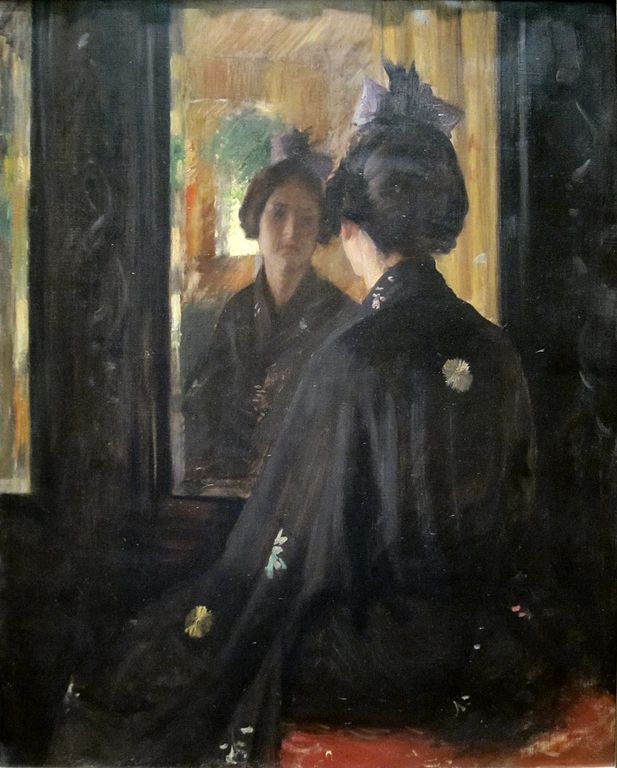
“The Mirror” by William Merritt Chase, c. 1900

What makes a novel or movie fascinating for me is when the protagonist is flawed and must overcome inner obstacles to achieve his goal, or to choose (and find) her happiness. If all the characters—especially the main ones—are practically perfect, then we have trouble being interested in the story or the characters, because they’re not real. (Even the practically perfect Mary Poppins has a fault—or at least a weakness—in how she deals with her affection for the children and for Bert.) Perfect characters don’t just make the story less interesting. We are unable to relate to these flat characters, or to their lives, because they aren’t struggling with anything. They’re not like us.

We all struggle with ourselves—our faults, a flaw, or even a simple tendency that, in our situation, causes pain or distress. If we truly come to know ourselves, we acknowledge that we struggle with much more than the occasional fault. We all have a tendency to sin, and the more honest we are with ourselves, the better we know our sinfulness and flaws. (One of the benefits of spiritual direction is gradually coming to a clearer self-knowledge.) St. Augustine encourages us to pray for self-knowledge, and it’s something we can do daily before we make our examen.

People have different levels of awareness of their faults and sinfulness, but almost all of us have “blind spots” when it comes to how we see ourselves. A strength or talent we take pride in may actually be an irritant or flaw to others. For some of us, pride blinds us to our flaws and we have trouble acknowledging our sinfulness, except in things that we don’t consider that important. For others among us, all we can see is our faults and sinfulness. And many of us swing back and forth between the two perspectives—we have days we feel we can conquer the world, and other days where to love that irritating person for the love of Christ feels way more heroic than we can manage.

Neither perspective is really helpful. If you are someone who, like me, shifts back and forth, then you have one advantage: you know that you have still not come to the truth of who you are. For me, the key word in my understanding of who I am is one word: and.

Who are we? We are flawed and saved. We are called to eternal glory through the gift of our Baptism, and we are limited and sinful human beings. We are sinners and redeemed. We are cherished and we are called to conversion.

When we are discerning an important decision, it is crucial that we remember who we really are: precious and weak, sinful and called to holiness. At some point, God will probably call us to go beyond ourselves, beyond our own strength, sustaining us with the gift of his grace. But God also perfects our human nature, the gifts of our specific personality inherent in us. Our weaknesses shape our call just as much as our gifts, so it’s important in our discernments that we know who we are, in all the greatness of our call and all the weakness that we suffer.

For some helpful real-life examples, we can read more about the saints. In comparing two saints, we will often discover that the questions that they wrestled with were very different. A sensitive monk who grapples with scrupulosity and becomes a great confessor (like the great saint, Padre Pio) will have very different discernments during his life than a practical peasant woman who grows up on a farm and founds a religious congregation dedicated to bringing the love of God to others through the corporal works of mercy (like the great St. Frances Xavier Cabrini). Both are great saints known for their love for God and selfless service of others, but their love was expressed in completely different ways.

Pen_Uncapped

To Journal About

  • How do I see myself? Do I use “and” or “but” when I describe myself?
  • At this point in my life, what is my greatest fault?
  • At this point in my life, what is my greatest gift?

You may wish to conclude your journaling time with a prayer to the Holy Spirit for the grace to see yourself through God’s eyes.

God Wants a Relationship with Us

To understand God’s call for us, we need to also understand how God sees us; we have to understand our “backstory” (to put it in storytelling terms) or where we come from.

How does God see us? Most simply put, we have been loved into being:

There is one truth for believers that, no matter how much our wounded nature might try, cannot be twisted. This truth is that God chose to create each of us. There is something so unique and wonderful about us that God wants to share his life with us. God wants us in the world.  See Yourself Through God’s Eyes

Not only is this true, but it has an amazing corollary: in creating us, God is expressing a desire to have a relationship with us. Because of Jesus, we know that this relationship with the God is adoption as God’s child, and our relationship with Jesus is friend.

Image 7How precious is the worth and dignity of every person on earth! The core of our identity is that we are created in the image of God, invited to become a child of God through Baptism so that we can share in Jesus’ divine Sonship. Created in God’s image, we have the ability to know and to love. Unfortunately, the freedom that gives us the ability to love also gives us the ability to choose to turn away from love.

When we choose not to love, we aren’t living according to the greatness of our identity. Although we are beloved, we are also flawed and sinful. Yet, even God’s response to our sinfulness proves his love for us! God sends his Son Jesus to save us from ourselves, from the power of sin, from the power of evil. Every time that we repent of our sins and ask forgiveness, we are invited to return to the depth and beauty of greater communion with God.

Our “backstory” helps us as begin or deepen our attitude of discernment, because God’s call to us is congruous with this reality that we are precious in God’s eyes. Since our very identity is founded on our relationship with God, it makes sense then that God is the Co-Protagonist in our life. God wants to partner with us, to draw us always closer to himself (in deeper communion with him) throughout our lives.

To Pray With

Psalm 139 is wonderful to pray with and ponder our identity in God’s eyes—God’s beloved ones. Pray with it over the next few days, and allow the awe and gratitude of this psalm to fill you.

My True Identity

In this series of blogposts about discernment, we continue to look at our life through a storytelling lens…beginning with ourselves as the co-protagonist of our lives (co-protagonists with God).

453px-Caravaggio-The_Conversion_on_the_Way_to_Damascus

Conversion on the Way to Damascus, 1601, Caravaggio

Who am I as the protagonist of my story? Who am I, really? What are the key events that have shaped my life? What important choices have I made so far? What are my deepest desires around which I want to base my decisions, plan my future? What do I consider my successes? my failures?

Each of us is a son or daughter of our families, and members of the human family. If we have been baptized, we also belong to the family of God, the Church. We are sons and daughters of God—adopted into God’s life.

And if we able to honestly and realistically look at ourselves (and this is not easy!) we will recognize great beauty and potential, but also great flaws and woundedness. We will see greatness and pettiness, openness to grace and attraction to sin. We will recognize that we carry both love and pride in our hearts, selfishness and generosity.

* * *

I used to not know this. As a teenager, I used to relegate the Redemption—Jesus’ suffering and dying—as  important background to my life. (Forgive me, Lord!) After all, I was baptized as an infant years ago, and I was grateful that I had been redeemed. But now I was on my journey toward holiness, and I didn’t need to keep going back to those ideas of conversion, sin, mercy, forgiveness, Redemption…

I look back and chuckle at how clueless I was—about myself, about human nature, and about my relationship with God. (One proof of God’s infinite mercy is that I’ve grown beyond this cluelessness!)

Saint Paul—one of the greatest saints ever—wrote, “For I decided to know nothing among you except Jesus Christ, and him crucified” (1 Cor. 2:2). Saint Paul’s entire life was shaped around the merciful love of Christ—the merciful gaze of Jesus as he forgave Paul for helping to stone Saint Stephen and persecute his first followers, the mercy of Jesus that revealed to Paul God’s great love for him in Christ. This was the merciful love that Paul constantly preached.

You might say that Paul needed conversion, but he wrote this years later, after he had already spent years of his life preaching Christ all over the world.

No matter where we are on our journey, even if we are baptized, live our faith in a dynamic and vital way, and earnestly seek God’s will, we will always, constantly, be in need of the mercy and grace of God to live out our truest identity—as human beings, as children of God.

This is where we need to start in our discernment, because the experience of God’s mercy is the foundation of our relationship with God. God creates us and loves us gratuitously: we cannot possibly ever do anything that would “earn” us God’s love. It’s in the midst of our unworthiness and even our sinfulness that we discover God’s immense love for us. God’s merciful love becomes the bedrock of our relationship with God!

Pope Francis, in his letter officially announcing the Year of Mercy (from Dec. 8, 2015-November 30, 2016), says this eloquently:

“Mercy: the ultimate and supreme act by which God comes to meet us… Mercy: the bridge that connects God and man, opening our hearts to a hope of being loved forever despite our sinfulness.”

Pen_UncappedTo Journal About:

Answer the questions at the beginning of this blog post:

  • What key events have shaped my life?
  • What important choices have I made so far?
  • What are my deepest desires around which I want to base my decisions and plan my future?
  • What do I consider my successes? my failures?
  • Who am, really?

Dancing with God

In a book or film, the protagonist is the central character in the story—the story is the protagonist’s story. Without the protagonist, there is no story, just a set of circumstances. This is also true of the story of our lives. We are the protagonists of our own lives. It is our story. But it’s also God’s story. God brought us into being, provides for us, and guides us as closely as we’ll allow. So God, too, is the protagonist of our story or rather, God and I are the co-protagonists of our story, which is the story of my life.

385px-Ballroom.svgIf we truly believe this—that the Holy Spirit is our Co-Author and Co-Protagonist—then how do we describe our role as the human co-protagonist? We know we aren’t simply passive spectators to our own lives. The Church unequivocally reminds us that we each have free will and the dignity of exercising that freedom. The question is how do we exercise our freedom, to make a choice, to step forward in faith, while letting God lead?

Letting God take the lead and our making a free choice are not mutually exclusive; in fact, just the opposite is true because ideally, they happen together! God invites, and we respond with faith and loving action. Our full, wholehearted response is absolutely essential to fulfilling our purpose, vocation, and mission in life.

For me, perhaps the best image of discernment as a way of life—even better than the image of co-authoring!—is that of a couple dancing together. Certainly one dancer usually takes the lead, but the other partner must choose to dance, take each of her own steps, occasionally choose her steps more independently when they are not hand in hand, and follow her partner’s lead when they are moving together. True dancing partners—even when across the room from each other—are always aware of each other, always seeking to harmonize or synchronize their movements. If not, there’s no dancing.

Growing in our relationship with God means that our partnership, this “dance” of our lives, enables us to understand always more the intentions and desires of God. Just like partners who have danced together for years can anticipate their partner’s next move, so when we live in communion with God, we start to understand God’s invitations and we can respond more easily and quickly—almost before God extends his hand in invitation.

Each step we take—whether we are intentionally following God’s lead or simply moving forward with our lives by doing the best we can—is a step we take freely. God respects our free will, works with our missteps, and wants us to grow in freedom. Just as partners who have danced together for years feel greater freedom—they trust so much in their partner’s support that they can take riskier moves—so the greater our spirit of discernment and union with God, the greater our freedom in living our deepest identity.