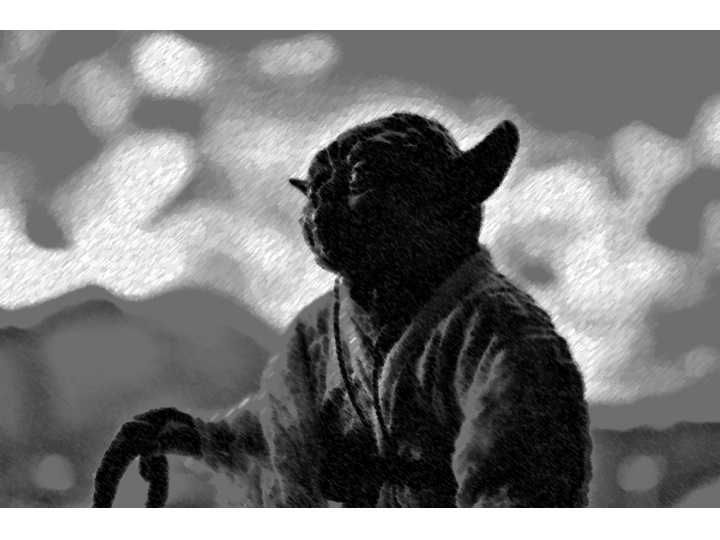
Would Yoda Have Made a Good Spiritual Director?

YodaBandWWhere would Cinderella be without her fairy godmother? Frodo without Gandalf? The English students without John Keating in Dead Poets Society?  The Karate Kid without Mr. Miyagi? Or Luke Skywalker without Yoda?

Great movie mentors, although often idealized, remind us how important mentors are in our own lives. Mentors are the people who have walked the difficult path before us, people who have shared or currently share in our situation or something similar. How they have walked their path ignites in us a longing to be like them. They approach challenges with a quality or grace that appeals to us. Sometimes it is simply their courageous example that shows us the way; at other times it might be their wisdom that gives us hope that we too can overcome the obstacles in our path. Although we don’t have to personally know someone for their words and example to mentor us, the ideal mentor not only knows us, but “gets” us, and offers us insight to help us see from a different perspective. A mentor can be encouraging, challenging, or even discouraging at times, but their wisdom and insight is the fruit of their life experience.

We can be mentored in many areas of our lives, from a career, to living our Catholic Faith, to a certain scientific or artistic discipline, to simply becoming a better human being. A mentor may be a parent, grandparent, or other relative, a teacher, an expert in a particular field, a boss, a co-worker, a pastor, a spiritual friend, or someone with vast life experience. The best mentors are those who are comfortable with themselves, who have integrated the various aspects of their lives, and are deeply spiritual human beings.

A spiritual mentor is wise in spiritual matters not just from study but from his or her lived experience. Consulting with someone wise in the ways of God can be invaluable for our discernment journey. We should seek advice when we are ready—after we have already been praying about our discernment and done whatever research we need to do—and are at a point where we need some insight as to how to proceed. Perhaps we are stuck in indecision or fear, or perhaps we simply lack the knowledge or insight needed take our next step forward. It’s important to be really open to what our mentor has to say.

One form of mentorship that is part of the Catholic spiritual tradition, as well as highly encouraged in discernments, is spiritual direction. If we are seriously engaged in our spiritual life, we may want to seek regular spiritual direction. But especially when we are discerning a larger matter (such as our vocation), we would be wise to seek a spiritual director, who is often the most helpful mentor in a discernment.

In an earlier post: https://coauthoryourlifewithgod.com/2015/03/04/spiritual-direction/, I talked about how to find a spiritual director. In my next couple posts, I’ll talk a little bit about what it is like to go for spiritual direction for the first time, and some tips for how to make the most of spiritual direction.

To get back to the title question, yes, I think Yoda would have made a good spiritual director for Luke and perhaps does offer him some spiritual direction. Above all, Yoda does what a good spiritual director does: to find God in the directee’s own experience. Yoda encourages Luke to get in touch with and trust his own experience of “the Force.” And while “the Force” seriously lacks as an image of God from a Christian worldview, for the fictional world of Star Wars “the Force” does seem to refer directly to God’s Providence at work in creation.

* * *

In the meantime, what questions do you have questions regarding spiritual direction? If you contact me with your questions, either below in the comments, or via email, I’ll answer them in an upcoming post.

Call out for prayer requests: what can I pray for you during my retreat?

IMG_20140722_081126629_HDRThis weekend, I begin my annual 8-day retreat. I won’t be blogging or posting these days.

My annual retreat has become one of my very favorite times of the year, after which I usually return home deeply refreshed, renewed, and recommitted to my journey towards Christification. Something about the silence, the intense focus on prayer and my relationship with God, and the lack of the daily hustle and bustle, really fills my soul. I have come to treasure this beautiful week when I can focus all of my attention on my Beloved Master.

I invite you to send in any prayer requests you’d like me to pray for during this week–via email,  in the comments below, or on Facebook! 

May your week be deeply blessed by the knowledge and embrace of Christ.

Three ways the Church helps us discern

06H Sr Margaret JosephBelonging to the Church and being active in the Church is one of the best ways to live and grow in our faith, and can be invaluable in helping us discern God’s call. Our faith community can be as small as a prayer group, as large as a parish, or a midsize group that centers around a form of ministry or nurturing our faith and spirituality in every day life. Virtual faith communities can also support us spiritually and help us to grow, although in more limited ways. We may belong to more than one faith community.

Faith communities that really nurture us can be difficult to find, and they take many shapes. If you do not have a faith community—for example, you go to Sunday Mass but are not more involved in living and sharing your faith in your parish or in other ways—I encourage you to actively seek one. Your own parish is a good place to start. (If you don’t feel that your parish is nurturing your faith deeply enough, there are many other ways to connect with the Church.)

Why is belonging to a faith community so important to our discernment?

1. Because we need to be actively involved in building the Church in order to fully live our faith. Jesus doesn’t call us as isolated individuals, but calls us into community, to serve one another and to live in communion with each other. How can we do that if we aren’t actively involved? An essential part of our baptismal call is to evangelize, to witness, and share our faith with others. And the first place that we can do that is within the Church.

We cannot nurture and grow in our faith alone; we need others to help us, to inspire us, to motivate us, to call us to greater self-giving. Finding a dynamic faith community where we are nurtured spiritually can be challenging, but it’s worth the search. If we cannot find a vibrant parish nearby, we can start looking for other kinds of Catholic faith communities. Retreats, lay movements, or connecting with religious communities of priests, brothers, or sisters, are three ways we can find people who are committed to growing in holiness in ways that we can identify with and share. In a dynamic faith community where we truly share the height and depths of our Faith, we can more easily hear and respond to God’s invitations to us—whether they are to a particular ministry or initiative, or a deeper relationship with Christ. Especially if we are discerning our vocation or ministry, Jesus will call us and affirm our call in and through the Church.

2. We often receive Christ’s call in and through his Church: through receiving the Word of God, through our sacramental life, through the Eucharist, in the homilies, in the calls of our pastors, in the service that we give, in the holy examples of the saints and perhaps in the inspiring lives of someone we know. For those discerning their vocations, the Church has the best understanding of how to receive, respond to, and live the call to marriage, single, priestly and religious life.

3. Usually it is in the Church that we can best learn how to serve with the mind and heart of Christ. Despite the reality that the Church is Christ’s Body, we will find many people in the Church whose humanity and sinfulness irritate, disturb, and perhaps even appall us. But we know that Christ died to redeem us and sanctify us, and that the Church’s holiness comes from Christ. If we look attentively, we will also find people in the Church who are truly holy: who are receptive to the Word of God in the Scripture and in the Eucharist, and who humbly serve—often without being acknowledged. We are called to build up the Church—sometimes the irritating or wounded part of the Church that would normally turn us away—with our faith and service. In turn, certain members of our faith community will invite and/or challenge us to serve. And they will also affirm us in our service.

As Catholic Christians, we are called to listen to the invitations the Church makes–because Christ speaks through his Church. Our last few popes have wisely and unapologetically called the Church to take specific actions. Coming from pastors who most clearly represent Christ on earth, these are calls from God. Today, Pope Francis sometimes startles us with the vividness of his invitations of how we are to called to love the world as Christ did. His wise and pastoral invitations to holiness and service are not just for the bishops and clergy, but for all of us Catholic Christians to bring to prayer and discernment.

Can God Speak to Us Through Others?

06G Pixabay choice 3Can God speak to us through others? Yes! Actually, an important part of listening to God is recognizing that sometimes God will speak or invite us through other people. As human beings, we are called to share life together in our family. But we also have other communities that we are part of: our circle of friends, school, work, and other groups of people we hang out with. Our parish as our faith-community is especially important.

We really do not know ourselves well nor mature fully until we experience ourselves as part of a community.

Others challenge us to give fully of ourselves. Without being stretched by others’ needs and demands, we cannot know our true strengths. And we do not truly know our weaknesses until we rub elbows with the people in our lives who push us to our limits and sometimes beyond. Our ego—with our false sense of ourselves—often blinds us to our greatest gifts and our greatest weaknesses. But others can see us clearly, without the blind spots.

I can think of a time when I fooled myself into thinking I was a pretty patient person…but then I found myself in a very irritating situation—and I suddenly discovered that I was not patient at all, it’s just that I hadn’t encountered a situation where my patience had really been tested. Living and working closely with others is one of the best ways to help us to get to know ourselves.

God often helps us to see and understand ourselves and our situation better by speaking through others—friends, co-workers, enemies, bosses, and acquaintances. Sometimes just a random comment from someone who doesn’t like us very much can help us to understand something about ourselves: how we come across, something we are particularly good or bad at, etc. If we are open, sometimes we will discover that God is speaking to us or inviting us through our conversation with someone.

When we are discerning, it can be really helpful to sort things out with someone we trust: a family member, friend, a mentor, or someone in our faith community.

Discerning in My Weakness: a personal story

OLYMPUS DIGITAL CAMERARecently, I made a discernment that specifically takes into account my personal gifts and weaknesses. Honestly, I hesitated to write something so specific and personal on this blog, but then I thought it might be helpful for others if I shared the process that I went through. Like the stories I try to write, there’s an unexpected twist at the end!

Gift from God
As a published author, I am often asked to give talks and conferences, or lead retreats. But I’ve always been terrified of public speaking. Over the years, I’ve worked hard to overcome my fears and to become a speaker who really engages with people; I try to make the talks appealing and enjoyable. A number of people have affirmed that they have been touched by the talks and conferences.

Limitations Surrounding the Gift
Despite my best efforts, speaking publicly is still quite difficult and draining for me. While I’m able to present well, I am often quite anxious several days ahead of time. Afterwards, I’m drained and have difficulty for several more days settling into writing and my other demanding responsibilities. I was hoping that over time, the anxiety and energy drains would lessen, but this year’s book tour has shown me that this is not true. Instead, the traveling and stress from the book tour resulted in my being unable to fulfill some of my other apostolic responsibilities well.

Motivation to Discern
This is the reason I started to discern whether I should continue to speak publicly. With God’s grace, I can manages the challenges and sacrifices that speaking publicly requires. But these challenges make me less available to enter deeply into my prayer life and to carry out my other responsibilities.

After the book tour ended in June, I’ve continued to receive requests for public speaking, and my next book will release in eighteen months. How is God calling me with regard to public speaking as an evangelizer for the Gospel? After praying about it and not receiving any clarity, I did a simple “pros and cons” analysis. These were the most important points that arose  when I prayed with the question: Is God calling me to continue public speaking?

 Pros:

  • I am asked repeatedly to speak publicly
  • God seems to bless my talks by touching people’s hearts and lives
  • Public speaking is part of being an author today because it’s an important way to spread the message of the books that I’ve written

Cons:

  • Because I become unduly stressed, anxious, and drained almost every time I accept an engagement, my prayer, writing, and other apostolic duties (given to me in obedience) are often affected negatively, despite my best efforts

When I discern taking on apostolic projects, an important criteria is seeking the greatest good for the greatest number of people. But I puzzled over what that meant in this case. Is it reaching more people through public speaking? How about the people that I reach through my writing, whom I can’t count? What about the quality of my prayer, of how I carry out my other responsibilities, and of my relationships with the sisters with whom I live? And, if I become burned out, how will I be able to effectively communicate Christ’s love?

The Unexpected Twist
After several months of discerning, I suddenly realized that maybe I’d been asking God the wrong question all along. Perhaps I was trying too hard to plan out the future, when instead what I really needed to do was discern the opportunities that were right in front of me. I changed the question from being general to being specific: Am I being called to speak in this particular time and place? Immediately I started receiving clear answers.

And my larger question was answered, too, though not in the way I expected. For right now, it is clear that God is inviting me to discern each opportunity for public speaking individually, on a case-by-case basis, and to accept those specific engagements which I truly feel called to and which my other responsibilities allow.

Finally, I also received an interesting insight in my prayer–that God seems to be guiding me to do his will specifically through this weakness of mine. If I didn’t find public speaking so challenging and need to set limits around it, maybe I would accept so many invitations to speak that I wouldn’t have any time to write another book. Perhaps this balance between public speaking and writing is exactly how God is calling me.

At some point in the future when my situation changes—for example, if I were freed up from other duties—I may find God inviting me to do more public speaking. Or I might be given a duty which precludes public speaking altogether. But for now, in the situation I’m in with my current responsibilities, gifts, and limitations, God’s will is clear. I cannot always say “yes” to people’s requests, but I can be open to the guidance and invitations of the Holy Spirit in each opportunity that arises, in my gifts and limitations, and in my current circumstances.

Our Gifts and Weaknesses Help Us Discern Our Way of Being in the World

06D RGBstock 2 choiceDiscernment can be approached in many ways. Personally, I’ve found it easier when I begin with my own heart, my identity, and experience (as at the center of a circle) and then gradually expand outwards to my situation, my family, community and workplace, the calls of the Church, and the needs of the world.

If we imagine discernment as a series of concentric circles, the innermost circle would be my interior life, including: my God-given identity, my feelings, thoughts, deep desires, my gifts and limitations. We discover these in prayer and also by praying with our history, the needs of the world, and our current situation.

In particular, reflecting on and praying with our gifts and limitations—the ways that God has given us to be and to act in the world—is extremely helpful in discerning a course of action or our vocation. One of the most popular sayings of St. Thomas Aquinas is: “Grace does not destroy nature but perfects it.” This is helpful in understanding that we are called be holy in a way that respects our humanity, although grace also enables us to transcend the merely human and to selflessly sacrifice for the sake of love.

A superficial examination of the lives of several saints quickly reveals how unique each saint’s path to holiness was. (I give a quick example between St. Pio and St. Frances Cabrini in this earlier post.) Sanctity certainly has many common elements: faith, hope, and love; the works of mercy; the Beatitudes. But how each individual is specifically called to live holiness is unique, partly according to that person’s gifts and limitations.

Taking into account our gifts and limitations, therefore, is an important part of understanding God’s call for us. There are certain roles that require certain aptitudes or skills. If we are discerning our call to a role that has such requirements, we need to reflect on whether we have the aptitudes or the ability to acquire the needed skills. We don’t discount the reality that grace can help us to do something that would ordinarily be beyond us, but we also don’t seek to work against the foundational inclinations of our personality, unless we have a compelling reason to do so.

* * *

As a college student, Sarah is currently discerning her future career. At heart, Sarah is an artist and idealist who feels called to serve others. For some reason—perhaps because of her family background—she believes that being a doctor is the best way to serve others. Yet, she finds herself dismayed when she starts to fill out an application for medical school because she feels no personal inclination towards a medical profession: she isn’t good at science, and she becomes faint not just at the sight of blood, but at the thought of blood. If Sarah’s interest in becoming a doctor is based solely on her theory that being a doctor is the best way to help others, then she is basing her discernment on a faulty assumption, and her resistance to filling out that application is a real indication of that. The clue here is not that being a medical doctor is hard, or a lot of work, but that it actually goes against Sarah’s personal inclinations and gifts. Sarah may indeed be called to serve others, but in another way.

* * *

When we discern, we want to take our personalities, gifts, limitations, and inclinations into account. Part of the work of vocation directors for priesthood and religious communities is to see if the candidate is a “good fit.” For example, as Daughters of Saint Paul we share life closely—not just daily life, but also in the ways we carry out our daily mission together. It can be quite demanding to live and work so closely together, even for those of us who are called to it. (One of the greatest “daily miracles” in religious life is the reality that five women, who all take turns cooking the meals, can share the same small kitchen and still be friends at the end of the day!)

Since a young woman needs to have a certain amount of flexibility and sociability to be happy as a Daughter of Saint Paul, this becomes part of her discernment with our community. If she doesn’t have those particular qualities, it doesn’t mean she isn’t a wonderful person called by God to a special mission, but it’s an indication that she might be called somewhere else—perhaps to another congregation of sisters who don’t live community life together so closely, or perhaps to single life, or married life.

On the other hand, someone who hastily dismisses an invitation to be involved in something good–such as their parish’s outreach program–only because it’s “too hard,” is not really discerning. The amount of sacrifice involved is not the question; as followers of Christ, we will always have something to offer because we seek to love selflessly as Christ does. Instead, the question is how God is calling us to use our particular gifts and our limitations to serve others’ needs in the way that only we can.

Lectio Divina for Discerners: What do you seek?

06C wikipedia (3)

Discerning with the Word: A Guided Lectio Divina for Those in Discernment
“What do you seek?”

Introduction: We may not notice, but many times when Jesus encounters someone, he asks them a question about what they want. In this reading, Andrew and John, who would become two of Jesus’ chosen apostles, meet Jesus for the first time. As you pray with this reading, imagine Jesus directing this question to you. How would you answer?

Lectio: John 1:35-42

The next day John again was standing with two of his disciples, and as he watched Jesus walk by, he exclaimed, ‘Look, here is the Lamb of God!’ The two disciples heard him say this, and they followed Jesus. When Jesus turned and saw them following, he said to them, ‘What are you looking for?’ They said to him, ‘Rabbi’ (which translated means Teacher), ‘where are you staying?’ He said to them, ‘Come and see.’ They came and saw where he was staying, and they remained with him that day. It was about four o’clock in the afternoon. One of the two who heard John speak and followed him was Andrew, Simon Peter’s brother. He first found his brother Simon and said to him, ‘We have found the Messiah’ (which is translated Anointed). He brought Simon to Jesus, who looked at him and said, ‘You are Simon son of John. You are to be called Cephas’ (which is translated Peter).

Read through this reading slowly and attentively at least twice. Can you imagine yourself as one of the people in this story, and how you might feel? Take your time praying with it.

Meditatio

Jesus begins his relationship with Andrew and John by asking them what they want. Andrew and John answer Jesus in a way that seems ordinary but that actually expresses their desire to get to know Jesus better, to “stay” with him. Jesus responds to their desires–both spoken and unspoken. This initial encounter was so transformative for Andrew that he immediately went off and convinced his brother Simon to meet Jesus. The meeting between Jesus and Simon is even more dramatic, as Jesus doesn’t just call Simon by name, but gives him a new name, “Peter.”

As we begin to discern, Jesus asks us this same question, “What are you looking for?”

What are your dreams? What are you looking for? Share one of your deep desires or dreams with Jesus now.

Contemplatio

You have shared with God a dream or desire important to you. Now, take some quiet time to listen. How might God communicate to you his dreams for you?

God may respond in word, in a feeling, in making things work out…or God may respond in silence. But God always responds to us.

Oratio

God’s Dream for Me based on the writings of Bl. James Alberione

Your dream, O Master, is to lay hold of me with your divine life.
Your dream is to purify me, to recreate me,
to make me a new person in your image.
Your dream is to fill me with your love, to make me love the Father and all my brothers and sisters just as you do.
Your dream is to draw me to you with the closest of bonds, to unite my heart with yours, to make me strong,
to impart to me your divine power
so that I can overcome evil and be constant in doing good.
Your dream is to inflame me with an untiring zeal to spread your kingdom.
Your dream is to possess me in this life and in the life to come.
O Master, may your dream come true!
May I be able to give all you ask of me. Amen.*

* From Live Christ! Give Christ! Prayers for the New Evangelization 

Actio

Try to be aware of your hopes for the day each morning.
Next, start to bring your “hopes” to prayer.
Imagine Jesus looking at you and asking you, “What do you want me to do for you today?”

Discerning: What’s In Our Heart?

06B foto stochDiscerning what is in our heart is the touchstone of our discernment, and it’s what we need to keep coming back to throughout our discernment. Previously, we spoke about desire and deep desire (see What’s the Connection Between Desire and Discernment, and Discerning with Deep Desires blog posts), but let’s re-visit this briefly, as many people struggle with interior “listening” the most.

Our deepest desires—such as the longing to love and be loved—are placed in us by God. These deep desires are often buried beneath more superficial desires that spring from our ego or the stress or distractions of daily life. That’s why it’s so important to pray with our feelings and desires, and to continually “go deeper” and evaluate what we most truly want. If you haven’t had the opportunity to do this, I encourage you to take some time now to pray with your desires. You can use the journaling and prayer exercises in the earlier posts listed above, if that’s helpful.

As we reflect on the other important aspects of our lives to discern, we want to constantly return to what our hearts are telling us. How do we feel about the needs of the world, about the needs of the people around us, about the circumstances in which we find ourselves? It’s not that what our heart says is more important than whatever else we bring to discernment, but rather it is our minds and hearts that find the balance and assign the right importance to each of these different elements. Everything must be sorted through our minds and hearts because, in the end, it is with our will and heart that we will say “yes” to God.

Pen_Uncapped

To Journal With

When we begin a discernment, it can be helpful to start with how we feel, because our feelings can often help us determine what troubles us, what we are resisting, and what feels like an invitation. Because all of us want to be happy, we can receive important clues for our discernment when we ask ourselves a few questions about happiness. These might be helpful questions to pray with over the next few days:

  • What does happiness look like for me?
  • Am I happy now? Why or why not?
  • What might I need to become truly, deeply happy (or happier)?

Throughout our discernment, we will want to continue to touch base with our thoughts, feelings, and desires, and bring them often—daily—to God in our prayer.

Follow-up Resource

For a prayerful reflection on how our gifts and our dreams can intersect to reveal God’s will to us, read Meditation 48 in my book, See Yourself Through God’s Eyes, Pauline Books & Media. In the printed book, Meditation 48 can be found on pp. 139-142.

Discernment: Praying Our Future

2012-10-11 16.38.21The art of discernment encompasses praying our past, our present, and our future. But we are called to live in the present moment. Does the art of discernment force us into an unhealthy attitude of trying to live in the past, or in a future that is not here yet? Not if we are discerning well.

Discernment is very much a call to live the present moment. In order to attentively listen to and seek God’s will for the next step in our lives, we need to be fully present to ourself, to God, and to our own lives, in the here and now. Discernment is the art of listening to God in the present so that we are open to carrying out God’s plan. The greater our ability to listen, the more we discover—perhaps to our surprise—that God invites us in specific ways to draw closer to him and to do his will in the world. We are not seeking to foretell the future, nor to make our own plans, but to seek God’s plan, so that what God wills can fully become our will. Whether it’s seeking how to approach an important conversation with a loved one, discerning our vocation, or recognizing God’s invitation in the moment, discernment is being present to God right here, right now, and making ourselves available to God’s plan for us. As Father Ivan Rupnik says in his book, Discernment: Acquiring the Heart of God: “Discernment is not a technique for resolving the problems of our spiritual life, but a reality found in the relationship between the human person and God.”

God’s Dream for Us
Up to this point, we have focused more on how to grow in the attitudes that will help us discern God’s will for us. As we go forward, we enter into the concrete practice of discernment, of how to give priority to God’s will in our lives, and how to overcome the obstacles that get in the way of a discerning heart so that we can fully live God’s will.

God’s will=God’s plan=God’s desires=God’s dream for us.

We know from the Bible that God’s dream for us is what is truly best for us. God dreams of our happiness, our freedom, of being in a close relationship with us, of our knowing and trusting that we are loved, of our complete fulfillment. As mentioned earlier, God doesn’t just dream for us, but with us. We can see discernment as our way of dreaming with God, of discovering how we can reach that fullness of happiness and freedom that God desires for us—even more than we want it for ourselves. Since God shares his dreams with us most often in the ordinary “stuff” of our lives, these ordinary things are what we will be praying and discerning with: our prayer, our interior dispositions, our situations, our world, our desires, our abilities, limitations, and gifts.

How To Pray the Examen Prayer

imag0079Here is an example of how you can pray the examen during an Hour of Adoration or a longer time of prayer—perhaps in the evening.

1. Place Yourself in God’s Presence

This is a moment like that of the Transfiguration on Mount Tabor: Jesus is here before you, wishing to bathe you in the radiance of his love, wanting to speak to you. This is a moment of very personal encounter between you and Jesus. Take this moment to rest in the light of his gaze of unconditional love for you. Allow his love to fill you—perhaps with awareness of his presence, or peace, or joy—whatever grace he wishes to give you at this moment.

2. In Gratitude

In the light of his love, look over your day or the past week, with gratitude. What are the gifts you have received this day/week? Give thanks to God for the blessings that immediately spring to mind. Now look deeper. Have you received a special grace this day or week for which you want to thank God? A hidden gift that you took for granted until now? Or a little joy that reminded you of how loved you are? Remember also to thank God for the special gifts that he has given you, in your person—whether it’s a talent to serve or to cook, or to listen, or your patience, or a gift to encourage others… Thank God for these gifts.

3. Petition

Confident in God’s desire to draw you closer to himself, now ask the Holy Spirit to come into your heart and to help you gently look over the day or week in the light of his grace and your response to his grace.

4. Gently Review Your Day/Week

Look through your life in these days/week. A particular event might spring to mind right away—that might be God’s invitation to spend some time with him reflecting on it. If nothing comes to mind, look through the events of your day, especially noticing what’s going on inside of you—your motivations and feelings.

Good questions to ask yourself:

  • When did you feel loved today? How were you able to show love to someone else?
  • What drew you closer to God today?
  • What drew you away from God today?
  • What kind of moods were present in you today? Why?
  • What regrets do you carry for today?
  • Where were God’s invitations to you today? How did you respond?
  • Do any events seem to be unfinished, requiring some reflection or making you feel uncomfortable, angry, or fearful? How might God be inviting you in this situation?

5. Renewal of love and resolve

Express whatever is in your heart to Jesus—how you feel about the events of this day or week, how you have grown closer to him, asking forgiveness for your sinfulness and failures. In a particular way, ask him to be with you in the coming day or week.

Close with a prayer for the grace to live in his love, such as the Our Father.