Tips for the Discerner

PraySeveral people have sent in questions or comments, which I will be delighted to address tomorrow or Friday. But in the meantime, I have run across a number of wonderful reflections and tips for those who are discerning, and I couldn’t wait to share them with you. Check these out!

From Sr.  Margaret Michael’s video, Discernment Tip #2: He who is the Way will show us the way for our life. Pray! (Check out her video on facebook here on our Daughters of St. Paul Facebook Page–and keep checking back all week!) Actually, if you are discerning religious life, I would recommend you visit the discernment section on our Daughters of Saint Paul website, too. No matter what community you are called to, you will most likely find the discernment tips offered there very helpful. (Yes, I wrote some of the material that you will find there.)  

Sr. Christina Neumann, OSF, who has a lovely blog that offers an “inside view” of religious life from the Franciscan perspective, offers her reflection for how we can all live #NationalVocationAwarenessWeek

The Heart of Mary’s Women’s Fellowship occasionally offers “self-studies” or “mini-retreats.” They recently posted a beautiful nine-day series of Scriptural reflections on call, vocation, and discernment, which you can find here. This series of reflections make a beautiful Scriptural novena with lectio divina for anyone who is seeking to discern how to follow God more closely in their life. 

The Coffee Spoons Blog posted a lovely reflection, “Everything is grace,” about St. Thérèse’s Garden: that living our true vocation is not necessarily living whom we think we’re supposed to be, but whom God calls us to be! St. Therese’s words are a joyful reminder of God’s loving call to us to be ourselves–our best selves.

How To Promote Vocations to Consecrated Life in the Family

woman-591575_1280When I was growing up, my parents always encouraged me to think of the future with freedom and hope. Although my parents had high expectations regarding my behavior and my schooling, they gave my siblings and I great freedom in deciding what we would do with our lives. I knew they wanted me to be happy and holy, but I also knew that I could aspire to be a nurse, a veterinarian, a musician, or anything else, and they would support me in following my dreams.

So, when I asked permission to enter the convent while still a teenager, I was thrilled but not super-surprised that they said “yes.” (I expected support but wasn’t sure if my parents would ask me to wait.) Only later did I realize how unusual their decision was, how hard it must have been for them, and how much flak they received from family and friends in allowing me to follow my dreams.

Helping a child discern his or her vocation in life is one of the most important responsibilities of being a parent. Why? Because we find our most complete fulfillment and happiness possible here on earth when we are living our vocation. In creating us, God has gifted us with a mission that, when we carry it out, fulfills our deepest desires and allows us to develop our gifts. Helping a child to discover and follow their unique, God-invited path is one of the greatest gifts a parent can give to a child; such a gift becomes foundational to that child’s happiness for the rest of his or her life!

The most important way to help a child follow his or her vocation is, of course, to nurture their life of faith and their call to holiness. But how can parents specifically foster in their children an openness to every vocation?

Openly talk about the various vocations with your children.
If your child is old enough to be seriously thinking about his or her future, invite him or her to consider the various options. Talk about the advantages and gifts of each state in life. If they make a preemptive choice for a particular vocation or career, talk it over with them reasonably. Even if their choice seems ridiculous, find out why they are drawn to it, and help them to see the practical consequences. By encouraging them to think through their choices, you free them from the pressure of choosing something simply to please you or someone else.
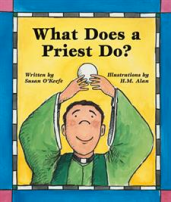
WhatDoesaPriestDoOne resource to begin a conversation—even at a young age— is this flip book published by Paulist Press entitled What Does a Priest Do? / What Does a Nun Do? by Susan Heyboer O’Keefe. (The back cover is the front of the second book, What Does a Nun Do?)

HeSpeaksToYouFor young women (teens and young adults)  He Speaks to You by Sr. Helena Burns, FSP is a daily meditation book directed specifically to teens with super-short meditations, prayers, and activities that encourage a young woman to root her life in Christ and discern how she can follow Jesus in her daily life and in the future.

Help to make deacons, priests and sisters familiar to your children whenever possible.
Find ways to be active at your parish, and encourage your children to participate as well, as a singer in the children’s choir, as an altar server, as a member of the Junior Legion of Mary, etc. In addition to helping them engage in parish life, they will also see the priest(s) at the parish more often.

If you have a friend who is a sister, deacon, or priest, invite them over for a family dinner.

Encourage your child to become a pen pal of a religious priest or sister. (Sr. Christina Marie Neumann, OSF, has offered to match up a few pen pals with sisters in her community, the Franciscan Community of Dillingen-Hankinson, North Dakota Province. (Website home at www.ourfranciscanfiat.wordpress.com)

Sister-Softysmall-683x1024Another resource for young children is from ABCatholic, who has created a unique series of dolls, among them “Sister Softy” who can help to make religious life more familiar for young girls. Unfortunately, many young people never have the opportunity to meet religious sisters, especially sisters in habits. Sadly, the habit, which is meant to be a sign of consecration to God but also a sign of God’s loving care, can even make some people feel a bit intimidated to approach a sister. This doll—and others in the series, such as the Carmelite Sister or the Dominican Sister—can help make religious sisters accessible.

Share the lives of the saints with your children.
Share with your children of all ages stories of your favorite saints, planting the seeds for their vocation even at a young age. Use a Catholic calendar to note and celebrate feast days of your favorite saints. Perhaps you can pick a patron saint for your family every year, or choose a patron to celebrate every month.

encounterthesaintsseries

Our sisters at Pauline Books & Media produce fantastic saints’ books for children. My favorite is the Encounter the Saints series (pictured above), which is awesome for middle grade children and young teens. (Sometimes older teens and adults will pick up an Encounter saint book because they want a quick and engaging introduction to a saint’s life.)

SaintsoftheAmericasFor younger children, Saints of the Americas Coloring Book was recently distributed at the World Meeting of Families in Philadelphia as a way to encourage vocations in families.

Our sisters also have a Catholic book club for Catholic schools called JClub (“J” is for Jesus), which provides not just books and resources, but can sometimes include a visit from a sister to the school, if one of our convents is local: www.jclubcatholic.org/

Watching movies on the saints can become a monthly family night. These dramatic portrayals of the lives of the saints not only inspire growth in the faith and knowledge of Church history, but also provide an “inside view” of how different individuals have lived their unique vocations. For recommendations of great saint movies, check out this post on my media blog. 

Perhaps the cutest option for encouraging younger children to encounter the saints for themselves is from the Kiczek family at www.DollsfromHeaven.com:

DollsfromHeavenT

The Kiczek family have created a lovely doll of St. Therese of Lisieux, which comes with accessories: several costumes and a children’s book about her life. The Kiczek family are hoping to create a whole series of saint dolls at www.dollsfromheaven.com. Dolls are a warm way to encourage a child’s relationship with individual saints, as well as introduce the universal vocation to holiness, and the various vocations.

Creatively Use Holy Days and Holidays To Engage Your Children’s Imaginations
Dressing up is a favorite childhood pastime. Halloween gives children and families the opportunity to dress up imaginatively for a night. If your parish, Catholic homeschool group or Catholic school has a themed party for Halloween or All Saints Day, this is a perfect opportunity for your child to dress up as a monk, nun, priest or deacon. An “All Saints Day” party offers the chance to research a saint and dress up as well. A “Dress Up As Your Favorite Saint Contest” at home could also be an opportunity to explore what it means to live a particular vocation to holiness.

Celebrating the feast day of a favorite family saint can include reading the life of the saint aloud together, dressing up, and preparing a meal or dessert that reflects that saint’s nationality. (For more creative ideas about celebrating the saints in your family, check out Catholic Family Fun by Sarah Reinhard.) 

Encourage Retreats and Visits to Shrines, Convents, and Monasteries
There is nothing like seeing religious life in action, to better understand it firsthand. Make a family pilgrimage to a convent, monastery, or seminary during an “open house” or special celebration. If an opportunity arises for an older child to make a retreat, go on a “nun run” (a visit to a series of convents for young women), or something similar, encourage him or her to go.

Encourage Active Participation in Mission Outreach
Encourage your teens to actively participate in mission outreach sponsored and supervised by the parish, diocese, or religious communities. Being sent on mission is a great way for a young person to experience the mission of the Church—a mission they are called to participate in, no matter what their vocation is. Mission experiences can help a young person understand that God has a mission for them to fulfill, and how important it is to correspond to God’s call.

Here are some additional ideas for ways to promote vocations in your family:

How To Promote Vocations in Your Family A comprehensive list of ideas downloadable as a PDF from the Diocese of LaCrosse.

7 Ways Families Can Foster Vocations is a brochure that can be purchased and shared—but also simply read online here.

Catholicmom.com has the most comprehensive resource online that I found for encouraging vocations in the family. I highly recommend checking it out—both for encouraging vocations, but also for great resources on nurturing holiness in our families.

Tips on How To Quiet Our Minds for Prayer

This week, I want to make sure I respond to your questions!  I know that my responses are often delayed by months, and there are probably a few questions that came to me that I didn’t answer. If you have a burning question about discernment, or specifically about religious life, please email me or add a comment! I will try to be  proactive in the next two months and respond to your questions, either individually or as a post, within a week or so.

imag0157
Recently, someone posted a comment to one of my posts about silence. I thought the question was excellent, so I’m reposting the question here, as well as my response.

I was wondering if you had any tips on how to BE silent? Whenever I try to meditate on a reading in silence, or go for a walk, or spend some quiet time in my room to pray, I find my mind instantly wandering to other things. How can I focus quieting my mind, not just my environment?

Entering into silence is often daunting or uncomfortable. Here are a couple of things I did when I first tried to pray silently. Even today, when I’m especially distracted I still go back to some of these, especially #s 1, 3, 4, & 5.

1) Start small. Try to focus your attention for a very short time–maybe 2 to 5 minutes. When your mind wanders (and this happens to all of us!), as soon as you realize it, bring your attention back to what you’re meditating on. Try meditating or praying quietly for 5 minutes a day. After you feel that you are able to focus for about half of that time, increase it to 10 minutes, and so on. Many people pray silently or meditate on the Word of God between 20-30 minutes a day.

2) What time are you choosing to pray? Prayer–especially contemplative prayer–is hard work, so it’s a good idea to find a fairly consistent time when we are quite alert, but not imminently distracted about our responsibilities. This is why early in the morning is a good time to pray for many people; others are able to pray best in the evening–after supper or before bed.

3) If you’re meditating on a reading, choose just one sentence or phrase that “resonates” with you and re-read it slowly several times. What comes to mind as you re-read it? What about this phrase stands out for you? Even if no thoughts or insight arrives, savor the sentence or phrase. Simply spending time with the Word of God and allowing it to enter deep within us can be deep prayer and transformative.

4) Look at the sources or “fonts” of your prayer. If you’re struggling to “quiet” your mind, choose a source that is easier to enter into. The Word of God is the best “font” for our prayer, but different passages are easier than others. For example, it took me several years to learn how to pray with the letters of Saint Paul, while praying with the Gospels–especially with the stories of Jesus healing people–was much easier for me to enter into. Needless to say, I used to pray mostly with the Gospels! Pick a book of the Bible–and the Gospels are ideal–that you can read more easily.

If you’re struggling to read the Bible or if you feel especially distracted, you can pick a spiritual writer that engages you, whom you really like to read. Sometimes another person’s insights can enable us to enter into silence a little more deeply or easily.

5) Talk to God about what you read or are trying to pray with–a spontaneous conversation. If you’re by yourself, you can even talk out loud! Make sure you give God space to respond to you. If you really find it impossible to concentrate, talk to God about what’s on your mind. Once again, after you have opened your heart to the Lord, make sure you take time to listen to his response. You may not “hear” any words or “feel” anything, but even making an act of faith that God is present by listening for him will bear fruit in your day.

6) Choose an environment that enhances your ability to concentrate. For example, try praying in a quiet chapel. If you’re praying in your room, create a simple prayer-corner with a religious image, statue or crucifix, a prayer book, a Bible, and a comfortable chair. If you like to pray outside, pick a beautiful but quiet place. Wherever you choose to pray quietly, use the environment to quiet your mind: focus on the religious image in your room; offer your heart to the Lord as the candle that is burning in the chapel sanctuary; etc. Using beauty or religious imagery to enter into prayer often engages our emotions and enables us to “bypass” our mind’s noisiness and encounter God in our hearts.

* * *

There are so many styles of prayer, and it’s helpful to pray in a variety of ways, depending on what’s going on in our lives, where we are in the moment, how much time we have, and how we feel. Prayer doesn’t always need to be silent or contemplative:

  • Vocal prayer is the easiest way to pray as a community together.
  • Praying amid the bustle of the day is the easiest way to connect with God or stay connected with God. Snatching a moment on a subway commute, praying the Rosary when we’re out for a walk, or making short acts of faith and love while waiting in line at the grocery store are ways that we sanctify our day.
  • But we also need quiet or more focused times when we can have “quality” conversations with God. The quiet in our prayer is important because it helps us develop the habit of listening for God and to encounter God more fully in the depths of our hearts. 

Discernment Tips for National Vocation Awareness Week

Sr. Margaret Michael Gillis, Vocations Director for the Daughters of St. Paul, is offering a daily discernment tip on video for National Vocations Awareness Week. Her first tip is an invitation to pray for vocations, and you may want to check out the rest through the week at the Daughters of St. Paul Facebook Page. (I’ll try to post them here as I can.)

How To Overcome Obstacles in Discerning Consecrated Life & National Vocation Awareness Week

woman-571715_1920This week—from Sunday, November 1 until Saturday, November 7, 2015—is National Vocation Awareness Week. The United States Conference of Catholic Bishops invites us all to dedicate this week to promote vocations specifically to the priesthood, diaconate, and consecrated life through prayer and education, and to renew our prayers and support for those who are considering one of these particular vocations.

With the recent Synod on the Family, the importance for young people to discern and be formed in their vocation to marriage is recognized, but there is one big difference. In our culture, marriage as we understand it as Catholics may be under pressure, but it is still considered a “usual” or “normal” path in life. Whereas ordained and consecrated life are the “hidden” or “forgotten” options for many young people. There could be any number of reasons for this, but in working with young people, I’ve found there’s usually just a few:

  • Out of sight, out of mind. A young person has never truly connected with a young priest, deacon, or religious, and so the thought that he or she could have a similar vocation never comes to mind.
  • Celibate chastity is so counter-cultural in our “do whatever feels right” culture obsessed with pleasure and sex, it’s immediately dismissed as “not possible.”
  • Similarly, the vow of poverty is absurd to someone immersed in the materialistic culture
  • The mistaken belief that true freedom means to be absolutely unencumbered by any form of restraint whatsoever, makes the priestly or religious vows unthinkable: like an unbearable lifetime of captivity.
  • Fear of commitment
  • Fear of unworthiness to be consecrated to God

National Vocation Awareness Week (NVAW) is especially helpful for highlighting consecrated life as a valid vocation to discern; NVAW can also help to address the misunderstandings that people often have about a life consecrated to God’s service. Great joy, beauty, love, and goodness flow from authentically living a priestly, diaconal, or religious vocation.

Of course, the greatest joy and love flow from living one’s own authentic call, so the point of National Vocation Awareness Week is not to put pressure on anyone, but to ensure that the full range of beautiful vocations in the Church are understood,  considered, and discerned.

Through the week, I hope to:

  • Answer the most recent questions about religious life that  have come in. Feel free to email, comment, or tweet me with your questions. (Note: I’m only on Twitter once or twice a day, so to reach me through Twitter, I believe you have to add a period in front of my name: put .@SisterMPaul at the beginning of your tweet, otherwise I might miss your question.)
  • Tweet resources that I discover through the week (and I’ll try to list them on the blog)
  • Highlight resources for nurturing vocations to religious life, priesthood and diaconate in the family, which is ideally the place where one can find the greatest support for discerning and taking the first steps to follow one’s vocation.

In addition, as I mentioned earlier, you can support NVAW in prayer by: downloading reflections for each day, a holy hour that you can pray for vocations this week, and a digital prayer card (PDF) that you can pray with and share, as well as other resources here on the USCCB’s website.

Discerning with Mary, the Mother of Jesus

06_CC Sr Tracy

In Genesis, when God specifically promises to redeem humanity by sending the Savior, he speaks of Mary as “the woman” who is Satan’s enemy and whose Son will overcome the devil definitively. When we cultivate a relationship with Mary, the Mother of Jesus, we draw close not just to Mary but to Jesus. As our Mother, Mary wants us to be united to her Son, and she will clear the way of obstacles for us, most especially the devil’s temptations.

Many saints speak eloquently about Mary’s power over Satan and her ability to lead us to Christ. This is an excerpt from one of my favorite prayers to Mary by Blessed James Alberione:

“O Mary, grant that we may listen to, follow and love Jesus Christ the Divine Master! May sin never stain our souls consecrated to you. Immaculate Virgin, crush the head of that insidious demon of discouragement.

Live in our midst, Mary; blessed are they who dwell in your house.”
– Blessed James Alberione

In his beautiful apostolic letter On the Most Holy Rosary, Pope St. John Paul speaks about our entering into the “school” of Mary because “No one has ever devoted himself to the contemplation of the face of Christ as faithfully as Mary. The eyes of her heart already turned to him at the Annunciation, when she conceived him by the power of the Holy Spirit…. Mary lived with her eyes fixed on Christ, treasuring his every word” (On the Most Holy Rosary, nos. 10 & 11).

Mary is both a wonderful model for our discernment and a powerful intercessor so that we can receive the light of the Holy Spirit in order to “see” or contemplate Christ’s presence in our lives. Mary is not just the Mother of Jesus, but our Mother, too, and her greatest desire is to lead all of her children to her Son. Praying to Mary regularly is life-changing.

Countless Marian prayers and traditions can help us to grow in our relationship with the Blessed Mother. The Rosary is especially fruitful as a prayer to help us grow in a spirit of discernment because when we contemplate Jesus by praying the Rosary, we do so with Mary, the first and truest disciple of Jesus who most closely sought and lived the will of God. When we pray the Rosary, we meditate with Mary on Jesus’ life: how Jesus lived the will of his Father while on earth. We can also meditate on how Mary recognized and responded to God’s invitations in a spirit of faith and obedience. The subjects for meditating on the mysteries of the Rosary are endless.

The saints are eloquent about how devotion to Mary changes our lives. If you are looking for more resources on growing in your relationship with Mary, here is a short list of new titles that introduce devotion to Mary and the Rosary, and a few of the classic books on Mary that foster devotion to her.

Discernment in Times of Temptation

06_EE Pixabay (2)Sometimes people raise the question how to distinguish the voice of God from the voice of the devil. It’s a good question because the devil truly is the father of lies and an expert at deception. The devil often preys upon our deepest faults, and because of this, his voice can sometimes be hard to recognize.

God allows the devil to tempt us, but God never allows us to be tempted beyond our strength. Jesus has already conquered the devil, sin, death, and all consequences of sin. So in our discerning, we seek to make sure that we are attuned to the voice of God, and not deceived by the voice of the devil.   

The closer we grow to Christ, the more subtle the devil has to become in the ways he tempts us. If we are truly discerning God’s will, the devil may not be tempt us outright, but manipulates us by using our worst faults and sinfulness—especially our negative thoughts—to try to draw us away from intimacy with God. This is where the expertise of an experienced spiritual director can help us recognize a temptation more quickly than we would on our own.

The devil is not privy to our private thoughts and our conversations with God. But the devil is a keen observer of both human nature and our behavior, and thus can deftly nudge us towards thoughts that lead us away from faith and into self-doubt, discouragement, and self-righteousness—thoughts that we might easily fall into or have on our own—without our even realizing what’s happening. And the devil often uses the subtlety of our thoughts to deceive us.

A basic criteria to discerning the devil’s voice is the question: Does this [thought, choice, action] help me to grow closer to Christ and keep my focus on him?

If the thought focuses my attention on myself in an unhealthy or discouraging way, then it is most likely a temptation.

* * *

Here is a personal example of how the devil uses one of my weaknesses—my perfectionism and tendency towards being overly self-critical. For years I thought that this was actually humility, so it took me a long time to recognize the pattern of temptation that happens to me repeatedly:

  1. Relying on God’s grace, I work hard to accomplish something in our mission—for example, perhaps I wrote an article. I know that the article is not perfect, but I did my best with the time and resources I had, and I entrust the results to God, praying that the readers of the article will be touched and feel God’s invitation.
  2. Afterwards, I’ll reflect on the article. How was it received? When I re-read it, what do I like about it? What is missing? How could I have written something that would bring more people to encounter the Lord?
  3. It’s during this reflection—which is actually important to do if I want to improve what I’m writing—that the devil jumps in. Rather than noticing what I could improve for next time and then humbly offering the article and its readers to God’s loving care, I’ll start to focus on the fact that I didn’t do a perfect job. My feelings of dissatisfaction that the article wasn’t perfect will start to grow, and then quickly spread to other areas of my ministry and of my life.
  4. Pretty soon, I’m dissatisfied with everything I do, and with myself overall. All I can see is my faults, my omissions, and what I’m not doing well. Once I’ve started riding this train of thought, I’m focusing not on what actually happened but on myself and everything I haven’t done. This is an express ride to discouragement.
  5. If I don’t recognize that I’ve jumped onto this train of discouragement, I may stay in a discouraged state focused on myself for days or even weeks. This kind of discouragement prevents me from taking risks in my ministry because it has sapped my trust in God and my self-respect. Worst of all, I end up focused on myself rather than on God, even though I started with the good intentions of growing in humility, and of trying to improve in my ministry.

The devil knows that being hyper-critical of myself is a place where I am vulnerable, and so preys on this weakness. Over the years, with the blessings of God’s grace, spiritual direction, and good friends, I can often recognize what’s happening pretty quickly. I still evaluate my apostolic work and efforts, but I’m careful to always conclude by offering each effort and my littleness to God, and even to rejoice in my littleness. In these times, the temptation to discouragement is transformed into an opportunity to grow in true humility.

* * *

Our Catholic traditions of the spiritual life are all helpful in drawing us closer to the Lord and away from the devil. But three guides that are particularly helpful for growing in a spirit of discernment are: Jesus’ gift of himself in the Most Blessed Sacrament, our relationship with Mary, our Blessed Mother, and praying with the Word of God. All three of these topics deserve their own books…but in upcoming posts, we’ll look briefly at them in light of discernment.

How Does God See Us?

KONICA MINOLTA DIGITAL CAMERAA second way to grow in our true and deeper understanding of ourselves is to pray with Scripture passages that help us to understand who we are: who we are created to be, who we are called to be. From Genesis to Revelation, the Bible is full of God’s understanding of who we are, God’s love for us, God’s invitation for us to grow into “other Christs.”

If we have been praying with the Scriptures for several years or more, we might find it helpful to look back at our spiritual journey and make note of the Scripture passages that were foundational for our journey in Christ. These key Scripture passages resonated with us in part because they told us who we are in God’s eyes, and how God is inviting us to become our best selves in Christ. Picking 5 or 6 of these Scripture passages to go back to and pray with can be very helpful in reaffirming our true identity: as children of God, as disciples of Christ, as sent by the Spirit.

For those who’d like, here is a short list of passages from the Bible that affirm our identity in God, in Christ. Please add your favorite passage to this list in the comments below, and I’ll add them in!

  • Isaiah 43:1-7
    God speaks to us: “You are precious in my eyes, and honored, and I love you.”
  • Psalm 139
    “O Lord, you search me and you know me.”
  • Ephesians 1:3-10
    “He chose us in him before the world began.”
  • Ephesians 2:4-5
    “But God, who is rich in mercy, out of the great love with which he loved us, even when we were dead through our trespasses, made us alive together with Christ.”
  • Zephaniah 3:17
    “The Lord your God is in your midst,
         a warrior who gives victory;
    he will rejoice over you with gladness,
    he will renew you in his love;
    he will exult over you with loud singing.”
  • John 15:15
    “No longer do I call you servants, for the servant does not know what his master is doing; but I have called you friends, for all that I have heard from my Father I have made known to you.”
  • 1 Corinthians 6:19
    “Do you not know that your body is a temple of the Holy Spirit within you, which you have from God? You are not your own; you were bought with a price. So glorify God in your body.”
  • Ephesians 2:10
    “For we are his workmanship, created in Christ Jesus for good works, which God prepared beforehand, that we should walk in them.”
  • 1 Peter 2:9
    “But you are a chosen race, a royal priesthood, a holy nation, God’s own people, that you may declare the wonderful deeds of him who called you out of darkness into his marvelous light.”

SeeYourselfCoverFor guided meditations on discovering who we are in God’s eyes, you can check out my book, See Yourself Through God’s Eyes: 52 Meditations To Grow in Self-Esteem.  You can also check out the app (free on iTunes, .99 on GooglePlay) or other free resources here.

Discovering Our True Identity: Essential for Discerning

06 AA Sr EmmaualIf our “false self”—the self driven by sin and by a false identity—is sometimes our greatest obstacle on our discernment journey, our “true self” is one of our greatest allies in our discernment journey.

The closer we grow to Christ, the more we start to see the world, others, and ourselves, with the eyes of Christ. What is our true identity? As discussed earlier, we find our true identity in God. Two ways to come to a truer sense of ourselves immediately stand out: Seek self-knowledge and learn to see ourselves through God’s eyes.

1. Seek self-knowledge

Getting to know ourselves—without false vanity, without the shadow of sin—is true humility. Self-knowledge is often marred by two opposite tendencies—sometimes simultaneously. Either 1) we ignore our faults altogether and become prideful, attributing our gifts to ourselves rather than God, or 2) we fall into the slump of seeing ourselves too negatively, only seeing our faults and limitations.

Genuine self-knowledge comes through prayer, living reflectively (especially through the examen), and openness to discovering the truth about ourselves.

Humility is knowing ourselves as graced and weak, blessed and sinful. If we can become comfortable in this truth about ourselves, then we are much less likely to get in our own way on our discernment journey. Humility can be uncomfortable, especially when our illusory image of ourselves as overly powerful and in control is shattered. In these moments, it can be helpful to cling to God’s love, in which we can find the true anchor of our identity. Isaiah 43:4 is a great reminder: “You are precious in my sight, and honored, and I love you.”

We can pray for self-knowledge to the Holy Spirit, asking especially for the gifts of the Holy Spirit. In his Confessions, Saint Augustine offers a prayer for self-knowledge: “Let me know Thee, O Lord, who knowest me: let me know Thee, as I am known” (Confessions, Book X). The following Petitions of Saint Augustine is a beautiful and powerful prayer that is helpful to pray regularly. I’ve adapted it slightly for today’s usage.

LORD JESUS, may I know myself and know You, and desire nothing else but You.

May I hate my [false] self and love You.

May I do everything for the sake of You.

May I humble myself and exalt You.

May I think of nothing except You.

May I die to myself and live in You.

May I receive whatever happens as from You.

May I banish self and follow You, and ever desire to follow You.

May I fly from myself and fly to You, that I may deserve to be defended by You.

May I fear for myself and [be in awe of] You, and be among those who are chosen by You.

May I distrust myself and trust in You.

May I be willing to obey on account of You.

May I cling to nothing but to You.

May I be poor for the sake of You.

Look upon me that I may love You.

Call me that I may see You, and ever and ever enjoy You.  Amen.

What Do We Need To Be Freed from To Discern Well?

06Z Pixabay

One of our biggest obstacles in discerning God’s will in our life is ourselves. Because of original sin—the sin of Adam and Eve which has marked every human being—we are prone to sin. In our discernments, we want to “sort through” our desires, distinguishing between disordered desires which can lead to sin and genuine desires that well up from deep within and reflect our true identity.

Sometimes when we find ourselves in difficult situations, we’ll discover that our main difficulty is really ourselves. We might think that if we just didn’t have to deal with this situation, or this person, or this challenge, we’d be fine. And then we end up in a new situation and we find that it’s not the situation that was the problem, it’s ourselves and how we deal with the situation.

* * *

I remember one time as a younger sister when I found myself in what I thought was a really difficult situation. Another sister and I really clashed, and it made community life really challenging for me. At the end of the year, I was transferred to a new community. At first I was thrilled, thinking everything was great. Then I started running into the exact same difficulties that I had run into before!

Gradually, I realized that although the circumstances of life would never be perfect, what made them unmanageable was me. My particular faults—in this case my high expectations, my desires for perfection, and my impatience with others—were really at the root of my problem in getting along with the other sisters. It was a hard lesson to learn, but a wonderful opportunity to get to know myself better. I realized that sometimes—perhaps more often than I’d like to admit—I am my own worst enemy!

* * *

In discernment, we spend a lot of time seeking greater freedom. (This is why sometimes we need to take a longer time to discern.) In our discernments, we seek freedom:

  • from our ego
  • from our tendency to seek ourselves or to put ourselves ahead of God
  • from our disordered desires
  • from the world’s materialistic and secular perspective
  • from others’ expectations

When Saint John the Baptist was pointing to Christ as the Messiah, he made a wonderful statement that fits this aspect of discernment: “He [Christ] must increase, but I must decrease” (Jn. 3:30). Discernment is about giving Christ and his will for us more and more space in our life, so that our true identity as disciples of Christ can clearly emerge.