Inspiring Vocation Story from a Daughter of Saint Paul

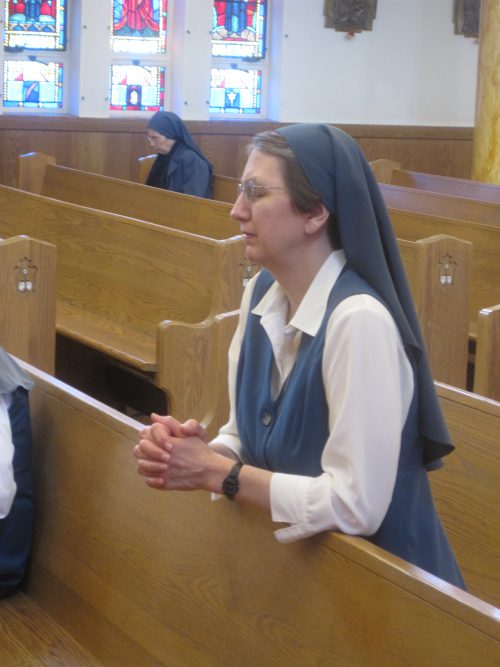
I’m delighted to share with you this lovely vocation story of Sr. Maria Kim, FSP, who recently made her perpetual profession in the Daughters of Saint Paul. Not only is she very open about the steps of her discernment, but there are “tips” and feedback from other young women who  witnessed Sr. Maria Kim’s perpetual profession while discerning religious life.

As you enjoy her inspiring story, pray for young people discerning their vocations, that they may have the same openness and joy to Christ’s call of love.

#Discernment: Is the Vow of Chastity Too Hard To Live?

In the responses to the poll about obstacles to considering priestly or religious life, the obstacles that came up repeatedly were the vows.  Although we looked at them briefly in the post about religious life, I thought that perhaps sharing some personal experience of living these vows could show the beauty and value of consecrated life.

Religious life is meant to be a life directed towards a closer following of Christ—carrying the cross with Jesus here on earth, trusting in God’s loving providence to draw us closer to himself, both here and in eternity. Every vocation has its call to sacrifice and heroism, but the constancy of the sacrifices in religious life have led some to call it  “a slow martyrdom.” That has less to do with the conspicuous sacrifices of the vows, and more to do with laying down lives in service to others. It’s the vows that give religious the freedom to love with an undivided heart.

“Celibacy is too hard.”

Celibacy is hard. I don’t deny it. Every human being is created for the intimacy of spousal love, and celibacy is giving up the physical expression of spousal love. Renouncing the physical intimacy of sex for the sake of Christ and his kingdom is a real sacrifice. Celibacy means not having the unconditional support of one’s spouse, nor having someone in your life who is always there for you. Celibacy (or consecrated chastity as it is often called) means times of loneliness.

However, celibacy doesn’t mean giving up all emotions and relationships. It  mean that our exclusive relationship is with God. So the wise celibate is attentive to nurturing meaningful relationships with other people in his or her life—with family, community, and friends—so that they remain emotionally healthy and can rely on a certain level of human companionship. For me personally, sharing life with my sisters in community is one of my greatest joys and supports in living religious life and the vows.  

IMG_0590What does it mean to have an exclusive relationship with God? It means that the “Someone” whom we go to first, the One is always there for us, the One to whom we give ourselves completely, is God.  As we grow in our exclusive relationship with God, we find ourselves falling more and more deeply in love with him: we rely always more on him, becoming more aware of his presence in the tiny details of our day; our desire to do God’s will and to serve God’s people always more deepens; and our love continually grows. A special intimacy develops between us and God.

For priests and men religious, the “spouse” is the Church. For women religious, our spouse is Christ himself. For both men and women religious, spousal love is expressed primarily in loving all of God’s children, and especially Christ in his members, the Church.

One key aspect of spousal love is fruitfulness. Just as married love is to be open to the creation of new life, so the love of religious and priestly life is to be fruitful, as spiritual fathers and mothers of God’s People. This spiritual parenthood is expressed in countless ways.

I was recently at a faith sharing with a number of other Catholic women who were talking about the joys and challenges of being married. I’m sure they just thought I was listening, but I added my comment in the end—a comment that I borrowed from Sr. Helena Burns. “My Spouse is perfect. The only problem is that, when we disagree about something, he’s always right.”

Our Founder, Blessed James Alberione, called chastity the greatest love. I think part of what he meant by that is that our spouse is the perfect Lover; but perhaps he also meant that chastity is a very self-sacrificing love, with fewer tangible rewards here on earth. For me, chastity is a treasure that keeps my gaze and my attention focused exactly where it should be: on God and his People.

FYI: #RisenMovie DVD Giveaway

Risen_Static_728x90_Faith_60k_pre

Just wanted to let you know that on my other blog, Windows to the Soul, I’m running a free DVD giveaway for 3 copies of the film RISEN, which released digitally last week and releases to DVD on Tuesday, May 24th. It’s a beautiful film with many openings for reflecting on and sharing about faith: coming to faith, searching for Jesus when he seems absent, and how we choose to live our faith.

On May 27th, I’ll post a lectio divina guide for the film, and also choose the winners.

If you’re interested in participating in the giveaway, just click on the image below to enter!

Screen Shot 2016-05-20 at 8.23.10 AM


Considerations on Discerning Priesthood

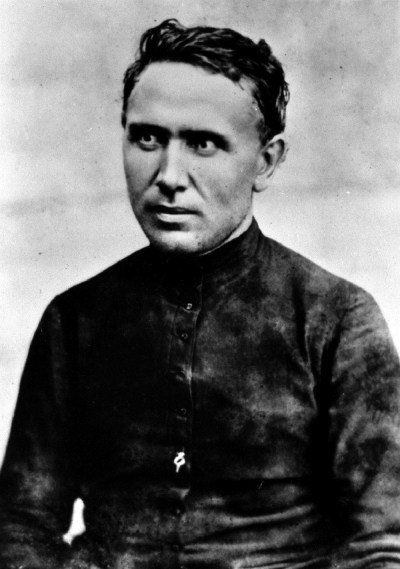
 A Saintly Priest: Father Damien of Molokai Photo credited to Sacred Hearts Archives, Rome - http://www.hawaiimagazine.com/images/content/Damien_Hawaii_Saint_Molokai_Kalaupapa_canonization/Damien%20p1.jpg, Public Domain

A Saintly Priest: Father Damien of Molokai
Photo credited to Sacred Hearts Archives, Rome – In Public Domain

“In the unity of the Christian life, the various vocations are like so many rays of the one light of Christ, whose radiance “brightens the countenance of the Church….’  Sacred ministers, for their part, are living images of Christ the Head and Shepherd who guides his people during this time of “already and not yet”, as they await his coming in glory.” (Vita Consecrata, #16)

“The priestly vocation is essentially a call to sanctity, in the form that derives from the Sacrament of Holy Orders.  Sanctity is intimacy with God; it is the imitation of Christ, poor, chaste and humble; it is unreserved love for souls and self-giving to their true good; it is love for the church which is holy and wants us to be holy, because such is the mission that Christ has entrusted to it.  Each one of you must be holy also in order to help your brothers pursue their vocation to sanctity.” — Pope St. John Paul II, Rome, Italy, Homily on October 9, 1984

“His calling is a declaration of love. Your response is commitment, friendship, and love manifested in the gift of your own life as a definitive following and as a permanent sharing in his mission and in his consecrations.  To make up your mind is to love him with all of your soul and all of your heart in such a way that this love becomes the standard and motive of all your actions.  From this moment on, live the Eucharist fully; be persons for whom the Holy Mass, Communion, and Eucharistic adoration are the center and summit of their whole life.  Offer Christ your heart in meditation and personal prayer which is the foundation of the spiritual life.”  —Pope St. John Paul II, Valencia, Spain, November 8, 1982

“The world looks to the priest, because it looks to Jesus!  No one can see Christ; but everyone sees the priest, and through him they wish to catch a glimpse of the Lord!  Immense is the grandeur of the Lord! Immense is the grandeur and dignity of the priest!” —Pope St. John Paul II, Rome, Italy, October 13, 1979

The Vocation of Priesthood

Priesthood is the vocation of men who are ordained and consecrated to serving the People of God in persona Christi, or “in the person of Christ” who is Teacher, Priest, and King. Priests share in Christ’s ministry, building up the People of God as the Body of Christ and the Temple of the Holy Spirit.

Priests take the vow of celibacy, in order to be more closely configured to Christ and so that they can completely dedicate themselves to their priestly ministry. They also take a vow of obedience to their bishop (in whose priestly ministry they share). The primary areas of priestly ministry are teaching, governing and sanctifying the People of God. Key aspects of priestly ministry include:

  • administering the sacraments, especially celebrating the Eucharistic Sacrifice and absolving sins in the sacrament of Reconciliation
  • preaching the Word of God and explaining it
  • shepherding the People of God,  accompanying them on their journey

Because they are called to lead the People of God on the way of salvation, priests have a special obligation to a life of holiness. Their vocation to love is that of service, but rather than an exclusive service dedicated to their own family, priests are called to be fathers and shepherds to everyone. Their vocation can be summed up thus: A priest is called to be Christ for all whom he meets.

FrMark2sme

Here is an excerpt from Vatican II’s document on the priesthood, Presbyterorum ordinis, describing the purpose of the priesthood:

The office of priests, since it is connected with the episcopal order, also, in its own degree, shares the authority by which Christ builds up, sanctifies and rules his Body…. Priests, by the anointing of the Holy Spirit, are signed with a special character and are conformed to Christ the Priest in such a way that they can act in the person of Christ the Head…

The purpose, therefore, which priests pursue in their ministry and by their life is to procure the glory of God the Father in Christ. That glory consists in this—that men working freely and with a grateful spirit receive the work of God made perfect in Christ and then manifest it in their whole lives. Hence, priests, while engaging in prayer and adoration, or preaching the word, or offering the Eucharistic Sacrifice and administering the other sacraments, or performing other works of the ministry for men, devote all this energy to the increase of the glory of God and to man’s progress in the divine life. (#2)

To sum up, priests are called, ordained, and consecrated to God’s service, sharing in the very ministry of Christ himself, and continuing Christ’s presence in the world through celebrating the sacraments, proclaiming the Gospel, and shepherding the People of God throughout their lives. They are dedicated in a particular way to the service of the Church.

Particular Graces & Strengths of Priesthood

The framework for priesthood is a celibate life dedicated to ministry. Presbyterorum ordinis highlights several virtues or characteristics that are especially helpful for priestly ministry:  goodness of heart, sincerity, strength and constancy of mind, zealous pursuit of justice, and affability. In talking to priests, Pope Francis often highlights the importance of the priest’s relationship to Christ, the priest’s closeness to the people he serves, his dedication to service, and personal integrity and humility as key aspects of what it means to be a priest.

Pope Francis’s recent reflections on the priesthood are helpful in understanding how important human formation and the family, closeness to Christ and his flock, and the call to serve, are to the life and vocation of every priest. You may wish to bring his thoughts, as well as the Scripture passages below, to prayer.

A good priest, therefore, is first of all a man with his own humanity, who knows his own history, with its riches and its wounds, and who has learned to make peace with it, reaching an underlying serenity, that of a disciple of the Lord. Human formation is therefore a necessity for priests so that they learn not to be dominated by their limitations, but instead to build on their talents…

We priests are apostles of joy, we proclaim the Gospel, that is, the “good news” par excellence; it is certainly not we who give strength to the Gospel — some believe that —, but we can either help or hinder the encounter between the Gospel and people. Our humanity is the “earthen vessel” in which we safeguard the treasure of God, a vessel which we must take care of, in order to properly pass on its precious content.

A priest cannot lose his roots; he always remains a man of the people and of the culture that engendered him. Our roots help us to remember who we are and where Christ has called us.

Answering God’s call, you become a priest to serve your brothers and sisters. The images of Christ that we take as a reference for the ministry of priests are clear: He is the “High Priest”, close in the same way to God and to mankind; he is the “Servant”, who washes feet and who becomes a neighbor to the weakest; he is the “Good Shepherd”, who always has as his goal the care of the flock.

There are three images that we should look to when thinking about the ministry of priests: sent to serve men, to help them obtain the mercy of God, and to proclaim his Word of life. We are not priests for ourselves, and our sanctification is closely linked to that of our people, our unction for their unction; you are anointed for your people….The good that the priests can do is born mainly from their closeness and their tender love for people. They are neither philanthropists nor officials; priests are fathers and brothers. The fatherhood of a priest does so much good.

Closeness, the depths of mercy, a loving gaze: to experience the beauty of a life lived according to the Gospel and the love of God, which is also made concrete through his ministers. God never refuses. —Address of Pope Francis, Nov. 20, 2015

Resources for Prayer and Reflection About the Vocation to Priesthood

Here are a few Scripture passages to pray with, that could be helpful for someone  discerning his vocation to the priesthood.

  • Exodus 3:1-15 Call of Moses
  • Isaiah 42:1-7 “I have given you as a covenant to the people, a light to the nations”
  • Matthew 9:35-38 “The harvest is plentiful, but the laborers are few”’
  • John 13:1-15 Jesus washes the feet of the disciples
  • 1 Peter 2:4-10 “Let yourselves be built into a spiritual house, to be a holy priesthood”
  • Hebrews 4:12-16 “Let us confidently approach the throne of grace to receive mercy and favor”
  • Hebrews 5:1-10 “You are a priest forever”

If you are reading this blog but not discerning priesthood, join me in taking a few moments to  pray for future priests: those currently discerning, and those who have not yet received Jesus’ invitation to become a priest. 

Connecting Lent & Discernment: 2 Amazing Journeys

sand-768783_1280Today is Ash Wednesday, the first day of an amazing six-week opportunity for a spiritual “makeover,” for deepening our relationship with God, for experiencing anew God’s great mercy.

So many connections between our discernment journey and our Lenten journey are immediately obvious. Any time that we focus on renewing, revitalizing, and deepening our relationship with God, our ability to discern is also going to grow. This Lent, in addition to making the 7 Qualities of Mercy online mini-retreat, I have decided to focus my Lent around listening. Listening is a wonderful quality that is a prerequisite for genuine communication—with God first of all, but also with self and with others.

Pope Francis talks about the importance of listening in our relationships in this year’s Message for the 50th World Communications Day:

Communicating means sharing, and sharing demands listening and acceptance. Listening is much more than simply hearing. Hearing is about receiving information, while listening is about communication, and calls for closeness. Listening allows us to get things right, and not simply to be passive onlookers, users or consumers. Listening also means being able to share questions and doubts, to journey side by side, to banish all claims to absolute power and to put our abilities and gifts at the service of the common good.

Listening is never easy. Many times it is easier to play deaf. Listening means paying attention, wanting to understand, to value, to respect and to ponder what the other person says. It involves a sort of martyrdom or self-sacrifice, as we try to imitate Moses before the burning bush: we have to remove our sandals when standing on the “holy ground” of our encounter with the one who speaks to me (cf. Ex 3:5). Knowing how to listen is an immense grace, it is a gift which we need to ask for and then make every effort to practice.

You might have noticed that Pope Francis talks about listening as a form of self-emptying love, similar in a way to Jesus’ kenosis in taking on our human nature and in dying on the cross. Listening can be a sort of martyrdom. In truly listening, we can imitate Jesus’ self-giving, sacrificial love for us, by putting ourselves and our agendas aside and becoming deeply receptive to whomever we are listening to. Deep listening enables us to become aware of the sacredness of the other. Even if we are just having an ordinary, everyday conversation, deep listening takes us beyond the surface to glimpse the depth of someone else’s humanity and thus, how beloved they are by God.

Lent is a time to die to ourselves so that we can rise with Christ. Learning to listen better is a concrete way to die to self and to welcome the other in a genuine encounter of love and mercy. When we really hear one another, we are more likely to respond to them with compassion, gentleness, and mercy. As attentive listeners, we can discover God speaking to us—not just in prayer and in his Holy Word, or within ourselves in the depths of our own hearts—but especially in the words and unspoken longings and vulnerabilities of others with whom we relate.

Deep listening will enrich our discernment journey, eventually becoming more and more foundational to our prayer and our daily seeking the will of God.

* * *

Join me in making the 7 Qualities of Mercy Online Mini-Retreat.

7 QUALITIES FB

Does Everyone Need To Discern Their Vocation?

streak-275978_1280Often when we begin discerning our vocation, we already have an inkling about which vocation we are drawn to or God might be calling us to. But one reader recently raised this question:
What if we are pretty sure we already know how God is calling us—do we still need to discern our vocation?

Many people do not feel the need to discern their vocation. Lots of good Catholics never heard about the spiritual art of discernment or never considered discerning their vocation.

A formal vocational discernment may not always be necessary, but there are compelling reasons and excellent benefits for discerning our vocation, even if we are already strongly inclined in one direction. If we are wondering if we should discern our vocation, we might find it helpful to do so for the following reasons:

1) Committing to our vocation is a huge decision that shapes the rest of our lives. Taking time to consider our vocation gives us the opportunity to look at all the possibilities at least once, even the ones we haven’t considered.

If we haven’t witnessed or been inspired by people striving to live their vocation to holiness in a particular state in life, we may not feel drawn to that state simply because it’s not been part of our experience. While some people want to be priests or sisters from an early age, others are surprised by an insight or experience only after reaching adulthood. Other people may need to consider the full beauty and potential of marriage. Every vocation is beautiful, and there is a special complementarity between married family life and consecrated religious life—a complementarity that can support and strengthen us in our vocations in the future.

Since God gave us the gift of our lives, knows us best, loves us and wants what is best for us, it makes sense to consider his plan in creating us and putting us in this time and this place. If we want to be happy, then it it is fitting to seek God’s will.

2) Discerning our vocation helps us to know and follow God’s will for our lives. Even if we think we already know God’s will, it’s a wonderful opportunity to open ourselves to his loving plan, and to learn and/or grow in the art of discernment—a spiritual art that we want to use throughout the rest of our lives.

3) Knowing that we carefully discerned our vocation can be very reassuring for those times in the future when we are struggling or facing doubts in our vocation. We can rest assured that we sought God’s will, and that, even in the darkness or challenges that we face, we are living God’s call.

If we have already chosen our vocation and are living it, do we need to feel bad if we didn’t discern it? Absolutely not! Most people consider their choice very carefully before making such a commitment, even praying over it. God works with all of us individually and guides us, even when we don’t know we are being guided. We may think we didn’t discern because we didn’t follow certain steps, but most likely the Holy Spirit was at work in us, especially if we were prayerful and seeking God’s will.

We cannot always see how God leads and guides us, but we can be sure that God has led us in the past and will continue to lead and guide us into the future. Discernment simply helps us to be more aware of and attentive to God’s presence and work in our lives.

Checklists for Discerning Our Vocation

Many of us discern our vocation informally through the years. When we enter more intentionally or deeply into vocational discernment, we need a few things already in place in our lives. If we aren’t currently trying to live these already, we will find them of immeasurable help in our discernment. But before I post my list, I want to share about another list, found in a book that I highly recommend:

GeekpriestCover

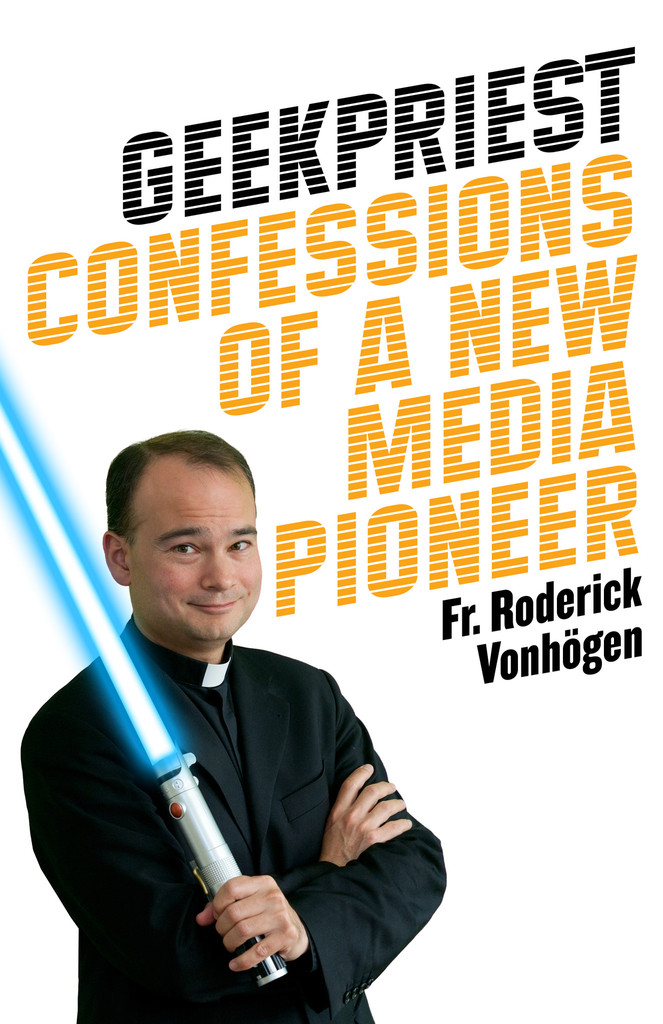
In his book, Geekpriest: Confessions of a New Media Pioneer, Father Roderick Vonhögen shares the story of his vocational discernment in chapter 2, “Spider-Man’s Day Job.” He compares discerning our vocation with the typical superhero story, and shares a checklist for what we can learn from superheroes in discerning our vocation. (How cool is that! I wish I’d had this checklist when I was discerning!)

Father Roderick’s “Superheroes Checklist” is insightful and a great deal of fun for those with geekish tendencies (like myself) who enjoy superhero stories, but it also makes discernment very accessible to anyone who has seen even one superhero film. Included in his checklist are: seek solitude, study and read, discover your strengths and acknowledge your weaknesses, be humble, listen to your friends, do not fear, and persevere.

Geekpriest is a great, fun read and I highly recommend it for young people, as it offers a fascinating and entertaining “inside look” at the life of a dedicated priest, as well as offering helpful ways for living as a Catholic amid our social-media-inundated world. If you are discerning a vocation to the priesthood, the whole book is a fun read that will also get you thinking and praying! (You can read my full review here.)

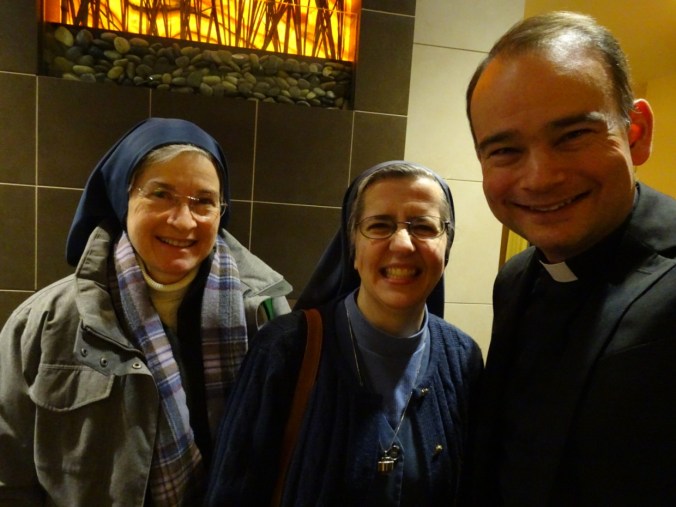
At a recent meeting with Father Roderick. (With me is Sr. Anne Flanagan aka @Nunblogger)

I was excited and thrilled this week to meet Father Roderick. (Sr. Anne Flanagan aka @Nunblogger is with us)

Below is my less-fun, not super-hero related list of essentials to put in place in your life as you begin or continue to discern your vocation. (Notice that my list intersects with Geekpriest’s SuperHeroes Checklist in more than one place!) This list also sums up a whole slew of my previous blog posts.

1. A dynamic prayer life and sacramental life. Have a real relationship with God that is living and growing. This means a regular prayer life, not just a “hit or miss” approach, or only praying “when I feel like it.” If you haven’t already, commit to daily prayer.

Becoming an “expert” in prayer is a lifelong journey, but having a genuine relationship with God when we are seeking his will is essential. How better to learn how to recognize God’s invitation in the big decisions we have to make, than to listen to God every day?

The sacraments are the privileged ways that the Church offers us an encounter with Christ. Frequently participating in Holy Mass (Sunday Mass is the minimum) and regular reception of the Sacrament of Reconciliation are the ordinary means for growing in our relationship with God. They might seem “ordinary,” but both sacraments are really hidden miracles in our midst.

At Mass, we adore, thank, offer ourselves with, and receive Jesus himself, who delights in sharing himself with us and inviting us into his own relationship with the Father. In the Sacrament of Reconciliation, all of the obstacles that we put between God and ourselves—our sins, woundedness, and flaws—are forgiven and healed in a sacred encounter with Jesus’ merciful love.

2. Strive to live a good moral life. All of us are called to holiness, to grow in union with God here on earth, a union that will be fulfilled in perfect communion with God in heaven. Every vocation is a call to profound holiness. Constantly living in a state of serious sin means we are putting obstacles between us and God. All sin is a roadblock for our discernment, because sin is turning away from God’s will and choosing our will over God’s. Instead, discernment is striving to know and live God’s will. We do not need to be sinless to discern because we are all sinners, but we want to be striving to be upright, sincere about our journey of growing in virtue.

3. Trust in God. We can grow in trust in God by pondering and praying with these truths:

  • God loves us
  • God knows us better than we know ourselves
  • God has a plan for us that will bring about our greatest happiness and in which we will help others in a way that no one else will.

4. Get to know ourselves. This includes not just getting to know our gifts and weaknesses, but also discovering our motivations, which helps us to know what is most important to us. Including a daily examination of conscience in our prayer helps us to discover any area in our life—an attachment to a particular sin, for example—that might prevent us from seeking God’s will. Why are we entering into this discernment? What is in our hearts, what are we seeking? How can we more singleheartedly seek God’s will?

5. Active engagement with the Church. Our vocational state in life determines our role in the Church, as well as in life. Discernment doesn’t just involve God and us; it also involves the Church, the People of God within whom we will live and serve. In order to discern our role in the Church, we must already know the Church from the inside by being actively engaged with our parish or a church group. If we have not been involved with our parish, or other form of ministry, now is the time to get involved!

Especially for those discerning religious life or priesthood, or between one of these and marriage, it is essential to take part in the ministry and missionary life of the Church; otherwise we will not have the experience of sharing our gifts in ministry and the Church’s mission. Without this experience it’s hard to know what it would be like to share our gifts in this way as a lay person, sister, brother, or priest. We don’t always have to do this through our parish—there are other church groups that we can become involved in—but we need to find some way to get really involved in the Church’s ministry and mission.

6. Regular spiritual direction. [For more about spiritual direction—what it is, how to find a director, and what to expect for the first time, visit here and here.] A spiritual director may not be necessary as we begin discerning our vocation, but once we start to get serious, we should definitely start seeing a spiritual director regularly.

The first five areas are so important for discerning that they are, in a way, “prerequisites” to seriously discerning one’s vocation. If any of these are lacking, it might be a good idea to make that our “next step” in discerning our vocation.

What is vocational discernment?

LoveisHumanVocationFor the next few posts, we’ll be focusing on one of the most important discernments that we can ever make: our vocational discernment.
In his apostolic exhortation, The Role of the Christian Family in the Modern World, St. John Paul II wrote, “Love is therefore the fundamental and innate vocation of every human being” (no.11).  Every person has a unique, unrepeatable vocation to love. Discerning one’s vocation means discerning how God is calling us to love, how God is calling us to bring life into the world.

Several understandings of the word “vocation” have arisen even in Catholic circles, which could cause a bit of confusion.


Possible meanings a Catholic would give to “vocation”:

1) a person’s call to priesthood or religious life

2) how God is calling a person to live their call to love throughout their entire life

3) how God calls a person to live their call to love through a specific state in life


Let’s look closer at these three meanings:

1) Using the word “vocation” only to mean a person’s call to priesthood or religious life is too restricted a meaning. Every human being has the vocation to love. The vocation to marriage is just as important as the call to priesthood or religious life.

2) The concept of “personal vocation” is important and still developing. Our personal vocation includes—but is more comprehensive than—our vocation to a specific state in life. Our personal vocation animates how we live in every aspect of our lives. Every human being has a vocation to love, which is strengthened and specified when we receive the sacrament of Baptism.

Father Herbert Alphonso, in his small but powerful book Discovering Your Personal Vocation: The Search for Meaning Through the Spiritual Exercises, talks about our personal vocation as the unique God-given meaning of our lives, and as God’s call to us to reveal through our lives a particular aspect of the face of God. In an article in “America” magazine, author Russell Shaw describes personal vocation as “an unrepeatable call from God to play a particular role in his redemptive plan and the mission of the Church.”

(If you are interested in exploring the concept of personal vocation further, I highly encourage you to read Father Herbert Alphonso’s book, Discovering Your Personal Vocation: The Search for Meaning Through the Spiritual Exercises, and Personal Vocation: God Calls Everyone by Name by Germaine Grisez and Russell Shaw.)

3) The most common understanding of “vocation” in its Catholic sense, is how God calls a person to live their call to love through a specific state in life. “Discerning one’s vocation” traditionally refers to discerning whether one is called to Holy Orders, consecrated life, marriage or the single state. This is how I have been and will continue to use the word, “vocation.”

Discerning one’s vocation, understood as discerning one’s state in life, is potentially the most important discernment one can make, because this one choice “sets the course” of our entire lives to be most in accord with God’s plan for us. Living God’s will as closely as we can is the surest way to finding deep happiness and fulfillment. Living according to God’s plan for us means that we are seeking to fulfill the unique mission God has given us—and others’ happiness could easily depend on whether and how we fulfill our specific mission.

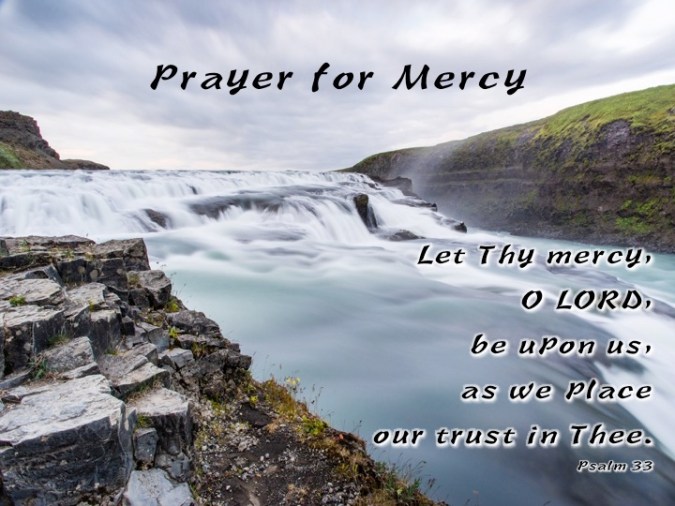
A Simple Daily Prayer for the Year of Mercy

Slide1

Psalm 33:22 is one of my favorite passages from the Bible, because it describes so eloquently in just a few words our relationship with God. On God’s side, ever-faithful mercy. On our side, ever-growing trust.

As we  begin 2016 and continue our journey into the Year of Mercy, my hope is to discern how God’s mercy is at work in my life right now, and to renew my commitment to trusting in his loving goodness. This will be the daily prayer that I plan to rise with every morning.

A True Story: Discerning During Midlife

A few years ago, a wonderful wife and mother named Catherine came to see me.

dawn-nature-sunset-woman

Catherine is a loving and generous woman who has inspired the many people at her parish who know her. She constantly seeks God’s will amidst the usual and sometimes unusual challenges of married life, and puts herself at the service of the needs of her parish. But recently, she underwent a particular experience of change, accompanied by darkness: her children were growing up and leaving home and didn’t seem to need her as much; her relationship with her husband felt routine; her daily life gave her little satisfaction. At one point, Catherine confided to a friend, “I was attracted to religious life when I was younger, and being a sister is so much more peaceful and holy. Maybe I missed my vocation. What if God really called me to religious life?”

This thought that she might have “missed” her vocation was a scary one for Catherine (and for anyone serious about seeking God’s will–more on that later). However, because she still had commitments to her husband and children, it was clear that God’s will for Catherine was to continue in her vocation as a loving mother and wife. If Catherine had indeed chosen a path other than what God originally willed for her, God’s will for her at his point in her life was clear: to continue in her vocational commitments. Her doubts were almost certainly not a call to switch vocations in midlife. But at her age, repeatedly experiencing these doubts could be an important part of Catherine’s midlife journey: she may have needed to re-evaluate certain decisions and how she was living her vocation. Rather than something to discourage or scare her, Catherine could use these troubling questions as an invitation to reflect on her life, bringing them to prayer and spiritual direction.

When we talked together, I encouraged Catherine to consider these possibilities:

A) It was possible her doubts were a temptation, especially because the doubts seemed to be making Catherine lose some of her interior peace. Perhaps the devil wanted to distract this loving, goodhearted woman from her true vocation—that of being a loving mother and wife. By putting the “holier” life of a religious sister on a pedestal and entertaining doubts about her own vocational discernment, Catherine could have been letting the devil gain a foothold in her thoughts, blurring her perception of the unique beauty of her call and gradually weakening her commitment to her vocation.

Instead of allowing these doubts to distract her, Catherine could use them as an opportunity to recommit more deeply to her life of self-giving love as a mother and wife, perhaps discerning new ways in which she can express her love in her changing situation.

B) Catherine might have been going through a time of desolation where, through her doubts and longing for “more,” God was inviting her to purify her motivations and deepen how she lives her true vocation. Catherine could take time to examine how she was living her vocation and how she could grow in her call to love as a wife and mother.

C) Perhaps God was inviting Catherine to dig deeper into what attracted her about religious life. Catherine’s feelings of dissatisfaction could have been reflecting a desire placed in her by God for greater union and intimacy with him—something that she previously thought was reserved only for sisters. God could have been using her feelings of desolation to call her to a deeper spiritual life of union with him. Perhaps deep within her restless longing, God was calling Catherine to offer herself to him in a special way: for example, in a particular ministry or consecrated lay institute.

Every person’s individual experience and discernment has specific details that God uses to lead them. Catherine never shared the fruits of her prayer after we talked, but she chose to continue in her vocation of love. She is now a happily devoted grandmother.