You Are…God’s Masterpiece! Lectio for Discerners

God’s Masterpiece

Discerning with the Word: A Guided Lectio Divina for Those Discerning

"St. Paul Writing His Epistles" attrib. to Valentin de Boulogne, c. 1618-1620

“St. Paul Writing His Epistles” attrib. to Valentin de Boulogne, c. 1618-1620

Introduction: We know that God’s invitations to us flow from our God-given identity. In this lectio, we pray with how God sees us, how God’s love shapes our very identity, and how God’s love frees us to be more fully ourselves.

Lectio: Ephesians 2:4-10

But God, who is rich in mercy, out of the great love with which he loved us even when we were dead through our trespasses, made us alive together with Christ—by grace you have been saved—  and raised us up with him and seated us with him in the heavenly places in Christ Jesus, so that in the ages to come he might show the immeasurable riches of his grace in kindness toward us in Christ Jesus. For by grace you have been saved through faith, and this is not your own doing; it is the gift of God— not the result of works, so that no one may boast. For we are what he has made us, created in Christ Jesus for good works, which God prepared beforehand to be our way of life.

Read through this reading slowly and attentively at least twice. Take your time with it.

Meditatio

Saint Paul’s dramatic encounter with Christ on the road to Damascus (Acts 9) completely changed Paul’s relationship with God from Pharisaism to experiencing the fullness of God’s love and mercy. By his baptism, Paul became a new creation in Jesus. Learning Christ, and living his new identity in Christ as an adopted son of God, led Paul to discover true freedom. No longer driven by fear or possessions, Paul belonged to Christ and trusted that nothing could separate him from God’s love and mercy. The extravagance eloquence of this passage demonstrates Paul’s amazement and gratitude to Jesus for his saving Passion, Death, and Resurrection.

Each of us who have been baptized can share in that journey from fear to trust and freedom discovered by Paul: we too are loved, redeemed, and sanctified.

As you re-read this passage, let yourself become aware that you are a son or daughter of God, that your very being is God’s awesome gift to you. Different translations of verse 10 into English range from the prosaic, “We are what he has made us” to “God’s handiwork,” “God’s masterpiece,” or “God’s work of art.”  Have you ever thought of yourself as God’s “work of art”? Do you believe that you are an heir of God, who will share everything with Christ as his brother or sister?

Contemplatio

Which phrase from this passage of Ephesians best describes how you see yourself? As you allow this phrase to “sink in,” how does it change your understanding of how God might see you? In your own words, how would you describe your relationship with God?

Oratio

The Work of Your Love – by Blessed James Alberione

My Lord, I am entirely the work of your all powerful love. I adore you, my God, one in nature and triune in Persons. I thank you, because you have made me for the happiness which lies in you and for your eternal glory. Save me with your love and your mercy!

Actio

Choose one way to act on your belief in God’s powerful love for you today.

More on Alberione: “Vibrant Media Apostle”

It’s a delight to be able to share with you so many resources on the Pauline spirit and our lives as consecrated Daughters of St. Paul. Just after I posted yesterday’s update from our interview on CatholicTV, I found out about Sr. Sean Marie David’s interview on New York’s Net TV about our new film on Blessed James Alberione, Media Apostle: The Father James Alberione Story. She does a fantastic job explaining about our charism and our Founder:


How Are You Celebrating the Year of Consecrated Life?

CTVlogoSo much has been going on, I’m taking a quick break from my regular discernment post to share some of the good news:

We are so blessed to have been invited by Catholic TV to come in for a show about the Year of Consecrated Life, and what we’re doing to celebrate it (and our centenary year of the founding of the Daughters of Saint Paul).

http://www.catholictv.com/shows/this-is-the-day/consecrated-life-daughters-saint-paul

Sr. Marianne Lorraine Trouvé talks about the anniversary edition of arguably the most beautiful document on religious life: Vita Consecrata by St. John Paul II, and I talk about our centenary year and all the great things we’re doing for the 100th “birthday” of the Daughters of Saint Paul–100 years of media evangelization, 100 years of living and communicating Christ, our Way, Truth, and Life! Here are a few–a comprehensive list will go up on our www.pauline.org website soon!

BOSTON AREA

  • World Communications Day Mass for communication arts professionals in the New England area on May 17, 2015, at our convent chapel here in Boston with CatholicTV’s own Father Robert Reed: www.pauline.org/WCDMass
  • Centenary Mass of Thanksgiving on June 14, 2015, with Cardinal Séan O’Malley at St. Theresa of Avila Parish in West Roxbury, MA. (RSVPs requested at: fspcentenary@gmail.com

NEW YORK AREA

  • Day of Recollection and Centenary Mass of Thanksgiving on the afternoon and evening of Saturday, June 6, at Holy Family Parish, New York, NY. (Email me if you’re interested in more information.)

ONLINE & MEDIA

DiscernItIcon_largerI was privileged to help in a small way with developing our Discern It! App, which we created for discerners for this Year of Consecrated Life. I’ve mentioned it here before, but on the show I have a chance to show a few screenshots and explain how helpful it can be–not just as a novena for when someone is at the beginning of their vocational discernment, but also for helping them through some of the most challenging moments of their discernment, with wise advice offered:

  • from the Scripture
  • from sisters’ experience of how Jesus speaks to us in prayer
  • from journaling and follow-up prompts
  • from your prayer and time with Jesus
  • from audio clips from wise vocations director, Sr. Margaret Michael

The Discern It! App offers real accompaniment for anyone discerning their vocation, and it’s free to download and use–for iOS and Android. 


final_ycl_logo_en_newOur interview ended with a request for our thoughts on the Year of Consecrated Life. Personally, I want to make this year a year of gratitude to God for the gift of my vocation as a consecrated religious. I also want to use it:

  • as an opportunity to thank the sisters, brothers, and priests who so generously make a gift of themselves in religious consecration
  • a time to focus my prayer for young people: that this year highlighting religious life will encourage young people to be open to God’s call to the religious life
  • a way to encourage parents and others who will encourage young people to consider religious life as a real possibility for their future

Wonderful App for the Examen

GoodFriBlessings for Holy Week! You will all be in my prayers even though I’m taking a bit of a break from posting the book this week.

In the meantime I wanted to share with you an app that teaches and reminds us how to do the examen, a wonderful discernment tool and spiritual practice. The examen is a wonderful way to listen to God’s invitations in our life, helping us to look over our day and to be aware of how God is acting in our life, and how we’ve responded. The examen comes to us from the famous expert on discernment, St. Ignatius of Loyola, the founder of the Jesuits, who has influenced the Church greatly with his spirituality that focuses on discerning the will of God. One of the tools for discernment are his Spiritual Exercises–an in-depth retreat where the retreatant seeks to discover God’s will. A practical tool that everyone can use in everyday life is the examen of consciousness. 

The examen is a bit like the examination of conscience–examining our thoughts, words, actions, and omissions at the end of every day, or before we go to confession. But the examen is a bit different. Rather than  focusing on what we’ve done or haven’t done, the examen helps us to look over the day and focus on how God has invited us and worked in our lives during the day.

At http://www.theprodigalfather.org/ Father Michael Denk hosts the Examen App for iPhones, android phones, and tablets that can guide you through the examen–with written steps on the screen and videos. The app is free and contains a full explanation of how to pray the examen. It even has reminders that you can set so that you remember to take the time to pray the examen! If you have a moment, just visit his site now and download the app!

For those of you who don’t have a device with which to use the app, I’ll briefly share the steps of the examen below. Later, I’ll do a whole blog post on this powerful prayer and tool for discernment.

Steps for the Examen: 

1. Gratitude
Note the gifts of love God has given this day; give thanks

2. Petition
Ask God for insight and an open heart; ask God to show you what God wants of you this day

3. Review
With God, look over your day; pay attention to the stirrings of your heart; review your choices and responses

4. Forgiveness
Accept the love and forgiveness God gives you

5. Renewal
With God plan concretely how to live in accord with God’s desire for you

Journaling with the steps of the examen is very helpful, and Father Michael’s Examen app encourages you to do just that. For more explanations of the examen prayer, visit: http://www.ignatianspirituality.com/ignatian-prayer/the-examen/


Mary at the Annunciation: Model of Discernment

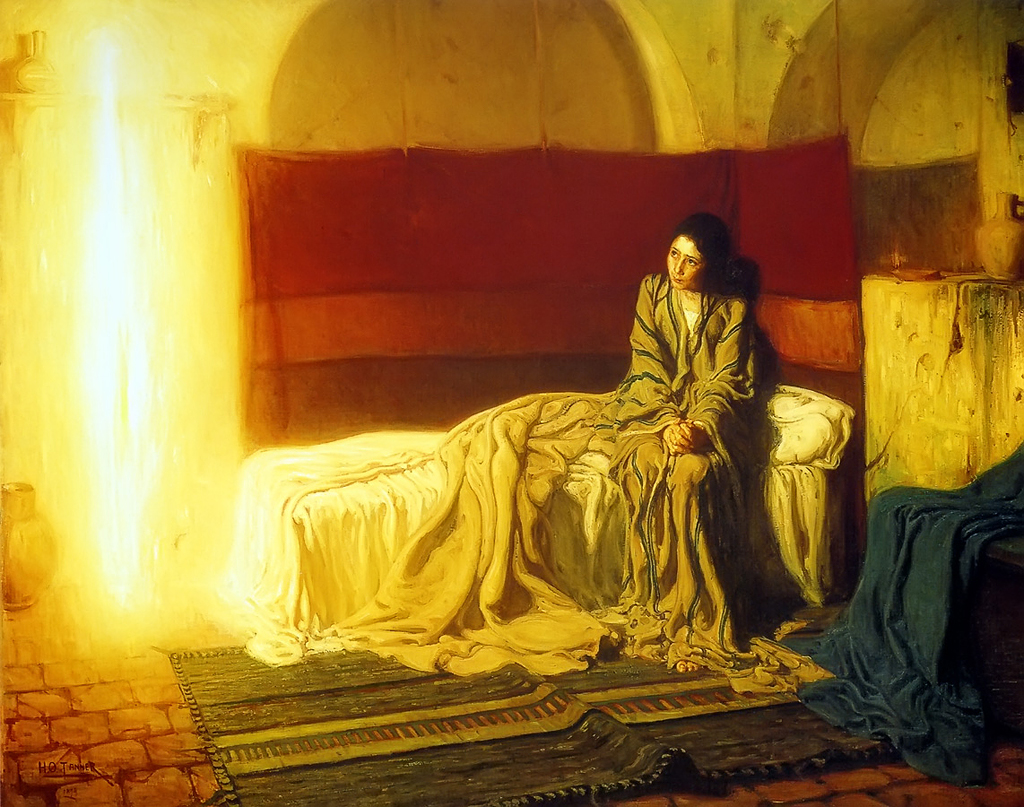
The Annunciation by Henry Ossawa Tanner, 1897

The Annunciation by Henry Ossawa Tanner, 1897

Mary, God’s Mother and mine,
you joyfully and fully responded to God’s call in your life.
Help me to respond to God’s plan for me with all my being,
as you did.
                                                                                                               – prayer taken from Discern It! app 

Happy Feast of the Annunciation! I was so deeply into the spirit of Lent and preparing for Holy Week that it was a bit of a shock this morning to pray the Gloria at Mass this morning…but how fitting to pray this canticle of praise on the feast of the Incarnation, the feast of Mary’s “yes” to becoming the Mother of God!

This is one of my favorite images of the Annunciation because it seems to capture Mary at a very ordinary, prosaic moment in her life, while at the same time emphasizing the mystery of the announcement–the angel Gabriel is brilliant but we cannot even distinguish the shape of his figure. At some point, I hope to offer here a guided meditation on discernment in the light of Luke 1:26-38 with this painting of the Annunciation. But for today as I seek to live in a spirit of discernment, I will carry in my heart Mary’s attentive gaze, her hands clasped in prayer, and her head tilted in wonder as she begins to grasp the radiance of God’s love for her and for all humanity.

Using a Storytelling Lens in Discerning

OLYMPUS DIGITAL CAMERA

In discerning where God is calling us, it can be helpful to see our lives within this context of God’s Story of Love. In this blog/book, I’d like to continue using the storytelling lens to help us to explore discernment. What are the various elements common to every story?

  • Premise—Our story’s beginning or set up, which includes a story promise that will be fulfilled. In this case, the story promise is made by, and will be fulfilled by, God!
  • Setting—The world and circumstances in which the story takes place
  • Worldview—the perspective from which the story is told. We looked at this earlier, calling it God’s Storyview.
  • Plot—What happens in our story and why (the series of events that take place in the story; the plot could also be called the story)
  • Story Structure — How a story is organized. Whatever the structure, every story always has a beginning, middle, and end.
  • Theme—What our story is really about
  • Characters—Who is in the story
  • Protagonist—The main character of our story; often this is the character who changes the most
  • Antagonist—The character or force that prevents the protagonist from reaching his or her goal
  • Supporting characters: Friend, Rival, Sidekick, Mentor, Trickster, etc.
    (Each character has:

    • Character goal—What the character wants
    • Character need—What the character needs in order to be truly happy or fulfilled. This is often very different from what the character wants
    • Character arc—How the character grows or changes (often interiorly) through the the story

I think there are a lot of parallels between various story elements and certain aspects of discernment. For example, we can look at the concept of “supporting characters” in light of discernment. No discernment happens in a vacuum, and in bigger discernments—such as a vocational discernment—we surely need the support of others. But sometimes we forget this, and we can try to discern all alone. Reflecting on the support we have and the support we need in our discernment can really help us on our discernment journeys.

Pen_Uncapped

To Journal About:

Revisit our “Story Premise”—the truth upon which we base our discernment: Our all-good God loves us and always wants what is good and best for us. How would you re-phrase this for the story of your life?

New Discernment@theMovies Guide: Amazing Grace

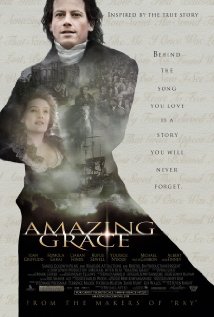
MV5BMTI5MTkxMDA4M15BMl5BanBnXkFtZTcwNjA4Mjg0MQ@@._V1._SY317_An inspiring and wonderful film to watch in its own right, Amazing Grace (2007, directed by Michael Apted, written by Steven Knight and starring Ioan Gruffud) is also a wonderful portrayal of discernment. Amazing Grace is based on the true story of  the struggle of William Wilberforce to abolish slavery in England, and is an inspiring watch at any time, but particularly so with Lent with its multi-layered theme of overcoming slavery. The guide is now posted up on the Discerning@theMovies Page.  Enjoy!

Spiritual Direction

Another way to help us to listen to God in our prayer and in our lives is to seek out spiritual direction. Speaking regularly to a spiritual director is a time-honored practice, especially when someone is discerning their vocation, making a major life-choice, or a week-long retreat.

How can a spiritual director help us? Ideally, a spiritual director accompanies us on our journey, helping us to recognize God’s action and invitation in our lives. As we share our prayer and experiences with a spiritual director, the director helps us to understand more clearly how God is speaking to us in our prayer and our lives. The more honest we are, the more insight the spiritual director can offer to us. An essential part of spiritual direction is our openness about our lives and what is happening interiorly. At first, it can be difficult or feel awkward to speak about our spiritual lives, our deeper thoughts and feelings, and what happens in our prayer life, but it is important to be open with a spiritual director.

Finding a good spiritual director can take time but is worthwhile. Here are some characteristics to look for in a spiritual director:

—Approachable—someone you can honestly speak to

–Available–a spiritual director only has time to meet with so many directees, and in many places, spiritual directors are in short supply. If a spiritual director tells you that they are not available right now, or it becomes too difficult to arrange a meeting, it is probable that they are already directing too many people to fit in another person. You can ask them for a recommendation for another director.

—A good listener—a good spiritual director offers guidance and direction, but most often listens to our experiences and then points us towards what is significant about that experience

—Spiritual experience and maturity—someone who is faithful in living their faith, is proficient at prayer, and growing in their own spiritual life. Ideally, a spiritual director has significant experience in the spiritual life and also training in spiritual direction.

—Accompanies rather than leads.

How can we find a good spiritual director?

  • Look for a priest whose homilies or personal conversations you find helpful. (Parish pastors can often be too busy to offer spiritual direction, but sometimes an associate pastor may be available.)
  • Ask for a recommendation from your pastor or another priest you trust.
  • Call a Catholic retreat house and ask for recommended spiritual directors in your area.
  • Make a retreat and follow up with the retreat director, or with someone the retreat director recommends.
  • Connect with a religious community that offers spiritual direction: Jesuits, Benedictines, Oblates, etc.

Having a good spiritual director accompany us on our spiritual journey helps us to learn the principles of the spiritual life, recognize God’s unexpected action in our lives, avoid obstacles and self-deception, and go beyond being stuck in a rut or discouragement. However, while finding a good spiritual director to be very helpful, our true Spiritual Director is Jesus Christ, who guides us in hidden ways through the action of the Holy Spirit. And Jesus is always with us, guiding us.

Listening to the Word of God: Lectio Divina guide

IMG_0005A wonderful way of listening to the Lord—and perhaps one of the first that we should practice—is praying with the Bible. For the past fifty years, the Church has encouraged all Catholics to re-discover lectio divina, a particular way of praying with the Bible that has its roots in the third century (with Origen specifically encouraging it as the way to read Scripture), and then later in the early monastic communities (especially the Benedictines). Lectio divina continued to be practiced through the ages by monastic communities, but in his Apostolic Exhortation Verbum Domini, Pope Benedict XVI highly encourages all of us to do lectio divina. Why? Because lectio divina is “capable of opening up to the faithful the treasures of God’s word, but also of bringing about an encounter with Christ, the living word of God.” (Scroll down to #87 for Pope Benedict’s description of how to do lectio.)

Traditionally, lectio divina has four steps, but Pope Benedict recommended adding a fifth without which lectio divina wouldn’t be complete. (There are other methods of lectio divina that have developed over time, too, but here we’ll stay with the traditional structure.) The five-step structure isn’t meant to be rigidly followed; rather, it’s meant to help us to engage with the Word of God with our whole being. It’s important when praying to follow where the Holy Spirit leads us; if we are drawn to stay or “rest” on one step during our prayer, that’s what we should do!

Here is a very short guide to making lectio divina, inspired by Pope Benedict’s short description in Verbum Domini and my own experience of prayer.

*To prepare, set aside some quiet time for prayer, and choose a Scripture passage. If you are new to lectio divina, a passage from the Gospels is a good place to start. Choosing the Gospel reading from Sunday or daily Mass can often be helpful.

Step 1. Lectio (Reading). Read the passage slowly and reflectively, listening attentively. What is the biblical text saying? 

Step 2. Meditatio (Meditation). Re-read the passage a second time, asking the question, What does the biblical text say to me in my circumstances? Listen especially for a particular word or phrase that strikes you more than the others—perhaps a word resonates with you; perhaps a sentence raises a question or even some disquiet. Let that word or phrase enter deep into your awareness and then reflect on it: why does this word appeal to me or disturb me? How is the Lord speaking to me?

Step 3. Oratio (Prayer). Speak to God about what is happening inside of you as you spend time with his Word. Prayer is a dialogue with God, and this is where you can respond to God’s Word. Perhaps the Word of God is comforting you—thank God for his comfort and strength. If the Word is challenging you or raising questions in you, ask God for the grace to understand and live his Word.

Step 4. Contemplatio (Contemplation). Contemplation is a time to take on God’s way of seeing. As you rest under God’s loving gaze, ask the Lord how he is inviting you to convert. What needs to change in your mind, will, life?

Step 5. Actio (Action) Take the Word of God with you back into your daily life. You can live the Word of God in your day by choosing to take on an attitude or particular action in the spirit of the invitation God extended to you as you prayed with the Scripture passage. 

The guided lectios provided on this blot are meant to help those who are just beginning with lectio divina. If  you choose to pray with them, I encourage you to go back later and pray with the Scripture passages on your own, using the above simple guide.