Discernment Resources: For Further Reading

Several months ago, a reader noted that my favorite book about discernment, Discernment: Acquiring the Heart of God by Marko Ivan Rupnkik, SJ, is no longer available. Sadly, this is true—even used copies are quite expensive! None of the books I am going to recommend here—and there are many good ones—quite replace Father Rupnik’s book in scope and depth in one volume. However, there are some great resources out there that you can read (while waiting for my book, based on this blog, of course!)
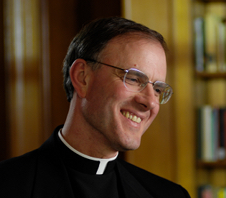
frtimsmallerFather Timothy Gallagher, OMV, shares his expertise on discernment and Ignatian spirituality in a style that is both lucid and deep. He is by far my favorite author on discernment! Father’s story-driven style makes it easy to understand how to apply Ignatian principles to our own lives, even when he is exploring more complex material. All of his books are excellent and helpful for growing in the spiritual art of discernment. The first book that I’d recommend is:

discerningthewillofgod_178.246Discerning the Will of God: An Ignatian Guide to Decision Making
by Father Timothy M. Gallagher, OMV
A wonderful source of practical wisdom for seeking God’s will, based on the writings of St. Ignatius of Loyola. Full of examples and stories, Father Timothy Gallagher makes the wisdom of Saint Ignatius of Loyola accessible to the everyday person. In this book, he goes through Ignatius’s three “modes” of discernment, which are extremely helpful for us to see how God works in our lives in different ways. Not only does Father take us through the process of discerning in each mode, he begins the book by spending a significant amount of time showing us how to prepare to discern: the “foundation” of God’s loving will for us, an openness to God’s will, and the means to use in our preparation, such as the Eucharist, the Word of God, and spiritual direction.

If you’re looking for another, deeply Ignatian perspective on much of the material covered here in this blog, Discerning the Will of God is a great choice. (Available at any Pauline Books & Media Center in the USA or Toronto, Canada, and online at frtimothygallagher.org)

Awareness that God has created us out of love and ceaselessly offers that love us; a consequent thirst for communion of wills with the one who so deeply loves us; the consciousness that each of us can say with John Henry Newman, ‘He has committed some work to me which He has not committed to another’; the desire to live like Jesus who always did the will of the One who sent him: This is the foundation of discernment. – Discerning the Will of God: An Ignatian Guide to Christian Decision Making, pp. 29-30

discernmentofspirits_178.246The Discernment of Spirits: An Ignatian Guide to Everyday Living
by Father Timothy M. Gallagher, OMV
The Discernment of Spirits takes a deeper look at discernment by exploring the Rules of Discernment developed by St. Ignatius of Loyola, which are foundational to living Ignatian spirituality. This material is more complex than Discerning the Will of God, but Father Timothy makes it accessible through his clear explanations and examples of contemporary stories. A good follow-up to the previous book for those interested in going deeper into discerning God’s will in daily life, and how God helps us to discern through desolation and consolation. I highly recommend The Discernment of Spirits, which the website states is Father’s most popular book.

Father Gallagher has  written a number of other books on Ignatian spirituality—including books on the Examen prayer, on praying with the Word of God, and further exploring of Ignatius’s Rules of Discernment He wisely provides a guide to all six of his books on Ignatian spirituality, which you can find by scrolling down this page: frtimothygallagher.org/books.

called-to-lifeCalled to Life by Father Jacques Philippe
This small book that provides a solid foundation for discerning one’s vocation and for discernment in every day life, especially developing our relationship with God, God’s desire for our happiness, our vocation as human beings, and listening to the call of God in the Word of God. This is a good start for someone on the path of discernment. Father Jacques Phillippe is a priest in the Community of the Beatitudes, and has become popular both in his accessible writings and retreats.

Every authentic vocation is a calling to live ever more fully. We should be wary of callings that may mask refusal to engage life, fear of love, flight from the body or feelings, or a lack of acceptance of human existence as it is. Accepting one’s calling should mean choosing a more intense, abundant way of life, not fear-driving flight, or a disguised choice of death, as can happen with some poorly discerned religious commitments.  – Called to Life, pp. 24-25

HeSpeaksToYouHe Speaks to You by Sr. Helena Burns, FSP
A daily meditation book that assists young women to enter into a daily conversation with Jesus about their lives, according to themes that draw the reader ever deeper into a personal relationship with Jesus. Monthly themes include: His Love, His Life, His Cross, His Will, His Family, His Majesty, His Ways, etc. The month of April (His Will), is dedicated to discernment, vocation and freedom. Sister Helena is a sister of my community, the Daughters of Saint Paul, and, in addition to her wonderful media work and her frequent presentations on the Theology of the Body, she has also dedicated years to assisting young women in discerning their call in life.

(From Jesus): My written word is your sure guide. It is enlightenment, consolation, and most of all, My love letter to you.

‘Thy word is a lamp to my feet and light to my path’ (Psalm 119:105).

God is always communicating. Always. If we can’t hear Him, perhaps we need to open our ears a little more! Perhaps we don’t like what He says and so we look for a different word from Him. Thus, He seems silent. The Apostle John says that all the books in the world couldn’t hold what God has done (and is doing and saying right now)!

‘I know the plans I have for you…to give you a future and a hope’ (Jer. 29:11). What clues do you have from God’s word about your future?

Dear Jesus, even Your “hard sayings” are good news because they have the power to heal and redeem me. Help me always experience Your word as good, helping me see the big picture. – He Speaks to You, p. 98 (April 5)

Two more titles that you might find helpful are:

The Art of Discernment: Making Good Decisions in Your World of Choices by Stefan Kiechle
A basic, practical, and easy-to-use book about discernment that is focused on decision-making. The approach is Ignatian and includes  many quotes from people in discernment or in the middle of making a decision.

Close to the Heart: A Practical Approach to Personal Prayer by Margaret Silf
Author Margaret Silf writes about Ignatian spirituality and Christian prayer for the every day person, from a “real life” perspective. Along with prayer, discernment is beautifully covered in this book that helps the reader who is just starting out in the spiritual life to grow in their relationship with Christ. (Note: Although Margaret Silf no longer considers herself Catholic but Christian, her way of making Ignatian spirituality accessible for the everyday person is still widely regarded.)

Odds & Ends & Discernment Tips

After posting about what to do when we feel unworthy about following our call, I came across the story of Sr. Marlyn Evangelina Monge, another Daughter of Saint Paul. Like me, she wondered if she was “worthy” to become a sister. I hope you enjoy it.

On her blog, Pursued by Truth, Sr. Theresa Aletheia highlights Sr. Alicia, who won on the show Chopped this week! Find out more about this wonderful sister, her community, the Franciscans of the Eucharist, and the good work that they do in Chicago. Soon, you will also find on this same blogpost a link to the Chopped! show in which Sr. Alicia won the cooking competition!

Here’s one more “Discernment Tip” Video from Sr. Margaret Michael. This tip is one that I don’t hear too often–and I think it’s a great one! (Hmm…another post for my blog/book.)


* * *

Although it’s probably hard to tell, I’ve reached the end of another chapter. This chapter was about “Helps and Obstacles Along the Way of Discernment.” Before I move on to specific moments of discernment (turning points in our lives), are there any other obstacles or helps to discernment that you’d like to see discussed here? Feel free to send me an email or post a comment.

I have only one more pending question to answer: the request for recommendations for books about discernment, since the favorite that I’d recommended has gone out of print. This answer is taking longer because I’m  working on several book reviews, which hopefully I can post soon. So, if you’ve sent me a question and I haven’t it answered it yet, I apologize because I’ve lost it! Please feel free to send it again. I recently reorganized my email, so hopefully I won’t lose any more questions or comments in the future!

Tips on How To Quiet Our Minds for Prayer

This week, I want to make sure I respond to your questions!  I know that my responses are often delayed by months, and there are probably a few questions that came to me that I didn’t answer. If you have a burning question about discernment, or specifically about religious life, please email me or add a comment! I will try to be  proactive in the next two months and respond to your questions, either individually or as a post, within a week or so.

imag0157
Recently, someone posted a comment to one of my posts about silence. I thought the question was excellent, so I’m reposting the question here, as well as my response.

I was wondering if you had any tips on how to BE silent? Whenever I try to meditate on a reading in silence, or go for a walk, or spend some quiet time in my room to pray, I find my mind instantly wandering to other things. How can I focus quieting my mind, not just my environment?

Entering into silence is often daunting or uncomfortable. Here are a couple of things I did when I first tried to pray silently. Even today, when I’m especially distracted I still go back to some of these, especially #s 1, 3, 4, & 5.

1) Start small. Try to focus your attention for a very short time–maybe 2 to 5 minutes. When your mind wanders (and this happens to all of us!), as soon as you realize it, bring your attention back to what you’re meditating on. Try meditating or praying quietly for 5 minutes a day. After you feel that you are able to focus for about half of that time, increase it to 10 minutes, and so on. Many people pray silently or meditate on the Word of God between 20-30 minutes a day.

2) What time are you choosing to pray? Prayer–especially contemplative prayer–is hard work, so it’s a good idea to find a fairly consistent time when we are quite alert, but not imminently distracted about our responsibilities. This is why early in the morning is a good time to pray for many people; others are able to pray best in the evening–after supper or before bed.

3) If you’re meditating on a reading, choose just one sentence or phrase that “resonates” with you and re-read it slowly several times. What comes to mind as you re-read it? What about this phrase stands out for you? Even if no thoughts or insight arrives, savor the sentence or phrase. Simply spending time with the Word of God and allowing it to enter deep within us can be deep prayer and transformative.

4) Look at the sources or “fonts” of your prayer. If you’re struggling to “quiet” your mind, choose a source that is easier to enter into. The Word of God is the best “font” for our prayer, but different passages are easier than others. For example, it took me several years to learn how to pray with the letters of Saint Paul, while praying with the Gospels–especially with the stories of Jesus healing people–was much easier for me to enter into. Needless to say, I used to pray mostly with the Gospels! Pick a book of the Bible–and the Gospels are ideal–that you can read more easily.

If you’re struggling to read the Bible or if you feel especially distracted, you can pick a spiritual writer that engages you, whom you really like to read. Sometimes another person’s insights can enable us to enter into silence a little more deeply or easily.

5) Talk to God about what you read or are trying to pray with–a spontaneous conversation. If you’re by yourself, you can even talk out loud! Make sure you give God space to respond to you. If you really find it impossible to concentrate, talk to God about what’s on your mind. Once again, after you have opened your heart to the Lord, make sure you take time to listen to his response. You may not “hear” any words or “feel” anything, but even making an act of faith that God is present by listening for him will bear fruit in your day.

6) Choose an environment that enhances your ability to concentrate. For example, try praying in a quiet chapel. If you’re praying in your room, create a simple prayer-corner with a religious image, statue or crucifix, a prayer book, a Bible, and a comfortable chair. If you like to pray outside, pick a beautiful but quiet place. Wherever you choose to pray quietly, use the environment to quiet your mind: focus on the religious image in your room; offer your heart to the Lord as the candle that is burning in the chapel sanctuary; etc. Using beauty or religious imagery to enter into prayer often engages our emotions and enables us to “bypass” our mind’s noisiness and encounter God in our hearts.

* * *

There are so many styles of prayer, and it’s helpful to pray in a variety of ways, depending on what’s going on in our lives, where we are in the moment, how much time we have, and how we feel. Prayer doesn’t always need to be silent or contemplative:

  • Vocal prayer is the easiest way to pray as a community together.
  • Praying amid the bustle of the day is the easiest way to connect with God or stay connected with God. Snatching a moment on a subway commute, praying the Rosary when we’re out for a walk, or making short acts of faith and love while waiting in line at the grocery store are ways that we sanctify our day.
  • But we also need quiet or more focused times when we can have “quality” conversations with God. The quiet in our prayer is important because it helps us develop the habit of listening for God and to encounter God more fully in the depths of our hearts. 

Discernment Tips for National Vocation Awareness Week

Sr. Margaret Michael Gillis, Vocations Director for the Daughters of St. Paul, is offering a daily discernment tip on video for National Vocations Awareness Week. Her first tip is an invitation to pray for vocations, and you may want to check out the rest through the week at the Daughters of St. Paul Facebook Page. (I’ll try to post them here as I can.)

How To Overcome Obstacles in Discerning Consecrated Life & National Vocation Awareness Week

woman-571715_1920This week—from Sunday, November 1 until Saturday, November 7, 2015—is National Vocation Awareness Week. The United States Conference of Catholic Bishops invites us all to dedicate this week to promote vocations specifically to the priesthood, diaconate, and consecrated life through prayer and education, and to renew our prayers and support for those who are considering one of these particular vocations.

With the recent Synod on the Family, the importance for young people to discern and be formed in their vocation to marriage is recognized, but there is one big difference. In our culture, marriage as we understand it as Catholics may be under pressure, but it is still considered a “usual” or “normal” path in life. Whereas ordained and consecrated life are the “hidden” or “forgotten” options for many young people. There could be any number of reasons for this, but in working with young people, I’ve found there’s usually just a few:

  • Out of sight, out of mind. A young person has never truly connected with a young priest, deacon, or religious, and so the thought that he or she could have a similar vocation never comes to mind.
  • Celibate chastity is so counter-cultural in our “do whatever feels right” culture obsessed with pleasure and sex, it’s immediately dismissed as “not possible.”
  • Similarly, the vow of poverty is absurd to someone immersed in the materialistic culture
  • The mistaken belief that true freedom means to be absolutely unencumbered by any form of restraint whatsoever, makes the priestly or religious vows unthinkable: like an unbearable lifetime of captivity.
  • Fear of commitment
  • Fear of unworthiness to be consecrated to God

National Vocation Awareness Week (NVAW) is especially helpful for highlighting consecrated life as a valid vocation to discern; NVAW can also help to address the misunderstandings that people often have about a life consecrated to God’s service. Great joy, beauty, love, and goodness flow from authentically living a priestly, diaconal, or religious vocation.

Of course, the greatest joy and love flow from living one’s own authentic call, so the point of National Vocation Awareness Week is not to put pressure on anyone, but to ensure that the full range of beautiful vocations in the Church are understood,  considered, and discerned.

Through the week, I hope to:

  • Answer the most recent questions about religious life that  have come in. Feel free to email, comment, or tweet me with your questions. (Note: I’m only on Twitter once or twice a day, so to reach me through Twitter, I believe you have to add a period in front of my name: put .@SisterMPaul at the beginning of your tweet, otherwise I might miss your question.)
  • Tweet resources that I discover through the week (and I’ll try to list them on the blog)
  • Highlight resources for nurturing vocations to religious life, priesthood and diaconate in the family, which is ideally the place where one can find the greatest support for discerning and taking the first steps to follow one’s vocation.

In addition, as I mentioned earlier, you can support NVAW in prayer by: downloading reflections for each day, a holy hour that you can pray for vocations this week, and a digital prayer card (PDF) that you can pray with and share, as well as other resources here on the USCCB’s website.

Discerning with Mary, the Mother of Jesus

06_CC Sr Tracy

In Genesis, when God specifically promises to redeem humanity by sending the Savior, he speaks of Mary as “the woman” who is Satan’s enemy and whose Son will overcome the devil definitively. When we cultivate a relationship with Mary, the Mother of Jesus, we draw close not just to Mary but to Jesus. As our Mother, Mary wants us to be united to her Son, and she will clear the way of obstacles for us, most especially the devil’s temptations.

Many saints speak eloquently about Mary’s power over Satan and her ability to lead us to Christ. This is an excerpt from one of my favorite prayers to Mary by Blessed James Alberione:

“O Mary, grant that we may listen to, follow and love Jesus Christ the Divine Master! May sin never stain our souls consecrated to you. Immaculate Virgin, crush the head of that insidious demon of discouragement.

Live in our midst, Mary; blessed are they who dwell in your house.”
– Blessed James Alberione

In his beautiful apostolic letter On the Most Holy Rosary, Pope St. John Paul speaks about our entering into the “school” of Mary because “No one has ever devoted himself to the contemplation of the face of Christ as faithfully as Mary. The eyes of her heart already turned to him at the Annunciation, when she conceived him by the power of the Holy Spirit…. Mary lived with her eyes fixed on Christ, treasuring his every word” (On the Most Holy Rosary, nos. 10 & 11).

Mary is both a wonderful model for our discernment and a powerful intercessor so that we can receive the light of the Holy Spirit in order to “see” or contemplate Christ’s presence in our lives. Mary is not just the Mother of Jesus, but our Mother, too, and her greatest desire is to lead all of her children to her Son. Praying to Mary regularly is life-changing.

Countless Marian prayers and traditions can help us to grow in our relationship with the Blessed Mother. The Rosary is especially fruitful as a prayer to help us grow in a spirit of discernment because when we contemplate Jesus by praying the Rosary, we do so with Mary, the first and truest disciple of Jesus who most closely sought and lived the will of God. When we pray the Rosary, we meditate with Mary on Jesus’ life: how Jesus lived the will of his Father while on earth. We can also meditate on how Mary recognized and responded to God’s invitations in a spirit of faith and obedience. The subjects for meditating on the mysteries of the Rosary are endless.

The saints are eloquent about how devotion to Mary changes our lives. If you are looking for more resources on growing in your relationship with Mary, here is a short list of new titles that introduce devotion to Mary and the Rosary, and a few of the classic books on Mary that foster devotion to her.

How Does God See Us?

KONICA MINOLTA DIGITAL CAMERAA second way to grow in our true and deeper understanding of ourselves is to pray with Scripture passages that help us to understand who we are: who we are created to be, who we are called to be. From Genesis to Revelation, the Bible is full of God’s understanding of who we are, God’s love for us, God’s invitation for us to grow into “other Christs.”

If we have been praying with the Scriptures for several years or more, we might find it helpful to look back at our spiritual journey and make note of the Scripture passages that were foundational for our journey in Christ. These key Scripture passages resonated with us in part because they told us who we are in God’s eyes, and how God is inviting us to become our best selves in Christ. Picking 5 or 6 of these Scripture passages to go back to and pray with can be very helpful in reaffirming our true identity: as children of God, as disciples of Christ, as sent by the Spirit.

For those who’d like, here is a short list of passages from the Bible that affirm our identity in God, in Christ. Please add your favorite passage to this list in the comments below, and I’ll add them in!

  • Isaiah 43:1-7
    God speaks to us: “You are precious in my eyes, and honored, and I love you.”
  • Psalm 139
    “O Lord, you search me and you know me.”
  • Ephesians 1:3-10
    “He chose us in him before the world began.”
  • Ephesians 2:4-5
    “But God, who is rich in mercy, out of the great love with which he loved us, even when we were dead through our trespasses, made us alive together with Christ.”
  • Zephaniah 3:17
    “The Lord your God is in your midst,
         a warrior who gives victory;
    he will rejoice over you with gladness,
    he will renew you in his love;
    he will exult over you with loud singing.”
  • John 15:15
    “No longer do I call you servants, for the servant does not know what his master is doing; but I have called you friends, for all that I have heard from my Father I have made known to you.”
  • 1 Corinthians 6:19
    “Do you not know that your body is a temple of the Holy Spirit within you, which you have from God? You are not your own; you were bought with a price. So glorify God in your body.”
  • Ephesians 2:10
    “For we are his workmanship, created in Christ Jesus for good works, which God prepared beforehand, that we should walk in them.”
  • 1 Peter 2:9
    “But you are a chosen race, a royal priesthood, a holy nation, God’s own people, that you may declare the wonderful deeds of him who called you out of darkness into his marvelous light.”

SeeYourselfCoverFor guided meditations on discovering who we are in God’s eyes, you can check out my book, See Yourself Through God’s Eyes: 52 Meditations To Grow in Self-Esteem.  You can also check out the app (free on iTunes, .99 on GooglePlay) or other free resources here.

Discovering Our True Identity: Essential for Discerning

06 AA Sr EmmaualIf our “false self”—the self driven by sin and by a false identity—is sometimes our greatest obstacle on our discernment journey, our “true self” is one of our greatest allies in our discernment journey.

The closer we grow to Christ, the more we start to see the world, others, and ourselves, with the eyes of Christ. What is our true identity? As discussed earlier, we find our true identity in God. Two ways to come to a truer sense of ourselves immediately stand out: Seek self-knowledge and learn to see ourselves through God’s eyes.

1. Seek self-knowledge

Getting to know ourselves—without false vanity, without the shadow of sin—is true humility. Self-knowledge is often marred by two opposite tendencies—sometimes simultaneously. Either 1) we ignore our faults altogether and become prideful, attributing our gifts to ourselves rather than God, or 2) we fall into the slump of seeing ourselves too negatively, only seeing our faults and limitations.

Genuine self-knowledge comes through prayer, living reflectively (especially through the examen), and openness to discovering the truth about ourselves.

Humility is knowing ourselves as graced and weak, blessed and sinful. If we can become comfortable in this truth about ourselves, then we are much less likely to get in our own way on our discernment journey. Humility can be uncomfortable, especially when our illusory image of ourselves as overly powerful and in control is shattered. In these moments, it can be helpful to cling to God’s love, in which we can find the true anchor of our identity. Isaiah 43:4 is a great reminder: “You are precious in my sight, and honored, and I love you.”

We can pray for self-knowledge to the Holy Spirit, asking especially for the gifts of the Holy Spirit. In his Confessions, Saint Augustine offers a prayer for self-knowledge: “Let me know Thee, O Lord, who knowest me: let me know Thee, as I am known” (Confessions, Book X). The following Petitions of Saint Augustine is a beautiful and powerful prayer that is helpful to pray regularly. I’ve adapted it slightly for today’s usage.

LORD JESUS, may I know myself and know You, and desire nothing else but You.

May I hate my [false] self and love You.

May I do everything for the sake of You.

May I humble myself and exalt You.

May I think of nothing except You.

May I die to myself and live in You.

May I receive whatever happens as from You.

May I banish self and follow You, and ever desire to follow You.

May I fly from myself and fly to You, that I may deserve to be defended by You.

May I fear for myself and [be in awe of] You, and be among those who are chosen by You.

May I distrust myself and trust in You.

May I be willing to obey on account of You.

May I cling to nothing but to You.

May I be poor for the sake of You.

Look upon me that I may love You.

Call me that I may see You, and ever and ever enjoy You.  Amen.

Mary: the Freest Woman Who Ever Lived

06P pixabay 2As we continue our discernment journey, striving for the freedom to see, understand, and live God’s Story for us, we find both helps and obstacles along the way. Many of the helps which can guide us we have already looked at: praying—especially with the Word of God, self-knowledge, the examen, our friends, a spiritual director, other mentors, the community, the Church, the circumstances of our daily life. The obstacles may be unexpected, especially because if we seek God’s will, God should clear the path for us, right? Unfortunately, doing God’s will has nothing to do with how easy or hard something is, nor how many obstacles we face.

Because of original sin, our own tendency towards sin, and our personal history of sin, none of us live the full potential of God’s Story for us. Original sin has “messed up” not just us individually but God’s creation. Yet, original sin has not changed God’s desires or ultimate plan for us, not has it taken away our freedom.

The consequences of sin in our lives make it harder for us not only to see God’s viewpoint, but also to live our stories in all their fullness and beauty. But they don’t change our call, nor our potential. Getting to know the obstacles in our discernment—obstacles to listening, to freedom, to responding generously to God’s call—is helpful for facing them, especially when they are unexpected.

virgin-335500_1280One guide to freedom is Mary, the Mother of Jesus. The saints remind us frequently that devotion to Mary is the surest and quickest way to grow in our following of Christ, in seeking and doing God’s will. Perhaps this is because Mary, whom we as Catholics believe was preserved free from all sin, is the freest human being who ever lived! She was free enough to receive the angel Gabriel’s impossible announcement and then to give an impossible yes—a yes which she must have known would lead her not just to tremendous joy, but also to great suffering as the Mother of the Suffering Servant.

Mary was not stifled by selfishness, pride, or any other of sin’s enslavements. She who listened to and lived the Word of God most freely and attentively in her life is eager to help us to draw closer in freedom to her Son.

To Pray With

Pray a decade of the Rosary, asking Mary for the grace to be free enough to listen to and respond to Jesus’ invitations in all the events of your daily life. (If you aren’t familiar with praying the Rosary, you can find an easy “how to” here: http://www.usccb.org/prayer-and-worship/prayers-and-devotions/rosaries/how-to-pray-the-rosary.cfm) I highly encourage you to consider praying the Rosary—which is a wonderful way of praying with Scripture and the mysteries of the lives of Jesus and Mary— and making it a frequent part of your prayer routine.

Spiritual Direction 101

Before getting to the practical tips, I thought it might be helpful to share some general notes about spiritual direction.

06A second foto stochPerhaps we are discerning our vocation or another big life choice, and we decided to go for some spiritual direction. [Here are some suggestions how to find a spiritual director.] After we have found a director and set up an appointment, what should we expect?

First of all, we remember that our true Spiritual Director is Jesus himself. The person we are seeing for spiritual direction is helping us recognize Christ’s direction and invitations in our life. A spiritual director is trained to listen, to accompany us on our spiritual journey, and to help us recognize God’s invitations in our prayer and in our life.

Secondly, in our first meeting, we want to look for a certain affinity between our spiritual director and ourselves. When we meet for spiritual direction for the first time, we want to notice how we feel, especially if we feel fairly comfortable talking honestly with the director. (It’s natural when speaking with a spiritual director for the first couple times, to feel a bit uncomfortable simply because we don’t know the director yet.) After the session, we can consider if we felt understood and validated in presenting our experience. The spiritual director should understand where we are on our spiritual journey and we should feel that we are able to trust him or her. If we find ourselves holding back from what we wanted to talk about out of fear, or feel misunderstood, or something feels “off,” we can still have a helpful session, but we may wish to try another spiritual director in the future. Sometimes it takes two or three meetings for us to recognize whether or not a spiritual director is a “good fit” for us. This is normal, and the spiritual director will expect us to evaluate our experience with them.

Thirdly, spiritual directors usually support themselves and their families (or their communities if they are religious) with their spiritual direction. When we set up the appointment, it is helpful to ask the spiritual director what their stipend is. If we forget to ask about a stipend before we meet, we will want to make sure we do so at our first meeting.

Next, I’ll post some tips on how to make the most of spiritual direction.