Send Me Your Intentions & I Will Pray for You on My Retreat

Forest Path2

Retreats are wonderful, mysterious journeys where we allow the Divine Master to lead us…even when we don’t know where He is leading us!

It’s been a couple of weeks since I’ve blogged, and partly that’s because I was preparing to be away for two weeks. This Monday, July 11th, I will begin my annual eight-day retreat. (Some day I need to tweet a retreat…wouldn’t that be awesome to follow a nun’s progress on an eight-day retreat? Retreats are such mysterious and amazing encounters with the Lord. Maybe next year.)

So I will be offline for another two weeks, but I’d like to bring you with me. Send me your specific intentions–or even just send me your name–and I will bring your individual intentions to the Lord while I’m on retreat.

Inspiring Vocation Story from a Daughter of Saint Paul

I’m delighted to share with you this lovely vocation story of Sr. Maria Kim, FSP, who recently made her perpetual profession in the Daughters of Saint Paul. Not only is she very open about the steps of her discernment, but there are “tips” and feedback from other young women who  witnessed Sr. Maria Kim’s perpetual profession while discerning religious life.

As you enjoy her inspiring story, pray for young people discerning their vocations, that they may have the same openness and joy to Christ’s call of love.

http://www.youtube.com/watch?v=SQMHexekBrs

“I can’t discern consecrated life because I don’t want to be tied down”

Dlamp1

When I took a poll to discover what prevents readers from considering religious life or priesthood, I was surprised by some of the results. I was especially surprised to see that over 1/3 of those who answered felt unworthy, and so I immediately addressed that in this blog post. I also addressed some of the issues regarding family (about 9% were concerned either about family responsibilities, or the disapproval of family members if they seriously considered religious life or priesthood).

Another obstacle that came up repeatedly (13%) was the fear of commitment (“I can’t be tied down”).

Fear of Commitment
Making a commitment is perhaps harder today than ever before. With massive technological and cultural changes that continue to sweep over our lives, constantly changing the ways we think and do things, combined with a hectic pace of everyday life that makes it difficult to reflect and process our experience, the future seems to be ever-shifting, insecure, and unstable. How can we possibly commit to something in such a shifting environment? Won’t we need to adapt in order to survive?

Commitment might seem like tying ourselves to a tornado, which can ultimately end in our destruction.

But commitment is not tying ourselves to something that is unstable. Commitment is, ultimately, to a person. To ourselves, to another, or, in the case of one’s religious or priestly vocation, to God. In a world that is endlessly changing, God is the Steady, Faithful One whose love we can always count on.

Truly committing allows us to deepen and to grow
in ways that we cannot before we commit.

I had a personal taste of this during my years as a temporary professed sister. The Church only allows religious to profess their first vows as temporary vows—usually for one year at a time. This is to give the religious the opportunity to really experience the life before making a definitive commitment. In our community, the period of temporary profession lasts from five to six years. I remember vividly during the last years of my temporary vows how I felt something was missing. I longed to go deeper, but because every year I discerned whether to renew my vows, I felt I was starting over every year. When I was finally blessed to be able to make my perpetual profession, I deeply rejoiced. And afterwards, I could feel my commitment, my relationship with the Lord as a religious sister, deepen and strengthen in a way that was not possible as a temporary professed. To fully embrace my vocation, I needed to make a lifelong commitment.

Perhaps fear of commitment is really another way of admitting that we cannot yet trust ourselves: we’ve been so busy adapting and responding to our changing world, we do not yet have a deep sense of ourselves and what we truly want. What will we do in ten years if our desires change? What if we grow tired of the life we are living and want to try or do something new?

Just because we make a vocational commitment doesn’t mean that all the doubts and struggles disappear. And making a vocational commitment doesn’t mean we stop changing and growing, but we do so within the gift of our commitment.

Photo: Sr. Mary Emmanuel Alves, FSP. © Daughters of St. Paul

Photo: Sr. Mary Emmanuel Alves, FSP  © Daughters of St. Paul

Limits and Freedom
There is a paradox within the creative life that may be helpful here. Most of the time, artists are seen as “free spirits” who rebel against boundaries and limits. And there is a lot of truth to that. Gifted with seeing reality shaped by their special relationship with truth and beauty, artists are often free of conventional restrictions.

At the same time, art is only created within the boundaries of a specific art form. The boundaries of an art form restrict the artist in a very real sense—and it’s in that very specificity of the restriction that often elicits the greatest creative expressions. Think of the sonnet. One of the most structured of poetic form, the sonnet has precise rules. Yet some of the most beautiful and timeless poetry are sonnets. Pushed to their limits by the sonnet’s rules, poets have been brilliantly creative and expressive. (If you have any doubts, read William Shakespeare’s 154 sonnets. I have my favorites, but each one is an exquisite masterpiece.)

How many of us have witnessed the “flowering” of a married couple into parents when their first child is born? And yet, their lives are now defined by taking care of an infant, 24 hours a day, seven days a week.

Our society often views vocational commitments as a restriction of a person’s freedom. But if we truly believe that love is the fulfillment of the human person, then our true vocation—which is when we will give ourselves the most fully in love—is the gift that will give us the greatest freedom.

Our true vocation is not a burden or a restriction,
but a gift and a path to love, joy, and freedom.

Everyone has times when they feel burdened by the challenges of their vocation. It is then that we need to rely on the gift of commitment to strengthen us. First, the power of the commitment encourages us to persevere. It also allows us to discern: what is the essence of our commitment, and what are the nonessential “trappings” that I have added “on top of” that commitment”? Are we perhaps being called to change or let go of some of these nonessentials? How is God calling me now to live my vocation in all its fullness?

* * *

One last thought for those who are fearful of a possible commitment. In discerning a priestly or religious vocation, we aren’t yet making a commitment, but simply trying to discover how God is calling us. The future is impossible to predict. While it is possible that we will make a commitment that we will someday have regrets about, it is also possible that the same commitment will become a source of great joy, strength, and fulfillment. Wouldn’t it be sad if the fear of commitment would prevent us from discovering the deep joy and fulfillment of living God’s call to us?

How Do I Find the Community I’m Called To?

StTheclaArches

(Here is the second in a three-part series of posts about discerning religious life. You can find the first post about discerning religious life here.)

People discover their call to religious life in different ways. Every vocational journey is unique, as we are each unique, and God’s relationship with us is unrepeatable.

Sometimes someone will realize that they are called to religious life and then they will start to look for a congregation. Other people encounter a congregation or order, and on the basis of their attraction to the community’s way of life will begin discerning a vocation to religious life.

Both ways are fine. However, what’s important to recognize is that discerning which congregation or order is part of one’s discernment of his or her vocation to religious life. It’s not that a person receives a generic vocation to religious life in the abstract. A vocation to religious life includes a call to a particular community.

* * *

If someone feels the call to religious life but doesn’t know any religious, or doesn’t think they have met the congregation they’re called to, how do they discern which congregation God is calling them to?

Prayer is essential as always, first and foremost. There are many ways to get to know various congregations. As a discerner browses websites and youtube videos, meets different communities, and starts to read up on them, it’s most important to keep bringing one’s experience to the Lord, always seeking the Lord’s direction.

Tips for Finding an Order or Congregation

* If there is a vocation fair in your area, go to it. Many dioceses have a vocation fair every year or every other year.

* Attend events in your diocese that will have religious men and women present.

* Contact the vocation director for the diocese, or the vicar for religious for the diocese, and ask them if there are any discernment groups meeting in the diocese.

* If there are no religious in your area, visit www.vocationnetwork.com, pick a couple of communities that you feel drawn to, and write, email, or call them.

* Browse the websites and available literature about different communities.

* Ask for and listen to recommendations of vocation directors, spiritual directors, and others who know various religious communities (and you) well.

* Look for priests, brothers, and sisters on social media, and contact them there.

* Once you have found a couple of communities you are drawn to, try to connect over the phone, letters, or email. If your interest persists, arrange for a visit.

How To Discern Between Communities

How does one approach looking for a religious congregation in a discerning way? You may wish to make a list of essential characteristics that you are looking for in a community, such as fidelity to the Church’s teaching, or a particular mission, or a specific way of praying.

It may be helpful to look at the orders or congregations by dividing what you see or experience into three key elements: spirituality, mission, and lifestyle. Many religious congregations seem very similar on the surface, or share particular characteristics, but the Church has approved the rule of life of each order or congregation because it is unique.

lamp2

* Spirituality

A congregation’s spirituality is more than their practices of prayer; it’s their whole approach to God, to Christ, to the Blessed Mother and the saints; it’s how they approach the journey to holiness. You can usually get a strong sense of how a congregation’s spirituality is well-expressed by how the community prays together.

Every community approaches prayer a bit differently and emphasizes different mysteries of faith—for example, different mysteries or events in the life of Christ. A community usually fits in with a particular school of spirituality. If you are not familiar with various spiritualities—such as Franciscan, Jesuit, Benedictine, etc.—you may wish to become familiar with them, even trying out a few different prayer styles. You may wish to ask your spiritual director what “school” of spirituality might be a good fit for you. Or perhaps you already know that you are especially drawn to Eucharistic adoration, or to praying the Liturgy of the Hours, or to praying in nature. This affinity may guide your initial choice of visiting a community. (You can also find books and other resources on these different schools of spirituality. Sister Kathryn Hermes has written a wonderful book that I highly recommend.)

Although a community’s way of praying may be new or unfamiliar, if you are called to this community, you will most likely feel deeply drawn to it over time.

* Mission

Every congregation has a particular mission. To be fully engaged in mission is a dynamic sign of the health of a community. The mission of each community has a certain urgency, because the members are aware that no one else will fulfill the mission God has entrusted to them; God’s people need what the community offers, and are counting on them! Usually the mission will entail certain spiritual and corporal works of mercy, done in a particular way. Caring for spiritual needs by teaching, counseling, evangelizing, guiding, instructing, praying, etc., and/or caring for physical needs by providing health care, material sustenance or resources, visiting those who are on the margins—either physically, spiritually, socially, morally, or some combination.

Perhaps you have particular gifts or training that will help you to carry out this community’s mission. Or perhaps you share the urgency of the congregation to respond to the needs of the world in this particular way. Sometimes it helps if you can imagine yourself doing what you see the full members doing. Other times, it’s unimaginable but you still feel deeply drawn to the community.

A visit during which you share in the mission of the community can be invaluable for your discerning for this particular community.

* Lifestyle

The unique way that the community integrates their spirituality, prayer, vows, community life, and mission is a concrete expression of their charism—the gift of the Spirit that animates the community in its life and mission. A congregation’s “lifestyle” is hard to define, in part because it’s a combination of a lot of factors, but it can be the most powerful witness for a visitor discerning that community.

Some communities live a more formal, structured lifestyle. Other communities might have similar structure but more simplicity and expressions of individuality. Some communities could be characterized as having a “family spirit.” Some communities will focus on living poverty in a very strict way; other communities will focus more on hospitality or outreach. Some communities will have a more structured schedule; others will be structured more flexibly around the needs of individuals encountered in the mission.

Every congregation will have its own particular way of living the vows, prayer, and mission. A community’s unique way of life may draw you to feel particularly at home. If you have an experience of feeling that you are “coming home,” this is an important aspect of your discernment to bring to prayer.

bank-511901_1280_pixabay

Questions To Reflect on When Visiting a Community

When preparing to visit a community, bring these questions with you, and make sure to take the time to reflect on them daily during your visit and overall afterwards.

  • How did your day go?
  • What happened today that impressed you?
  • What was your experience in prayer today?
  • How did you feel today?
  • What did you find challenging?

DISCERNMENT TIP: Don’t look for the “easy” fit, but for the “deep fit.” Remember to keep bringing your experiences to prayer. It’s not just that someone can picture themselves in this particular community, doing what the members of this community do. No, it’s in discovering or knowing that in this community or this congregation, God is calling us closer to himself.

Often, before someone enters a community, they will recognize certain things about religious life in the community that they know they’ll have a hard time with. But that cannot discourage us from following our vocation. Following God’s call means we are challenged on the deepest levels of our being. Another community may feel “comfortable,” or welcoming, but the community to which we are called should make us feel at home to give our all, to try our very utmost, and to be challenged in ways we never expected or dreamed of.

New Discernment@theMovies Guide: Entertaining Angels

EntertainingAngelsCoverThe next couple of movies that I will be posting a “Discernment@theMovies Guide” are among my favorite movies! The 1996 biopic, Entertaining Angels: The Dorothy Day Story,  is a wonderful portrayal of the life of an amazing woman who might be canonized some day. You might remember that Pope Francis spoke about her to the U.S. Congress on his recent visit:

“In these times when social concerns are so important, I cannot fail to mention the Servant of God Dorothy Day, who founded the Catholic Worker Movement. Her social activism, her passion for justice and for the cause of the oppressed, were inspired by the Gospel, her faith, and the example of the saints.”

Dorothy_Day_1934

Dorothy Day in 1934

Paulist priest Father Ellwood “Bud” Kieser produced two of my favorite biopics as part of his mission of evangelization: Entertaining Angels: The Dorothy Day Story,  and Romero. Both are wonderful movies and biographies that are not only enjoyable and moving to watch, but also portray the profound spirituality of the protagonists. Both films are also very helpful to watch from the perspective of discernment. This week, I’ve posted up the Discerning@theMovies Guide for Entertaining Angels. This movie stands the test of time because of the genuine way it shows Dorothy wrestling with God and her idea of God, her vocation, and her mission. Those of us attentive to the spiritual art of discernment will appreciate the gradual way that Dorothy found her mission, and then how God confirms her mission for her in moments of crisis.

To get the most out of the film, you might want to read a short biography ahead of time. You can find much more information about Dorothy Day at the Dorothy Day Guild website. Note that Cardinal Dolan of the Archdiocese of New York recently announced that Dorothy’s cause for canonization is taking its next step forward with a “canonical inquiry” into her writings and the testimony of witnesses.

You can find the Entertaining_Angels_Discernment@MoviesGuide here.

Discernment: Listening with Our Hearts

Slide1Thank you for your patience with me while I’ve been “absent” online. Initially, I planned to take a three-week hiatus from blogging, but events conspired to keep me from getting back here for much longer—I haven’t really blogged since February. In addition to trying to complete a draft of the book, I’ve been focused on other things, such as leading a seven-day retreat, etc.

With the end of the Year of Consecrated Life and the almost-completion of the book’s content, I’m going to blog in a way that I can keep up with; I’ll start with a weekly post. I have a few more posts from the book to put up here, but I also want to simply update the blog with new insights, and respond to your discernment questions. (I have a few still to answer—thanks for the patience of those of you who have emailed me!)

Hopefully, starting this week, I can make my weekly posts fairly consistent. I am excited about “being back” online—I’ve missed blogging about discernment! I will be traveling over the next three weeks, but I will try to get a weekly post up.

* * *

Yesterday’s Gospel (for the 4th Sunday of Easter) is particularly relevant for those of us who seek to discern the Lord’s invitations in our lives:

“My sheep hear my voice. I know them, and they follow me. I give them eternal life, and they will never perish. No one will snatch them out of my hand. What my Father has given me is greater than all else, and no one can snatch it out of the Father’s hand. The Father and I are one” (John 10:27-30).

This past Sunday—Good Shepherd Sunday—was also the World Day of Prayer for Vocations, during which Pope Francis offered a beautiful reflection on Sunday’s Gospel about listening with our hearts to the voice of the Good Shepherd, which you can find here. In it, the Pope offers perhaps the best definition of discernment: Listening to Jesus with our hearts.

Listening as a way of encountering the Lord and each other has been a strong theme in Pope Francis. In this year’s Message for World Communications Day (which is celebrated every year on the Sunday before Pentecost—this year falling on May 8), Pope Francis has beautiful words about how we are to listen to each other. But we can apply it also to how we listen to God:

Listening is much more than simply hearing. Hearing is about receiving information, while listening is about communication, and calls for closeness. Listening allows us to get things right, and not simply to be passive onlookers, users or consumers. Listening also means being able to share questions and doubts, to journey side by side, to banish all claims to absolute power and to put our abilities and gifts at the service of the common good.

Listening is never easy. Many times it is easier to play deaf. Listening means paying attention, wanting to understand, to value, to respect and to ponder what the other person says. It involves a sort of martyrdom or self-sacrifice, as we try to imitate Moses before the burning bush: we have to remove our sandals when standing on the “holy ground” of our encounter with the one who speaks to me (cf. Ex 3:5). Knowing how to listen is an immense grace, it is a gift which we need to ask for and then make every effort to practice.     –    Message for 50th World Day of Communications

Yesterday, Pope Francis concluded his remarks with a special invitation to young people to consider if God is calling them to consecrate their lives to the Lord’s service, in the  priesthood or in consecrated life.

May God bless each of us in these days with a heart that is open, that attentively listens, that draws us close to the heart of the Divine Master.

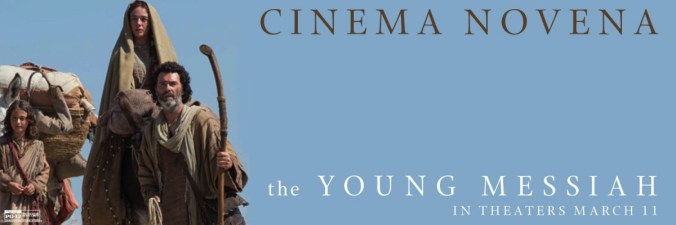
National Catholic Sisters Week & Cinema Novena: The Young Messiah

Last week, I was away working on finishing the first draft of my book. Now that I’m back, I’m busy catching up with the stuff that piled up while I was away.

1500x500-cinema-novenaOne of the things that I’ve been helping with is getting the word out about the new film opening on Friday (March 11), The Young Messiah (you can find my review here), and also inviting people to make the online Cinema Novena: The Young Messiah, either as a novena to St. Joseph (if you start on March 11th and finish on March 19th, the feast of St. Joseph), or as a novena to the Holy Family which you can make anytime. The novena uses clips from the film, a Scripture reading, a reflection question, and a prayer. You can sign up here!

Since this is National Catholic Sisters Week,  through the week I’ll try to post and tweet interesting resources for those discerning religious life as I find them. My favorite so far is Sr. Clare Hunter’s Top Ten Reasons “I could never become a nun”,  a wonderful article that briefly addresses some of the reasons I’ve heard most often.

If you’re looking for a Lenten Discernment Retreat, it’s not too late to sign up for our Holy Week Retreat at the Daughters of Saint Paul in Boston, MA.

HolyWeekRetreat2016

Considerations on Discerning Consecrated Life

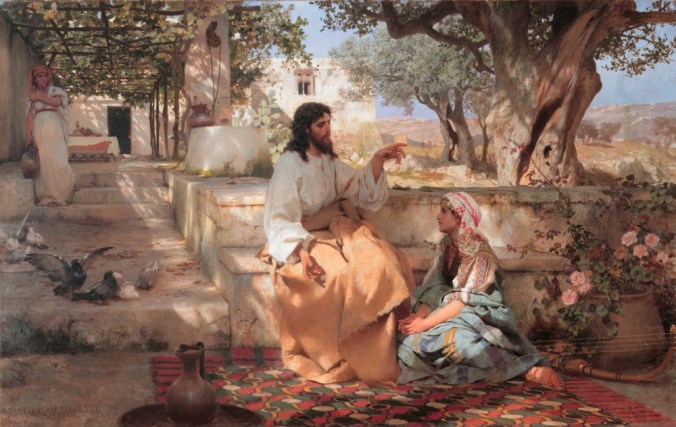
Christ with Martha and Maria by Henryk Siemiradzki, Public Domain

Christ with Martha and Maria by Henryk Siemiradzki, Public Domain

“In the unity of the Christian life, the various vocations are like so many rays of the one light of Christ…. It is the duty of the consecrated life to show that the Incarnate Son of God is the eschatological goal towards which all things tend, the splendor before which every other light pales, and the infinite beauty which alone can fully satisfy the human heart… By professing the evangelical counsels, consecrated persons not only make Christ the whole meaning of their lives but strive to reproduce in themselves, as far as possible, ‘that form of life which he, as the Son of God, accepted in entering this world….’

“By embracing chastity, they [religious] make their own the pure love of Christ and proclaim to the world that he is the Only-Begotten Son who is one with the Father (cf. Jn 10:30, 14:11). By imitating Christ’s poverty, they profess that he is the Son who receives everything from the Father, and gives everything back to the Father in love (cf. Jn 17:7, 10). By accepting, through the sacrifice of their own freedom, the mystery of Christ’s filial obedience, they profess that he is infinitely beloved and loving, as the One who delights only in the will of the Father (cf. Jn 4:34), to whom he is perfectly united and on whom he depends for everything. By this profound ‘configuration’ to the mystery of Christ, the consecrated life…acknowledges with wonder the sublime beauty of God, Father, Son and Holy Spirit, and bears joyful witness to his loving concern for every human being” — Vita Consecrata by Pope St. John Paul II, #16.

The Vocation to Consecrated Life

Consecrated life is a vocation in which the person commits themselves to Christ in a radical way—by vowing chastity, poverty, and obedience as a way of following Jesus more closely and more fully living their baptismal consecration. In Vita Consecrata #16, Pope St. John Paul describes religious life as “conforming one’s whole existence to Christ in an all-encompassing commitment.” For religious men and women, this total dedication of self to God through prayer and the service of others is lived together in community, sharing everything in common. Consecrated life also means that one’s love for God extends to God’s people: a religious must have the gifts of generosity and a universal heart, as the consecrated person is called to become a spiritual father or mother of many people.

To sum up: Consecrated life is a lifestyle of deep faith and a closer following of Christ, where one offers one’s whole self to God, serving others wholeheartedly without expectation of reward on this earth, living a poor, chaste, and obedient lifestyle which has its reward in heaven.

Diverse Forms of Consecrated Life

Consecrated life has many diverse forms, from cloistered religious nuns and monks, to active communities of religious men and women, to less familiar forms such as consecrated virgins and secular institutes. Some male religious communities are priests; others are a mix of  priests and brothers. The Catechism of the Catholic Church briefly describes each form of consecrated life, which I’ve referenced below according to paragraph numbers.  A more complete description of the different forms of consecrated life can be found in Pope St. John Paul II’s Vita Consecrata, paragraphs 6-12.

Secular institutes are lay people who live in and evangelize the world by living the evangelical counsels of poverty, chastity, and obedience, acting as “leaven of the Gospel” in the world. (See CCC #928-929)

Consecrated virgins and widows are called to serve the Church in a life of consecrated virginity or celibate chastity for the sake of the Kingdom of Heaven. This was an ancient way of life in the Church that was recently restored. (See CCC #s 922-924)

Hermits may or may not live the evangelical counsels but strictly separate from the world in order to live in union with Christ. (See CCC #s920-921)

Religious life has a variety of forms but each has the following characteristics: religious make a public profession of the vows of chastity, poverty, and obedience, live community life together, and witness to the spousal union of Christ with his Church. (See CCC #s925-927)

The Vocation to Religious Life

Religious life is the more common and visible form of consecrated life. There are two basic kinds of religious life—although they are not always clearly divided. Cloistered nuns and monks live a monastic religious life, usually structured around praying the full Divine Office. Their main apostolate or mission is to pray for the world, but they often take on certain tasks or apostolates that they can carry out on the side, in order to evangelize and to support themselves while still giving priority to the liturgy. “Cloistered” means that they live a hidden life, separated from the world, in order to pray and offer their lives for the salvation of others.

Active religious life includes the communities of sisters, brothers, and priests who are more visible and active in serving the world and the Church. These communities usually structure their prayer and life in common around their mission. Communities that dedicate themselves to nursing, teaching, and social work are usually active communities.

Some communities—like my own, the Daughters of Saint Paul—seek to blend the contemplative aspects of monastic life with the active apostolate of the active communities. Their prayer lives are similar to those of a nun or monk, but their days are dedicated to apostolic service. It’s a particularly beautiful and demanding expression of religious life.

Discerning which congregation or community God calls us to is part of the discernment for religious life. People realize that they are called to religious life in different ways: some will recognize the call and then start to look for a community or congregation. Other people meet a congregation, and on the basis of their attraction to that community’s way of life, will begin to discern a vocation to religious life. Some people are attracted to a particular mission; others focus on a community’s spirituality. What’s important to recognize is that a vocation to religious life includes a call to a particular community. Discerning religious life includes discerning which community God calls us to. In a future post, we’ll look a bit further at some practical steps that can be taken to discern which community one is called to.

In the meantime, browse www.vocationnetwork.org to see the huge variety of religious life and of consecrated life.

Particular Graces & Strengths of Religious Life

The framework for consecrated life, especially religious life, is being dedicated to God for the sake of humanity, being an apostle of God’s love sent to serve all humanity in the particular spirit of one’s community. The service may be primarily that of prayer (for a cloistered contemplative) or a combination of prayer and action. To live a genuine religious life a universal heart is needed: that is, the desire and ability to generously embrace and serve all people—not restricted to one’s family or neighbor or parish. With the vows of chastity, poverty, and obedience, a religious is called to be a spiritual mother or spiritual father to everyone. This universal love is well-expressed in religious who become missionaries, who go wherever they are needed.

Through their vows, religious men and women live a closer following of Christ with a special intensity. Obedience is a “deep listening” to God together that frees religious from their own egos and wills and unites them to the will of God. (Obedience sometimes requires a deeper faith to see the will of God in the superior’s decisions.) The vow of poverty frees a religious from material goods so that he or she can depend entirely on God, putting all of his or her trust in God, and proclaiming with a poor and simple lifestyle that God is the greatest Treasure. With the vow of chastity, a religious offers his or her heart completely to God. God’s intimate love that the religious contemplates daily becomes the source and impetus for enthusiastic, loving service of others.

Religious live their intense radical following of Christ together, sharing everything in common. “Little” virtues that help life together blossom—such as humility, generosity, patience, and living in ongoing conversion—can make community life a tremendous support on the journey.

As a lifestyle on a human level, religious life seems to include many sacrifices and fewer satisfactions. But the joys of belonging to Christ completely, of knowing the love of God so fully, and sharing the love of God with others, overshadows the sacrifices. This special witness to joy is a frequent characteristic of authentic religious life, and it’s a reminder to all Christians—including the religious—that the joy of heaven is the only true lasting joy.

Some Reflections on Religious Life

“Poverty is the greatest wealth, chastity is the greatest love, obedience is the greatest freedom.” — Blessed James Alberione

“Religious life is a life of more vivid faith.” — Blessed James Alberione

“Religious life has its roots deep in the Gospel… The religious state, which is a perfecting of the Christian life and the integral practice of the Gospel, seems all the more a paradox: the sacrifice of one’s own life in order to save it, giving up everything in order to gain everything. And in culmination of this paradox, poverty becomes wealth; abasement leads to exaltation; virginity bears life; servitude becomes freedom; sacrifice, beatitude; service, apostolate; death, life. “I have been crucified with Christ, and if I am alive, it is no longer I who live but Christ who lives in me.” The mystic crucifixion of the religious is accomplished by the three nails of poverty, chastity and obedience. And this, after the Mass and martyrdom, is the greatest and most meritorious act.” — Blessed James Alberione

“Invited to leave everything to follow Christ, you, consecrated men and women, no longer define your life by family, by profession, or by earthly interests, and you choose the Lord as your only identifying mark. Thus you acquire a new family identity.” —St. Pope John Paul II, Homily at the Jubilee of Consecrated Life, February 2, 2000

“To have your heart, affections, interests and feelings centered on Jesus is the most important aspect of the gift that the Spirit works within you. He conforms you to the chaste, poor and obedient Jesus. And the evangelical counsels, far from being an impoverishing renunciation, are a choice that frees a person for a fuller realization of his potential.” —St. Pope John Paul II, Homily at the Jubilee of Consecrated Life, February 2, 2000

“The life of prayer and contemplation founded on the Eucharistic mystery is also at the heart of the vocation of consecrated people who have chosen the path of the “sequela Christi,” to give themselves to the Lord with an undivided heart in an ever more intimate relationship with him. By their unconditional attachment to Christ and to his Church, they have the special mission to reminding everyone of the universal vocation to holiness … Consecrated men and women proclaim that God alone can give fullness to human existence.” —Pope Benedict XVI, 2006 Address to Canadian Bishops

“Is Jesus really our first and only love, as we promised he would be when we professed our vows? Only if he is, will we be empowered to love, in truth and mercy, every person who crosses our path. For we will have learned from Jesus the meaning and practice of love. We will be able to love because we have his own heart.” —Pope Francis, Apostolic Letter to All Consecrated People for the Year of Consecrated Life

“Be men and women of communion! Have the courage to be present in the midst of conflict and tension, as a credible sign of the presence of the Spirit who inspires in human hearts a passion for all to be one (cf. Jn 17:21). Live the mysticism of encounter, which entails ‘the ability to hear, to listen to other people; the ability to seek together ways and means.’ Live in the light of the loving relationship of the three divine Persons (cf. 1 Jn 4:8), the model for all interpersonal relationships.” —Pope Francis, Apostolic Letter to All Consecrated People for the Year of Consecrated Life

“We are called to know and show that God is able to fill our hearts to the brim with happiness; that we need not seek our happiness elsewhere; that the authentic fraternity found in our communities increases our joy; and that our total self-giving in service to the Church, to families and young people, to the elderly and the poor, brings us life-long personal fulfillment.”—Pope Francis, Apostolic Letter to All Consecrated People for the Year of Consecrated Life

Scripture Passages To Pray With:

  • Genesis 12:1-9 Call of Abraham
  • Matthew 19:16-30 The Rich Young Man
  • Luke 1:26-56 The Annunciation
  • Luke 5:1-11 “Put out into the deep”
  • John 1:35-51 “Come and see”
  • John 15:1-17 “You did not choose me but I chose you”

Considerations on Discerning Priesthood

 A Saintly Priest: Father Damien of Molokai Photo credited to Sacred Hearts Archives, Rome - http://www.hawaiimagazine.com/images/content/Damien_Hawaii_Saint_Molokai_Kalaupapa_canonization/Damien%20p1.jpg, Public Domain

A Saintly Priest: Father Damien of Molokai
Photo credited to Sacred Hearts Archives, Rome – In Public Domain

“In the unity of the Christian life, the various vocations are like so many rays of the one light of Christ, whose radiance “brightens the countenance of the Church….’  Sacred ministers, for their part, are living images of Christ the Head and Shepherd who guides his people during this time of “already and not yet”, as they await his coming in glory.” (Vita Consecrata, #16)

“The priestly vocation is essentially a call to sanctity, in the form that derives from the Sacrament of Holy Orders.  Sanctity is intimacy with God; it is the imitation of Christ, poor, chaste and humble; it is unreserved love for souls and self-giving to their true good; it is love for the church which is holy and wants us to be holy, because such is the mission that Christ has entrusted to it.  Each one of you must be holy also in order to help your brothers pursue their vocation to sanctity.” — Pope St. John Paul II, Rome, Italy, Homily on October 9, 1984

“His calling is a declaration of love. Your response is commitment, friendship, and love manifested in the gift of your own life as a definitive following and as a permanent sharing in his mission and in his consecrations.  To make up your mind is to love him with all of your soul and all of your heart in such a way that this love becomes the standard and motive of all your actions.  From this moment on, live the Eucharist fully; be persons for whom the Holy Mass, Communion, and Eucharistic adoration are the center and summit of their whole life.  Offer Christ your heart in meditation and personal prayer which is the foundation of the spiritual life.”  —Pope St. John Paul II, Valencia, Spain, November 8, 1982

“The world looks to the priest, because it looks to Jesus!  No one can see Christ; but everyone sees the priest, and through him they wish to catch a glimpse of the Lord!  Immense is the grandeur of the Lord! Immense is the grandeur and dignity of the priest!” —Pope St. John Paul II, Rome, Italy, October 13, 1979

The Vocation of Priesthood

Priesthood is the vocation of men who are ordained and consecrated to serving the People of God in persona Christi, or “in the person of Christ” who is Teacher, Priest, and King. Priests share in Christ’s ministry, building up the People of God as the Body of Christ and the Temple of the Holy Spirit.

Priests take the vow of celibacy, in order to be more closely configured to Christ and so that they can completely dedicate themselves to their priestly ministry. They also take a vow of obedience to their bishop (in whose priestly ministry they share). The primary areas of priestly ministry are teaching, governing and sanctifying the People of God. Key aspects of priestly ministry include:

  • administering the sacraments, especially celebrating the Eucharistic Sacrifice and absolving sins in the sacrament of Reconciliation
  • preaching the Word of God and explaining it
  • shepherding the People of God,  accompanying them on their journey

Because they are called to lead the People of God on the way of salvation, priests have a special obligation to a life of holiness. Their vocation to love is that of service, but rather than an exclusive service dedicated to their own family, priests are called to be fathers and shepherds to everyone. Their vocation can be summed up thus: A priest is called to be Christ for all whom he meets.

FrMark2sme

Here is an excerpt from Vatican II’s document on the priesthood, Presbyterorum ordinis, describing the purpose of the priesthood:

The office of priests, since it is connected with the episcopal order, also, in its own degree, shares the authority by which Christ builds up, sanctifies and rules his Body…. Priests, by the anointing of the Holy Spirit, are signed with a special character and are conformed to Christ the Priest in such a way that they can act in the person of Christ the Head…

The purpose, therefore, which priests pursue in their ministry and by their life is to procure the glory of God the Father in Christ. That glory consists in this—that men working freely and with a grateful spirit receive the work of God made perfect in Christ and then manifest it in their whole lives. Hence, priests, while engaging in prayer and adoration, or preaching the word, or offering the Eucharistic Sacrifice and administering the other sacraments, or performing other works of the ministry for men, devote all this energy to the increase of the glory of God and to man’s progress in the divine life. (#2)

To sum up, priests are called, ordained, and consecrated to God’s service, sharing in the very ministry of Christ himself, and continuing Christ’s presence in the world through celebrating the sacraments, proclaiming the Gospel, and shepherding the People of God throughout their lives. They are dedicated in a particular way to the service of the Church.

Particular Graces & Strengths of Priesthood

The framework for priesthood is a celibate life dedicated to ministry. Presbyterorum ordinis highlights several virtues or characteristics that are especially helpful for priestly ministry:  goodness of heart, sincerity, strength and constancy of mind, zealous pursuit of justice, and affability. In talking to priests, Pope Francis often highlights the importance of the priest’s relationship to Christ, the priest’s closeness to the people he serves, his dedication to service, and personal integrity and humility as key aspects of what it means to be a priest.

Pope Francis’s recent reflections on the priesthood are helpful in understanding how important human formation and the family, closeness to Christ and his flock, and the call to serve, are to the life and vocation of every priest. You may wish to bring his thoughts, as well as the Scripture passages below, to prayer.

A good priest, therefore, is first of all a man with his own humanity, who knows his own history, with its riches and its wounds, and who has learned to make peace with it, reaching an underlying serenity, that of a disciple of the Lord. Human formation is therefore a necessity for priests so that they learn not to be dominated by their limitations, but instead to build on their talents…

We priests are apostles of joy, we proclaim the Gospel, that is, the “good news” par excellence; it is certainly not we who give strength to the Gospel — some believe that —, but we can either help or hinder the encounter between the Gospel and people. Our humanity is the “earthen vessel” in which we safeguard the treasure of God, a vessel which we must take care of, in order to properly pass on its precious content.

A priest cannot lose his roots; he always remains a man of the people and of the culture that engendered him. Our roots help us to remember who we are and where Christ has called us.

Answering God’s call, you become a priest to serve your brothers and sisters. The images of Christ that we take as a reference for the ministry of priests are clear: He is the “High Priest”, close in the same way to God and to mankind; he is the “Servant”, who washes feet and who becomes a neighbor to the weakest; he is the “Good Shepherd”, who always has as his goal the care of the flock.

There are three images that we should look to when thinking about the ministry of priests: sent to serve men, to help them obtain the mercy of God, and to proclaim his Word of life. We are not priests for ourselves, and our sanctification is closely linked to that of our people, our unction for their unction; you are anointed for your people….The good that the priests can do is born mainly from their closeness and their tender love for people. They are neither philanthropists nor officials; priests are fathers and brothers. The fatherhood of a priest does so much good.

Closeness, the depths of mercy, a loving gaze: to experience the beauty of a life lived according to the Gospel and the love of God, which is also made concrete through his ministers. God never refuses. —Address of Pope Francis, Nov. 20, 2015

Resources for Prayer and Reflection About the Vocation to Priesthood

Here are a few Scripture passages to pray with, that could be helpful for someone  discerning his vocation to the priesthood.

  • Exodus 3:1-15 Call of Moses
  • Isaiah 42:1-7 “I have given you as a covenant to the people, a light to the nations”
  • Matthew 9:35-38 “The harvest is plentiful, but the laborers are few”’
  • John 13:1-15 Jesus washes the feet of the disciples
  • 1 Peter 2:4-10 “Let yourselves be built into a spiritual house, to be a holy priesthood”
  • Hebrews 4:12-16 “Let us confidently approach the throne of grace to receive mercy and favor”
  • Hebrews 5:1-10 “You are a priest forever”

If you are reading this blog but not discerning priesthood, join me in taking a few moments to  pray for future priests: those currently discerning, and those who have not yet received Jesus’ invitation to become a priest. 

Connecting Lent & Discernment: 2 Amazing Journeys

sand-768783_1280Today is Ash Wednesday, the first day of an amazing six-week opportunity for a spiritual “makeover,” for deepening our relationship with God, for experiencing anew God’s great mercy.

So many connections between our discernment journey and our Lenten journey are immediately obvious. Any time that we focus on renewing, revitalizing, and deepening our relationship with God, our ability to discern is also going to grow. This Lent, in addition to making the 7 Qualities of Mercy online mini-retreat, I have decided to focus my Lent around listening. Listening is a wonderful quality that is a prerequisite for genuine communication—with God first of all, but also with self and with others.

Pope Francis talks about the importance of listening in our relationships in this year’s Message for the 50th World Communications Day:

Communicating means sharing, and sharing demands listening and acceptance. Listening is much more than simply hearing. Hearing is about receiving information, while listening is about communication, and calls for closeness. Listening allows us to get things right, and not simply to be passive onlookers, users or consumers. Listening also means being able to share questions and doubts, to journey side by side, to banish all claims to absolute power and to put our abilities and gifts at the service of the common good.

Listening is never easy. Many times it is easier to play deaf. Listening means paying attention, wanting to understand, to value, to respect and to ponder what the other person says. It involves a sort of martyrdom or self-sacrifice, as we try to imitate Moses before the burning bush: we have to remove our sandals when standing on the “holy ground” of our encounter with the one who speaks to me (cf. Ex 3:5). Knowing how to listen is an immense grace, it is a gift which we need to ask for and then make every effort to practice.

You might have noticed that Pope Francis talks about listening as a form of self-emptying love, similar in a way to Jesus’ kenosis in taking on our human nature and in dying on the cross. Listening can be a sort of martyrdom. In truly listening, we can imitate Jesus’ self-giving, sacrificial love for us, by putting ourselves and our agendas aside and becoming deeply receptive to whomever we are listening to. Deep listening enables us to become aware of the sacredness of the other. Even if we are just having an ordinary, everyday conversation, deep listening takes us beyond the surface to glimpse the depth of someone else’s humanity and thus, how beloved they are by God.

Lent is a time to die to ourselves so that we can rise with Christ. Learning to listen better is a concrete way to die to self and to welcome the other in a genuine encounter of love and mercy. When we really hear one another, we are more likely to respond to them with compassion, gentleness, and mercy. As attentive listeners, we can discover God speaking to us—not just in prayer and in his Holy Word, or within ourselves in the depths of our own hearts—but especially in the words and unspoken longings and vulnerabilities of others with whom we relate.

Deep listening will enrich our discernment journey, eventually becoming more and more foundational to our prayer and our daily seeking the will of God.

* * *

Join me in making the 7 Qualities of Mercy Online Mini-Retreat.

7 QUALITIES FB