Connecting Lent & Discernment: 2 Amazing Journeys

sand-768783_1280Today is Ash Wednesday, the first day of an amazing six-week opportunity for a spiritual “makeover,” for deepening our relationship with God, for experiencing anew God’s great mercy.

So many connections between our discernment journey and our Lenten journey are immediately obvious. Any time that we focus on renewing, revitalizing, and deepening our relationship with God, our ability to discern is also going to grow. This Lent, in addition to making the 7 Qualities of Mercy online mini-retreat, I have decided to focus my Lent around listening. Listening is a wonderful quality that is a prerequisite for genuine communication—with God first of all, but also with self and with others.

Pope Francis talks about the importance of listening in our relationships in this year’s Message for the 50th World Communications Day:

Communicating means sharing, and sharing demands listening and acceptance. Listening is much more than simply hearing. Hearing is about receiving information, while listening is about communication, and calls for closeness. Listening allows us to get things right, and not simply to be passive onlookers, users or consumers. Listening also means being able to share questions and doubts, to journey side by side, to banish all claims to absolute power and to put our abilities and gifts at the service of the common good.

Listening is never easy. Many times it is easier to play deaf. Listening means paying attention, wanting to understand, to value, to respect and to ponder what the other person says. It involves a sort of martyrdom or self-sacrifice, as we try to imitate Moses before the burning bush: we have to remove our sandals when standing on the “holy ground” of our encounter with the one who speaks to me (cf. Ex 3:5). Knowing how to listen is an immense grace, it is a gift which we need to ask for and then make every effort to practice.

You might have noticed that Pope Francis talks about listening as a form of self-emptying love, similar in a way to Jesus’ kenosis in taking on our human nature and in dying on the cross. Listening can be a sort of martyrdom. In truly listening, we can imitate Jesus’ self-giving, sacrificial love for us, by putting ourselves and our agendas aside and becoming deeply receptive to whomever we are listening to. Deep listening enables us to become aware of the sacredness of the other. Even if we are just having an ordinary, everyday conversation, deep listening takes us beyond the surface to glimpse the depth of someone else’s humanity and thus, how beloved they are by God.

Lent is a time to die to ourselves so that we can rise with Christ. Learning to listen better is a concrete way to die to self and to welcome the other in a genuine encounter of love and mercy. When we really hear one another, we are more likely to respond to them with compassion, gentleness, and mercy. As attentive listeners, we can discover God speaking to us—not just in prayer and in his Holy Word, or within ourselves in the depths of our own hearts—but especially in the words and unspoken longings and vulnerabilities of others with whom we relate.

Deep listening will enrich our discernment journey, eventually becoming more and more foundational to our prayer and our daily seeking the will of God.

* * *

Join me in making the 7 Qualities of Mercy Online Mini-Retreat.

7 QUALITIES FB

Considerations on Discerning Marriage

“Every Christian vocation becomes a revelation of Christ
and his love for humanity.”

Discernment: Acquiring the Heart of God by Father Marko Ivan Rupnik

“In the unity of the Christian life, the various vocations are like so many rays of the one light of Christ, whose radiance brightens the countenance of the Church. ‘The laity, by virtue of the secular character of their vocation, reflect the mystery of the Incarnate Word particularly insofar as he is the Alpha and the Omega of the world, the foundation and measure of the value of all created things.’ ” (Consecrated Life by Pope St. John Paul II, #16)
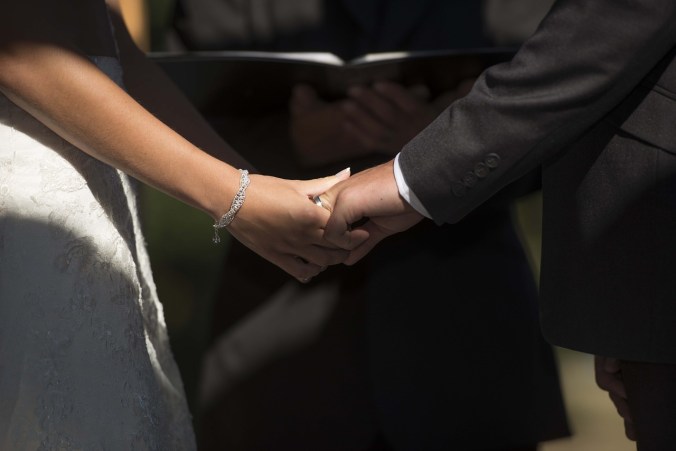
marriage-451596_1280

The Vocation of Marriage

Marriage is a beautiful vocation which is “written into” our human nature. Most human beings are called to marriage, because as humans we find our fullest human completion in that covenant of love, that special union between a man and a woman. This mutual love of a man and a woman is an image of God’s love for humanity and of Christ’s love for the Church. The purpose of marriage is twofold: the mutual support of the spouses and the procreation and raising of children.

The Sacrament of Matrimony has a special dignity as a sacrament. Husbands and wives are called to live out their baptismal call to holiness through their self-giving love to each other and to their children. Their “way” to holiness is with and through each other. By virtue of their Baptism, married couples are lay members of the Church. They are called to: “seek the Kingdom of God by engaging in temporal affairs and directing them according to God’s will…. The laity consecrate the world itself to God, everywhere offering worship by the holiness of their lives” (Lumen gentium, #31).

Here is the full paragraph from Vatican II’s Lumen gentium, comparing the “mission” of priests, those in consecrated life, and the laity:

What specifically characterizes the laity is their secular nature. It is true that those in holy orders can at times be engaged in secular activities, and even have a secular profession. But they are by reason of their particular vocation especially and professedly ordained to the sacred ministry. Similarly, by their state in life, religious give splendid and striking testimony that the world cannot be transformed and offered to God without the spirit of the beatitudes. But the laity, by their very vocation, seek the kingdom of God by engaging in temporal affairs and by ordering them according to the plan of God. They live in the world, that is, in each and in all of the secular professions and occupations. They live in the ordinary circumstances of family and social life, from which the very web of their existence is woven. They are called there by God that by exercising their proper function and led by the spirit of the Gospel they may work for the sanctification of the world from within as a leaven. In this way they may make Christ known to others, especially by the testimony of a life resplendent in faith, hope and charity. Therefore, since they are tightly bound up in all types of temporal affairs it is their special task to order and to throw light upon these affairs in such a way that they may come into being and then continually increase according to Christ to the praise of the Creator and the Redeemer.                 -Lumen gentium, #31

To sum up, married spouses are called to find salvation and help each other to grow in holiness, to give life their children and then to raise their children with love, educating them in their faith. An essential part of their vocation is to sanctify the secular—to bring Christ into every aspect of human life and work in which they are engaged.

Particular Graces & Strengths of Marriage

The framework for married life is, of course, the family. At the beginning of his apostolic exhortation on the family, St. John Paul encourages us to discover “the beauty and grandeur of the vocation to love and the service of life.”

The love of spouses and parents requires great generosity, patience, and self-sacrifice. A mother and father’s love is exclusive and particular: centered on God, that love is to be primarily expressed through love of one’s spouse and children. In his general audience addresses, Pope Francis lists the virtues that spring from a family spirit—virtues which are especially nurtured in the family and which our world desperately needs—loyalty, sincerity, trust, cooperation, and respect.

Pope Francis has a particularly direct and grounded way of speaking about the vocation of the family. He reminds us frequently that the family is called to forgiveness and to share its love beyond itself, to be inclusive: to extend the mercy of God to all of those who are abandoned, who do not have a home, who do not “belong.” He encourages families to live their vocations because in so doing, these family values “spill over” into the world.

Resources for Prayer and Reflection About the Vocation of Marriage

From Scripture:

Genesis 1:26-31 “God created humankind in his image”

Genesis 2:18-25  “Therefore a man leaves his father and his mother and clings to his wife, and they become one flesh.”

John 2:1-11 “Jesus and his disciples had also been invited to the wedding.”

Ephesians 5:21-33 “ ‘For this reason a man will leave his father and mother and be joined to his wife, and the two will become one flesh.’ This is a great mystery, and I am applying it to Christ and the church.”

* * *

Pope Francis speaks simply and eloquently about the gift of and vocation of the family. Perhaps these gems from his recent talks–especially at the 2015 World Festival of Families–can help us reflect further on the beauty of the vocation of marriage and family:

God’s Special Love for the Family
“All the love God has in himself, all the beauty God has in himself, all the truth God has in himself, he entrusts to the family. A family is truly a family when it is capable of opening its arms to receive all that love.”

The Family Gives Us Hope
“In families, there are difficulties. In families, we argue; in families, sometimes the plates fly; in families, the children give us headaches. And I’m not even going to mention the mother-in-law. But in families, there is always, always, the cross. Always. Because the love of God, of the Son of God, also opened for us this path. But, in families as well, after the cross, there is the resurrection. Because the Son of God opened for us this path. Because of this, the family is — forgive the term I’ll use — it is a factory of hope, of hope of life and of resurrection. God was the one who opened this path.”

The Family: God Does Not Want Us To Feel Alone
“The family is the great blessing, the great gift of this ‘God with us,’ who did not want to abandon us to the solitude of a life without others, without challenges, without a home. God does not dream by himself, he tries to do everything “with us”. His dream constantly comes true in the dreams of many couples who work to make their life that of a family.”

The Family is God’s Dream for Humanity
“That is why the family is the living symbol of the loving plan of which the Father once dreamed. To want to form a family is to resolve to be a part of God’s dream, to choose to dream with him, to want to build with him, to join him in this saga of building a world where no one will feel alone, unwanted or homeless. As Christians, we appreciate the beauty of the family and of family life as the place where we come to learn the meaning and value of human relationships… We learn to stake everything on another person, and we learn that it is worth it.” – Pope Francis, remarks at Prayer Vigil for the Festival of Families

The “Little Way of Love” in the Family
Love is shown by little things, by attention to small daily signs which make us feel at home. Faith grows when it is lived and shaped by love. That is why our families, our homes, are true domestic churches. They are the right place for faith to become life, and life to grow in faith.

Jesus tells us not to hold back these little miracles. Instead, he wants us to encourage them, to spread them. He asks us to go through life, our everyday life, encouraging all these little signs of love as signs of his own living and active presence in our world…. At home do we shout at one another or do we speak with love and tenderness? This is a good way of measuring our love. – Pope Francis, Homily at Mass for the Festival of Families

The expressions…“may I?”, “thank you”, and “pardon me”…open up the way to living well in your family, to living in peace. – Pope Francis, General Audience, May 13, 2015

A marriage is not successful just because it endures; quality is important. To stay together and to know how to love one another forever is the challenge for Christian couples. What comes to mind is the miracle of the multiplication of the loaves: for you too, the Lord can multiply your love and give it to you fresh and good each day. He has an infinite reserve! He gives you the love that stands at the foundation of your union and each day he renews and strengthens it. And he makes it ever greater when the family grows with children. On this journey prayer is important, it is necessary, always: he for her, she for him and both together. Ask Jesus to multiply your love. In the prayer of the Our Father we say: “Give us this day our daily bread.” Spouses can also learn to pray like this: “Lord, give us this day our daily love,” for the daily love of spouses is bread, the true bread of the soul, what sustains them in going forward. And the prayer: can we practice to see if we know how to say it? “Lord give us this day our daily love” – Pope Francis, Address to Engaged Couples Preparing for Marriage, February 14, 2014

Reflection questions:

  • God creates each person in his image, but it is in the union between one man and one woman that God’s image is most clearly made visible. How do I understand the beauty, strengths, and challenges that are inherent in married life? Do I feel invited to reflect the love of God through marriage with…?
  • “It is not good that the man should be alone.” I am not called to live my vocation to love alone. How is Jesus inviting me to bring forth new life and to build communion in the world?

The best vocation is…

Ruth Sharville [CC BY-SA 2.0 (http://creativecommons.org/licenses/by-sa/2.0)], via Wikimedia Commons

Ruth Sharville [CC BY-SA 2.0 (http://creativecommons.org/licenses/by-sa/2.0)%5D, via Wikimedia Commons

What is the best vocation?

That’s a trick question. Of course, the best vocation is the vocation God calls us to.

But is any vocation—objectively speaking—a higher or better calling than the others? This is a fascinating question that has been hotly debated through the ages. Especially in the Middle Ages, where people were preoccupied with order and hierarchy of importance even in spiritual matters, consecrated life was sometimes described as a higher calling. At least since the Council of Trent (and even in Saint Paul’s letters), various Church documents state that consecrated life should be considered a “higher” calling: living the evangelical counsels of poverty, chastity, and obedience is the closest way to imitate Jesus during his life on earth. Living these evangelical counsels also prepares us to anticipate eternal life in heaven.

Personally, it seems to me that if any vocation could be considered a “higher” calling, it would be priesthood, because the priest celebrates the Eucharist every day. However, most comparisons are between religious life versus either married life or diocesan priesthood. Even recent documents refer to the “objective superiority” of the consecrated lifestyle that more clearly and closely reflects Christ’s way of life while here on earth. (You can check out St. John Paul II’s Consecrated Life, paragraph #32). In many ways, it’s helpful to highlight the beauty and importance of consecrated life because it is a more hidden vocation, and marriage is the vocation we are all inclined to. Even those called to religious life may sometimes not consider religious life unless they receive special encouragement.

However, all of this discussion about the “higher” calling is academic at best, and for some it can be deceptive. Idealistic young people might be tempted to search for the “best” vocation, and can make a superficial conclusion that they should follow the “highest” calling—consecrated life—simply out of a desire to be the best.

All of us want to live the “best” vocation. We need to remember:

  • Objectively, a “higher” vocation is different from which vocation is subjectively the best for us. (There’s even a difference between the meaning of the words, “higher calling,” and “best calling,” but we won’t go into that here.)
  • While striving for excellence and greater closeness to Christ is praiseworthy, truly the “best” vocation for each of us is the vocation God calls us to. (Obedience to God is better than the biggest sacrifice. If you need convincing, read 1 Samuel 15:22.)
  • All vocations are beautiful; all vocations are calls to great holiness. Each vocation has different graces, challenges, and gifts.

The Catechism of the Catholic Church clearly supports the approach that the best vocation for us is the one God calls us to. The Catechism (CCC) makes it clear that every vocation is not only important and necessary in God’s plan, but that every vocation has equal dignity. In addition, each vocation faithfully lived  supports the other vocations. (See The Catechism of the Catholic Church  (CCC), #s 871-873.) The Catechism specifically talks about all of the vocations as coming from God, who gives them meaning and gives us the grace to live whichever vocation he has called us to (CCC #1820). Here are a few highlights:

  • The priest is to make the presence of Christ visible and to serve the faithful, helping all believers to grow in the grace of their Baptism (CCC #s1536ff).
  • Religious life is a more intimate expression of the consecration of our Baptism (CCC #916).
  • Marriage is written in our nature as human beings, was created by God and raised to the dignity of a sacrament (CCC #s1601ff).

In our next few posts, we’ll explore some of the general graces, beauties, and challenges of the three vocations of marriage, priesthood, and religious life.  The Church offers a lot of resources to reflect on these three, and I’m hoping that highlighting some of the beauty and gifts of each vocation will be helpful for those who are either just beginning their vocational discernment, or are struggling to move forward.

At this point, I couldn’t possibly cover all the variations of vocations, so these are the three I’ll focus on for now.  Because the post for each vocation is quite lengthy, I might be posting a little less frequently. Later, or perhaps in my book, I hope to include reflections from individuals who are living each vocation. 

Partners in Our Discernment

By Photographes du National Geographic (http://natgeofound.tumblr.com/) [Public domain], via Wikimedia Commons

By Photographes du National Geographic http://natgeofound.tumblr.com/ Public domain, via Wikimedia Commons

We may begin our vocational discernments on our own. But at some point, hopefully early on in our discernment, we start discerning with our partners in our discernment.

Discerning with others who share our call is important because we do not have a right to any vocation: a vocation is a gift, a call from God, a gift. Those who share our calling discern with us if God is calling us to this particular vocation.

If we are discerning marriage, we can only discern on our own up to a certain point. Even if we are pretty sure that we are called to marriage, we cannot truly discern our vocation to marriage until we meet a possible future spouse, with whom we discern our marriage together. Marriage is a vocation undertaken together with our spouse, and that spouse has an equal voice in the discernment. The other person, too, needs to discern if God is calling him or her to marriage with this particular person. The Sacrament of Matrimony is a covenant made with a spouse before God and the Church. The spouse, therefore, has the duty and privilege to discern their call from God as well. And the Church has a responsibility to bless, confirm, and witness to that covenant, ensuring that both spouses are freely entering into this covenant with full understanding of what it means.

If we are discerning priesthood or religious life, the Church is our co-discerner, with equal say in our discernment. At first, this may surprise us. Aren’t we supposed to follow God’s call no matter what? Yes, but priesthood and consecrated life are calls from God to a specific ministry or mission within the Church. The Church helps us to discern if God is indeed truly calling us to this vocation, and entrusts this task to certain people: the bishop and director of the seminary in the case of diocesan priesthood, the superior and vocation director of the community in the case of consecrated life.

Priesthood and consecrated life are gifts, just as marriage is a gift. Having the Church as our partner or co-discerner is a great source of strength and support in our vocation. When the Church, through the vocation director, confirms our understanding of God’s call, this confirmation can help anchor us in God’s will during times of darkness, doubt, and struggle.

When we are concerned about “making a mistake” in our vocational discernment, our partners in discernment offer necessary reassurance. Our vocational discernment is something we are responsible for, and we need to take it seriously, but it’s not all up to us. Our vocation is a call from God, and God will give us every help in discovering and following our vocation, including the support of the Church—through our potential spouse, the bishop or superior, our vocation director, and our spiritual director.

Discernment Opportunities with the #MediaNuns

As we conclude the Year for Consecrated Life tomorrow (February 2, 2016), I wanted to share a few things about my community, the Daughters of Saint Paul, for those of you reading this blog and discerning religious life.

First, here’s a little video about our community and our spirit:

Secondly, our annual #Discernment Retreat during Holy Week is coming up, if you’d like learn more about our Pauline life and mission:

HolyWeekRetreat2016

Third, if you are interested in learning more about the Daughters of St. Paul, you can connect with us in many ways, including our website, which has many discernment resources: www.daughtersofstpaul.org/vocations

When and How To Share Our Vocational Discernment with Family

We continue exploring how we can best share our vocational discernment with our family, continuing from our last post. 

people-mother-family-father

3) Our previous and current role in our family is part of our vocational discernment. Praying about our previous role in our family helps us to understand ourselves better. Praying about our current role in our family enables us to see how our vocational choice will affect our family, and how God might be calling us through our family.

For example, if our family relies on us for food and shelter, or one particular family member relies on us for day-to-day care, this is a special circumstance that we need to take into account. If the obligation or need is temporary, then we can discern after we are no longer needed (for example, after a younger sibling turns 18). If instead the need is permanent or ongoing, then the discernment might include looking at other ways the family’s needs can be met. For example, if someone is an only child with an elderly parent who is suffering from a severe medical condition, God may indeed be calling that person to to take care of their elderly parent, which is their mission at this time in their lives. Or, if we are discerning marriage, perhaps staying close to one’s parents—even including our parents in our new living arrangements—can become an important part of our discernment.

If we are supporting the family by providing, or helping to provide, food and shelter, that could be another indication that God is calling us to take care of our family, at least for now. But if the burden of the family’s support is resting solely or primarily on our shoulders, and others in our family could contribute but aren’t doing so, then that becomes part of our discernment too.

Being an only child highlights one’s responsibility towards elderly parents in our vocational discernment. Rather than ignore this, we bring it into our active discernment. (For example, someone who is an only child may discern to enter a religious community that is physically near their parents and allows frequent visits, rather than becoming a missionary on another continent.) Many “only children” are called to priesthood, religious life, or marriage. Whatever our relationship and role in our family, we need to discern how God is calling us.

God doesn’t call us to turn our back on genuine familial obligations, but Jesus speaks very strongly in the Gospel about the primacy of God’s call in our life—that God comes first. (See Matthew 8:18-22; Matthew 10:34-39; Matthew 12:46-50; Matthew 19:27-30; Mark 1:16-20; Mark 10:24-32; Luke 2:41-52; Luke 9:57-62; Luke 14:25-27. ) If we are struggling to understand our responsibility to our families during our vocational discernment, we may want to pray with some of these specific passages, as well as consult especially about this with our spiritual director.

4) Involving our family in our discernment doesn’t mean living up to their expectations. However, it does mean being sensitive to their concerns and needs, especially when we initially talk to our family members about our discernment. Their feedback and advice can be helpful, especially when we know they, too, are seeking God’s will. But even in the best of families, parents or other family members may resist our following our vocation, especially at the beginning. Perhaps they don’t like our chosen future spouse. Or perhaps they simply don’t want to lose daily or close contact with a loved child/sibling. To help our family accept our vocation, we can:

a. Explain our motivations
b. Explain what is truly involved (especially when aspects of our vocation are unfamiliar to them, such as priesthood or religious life, or our future spouse lives outside the country)
c. Talk about the next steps we will take to follow our vocation

Being open and explaining our motivation can help our family to see that we have considered and discerned well, that we are convinced that God is truly calling us in this way, and to understand what our following our vocation means for them.

In some cases, one or more family members may simply be opposed to our vocation. Once we have truly discerned our vocation, we cannot let  their opposition prevent us from doing God’s will. Discussion and further explanation may not be helpful in some cases. Although our path may feel lonely and hard without the support of our family, above all, we want to seek God’s will. When we do this, God will not just bless us, but God will bless our family as well.

Our Family’s Role in Our Vocational Discernment

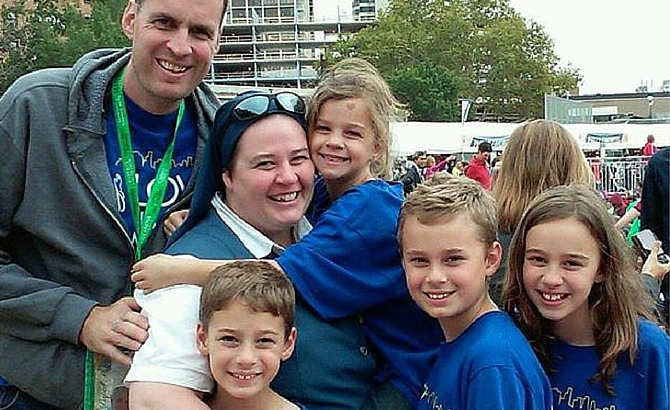
SrLaurawithFamilyWhat role does our family have in our vocational discernment? Ideally, an important one.

(For those who fear family will oppose their vocational discernment, you can read my previous post here, responding to concerns several readers raised.)

As I mentioned previously in response to a question, our vocational discernment greatly affects our family, and most of us desire to remain close to our family. In addition, we care about what our loved ones think, especially when we need another perspective on our strengths, weaknesses, and suitability for a particular vocation. At the same time, our call from God is sacred, and our discernment shouldn’t be influenced by familial pressures and undue attachments.

We want to share our vocational discernment with our family in such a way that it will promote the most freedom and wisdom in our discernment. A lot depends on whether our family members share our faith, our desire to seek God’s will, and the kind of selfless love that seeks what is best for us apart from self-interest. Our role in the family is also crucial. In some cases, our family’s dependence on us may be an important factor in our vocational discernment, for example, elderly parents or siblings who are much younger who depend on us because our parents aren’t able to support their basic needs.

Here are a few guidelines that can help us to know how and when to share our vocational discernment with our family.

1) Discerning our vocation is sacred. In many cases, our initial steps in our discernment are private. We need to start thinking through possibilities, come to know our own feelings and desires without others’ expectations or concerns, listen in the quiet of our hearts to God’s invitation. Especially when we are discerning something new, we are uncomfortable or unsure sharing about it, it is advisable to discern privately and wait to share it with family and friends.

2) Our families are God’s great gift to us and are a huge part of our lives. When we are ready to start sharing about our vocational discernment, and when we need advice from those who know us well, it’s often very helpful to talk about our vocational discernment openly with our family. In doing so, we build up our family love and unity, and also set a good foundation for how we will relate with our family as we follow our vocation. Ideally, we want our family to be involved with our discernment fairly early on, so that:

  • They will understand why we make the choice that we do
  • They can learn about our vocational choice as we do (e.g., getting to know about religious life, or getting to know our future spouse)
  • We don’t block them from being part of one of the most important decisions of our lives

At the same time, we don’t want to let our family members’ private agendas drive our discernment. So, for example, deciding not to get married simply because a sibling or parent will miss us too much or might need us in the future, is allowing others to have undue influence on our vocation. Instead, our priority is to listen to God. God is not only our Creator who gifted us with our lives, God is the One who loves us most and has the best—perfect!—plan for us. Above all other pressures and expectations, we want to listen to God’s invitation.

Vocational Discernment’s Big Question: What is the next step God is calling me to take?

Vocational discernment is like any other discernment, but it has a particular importance and urgency. In the next couple of posts, I want to highlight special considerations that might prove helpful to take into account for those discerning their vocations.

steps-887724_1280

Discerning the Next Best Step

Vocational discernment is not about foreseeing the future or committing to one’s vocation in one dramatic leap. Vocational discernment is about seeking to follow God’s will for us here and now. Is God calling me to consider religious life? marriage? priesthood? Discernment is about taking the next best step.

So, for example, if we are in our third year at college or university, and we start to seriously wonder whether God is calling us to priesthood, it doesn’t necessarily mean that we start planning to enter the seminary. Instead, it might mean that we take the first steps in discerning a call to priesthood, such as: talking about it with the diocesan vocation director, finding out more about the priesthood and the seminary, perhaps even visiting the seminary, and finding a spiritual director. Our constant prayer is twofold: To what vocation is God calling me? and How is Jesus calling me to follow him more closely here and now? If we struggle with the tension of this twofold prayer—for example, if we find ourselves worried about a particular future, then it is best to focus only on the second question: How is Jesus calling me to follow him more closely here and now? This question is enough to guide us in our vocational discernment.

If we continue to feel God’s invitation to consider priesthood, then we take further steps along our discernment: we make a discernment retreat; we follow the advice of the diocesan vocation director; eventually with the encouragement of the vocation director, we apply to enter the seminary, etc.

Entering a seminary or a convent is not the end of our vocational discernment, but a significant step along the way. Until a priest is ordained, a couple is married, or a religious professes perpetual vows, the vocational discernment continues.

After ordination, marriage, or profession, discernment continues but is no longer about discerning which vocation, but how to live our vocation. The fundamental question now becomes: How is God calling me to live as a…[priest, spouse, religious] today?

Discerning God’s Will…Our Mission in This World

We do not discern our vocation in a vacuum. We are born into our family, we grow up as part of any number of communities: our school, our neighborhood, our parish, our town, our country, and our world, in this time. When we discern how God is calling us to give our lives in love, it is important that we do so within our situation and our community, aware of the needs of our world today.

In our vocational discernment we specifically want to pray with the needs of the world, and take those into account as we discern, so that we can fulfill the mission God has entrusted to us. We need to bring our full selves to discerning the mission entrusted to us because God calls us—with our unique set of gifts, weaknesses, skills, experiences, and inclinations—to make a specific difference in the world.

At the same time, a big part of our vocational discernment is to “get out of the way,” putting Christ at the center of our lives and of our discernment. The more Christ becomes the center, the more we can take on an attitude of service, of attending to the needs of others. With a Christlike desire to serve, we are more easily able to discern how God wants us to respond to those needs with our lives.

Does Everyone Need To Discern Their Vocation?

streak-275978_1280Often when we begin discerning our vocation, we already have an inkling about which vocation we are drawn to or God might be calling us to. But one reader recently raised this question:
What if we are pretty sure we already know how God is calling us—do we still need to discern our vocation?

Many people do not feel the need to discern their vocation. Lots of good Catholics never heard about the spiritual art of discernment or never considered discerning their vocation.

A formal vocational discernment may not always be necessary, but there are compelling reasons and excellent benefits for discerning our vocation, even if we are already strongly inclined in one direction. If we are wondering if we should discern our vocation, we might find it helpful to do so for the following reasons:

1) Committing to our vocation is a huge decision that shapes the rest of our lives. Taking time to consider our vocation gives us the opportunity to look at all the possibilities at least once, even the ones we haven’t considered.

If we haven’t witnessed or been inspired by people striving to live their vocation to holiness in a particular state in life, we may not feel drawn to that state simply because it’s not been part of our experience. While some people want to be priests or sisters from an early age, others are surprised by an insight or experience only after reaching adulthood. Other people may need to consider the full beauty and potential of marriage. Every vocation is beautiful, and there is a special complementarity between married family life and consecrated religious life—a complementarity that can support and strengthen us in our vocations in the future.

Since God gave us the gift of our lives, knows us best, loves us and wants what is best for us, it makes sense to consider his plan in creating us and putting us in this time and this place. If we want to be happy, then it it is fitting to seek God’s will.

2) Discerning our vocation helps us to know and follow God’s will for our lives. Even if we think we already know God’s will, it’s a wonderful opportunity to open ourselves to his loving plan, and to learn and/or grow in the art of discernment—a spiritual art that we want to use throughout the rest of our lives.

3) Knowing that we carefully discerned our vocation can be very reassuring for those times in the future when we are struggling or facing doubts in our vocation. We can rest assured that we sought God’s will, and that, even in the darkness or challenges that we face, we are living God’s call.

If we have already chosen our vocation and are living it, do we need to feel bad if we didn’t discern it? Absolutely not! Most people consider their choice very carefully before making such a commitment, even praying over it. God works with all of us individually and guides us, even when we don’t know we are being guided. We may think we didn’t discern because we didn’t follow certain steps, but most likely the Holy Spirit was at work in us, especially if we were prayerful and seeking God’s will.

We cannot always see how God leads and guides us, but we can be sure that God has led us in the past and will continue to lead and guide us into the future. Discernment simply helps us to be more aware of and attentive to God’s presence and work in our lives.

Checklists for Discerning Our Vocation

Many of us discern our vocation informally through the years. When we enter more intentionally or deeply into vocational discernment, we need a few things already in place in our lives. If we aren’t currently trying to live these already, we will find them of immeasurable help in our discernment. But before I post my list, I want to share about another list, found in a book that I highly recommend:

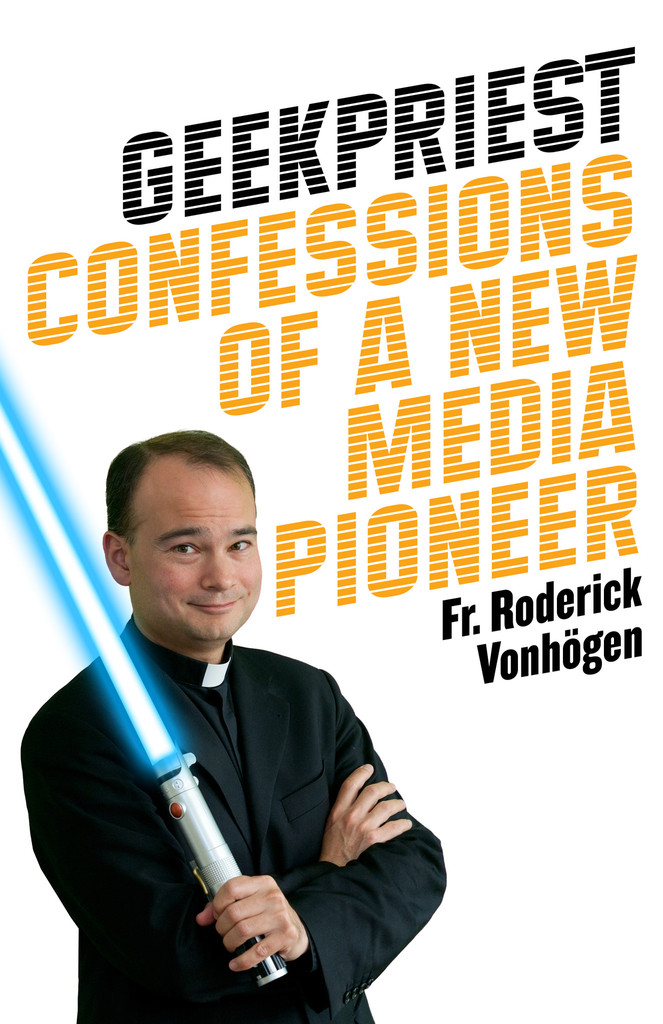
GeekpriestCover

In his book, Geekpriest: Confessions of a New Media Pioneer, Father Roderick Vonhögen shares the story of his vocational discernment in chapter 2, “Spider-Man’s Day Job.” He compares discerning our vocation with the typical superhero story, and shares a checklist for what we can learn from superheroes in discerning our vocation. (How cool is that! I wish I’d had this checklist when I was discerning!)

Father Roderick’s “Superheroes Checklist” is insightful and a great deal of fun for those with geekish tendencies (like myself) who enjoy superhero stories, but it also makes discernment very accessible to anyone who has seen even one superhero film. Included in his checklist are: seek solitude, study and read, discover your strengths and acknowledge your weaknesses, be humble, listen to your friends, do not fear, and persevere.

Geekpriest is a great, fun read and I highly recommend it for young people, as it offers a fascinating and entertaining “inside look” at the life of a dedicated priest, as well as offering helpful ways for living as a Catholic amid our social-media-inundated world. If you are discerning a vocation to the priesthood, the whole book is a fun read that will also get you thinking and praying! (You can read my full review here.)

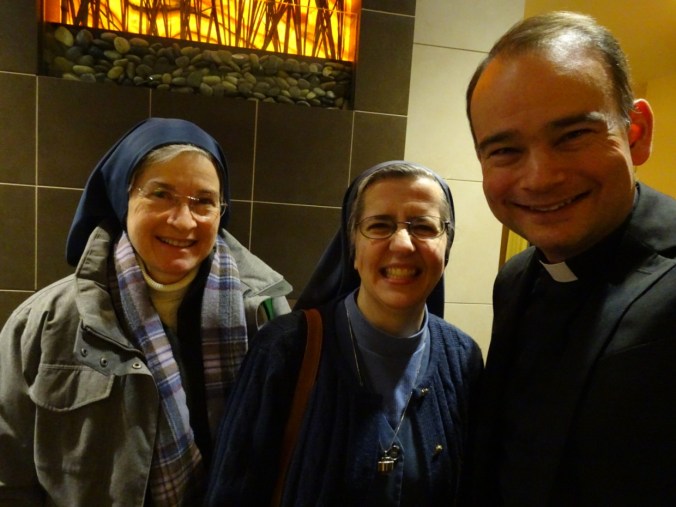
At a recent meeting with Father Roderick. (With me is Sr. Anne Flanagan aka @Nunblogger)

I was excited and thrilled this week to meet Father Roderick. (Sr. Anne Flanagan aka @Nunblogger is with us)

Below is my less-fun, not super-hero related list of essentials to put in place in your life as you begin or continue to discern your vocation. (Notice that my list intersects with Geekpriest’s SuperHeroes Checklist in more than one place!) This list also sums up a whole slew of my previous blog posts.

1. A dynamic prayer life and sacramental life. Have a real relationship with God that is living and growing. This means a regular prayer life, not just a “hit or miss” approach, or only praying “when I feel like it.” If you haven’t already, commit to daily prayer.

Becoming an “expert” in prayer is a lifelong journey, but having a genuine relationship with God when we are seeking his will is essential. How better to learn how to recognize God’s invitation in the big decisions we have to make, than to listen to God every day?

The sacraments are the privileged ways that the Church offers us an encounter with Christ. Frequently participating in Holy Mass (Sunday Mass is the minimum) and regular reception of the Sacrament of Reconciliation are the ordinary means for growing in our relationship with God. They might seem “ordinary,” but both sacraments are really hidden miracles in our midst.

At Mass, we adore, thank, offer ourselves with, and receive Jesus himself, who delights in sharing himself with us and inviting us into his own relationship with the Father. In the Sacrament of Reconciliation, all of the obstacles that we put between God and ourselves—our sins, woundedness, and flaws—are forgiven and healed in a sacred encounter with Jesus’ merciful love.

2. Strive to live a good moral life. All of us are called to holiness, to grow in union with God here on earth, a union that will be fulfilled in perfect communion with God in heaven. Every vocation is a call to profound holiness. Constantly living in a state of serious sin means we are putting obstacles between us and God. All sin is a roadblock for our discernment, because sin is turning away from God’s will and choosing our will over God’s. Instead, discernment is striving to know and live God’s will. We do not need to be sinless to discern because we are all sinners, but we want to be striving to be upright, sincere about our journey of growing in virtue.

3. Trust in God. We can grow in trust in God by pondering and praying with these truths:

  • God loves us
  • God knows us better than we know ourselves
  • God has a plan for us that will bring about our greatest happiness and in which we will help others in a way that no one else will.

4. Get to know ourselves. This includes not just getting to know our gifts and weaknesses, but also discovering our motivations, which helps us to know what is most important to us. Including a daily examination of conscience in our prayer helps us to discover any area in our life—an attachment to a particular sin, for example—that might prevent us from seeking God’s will. Why are we entering into this discernment? What is in our hearts, what are we seeking? How can we more singleheartedly seek God’s will?

5. Active engagement with the Church. Our vocational state in life determines our role in the Church, as well as in life. Discernment doesn’t just involve God and us; it also involves the Church, the People of God within whom we will live and serve. In order to discern our role in the Church, we must already know the Church from the inside by being actively engaged with our parish or a church group. If we have not been involved with our parish, or other form of ministry, now is the time to get involved!

Especially for those discerning religious life or priesthood, or between one of these and marriage, it is essential to take part in the ministry and missionary life of the Church; otherwise we will not have the experience of sharing our gifts in ministry and the Church’s mission. Without this experience it’s hard to know what it would be like to share our gifts in this way as a lay person, sister, brother, or priest. We don’t always have to do this through our parish—there are other church groups that we can become involved in—but we need to find some way to get really involved in the Church’s ministry and mission.

6. Regular spiritual direction. [For more about spiritual direction—what it is, how to find a director, and what to expect for the first time, visit here and here.] A spiritual director may not be necessary as we begin discerning our vocation, but once we start to get serious, we should definitely start seeing a spiritual director regularly.

The first five areas are so important for discerning that they are, in a way, “prerequisites” to seriously discerning one’s vocation. If any of these are lacking, it might be a good idea to make that our “next step” in discerning our vocation.