If I enter religious life, do I waste the “gifts” God has given me?

Slide2Another question from a reader:

I am currently in the process of discerning a call to the religious life. However, of late, I am experiencing a deep-seated struggle over what feels like a “locking away” of my gifts.

I have been an actor, writer and poet since I was a child, and I am passionate about music and the arts, theatre in particular. The thought of being unable to do these things, or at least participate in them fully, is painful to me, but I cannot decide if these are legitimate obstacles to a religious vocation, or merely commitment fears.

I thought I might put the question to you, as a writer and communicator. Did you ever struggle in this way with your discernment? Can you offer any insights that might help me in my attempt to be more sure of what it is God is calling me to?                                                                                 – L

Dear L.,

You have raised an excellent question that I’ve heard before and which I certainly understand. When I first entered the convent, I naively thought I was giving up writing altogether. It was a difficult choice, a letting go of a cherished dream. I never imagined that I would go back to writing and eventually become a published author as a Daughter of Saint Paul. Of course, I was too young to be sure that I wanted to be a writer, or even that I could be. But I’ve never regretted choosing to be a sister over writing, even when I thought I would never write again. Following Christ in God’s call to me was and is more important to me than anything else.

Here a couple of insights that I’ve received as I’ve lived religious life as a writer:

  • I have discovered that, whether I’m “assigned” to writing or not, I love our Pauline mission, which is an even deeper call. I didn’t enter the Daughters of Saint Paul to write or to “do” anything else. I entered to become a bride of Christ, an apostle, and a saint (insofar as God works in me). I entered religious life to become a better lover of God and of souls.
  • Living religious life calls forth a deep level of creativity—both life in community and in the mission. Religious life is a very demanding lifestyle, and calls us to use all our gifts, even gifts that we don’t know we have! (For example, I had no idea that I could be a good teacher until I started giving conferences and workshops as an author.)
  • One time, when I was asked to give up a form of writing that was really hard for me, I discovered that I’m most passionate about my writing because of how it allows me to live the Pauline mission. Writing is one way—an important way—that I live my Pauline vocation.
  • Even now, there are times when I’ve wanted to go in a particular direction (with writing) or write a particular project and, in obedience, I’ve had to let go of what I thought was best. I’ll probably never stop writing entirely…but with the demands of our ministry, it’s not always possible to write when, how, and what I’d like to. For example, right now I’m assigned to Pauline Digital, which is wonderful, but also a sacrifice because it means:
    • Most of the writing I do now is “short form,” which isn’t my preferred (or best) form. But I am getting better at it, I hope!
    • I have to “squeeze in” the time to write any new books in free moments, so instead of taking a year to write, now a book will take 2.5 years to write
    • Much of the time I’m not writing at all but focused on collaborating in projects in which I am doing other kinds of work, such as editing, technical, managerial, etc. All of this, however, feeds my writing.
  • When we are truly committed to our art, it grows and develops over time, and our needs and desires as an artist also change over time. I truly believe that God uses my desires, and blesses my obedience as a religious, even when obeying means greater sacrifice. If your state in life changes, you may discover that the very gifts that you brought to the theater arts will be called upon in another way. Or, you might be surprised as I was, and discover that God is giving you a new opportunity to use your gifts for theater, poetry, or music…

I would definitely suggest talking to a sister from the community you are discerning with. Find out if some of the sisters work in the arts, even in an adapted way. (But don’t decide to enter based on the fact that you would only be doing a particular ministry, unless the sisters assure you that this is the case. In our community—as in many others—we are called to obedience especially in our apostolic assignments.) This will give you more information that you need to discern this particular question. 

Also, you may want to look more closely at a community in which the arts has an important role in their ministry. There are a lot of communities where the arts are important to the sisters’ lives and mission (including my own, the Daughters of St. Paul). Music is important to many communities, including contemplative communities.

Finally, have you brought this specific question/fear to Jesus in prayer, and really laid out to him your hopes, your dreams, your fears, and your desire to do his will?  Don’t be afraid to entrust your questions and fears to him. Sometimes when we are really wrestling with something, we forget to bring it to him. Jesus will give you the light—and strength and desire—which you need to discern and respond to God’s call for you.

Whatever you discern his call to be, I encourage you to follow him in the vocation he gives you. You will not be disappointed!  May God bless you in your discernment journey. 

Is getting married selfish because you’re not giving your whole heart to God?

Slide2

A question from a reader:

“I am recently, as of a few days ago, feeling this strong pull to investigate the option of the religious life. But it really freaks me out. I never seriously considered it as an option, ever in my life; it honestly never felt like it fit me at all. And it still doesn’t, to be honest. I am having the hardest time, because I know that I would do it, if God asked me, because I love Him too much to say no. I would have to say yes. But I guess it boils down to this: I feel like if I get married, I won’t be giving myself completely to Him. I would feel like I didn’t give Him my all, which is what I should do, right? Is getting married selfish, because you’re reserving part of your heart for someone else other than God??

But on the other hand, I feel like if I become a nun I won’t be able to not feel sorry for myself all the time that I’m “missing out.” (I know I wouldn’t really be missing out, but I don’t know if I could stop myself from feeling that way). I feel like if I become a nun, a part of my heart will never come alive… The part of me that longs to love someone else and be loved and romanced by them, and the part of me that wants to have kids. I know that all of this could be fulfilled in a different way, like in a spiritual way, if I became a sister, but it wouldn’t be the same. And then I feel guilty and selfish for feeling that way.

I guess it’s just becoming very clear to me that I need to arrive spiritually at the point where I could become a sister joyfully, and not be afraid to let go of my dream of falling in love/marriage, but I don’t know how.

Any advice on how to deal with those obstacles? Because all He has been telling me in prayer is how much He loves me, and how good His plans are, but I am still scared of what that means.”  – M.

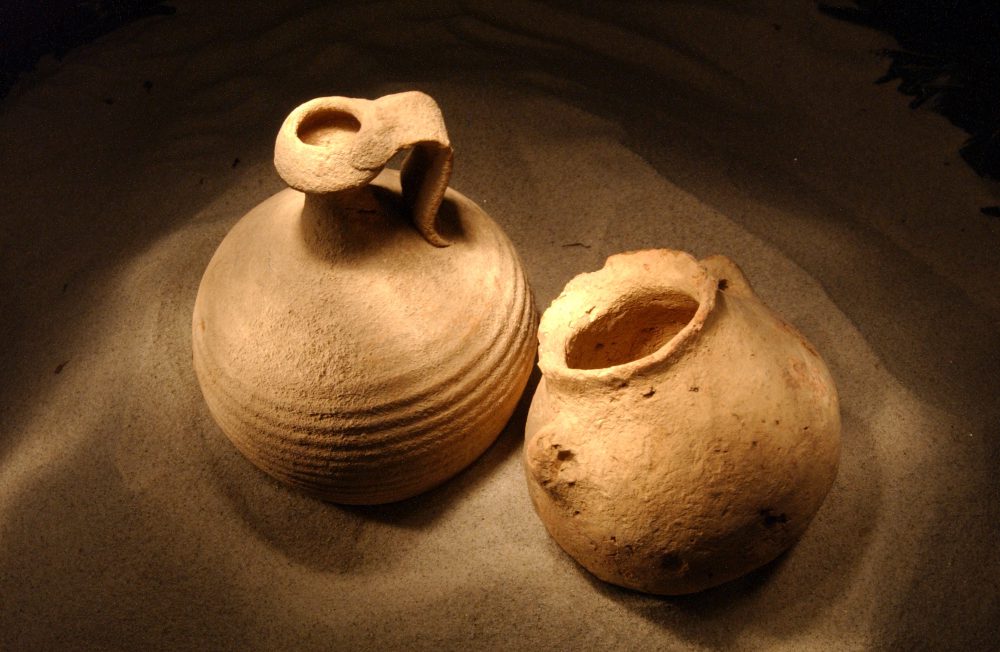
Feeling “freaked out” is an appropriate response when someone is first considering a vocation to religious life. A religious vocation is a beautiful, awesome call—and if we are honest with ourselves, we know that we are fragile, vulnerable “earthen vessels.” Feeling awed or overwhelmed by the thought of being called to religious life means that someone understands the vocation to religious life on a more-than-superficial level. So that’s a great first step in discerning our vocation.

But we need to have a good understanding of marriage, too. A couple of clarifications might be helpful at this point: in both marriage and religious life, we are called to offer our entire selves and our entire lives to God. The difference between these vocations is not in how much we give from our heart, because we are to give all in both. Rather, the distinction between the two vocations is in how we give our hearts.

In marriage, the spouses retain their individual identities, vocations, relationships, etc. But in their covenant of love with each other, they have a new way of living and loving. From now on, their journey through life is with, and often through, their spouse. Their love together—a gift from God to remain centered in God—bears fruit in their children and in nurturing in their family.

For a religious, God is the primary “Companion” or “Spouse” on their spiritual journey. The religious brother or sister’s love for God and God’s love for them bears fruit in their mission for their spiritual children, to be for them the face of God.

In both vocations, the overarching human vocation to love God and neighbor is a call to give all of one’s life to loving. There’s nothing selfish about either.

It’s really important to be open to God’s call. But if we are seeking to be open to God and, after praying about it, find that we are continuing to think about religious life simply because we think being married is selfish, then perhaps it would be helpful to shift the focus of our discernment from religious life to marriage. Perhaps what we are calling “selfishness” is simply an indication that we deeply desire marriage. (We are still discerning between the two vocations, but we are focusing on the discernment in another way.) Many times, a young woman is discerning a religious vocation because she thinks she “should” become a sister, due to expectations of others or even of herself that aren’t really discerning God’s will for her.

You may find it helpful to read (or re-read) these two posts: What is the Connection Between Desire and Discernment, and Discerning with Deep Desires. 

light-person-woman-fireIf, after serious thought and prayer, we truly, deeply feel that we will only come “fully alive” in one vocation, that is a positive indication towards that vocation! All vocations involve “missing out” on some things—that is the nature of making a choice! For example, I would have loved to be a wife and mother, but in not following my vocation to religious life, I would have “missed out” on something more important to me: the exclusivity of my relationship with God, and my availability to serve the people of God. (I want to note that these are more important to me precisely because I am called to religious life, whereas I am not called to be a wife and mother.)

Part of discernment is indeed becoming holily indifferent to both options. The reason for this indifference is so that we can hear God’s invitation and fully embrace it. If God is already giving someone a strong indication of their vocation, at that time it’s more important to pray with that than to put aside the possible inspiration from God aside to pray with the other choice. For example, someone discerning marriage could pray with some of the following questions.

  • What are my dreams for marriage?
  • Are my dreams of marriage idealized (for example, based on a romantic movie I watched), or are they real, similar to faithful, beautiful marriages that I have witnessed in real life?
  • Am I discerning the vocation to marriage with a full realization that both vocations I am discerning between (marriage and religious life) are good and holy; but that God is giving me the gift of one of them?
  • What attachments do I have that are preventing me from freely discerning marriage? (For example, am I afraid to give up my independent lifestyle?)
  • How do I feel living the vocation to marriage will help me to live life fully, that is, live the fullness of my vocation to love?

(Reflecting on questions about who our future spouse will be is also an important part of our discernment to marriage, but that’s another post.)

Finally, I want to affirm the importance of prayer and trust in God in all of this—especially the way of praying and listening expressed in the question. God does love us, and God’s plans for us are always good. God wants what is best for us. We may still feel scared because we don’t know what the future holds, and because our vocation is not something we can control. It is important to remember that, as much as we try to actively discern, God is going to guide us in the concrete circumstances in our lives. For many of us, our vocational discernment gradually unfolds over time. We can trust in God’s loving guidance.

The wonderful thing about discernment is that, growing in our relationship with Jesus, we come to realize that our vocation is a gift: a gift to embrace, a gift uniquely suited to us individually, and a gift that will lead us to the greatest love, and thus to great joy and fulfillment.

Mary as Model of #Discernment, Vocation & Mission

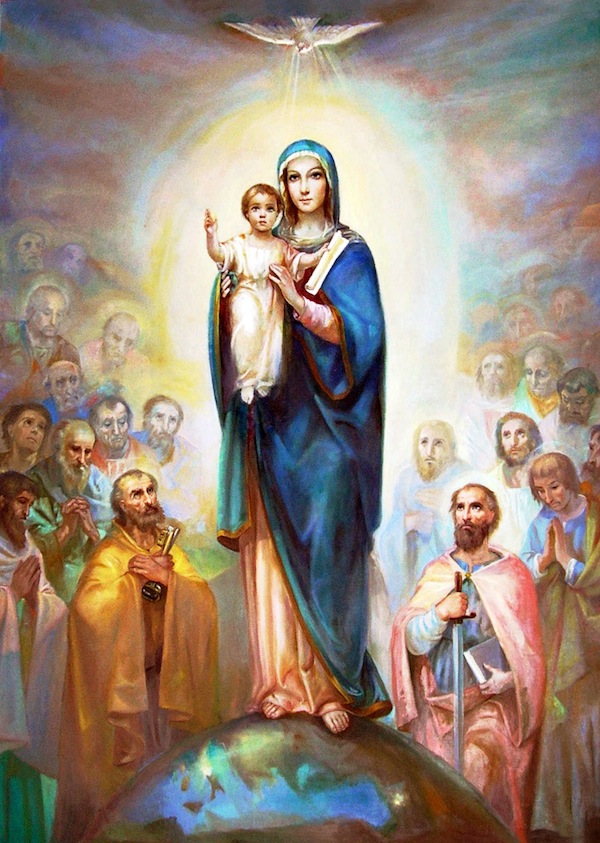
The devotion to Mary, Queen of the Apostles, is one of the oldest devotions to Mary in the Church. One of our sisters recently let me know about a youtube video of the song, Queen of Apostles, composed and sung by Nancy Krebs, which beautifully offers reflections and prayers about two key events in Mary’s life associated with this particular title of Mary.

A key in discerning and living our vocation is devotion to Mary. Devotion to Mary as our Queen of Apostles is more than asking Mary to help us discover and carry out the mission God has entrusted to us. It also means entrusting ourselves and our spiritual journey to her. It means imitating Mary in how she shared her Son with the world, taking on her attitudes of humility, of receptivity to God (especially her docility to the Holy Spirit),  her obedience to God’s Word, and her union with her Son in his mission. If we entrust every effort that we make and everyone whom we seek to serve to Mary’s motherly care, all our efforts will be blessed.

Sr. Marianne Lorraine Trouve, on her blog Thomas for Today, posted an introductory reflection on this ancient devotion: Mary and the Holy Spirit.

Vocation #Discernment: the Real Deal @ Chastity

VerticalArchBelvedere

Lovely view from convent rooftop where I sometimes go to gain perspective

Some months ago, I received a question from a young woman that, after telling me her story, could be boiled down to her question at the end: How have you dealt with feelings of attraction after you decided consecrated life was best for you?  

This is a great question, and depending on where we are in our discernment (or if someone is still discerning), we can approach it from several perspectives. I’d like to note that this question can come up both when we’re initially discerning a celibate life, and again at some point when we’re living celibacy or consecrated life.

If we are discerning our vocation between priesthood/consecrated life and marriage… 

then these feelings are an opportunity to further discern our vocation. (Just a note here: feelings of attraction are a part of life, no matter our vocation or state in life. Being attracted to someone is no indication of a vocational calling.) For someone discerning marriage, a key question is how strong the attraction is, and what about this person attracts us? If it is simply a physical attraction, then we acknowledge it and let it go. We don’t need to give it additional thought or energy. If, however, it is a deeper attraction—for example, we are drawn to the person’s goodness, the way that they relate to us or to others, their vulnerability and strength—then we might want to think more about it and bring it to prayer. 

Discerning between marriage and a life consecrated to God means discerning how God is calling us to express our love. Especially if we are in the early stages of our vocational discernment, if we find someone with whom we want to explore spending the rest of our life, then it makes sense to choose to get to know that person and see how the relationship develops. On the other hand, if we have been discerning our vocation for a while and have been moving towards the possibility that God is calling us to consecrated or priestly life, then this could be a good opportunity to “test” out our call to celibate chastity. Can we simply put the attraction aside, choosing not to spend time or energy on it, and see how we are several weeks (or months) later? If we find our minds constantly returning to this person we are attracted to, regretting that we didn’t engage with that person, then it may be an indication that living celibate chastity might not be our call, or we may not be ready yet to embrace it.

If we have already made a commitment to priestly or consecrated life… 

then when feelings of attraction arise, we simply don’t give them attention or energy. (We guard our thoughts, hearts, and imaginations so that we are not dwelling on merely physical feelings.) If we have an obligation to the person—for example, we work together—we also may need to practice prudence in how we spend time together. Limiting the time we spend together, inviting others to join us, or not working at night together are some examples. Eventually, the feelings dwindle through lack of encouragement. 

Personally, I have worked with wonderful Catholic men in my media apostolate. Especially when I first started working in cable television, there were very few women in the field. I cannot say that I was not attracted to any of the men I worked with. Occasionally, the thought would even pop into my head, “Wouldn’t it be amazing to be married to someone like him?” But because my heart already belonged to Someone Else—with whom I was in a vital relationship—I didn’t encourage or engage in thoughts or feelings that contradicted my vocation. 

As a woman religious, I identify closely with the description of my vocation as a spouse of Christ. So I delight in “keeping the romance going” in my relationship with Jesus. I sometimes write him poems; I love “candlelight praying” at night where my attention is focused on the spotlighted crucifix or tabernacle; I wear a ring to remind me every day that I belong entirely to him. Most importantly, however, I try to pay attention to him, and to his tender ways of showing me his love. (And there are so many, even in just this past week when I was on retreat!) I try to balance my life which, despite the intensity of our mission and lifestyle, also has moments of great joy and relaxation. Healthy friendships (both within and outside of community) provide tangible affection, companionship, and support for consecrated men and women, which offsets the occasional loneliness that we might feel in living consecrated chastity. 

All of us, no matter our vocation, are called to live chastely,

whatever feelings of attraction we may experience. If we are committed to living a chaste life, we stay attuned to our feelings and take them for what they are—no more and no less. In #2340, The Catechism of the Catholic Church encourages us to use these means to grow in the virtue of chastity: self-knowledge, self-discipline in daily life, obedience to God’s commandments, living the moral virtues (the four cardinal moral virtues are prudence, justice, fortitude, and temperance), and fidelity to prayer. 

(For more insights on living chastity as a young woman who is discerning her vocation, check out this book: He Speaks To You by Sister Helena Burns, FSP)

#Discerning in Every Day Life: We are in God’s hands as he shapes us

Photo: Sr. Mary Emmanuel Alves, FSP. © Daughters of St. Paul

Photo: Sr. Mary Emmanuel Alves, FSP. © Daughters of St. Paul

Then the word of the Lord came to me:
“O house of Israel,
can I not do with you as this potter has done? says the Lord.
Behold, like the clay in the potter’s hand, so are you in my hand, O house of Israel.”

I love this morning’s reading from Jeremiah 18:1-6. It fits so well with the themes of my prayer this week: creativity, being open to the Lord working in me and through me, and allowing the Lord to take the lead in all the aspects of my life: spiritually,  in my relationships, in my efforts to communicate, in the apostolate of sharing the Word.

As the fruit of my recent annual retreat, I’ve been praying for the grace to live in the present moment. It’s so easy for me to get lost in my plans and to forget that it’s God’s plan that I want to be living fully. It’s not really possible for me to discern God’s will, however, if I am not living in the present moment, taking one day, one hour, one minute at a time. Because God speaks to us and works in us in the present moment.

Our Blessed Mother Mary was an expert in living in the present moment. While I was in Rome for the Apostolic Mysticism Seminar, several of the speakers–all Pauline priests–spoke of how Mary was completely docile to the work of the Holy Spirit. We know this simply by her response at the Annunciation.

The conclusion of my every meditation this week has been prayer to Mary, specifically asking her for the grace of this openness and availability to God, not just in the big occasions of my life, but at every moment. So I pray to her with my favorite title, calling on her as my Mother and Queen, the Queen of every apostle, to teach me how to be aware of the presence of the Holy Spirit, and to be receptive to his nudges, his whispers, his inner direction.

Mary, Queen of Apostles, pray for us!

Mary, Queen of Apostles, pray for us!

A final note: Summer has become a bit of a chaotic time for me to fit in regular posts. Responses to the last couple of questions about vocational discernment are almost lined up and ready to post. I also have been reflecting/praying/living some profound moments of discernment in every day life, which I hope to share with you soon. Thank you for your patience with me, as my posting schedule has become a bit irregular.

Thank you for sending your prayer intentions!

IMG_20150128_124321145

I pray with these beautiful words of Jesus to our Founder every annual retreat.

Many of you have deeply touched me by how you’ve shared your prayer intentions with me. Many of them are deeply personal and inspiring–a great witness of faith to me! Every intention has moved me, and I am honored by your confidence–which, of course, is really confidence in God because God is the One who hears and answers prayers. If I feel so moved by your sincerity and faith in God,  I can only imagine how God feels that you are offering to Him these beautiful prayers. I feel honored to have such wonderful “company” during my retreat. 

My retreat begins Monday evening and I’ll continue to check my email (tweets, facebook messages, and blog comments) until Monday noon; I’ll be holding each of you in prayer during this week! God bless you!

Send Me Your Intentions & I Will Pray for You on My Retreat

Forest Path2

Retreats are wonderful, mysterious journeys where we allow the Divine Master to lead us…even when we don’t know where He is leading us!

It’s been a couple of weeks since I’ve blogged, and partly that’s because I was preparing to be away for two weeks. This Monday, July 11th, I will begin my annual eight-day retreat. (Some day I need to tweet a retreat…wouldn’t that be awesome to follow a nun’s progress on an eight-day retreat? Retreats are such mysterious and amazing encounters with the Lord. Maybe next year.)

So I will be offline for another two weeks, but I’d like to bring you with me. Send me your specific intentions–or even just send me your name–and I will bring your individual intentions to the Lord while I’m on retreat.

#Discerning Obedience: Path To Freedom

riding-768586_1280Freedom

“No one else can tell me what to do: I value my freedom too much.”

Obedience is not popular today, although everyone is called to practice this virtue. In terms of religious life, it’s probably the hardest vow to understand in our individualistic culture when resistance to or rebellion against authority is so often seen as a virtue. Mistrust of institutions and of authority, due to a heightened awareness of the abuse of power, makes it hard to see the value of promising to obey any superior. In addition, true freedom is often misunderstood, equated with no limitations.

Genuine freedom is not:

  • living without restrictions or constraints
  • the ability to cater to every personal whim
  • doing whatever we feel like doing whenever we feel like doing it.

Genuine freedom is the ability to make choices in accord with our deepest identity as God’s beloved one, no matter what our situation is. Real freedom is choosing to love, no matter what external constraints or inner pressures we face.

The Paradox of Obedience

The vowed obedience of priests and religious conforms us to Christ, who sought only to do the will of the Father. With this vow, we, like Christ, seek to live God’s will.

Ironically, the greatest limits to our freedom often come not from outside of us, but from within us. We are driven by self-serving needs and wants, often without knowing it. We say we’re doing something because “it’s what God wants,” or “it’s the right thing to do,” but actually most of what we do is at least partly self-serving. I may pray and work really hard to prepare a retreat or book that can change lives, and this is mostly a labor of love. But sometimes I find I also have a few motivations “on the side,” including a desire for appreciation. To want a little appreciation is a normal human desire. But when this desire is exaggerated so that we become driven by it to the  point that it shapes our choices, we have become enslaved by our need for the good opinions of others.  Our sinfulness, our pride, our weakness, our greed, the need to be right or useful or to dominate others often drive us to take certain actions. In reality, these interior forces are chains binding us, preventing us from living full freedom!

The paradox of obedience is that, in “giving up” our will, or seeking to align our will to God’s will, we become most fully free.

Obedience frees priests and religious from both external and internal constraints that would prevent us from fully living God’s will. With the vow of obedience, God’s will becomes ours.

JesusMasterCAIMG_20150128_115949266Conformity to Christ

Like the other vows, obedience is a journey, freeing the priest and religious to follow Jesus more wholeheartedly, to do God’s will completely, in every aspect of his or her life. In a most profound way, the vow of obedience enables the religious to live in union with God, completely offering their whole being—including their will—to God.   

In popular culture, a sister’s, brother’s, or priest’s obedience to God directly or through religious superiors is often portrayed as mindless. But mindless obedience is not genuine obedience, which is the submission of our whole being to God–mind, will, heart, and strength! However it is true, as any believer can attest, that God’s ways don’t always make sense to us. Human beings will always experience an element of mystery in God’s plan for creation. In his Letter to the Romans, Saint Paul wrestles with the question of why his fellow Jews rejected Christ, but he concludes his two chapters of anguish and attempts to understand with one of the most beautiful hymns of praise to God’s inscrutable wisdom.

“O the depth of the riches and wisdom and knowledge of God! How unsearchable are his judgments and how inscrutable his ways! ‘For who has known the mind of the Lord? Or who has been his counselor?’ ‘Or who has given a gift to him, to receive a gift in return?’ For from him and through him and to him are all things. To him be the glory forever. Amen” (Romans 11:33-36).

It’s also true that obeying God through human authority sometimes doesn’t seem to make much sense. I have to confess that, even after 25+ years of vowed obedience, my opinions and way of doing things almost always seem better to me. The vow of obedience of priests and religious often takes more faith to live, because many aspects of our lives are decided by superiors who speak with the authority of God.* More than once, my transfer or apostolic assignment made no sense to me until later. I’ve also  found that when I’ve obeyed in something that I’ve been asked to do, it may not have been easy, but I’ve learned more and been pushed to be more creative and industrious than I would have otherwise. And, I often see that it brings great spiritual fruit to others.

Finally, there are also the times when the faith and suffering that accompany obedience become a means God uses to bless others. We are the Mystical Body of Christ, and obedience to God is always blessed.

Obedience is still the hardest vow for me to live well. But it’s also the vow that gives me the greatest freedom. And I treasure this vow in a special way because of how directly it helps me to live in union with Christ who said, “My food is to do the will of him who sent me and to complete his work” (John 4:34).

*As I’ve covered elsewhere, if a superior tells a sister or priest to do something wrong or sinful, they are obviously not speaking with God’s authority.

#Discerning the Vow of Poverty

“I couldn’t do without my…car, own place, movie collection, ____________.” In the poll I ran recently, this statement was checked off by a number of people as a main reason that they don’t consider religious life. That’s not surprising in our culture, which is materially obsessed.

pexels-photo-house-106399

When I entered the convent, I was too young to own a house or a car. But I did give away my music collection, my books, and pretty much everything I owned except a few clothes and some holy cards which I brought with me. Was it easy? Not at first. But it was incredibly freeing. I see the vow of poverty as an amazing trade: as religious, we “trade in” the right to possess material goods, and we receive the gifts of a unique intimacy with and a closer following of Christ.

(As an aside, poverty has many practical benefits for a religious too—for example, poverty helps me to be available to be sent on mission anywhere, because I’m not tied to personal possessions or particular places.)

I think that the vow of poverty is perhaps the easiest vow to understand today. People are more aware of the extremes in the lifestyles of the minority who are wealthy and the vast numbers of people who are poor. The stats for global hunger and poverty are shocking:

  • nearly half of the world’s population (3 billion people) live in poverty
  • over 1 billion of the people living in poverty are children
  • 22,000 children die every day because they are too poor to receive what they need
  • hunger is the #1 cause of death in the world today
  • more than 750 million people do not have adequate access to clean drinking water*

* These statistics are taken from the website: https://www.dosomething.org/us/facts/11-facts-about-global-poverty, accessed June 9, 2016.

person-homeless-woman-sitting-old

Sharing what we have with others is the only way that everyone will have what they need. Choosing to make sacrifices—giving up material possessions—in order to provide necessities of life for others is fairly common, but it needs to become part of the everyday life of every Christian—actually, of every person in the world who has a secure place to live, and enough to eat and drink. Religious life is not just a helpful witness to encourage others to share like this, but as religious, we live in genuine solidarity with those who live in material and spiritual poverty.

Other easily-understood motivations for living a poor or simple lifestyle are:

  • Living the vow of poverty is a way of life that preserves or restores the resources of the earth, which is part of the Church’s official social teaching.
  • Pop culture today advocates the wisdom of simplifying or de-cluttering our lives as helpful in living with greater focus and purpose.

The Religious Vow of Poverty

Sr. Carly Paula, FSP, making her first profession

Sr. Carly Paula, FSP, making her first profession

The main reason a religious takes the vow of poverty is to more closely imitate Christ, the Poor One, both in his poverty and in his absolute trust in the Father. For me, the vow of poverty is not always easy, but I have found it helpful and freeing on so many levels:

  • A religious has nothing of his or her own, but shares everything in common with his or her community. The community then provides for the needs of each religious. It’s not that I’m completely free of financial concerns, because I am a responsible member of the community. Rather, it’s that I share this burden with my superiors and my community in discerning expenses together.
  • Most of my community’s resources go into our mission of evangelization with the media, but we share whatever we can with those who suffer from genuine want. With my vow of poverty, I live in solidarity with those who are “on the margins” of life—those suffering from spiritual and material poverty.
  • There’s a certain comfort and security in possessing materials goods, but this very security can become like a fog blinding me, preventing me from taking risks, and restricting my freedom. The vow of poverty clears away the “fog” of  today’s materially obsessed culture and enables me to focus on Christ as my Treasure.
  • On a spiritual level, poverty helps me to continually renew my trust in God, so that I learn to rely on God for everything, in every situation.
  • Poverty is very freeing spiritually: it frees my heart from possessions, from the need to possess, from greedy grasping for stuff, and from attachment to even interior things like my opinions and pride. Poverty helps me to be grateful for the most valuable things in life—which are certainly not material possessions—but my relationship with God, the sacraments, the people in my life, and my vocation.

My Personal Confession

My two biggest ongoing struggles with living authentic poverty are books and tools for our mission. Books—especially books of theology and spirituality—are a real weakness of mine. Not only do I love to read, but we are encouraged to have a shelf or two of books—the writings of our Founder, the resources we need to do our mission, books that we have used in our studies that we foresee using again in the near future. With my work of writing and giving workshops on a variety of subjects, it’s handy to have a large library. So every couple of years I need to re-discern the choices I’ve made with regard to books, and give away what is truly not needed.

By Jorghex (Own work) [ CC-BY-SA-3.0 (http://creativecommons.org/licenses/by-sa/3.0/)], via Wikimedia Commons

By Jorghex (Own work) [ CC-BY-SA-3.0 (http://creativecommons.org/licenses/by-sa/3.0/)%5D, via Wikimedia Commons

Because our mission of evangelization involves the media, using technology is essential. Our Founder wanted us to have “the latest means” so that we could reach the greatest number of people with the Gospel. But sometimes certain aspects of our mission would be easier with the “latest gadget.” For example, a smart phone is essential for my work in social media. But do I really need the latest iPhone model? The discerning answer to this for me is: I need a solidly functional smart phone to effectively use social media, but I certainly don’t need the latest model.

The Vow of Poverty in 5 Words:

Blessed James Alberione, the Founder of the Pauline Family, said, “Poverty is the greatest wealth.” I have found this to be true because living the vow and virtue of poverty enables me to consistently focus on Christ Jesus as my greatest Treasure—my only Treasure—and to dedicate all my efforts to living my vocation of growing in union with Christ and in serving his people.

Inspiring Vocation Story from a Daughter of Saint Paul

I’m delighted to share with you this lovely vocation story of Sr. Maria Kim, FSP, who recently made her perpetual profession in the Daughters of Saint Paul. Not only is she very open about the steps of her discernment, but there are “tips” and feedback from other young women who  witnessed Sr. Maria Kim’s perpetual profession while discerning religious life.

As you enjoy her inspiring story, pray for young people discerning their vocations, that they may have the same openness and joy to Christ’s call of love.