Soul of Christ book giveaway!

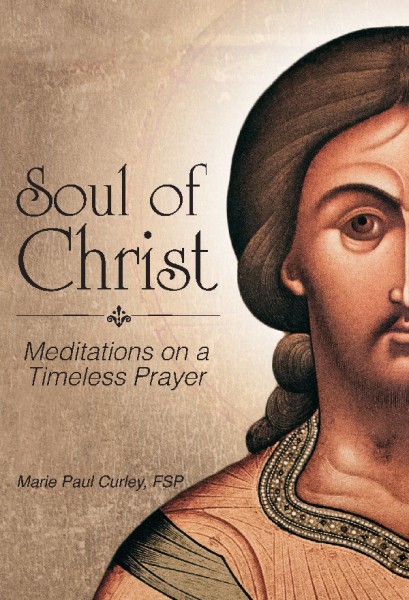
SOUL_CHRIST_cover_smallI’m giving away three copies of my newest book, Soul of Christ: Meditations on a Timeless Prayer, this week at Goodreads.com. I’ve been having a little trouble with the giveaway link–here’s the right link to the book:

https://www.goodreads.com/book/show/24194253

Visit Goodreads for details of the giveaway, which runs from Sat., Feb 7th to Fri., Feb. 14th. At the moment, I can only send the books to readers in the USA; hopefully someday in the near future, Goodreads will giveaway e-books, too. Click here to enter.

Discernment: a Matter of Trust & Retreat with #MediaNuns


Discernment quote 4

One of my favorite quotes about discernment from Father Rupnik’s book, Discernment: Acquiring the Heart of God, reminding us that discernment is all about trust: discovering that God first trusts us, and then entrusting ourselves to God to lead us.


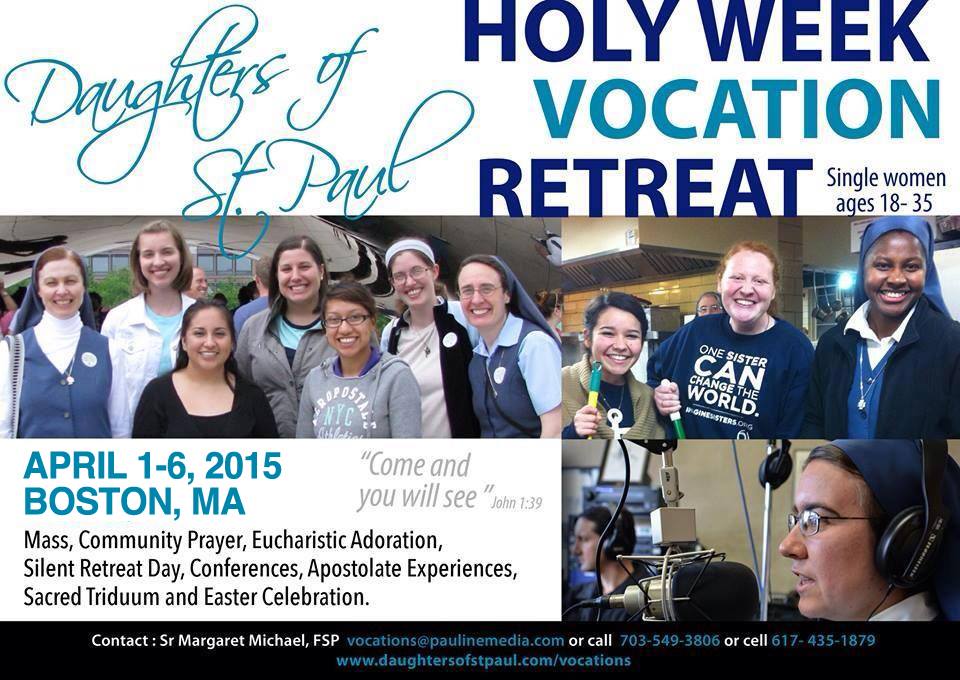
And for young women looking for an opportunity to discern with my wonderful community, the Daughters of Saint Paul, known on Twitter as #MediaNuns, this is a shout-out for our  Holy Week Retreat that will be held at our large convent in Boston, MA:
HolyWeek2015Ad

Partnering with God

kaleidoscopes-201644_1280I was recently asked to take on a project that I didn’t feel prepared for. I knew I had some skills to bring to it—namely, writing and editing. But the visual, artistic sense of design that the project required was completely beyond me. In addition, the project had technical requirements that I knew nothing about. So, I had to gather a team of people for the project.

My first days of working on this project felt like trying to pick up chunks of jello. I could never grasp anything concrete about it—although the chunks of jello were gradually being formed and then put together, the project felt completely out of my grasp. Everyone had a different vision of it, and we were all learning how to do something for the first time. Though I was working on a deadline, no one else had planned for this project and had to squeeze it into their own timetables. I had no assurance that we were going to finish it, never mind make the deadline.

Due to the remarkable people I worked with, the project not only came together, but came out beautifully and just on time. In the end, the project was not something I could point to and own, saying, “I did this!” Actually, I felt that I’d done very little; the beautiful result really came from the shared collaboration that we developed as a group.

Through this experience, I rediscovered two keys to collaborating on a creative project: 1) choose my creative partner(s) well and then 2) trust them.

These insights are even more true when I reflect on co-creating the “masterpiece” of my life.

1) Choose our Co-Author well.

We could try to “write” our lives by ourselves. But choosing to go solo is not only a lonely thing to do, it is also impossible for us to truly shape our lives on our own because so many things in life are beyond our control. Besides that, we’ve all run headfirst into our weaknesses; we know we need help. For the most important work of our lives, we want to have the best partner possible.

We may seek other collaborators as well, but it seems pretty obvious that choosing the All-Loving, All-Powerful, All-Good God—who loves us and always wants what is best for us—is the best choice we could make.

(Next post we’ll look at trusting our Creative Partner!)

Practical Steps for a Daily Discernment

02G choice 2

When we feel the need to discern something big—such as our vocation—then ordinarily we need to take our time with it, and there are a number of steps we can follow. Discerning about smaller, daily choices may take merely moments to make. For me, it often takes just a few minutes to do the following:

  • an evaluation of the need(s) presented to me
  • a short prayer to the Holy Spirit
  • an honest glance at my heart, to make sure I’m aware of my desires and to uncover any unconscious “agenda” that may sway me
  • a renewal of my deepest desire: to live in union with Christ
  • a check-in with my current schedule/responsibilities and, when needed, with a mentor and the people who will be affected by my decision (e.g. the team I’m working with)
  • good old common sense

Then, I put all those together and make a decision.

This may seem like a lot of steps for a smaller choice, but they’ve gradually become automatic for me as I’ve grown in the art of discernment, and they help me to pay more attention to seeking God’s will. Becoming proficient in this spiritual art means that seeking God’s will becomes as habitual as breathing.

To Think About

What would be your list of steps for a discernment about a smaller, daily matter? If you can, share them in the comments or via email (and I’ll post them)!

Discernment is…a living relationship with all creation!

Every once in a while, I’ll post one of my favorite quotations from Father Marko Ivan Rupnik’s book, Discernment: Acquiring the Heart of God. I had a little problem with the size, but if you click on the title or image, you can read it more easily. Here is today’s quotation:

Discernment Blog Backgrounds

Discerning in Daily Life

02 F (GS)Discernment is not just about big decisions. Discernment is a spiritual art, an attitude of seeking God’s will that we can take into our daily life. As our relationship with God deepens and grows, discernment naturally seems to become more and more a part of our daily life, even to our daily decisions. Even the small decisions can have untold influence on the story of our lives or the lives of others.

When I first wondered if I was called to religious life, I thought discernment was a one-time thing I needed to do—to discover my vocation. I believe that God gently led my young self through the steps of discernment, and I entered religious life. I thought I had finished discerning.

But as I traveled further into religious life, I found that, even when I finished my initial discernment regarding my vocation (which lasted several years), I had to continue discerning within my vocation. Especially when I was confronted by large questions, such as being asked to take on a particular assignment, I felt the need to discern God’s will. I wanted to live God’s story for me, so I brought these big questions to prayer and discerned, within the context of my vow of obedience, which apostolic work was God’s will for me.

Gradually, I started to feel the need to discern smaller apostolic choices within the assigned field of my ministry. For example, now every time I write a book, I spend at least several weeks discerning if it’s God’s will that I write that particular book. (Any writer will tell you that choosing one’s next book–which can take from a few months to several years to write–is not a small decision!) Is God calling me to respond to this particular need, to reach out to this particular group of people? How is he calling me to do that? What is it about this topic that God invites me to learn, deepen, and share with others? How will writing this book fulfill the mission that God has given me as a Daughter of Saint Paul? How will writing this book shape how I live my story, and my community?

After discernment became such an important part of my writing, it started to “leak” into my daily life—especially difficult choices. Long ago, I used to just trust common sense, the inspiration of the moment, and the intentions that I placed in my morning offering. But now, I try to bring a spirit of discernment to these daily choices. This allows me to be more mindful about seeking God’s will all the time, not just with big decisions.

But I still have a long way to go before I can claim to truly seek God’s will in everything. That’s my desire, but other things—like selfishness, a desire to please others, or fear of conflict—still get in the way. Making these daily little discernments helps to shape my larger life story, and makes me more receptive to God’s invitations—no matter how big or small, how obvious or subtle.

To Journal and Share

  • What discernments have I already done?
  • What kinds of things do I feel are important for me to discern?
California Soul of Christ Talks & Book-signings

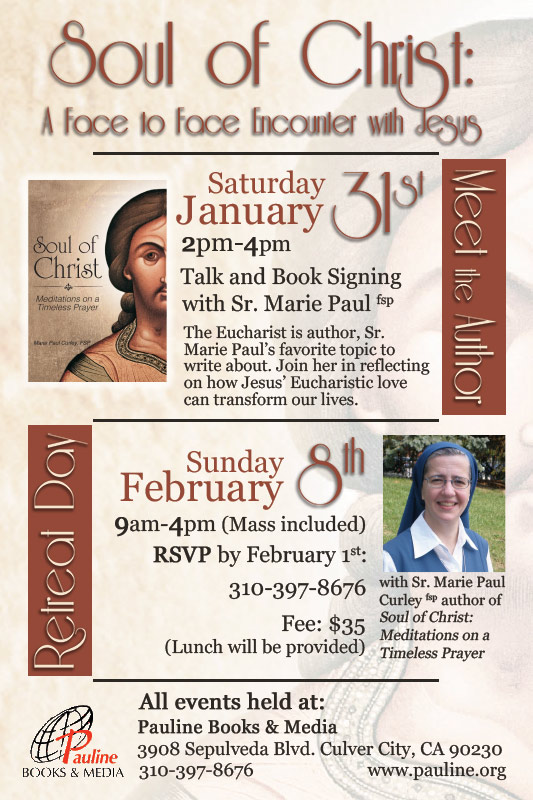
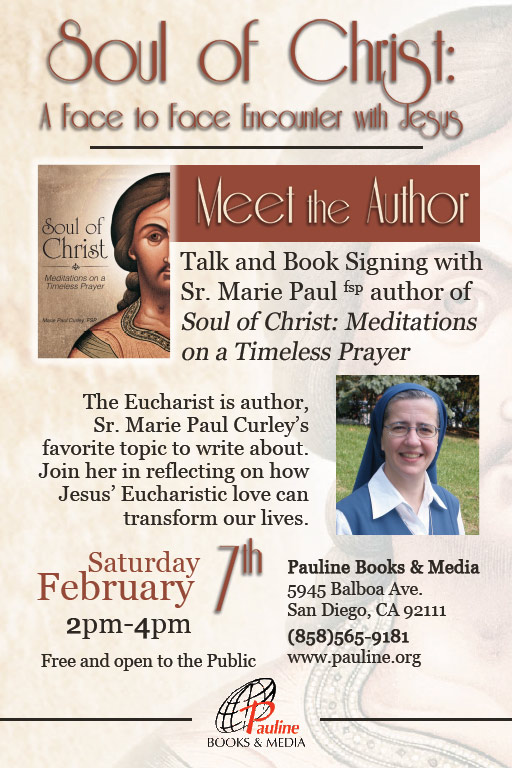
For those in California, I just wanted to let you know I’m visiting on a book promotion tour for the next two weeks. If you can, join me–I love meeting those discerning and readers of my books and blogs! I’m posting up the events below. As you know, Eucharistic adoration is one of the best ways to pray when you are making a discernment!

San Francisco Area:

SMPSoulOfChristReduced

Los Angeles Area (Culver City): 

SMP-Culver-City

San Diego:

SMP-San-Diego


What are you discerning?

02 D (me)In light of God’s Storyview (see several previous posts),  let’s break down/explore the first key to an authentic discernment, which answers a key discernment question:

What can we discern?

When I first saw the great classic film, The Godfather, I was riveted by the core dramatic question: Was the younger son Michael Corleone going to become the next padrone? The film brilliantly explores moral choice; how one chooses what one will do with one’s life, including the complexity of intentions; the responsibility of those surrounded by an evil that has become systematized; the attractiveness of evil disguised as protecting one’s family; the insidious process of corruption from within. But as brilliant an exploration of good and evil this film is, The Godfather is never about discernment, because becoming part of the mafia is aligning one’s self with evil, and is thus a choice for evil, no matter what a person’s intentions are.

If a choice involves an option that is sinful, it’s not a situation where we need to discern God’s will. Instead, it’s a situation in which we need to pray for the wisdom to make a good moral decision and for the moral strength to resist temptation and respond to God’s grace.

Very often when Catholics hear the word “discern,” they associate it with vocational discernment, e.g., a person seeking to discover whether their vocation is to marriage, single life, consecrated life, or priesthood. (Or in some cases, a combination of two.)

Vocational state is a great example of what to discern because all the states in life are inherently good. Discernment is always between good things. God, who is Truth, Goodness, and Beauty, is always going to invite us to truth, goodness, and beauty. God cannot contradict himself; God’s will for us can never be something morally wrong.

One of my favorite movies about discernment is Amazing Grace, the story of two crises (and two discernments) in the life of William Wilberforce, an Englishman who dedicated his life to end slavery in Great Britain. If you have the opportunity, I encourage you to see the film using the “lens” of discernment. Several principles of discernment that we’ll look at here on this blog are well depicted in the movie, which I will highlight and reflect on in a later (soon to come!) “Discernment @ the Movies” guide.

Pen_UncappedTo Journal About:

  • What difficult moral choices am I facing in my life? What can I do to gain the wisdom and strength to make a good decision?
  • What in my life do I want or need to discern? What are the “goods” that I am discerning between?

Four Essential Principles for Discernment

02 CAs we’ve been reflecting in the past few posts, discernment begins—and makes sense—only in the light of God’s point of view: God’s unconditional love for us. From God’s storyview flow the “key principles of discernment” that we will explore in the next few blogposts. In classic or traditional terms, these are essential to authentic discernment:

Between two (or more) good choices. It’s not a good choice vs. a bad choice. God would never want us to choose to do something bad.

In the context of a vibrant relationship with God. Discernment is more than making a choice or a decision—it’s seeking God’s will. How will we come to know or want what God wants, unless we come to know and love God?

“3D” listening. As we discern, we need to pay attention to our whole being, our loved ones, our circumstances, and the world around us, because the Holy Spirit lives and works within us, around us, and through others. Our thoughts, feelings, situations, others’ needs and concerns, the needs of the world, the insights of others, the voice and needs of the community, the guidance of a mentor or guide–all of these help us to listen to God’s invitations.

Free. Making a free choice is the aspect of discernment that can take the most time, wisdom, reflection, and guidance.

Please Chime In!

Do these points make sense to you? In the next few posts, we’lll explore each of these key principles of discernment, but it’d be great to hear your questions! You can post them here in the comments, or email them directly to me.

Discernment Attitude: Trusting God Wants the Best for Us

BibleAs looked at in the last post, we know that the Bible reveals to us God’s basic story premise:

Our all-good God loves us and always wants what is good and best for us.

What does this mean for us? Unpacking God’s story premise gives us a couple more important foundations for our discernment:

1) God is good and always wants what is good. So whatever we are discerning must in itself be good; it must conform to God’s law. Our all-good God would never want us to do something morally wrong. God doesn’t contradict himself. When we are making a choice between good and evil, we are making a moral judgment or moral choice. This is different from discernment in the spiritual sense. God always want us to choose what is good.

2) God loves us as we are. Our Creator God wants what is good and best for us. Having created us in his own image, with intelligence and free will, God invites us to live our full potential, to “become our best selves” by loving fully and freely. While God will never violate our free will, evil in the world around us and our own tendency towards sin condition us to make choices that are not always truly free. This is why God sent his Son into the world. Jesus Christ is God’s “Yes!” to humanity, God’s “Yes” to the question of whether God loves us.

A big part of discernment—and why a good discernment often takes time—is our becoming interiorly free enough to receive God’s love. Receiving God’s love and letting it transform us means  letting go of fear, guilt, outside pressures, or anything else that can distract us from God’s invitation and dream for us.

3) God is always, actively, seeking what’s best for us. The Gospel of John reminds us that God is love. For God, love is not a noun but an active verb. Whether we know it or not, whether we see it or not, God takes an active part in our lives. Because God is pure Being, whatever God wants is also what God acts to bring about. God doesn’t just drop us into the world and walk away. Jesus reminded us of this concretely at the Last Supper, when he promised to send the Holy Spirit, and that he would be with us always.

The Holy Spirit is God at work in the world around us and in the people around us, including family, friends, enemies, mentors. This means that: Authentic discernment always takes place within the context of this vibrant relationship with God. The more we seek out a vital connection with God, the better our discernment will be. True discernment means listening for how the Holy Spirit is speaking to us, how the Spirit is inviting us, how the Holy Spirit is acting in our lives. One of the key places where the Holy Spirit speaks to us is in the depths of our own hearts.