The Most Important Thing To Do When Discerning

The most important thing we can do during our discernment is to listen deeply. Listening is a skill that most of us can improve in, as we tend to talk more than listen. Even if we consider ourselves good listeners with our friends and family, we may still need to learn an attitude of listening in our every day life. In “3D listening,” we seek to listen to God who speaks to us and invites us through:

  • our lives and our whole being (our thoughts, feelings, gifts, limitations, desires, past and present)
  • the people in our lives (including their needs)
  • the “voice” and needs of the community
  • the Church
  • the guidance of a mentor or guide
  • our circumstances
  • the world around us (including the needs of the world)

A really helpful tool for 3D listening is the examen, which we’ll look at in the next post. But one of the keys to learning how to listen more deeply to our lives is to make time and space in our lives to listen.

We will find it very difficult—if not impossible—to listen deeply if we:

  • are constantly running from one thing to the next
  • don’t make time in our day or week for reflection or a meditative/contemplative prayer
  • don’t take time to genuinely relax regularly
  • don’t create quiet moments in our day or week (e.g. our lives are filled with constant “noise” — the radio is always on in the car, the TV is always on in the home, we can’t take a walk without headphones, we are always on the phone with friends, etc.)
  • neglect to put smart limits around our media use (e.g. we never “unplug,” we don’t take breaks from twitter, work email, news updates, etc., or we’re always listening to music or talk radio)
  • work excessively (e.g. workaholism, always being “on call,” or being so absorbed in our work that we only think of ourselves in terms of what we “do” and not who we are)

Many of these obstacles are easy to overcome, depending on our personality and our circumstances. Because of the culture we live in, many people don’t even think about creating quiet in their lives, and yet when they do, they find it can make a big difference in their awareness and appreciate of the beauty of their own lives.

Listening to God is possible only when we take time to pray and nurture our relationship with God. To do that, we need to create occasional (or regular) oases of serenity and quiet. Even the way we pray can prevent us from deeper listening, if we do all the talking and we don’t take time to listen.

Listening prayer can be as simple as starting or concluding our daily prayer with a few moments of quiet, doing lectio divina, or checking in with God and ourselves at the end of the day using the examen.

Follow-up

  • Which obstacles to listening do you struggle with?
  • Choose one way to improve your listening and start doing it today.

Guided Lectio Divina for Discerners: He Loved Me and Gave Himself for Me

“He Loved Me and Gave Himself for Me!”

453px-Caravaggio-The_Conversion_on_the_Way_to_DamascusIntroduction: St. Paul, who was known as “Saul” before his encounter with Christ, was a good man and a devout Jew who was quite conscientious about keeping the Law of God. He desired to serve God, but was too focused on what he wanted to do for God, rather than on what God was doing. Saul’s zeal was so misguided that he sought to persecute the Christians, whom he felt were destroying the Jewish religion. On his way to Damascus, instead of accomplishing this task, he encountered Jesus the Savior, who revealed to Paul the depth of God’s mercy and love. Paul’s foundational experience of Christ’s saving and merciful love for him and for the people to whom he would send Paul shaped Paul’s entire life and mission. It was an experience of love, light, and beauty to which Paul returned to over and over again.

For this lectio divina, we’ll pray with one of the Scriptural accounts of Paul’s encounter with Christ from Acts, followed by a short description of the experience from a letter of Paul.

Lectio: Acts 9:1-19 and 1 Tim. 1:12-17

Acts 9:1-19 (Read from your Bible or click here for this first reading.)

1 Tim. 1:12-17

I am grateful to Christ Jesus our Lord, who has strengthened me, because he judged me faithful and appointed me to his service, even though I was formerly a blasphemer, a persecutor, and a man of violence. But I received mercy because I had acted ignorantly in unbelief, and the grace of our Lord overflowed for me with the faith and love that are in Christ Jesus. The saying is sure and worthy of full acceptance, that Christ Jesus came into the world to save sinners—of whom I am the foremost. But for that very reason I received mercy, so that in me, as the foremost, Jesus Christ might display the utmost patience, making me an example to those who would come to believe in him for eternal life. To the King of the ages, immortal, invisible, the only God, be honor and glory forever and ever. Amen.

Meditatio

The Acts of the Apostles gives three different accounts of the conversion of Saint Paul because of its importance in the early Church (see Acts 9:1-19, Acts 22:3-16, and 26:2-18). In his letters, Paul often refers to his encounter with Christ, although often indirectly (see 1 Cor. 15:8, Gal. 1:11-16, 2 Cor. 4:6).

Initially, Paul had found fulfillment in living the Law to the point of perfection. But his encounter with Jesus changes all that. The brilliance of Jesus’ love and truth blinds Paul initially. He thought he had been able to see, but his temporary blindness enables him to see himself and his relationship with God and others in a whole new way. Paul must have felt great distress for being so wrong, for recognizing that he was persecuting the followers of Jesus, whom he now recognizes as the Messiah, the Son of God, his Light.

In his encounter with Jesus, Paul truly listens. He discovers that God’s merciful love in Christ gives the deepest meaning to his life, and he doesn’t have to do anything to win or earn that love. He just has to believe in it and receive it. Paul’s response is the beautiful and moving response of a discerning disciple, even though his world has just been turned upside down: “Lord, who are you? What do you want me to do?”

Praying with Paul’s dramatic encounter with Jesus, we can see that God may communicate to us in many ways: through an interior whisper or an insight, through others such as Ananias, or through an unexpected event that shakes us up. Jesus’ gaze of mercy on Paul transformed his life forever. But this profound transformation in Paul is not easy, nor is it over in three days. Paul’s growth in Christ and carrying out the call of Christ was lifelong.

In our times of discernment, we may experience similar moments to Paul in his encounter with Christ:

  • disturbance/shake-up (Paul fell to the ground)
  • great light
  • listening/attentive (light and voice)
  • dialogue
  • fasting (from both food and human sight)
  • absorbed in prayer and in one’s relationship with Christ
  • obedient to Christ’s call
  • receiving grace through the community and the celebration of the sacraments
  • guidance of an “elder” of the community
  • community confirms God’s call
  • obedience to the community
  • commitment to the entrusted mission of proclaiming/witnessing to Christ

How do we experience Christ’s invitations in our lives? When we are confronted with interruptions, unexpected changes, or times of transition, it can be difficult to see God’s light or invitation. But suppose we “refocused” our gaze from the distress of the unexpected experience to seeing it as an invitation from God, as Paul did? What insights would we receive if we did this? Discovering that we need to convert, change, or grow is an inherent part of receiving God’s call. How do I want to respond to God’s invitation?

Contemplatio

I am grateful to Christ Jesus our Lord, who has strengthened me, because…I received mercy. (See 1 Tim. 1:12-13)

From the second reading (from 1 Timothy) it’s clear how Paul’s encounter with Christ on the way to Damascus shaped his whole life. Paul’s descriptions of his relationship with Christ are marked by thanksgiving for Christ’s merciful love. It’s a deeply warm and personal relationship. This invites us to reflect:

  • What are our earliest memories of our relationship with God?
  • How have our encounters with Christ “marked” our lives, transformed us? How have I experienced Christ’s mercy, and how have I responded?
  • How would we characterize our relationship with Christ? How do we feel Jesus is inviting us to grow in our relationship with him?

Oratio

My favorite prayer posture is to sit or kneel on the floor near the tabernacle. As I was praying, I suddenly realized that this receptive and adoring posture–sitting at the feet of the Master–characterizes my relationship with Christ. At the feet of the Master, I am receptive to his call and his sending me; I listen, adore, love, receive his love, learn his way of gentleness, plead with him, receive forgiveness. I am blessed to be at his feet.

Sometimes when I’m coming to the end of my prayer time, I will joyfully remind Jesus, “I’m not going anywhere” — meaning that I will stay at his feet always. It’s a little renewal of my fidelity to the All-Faithful One.

Renew your relationship with Jesus in your own words. 

Actio

Be mindful of Jesus’ merciful love for you throughout your day today, choosing at least three times throughout the day where you will stop and thank Jesus for the gift of his love for you.

6 Ways To Recognize God in Our Life

Several Christian artists have written songs that refer to God’s “fingerprints” in our lives. We may have to look for them, but our lives are covered with signs of God’s love at work in us, although sometimes these signs are hidden. How can we grow in awareness of God’s presence and saving love in our life? Here are four simple ways to get started:

1. List your life—all the big events of your life. Can you see a pattern of how God has been present in your life? Later, you may wish to bring one of the events on your list to prayer.

2. Choose one of the events in your life that has influenced you and journal about it. (You can also bring it to prayer.)

3. If there’s a time in your life that you feel God wasn’t present, simply bring that hurt to God in prayer and ask him to reveal to you, at the best moment, how God was with you.

4. Make it a practice to bring your day or week to a prayerful review with the examen. (I’ll post more on how to do this later. If you want to get started right away, you can visit Father Michael Denk’s website and download his Examen App.)

Follow-up

Sometimes it is easier to enter into a new awareness by actively doing or creating something helps us to reflect with images, craftsmanship, or physical activity. Try one (or both) of the following:

  • Make a timeline, patchwork, or scrapbook of your own life – which includes both the “outer” or visible significant events of your life, and the “inner” or invisible significant events.
  • Draw your life as a pathway. Has it gone up a mountain, or through a dark forest? What signposts have shown you the way? Have you crossed beautiful meadows? Hit any roadblocks? What are the landmarks or milestones on your path? Where did your path begin, and where does it lead?

Praying with Our Past: Lights and Thanksgiving

As we pray with our past, we may see with new eyes:

2) We may begin to see a pattern in certain events of our lives, or recognize how blessed we have been—a recognition we may not have had at the time. We may remember moments that we had dismissed where God touched us deeply.

As a sister, I make an annual retreat every year. People tell me that they admire sisters for making silent retreats—but making retreat is no hardship. Usually, my retreat is one my favorite weeks of the year because I get to spend quality time with my Beloved! Still, if I come to the retreat from a time that is busier or more distracted than usual, sometimes it can take me a couple of days to settle into the deep silence.

One particular year, I remember struggling a bit more than usual to get into the silence and deeper prayer of the retreat. As usual, I prayed with a passage of the Bible, and later in the day went to speak with the retreat director. I talked about what happened during my prayer time, and then moved on to how I was struggling to get into the retreat. After a few minutes, the director stopped me. “Tell more more about your prayer time with that passage,” he encouraged me. “It seems to me that God was speaking to you very powerfully there.”

Startled, I was quiet for a few minutes, then I recalled my prayer and spoke about it. As I spoke, I realized he was right. Several days later, I thanked him for helping me to pay attention to this profound moment where God spoke to me—a moment that I had overlooked because I was distracted by something else! That moment of prayer became the key to my entire retreat.

Praying with our past can be a powerful experience of God’s saving love:

  • We better realize how faithful and intimate God is in our life
  • We grow in trust
  • We come to understand our relationship with God better: how God seems to work in our lives
  • We grow in being able to recognize how God is working in our lives right now

When we pray with our past, we can always conclude our prayer with an act of thanksgiving for how God has revealed his faithful love in our lives.

To Pray With
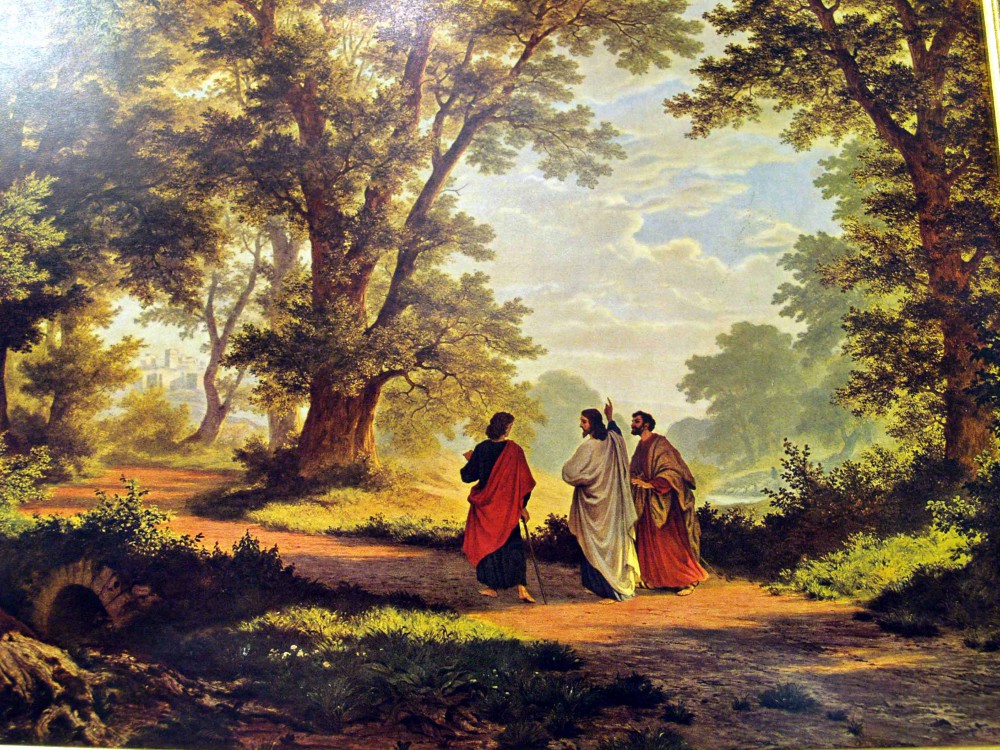
Luke 24:13-35

After Jesus’ death, the two disciples who left Jerusalem to go to Emmaus needed to share their sorrow and confusion with Jesus. As they unknowingly shared and retold their story to the Risen Jesus, Jesus opened their hearts to the mystery of grace at work in their lives to the point that they were able to understand their time with Jesus in a new way, and eventually recognize Jesus with them in the breaking of the bread.

Follow the steps for Lectio Divina in praying with the beautiful story of Jesus’ Resurrection appearance to the disciples on the way to Emmaus. After your prayer, you may find the following reflection questions helpful:

1. Imagine that you are one of the disciples walking on the road to Emmaus, and you are joined by a mysterious, trustworthy Stranger. Share with him your most recent experience of being angry, betrayed, discouraged, grieving, or lost. How does it feel to tell Jesus how you feel? Does Jesus say something to you?

2. Have you ever had an experience of prayer that set you on fire? How have you allowed that fire to burn, grow, and set your life alight?    

3. The disciples didn’t recognize Jesus on the road. When have you been surprised by God? Where might God be standing in your life right now, or walking alongside you, but unrecognized?

Praying with Our Past: Shadows & Mercy

“Salvation history” is how God is at work in the lives of the People of God. Each of us has our own personal salvation history. From time to time, we need to genuinely bring our history to God because our past is such an important part of who we we have become. Praying with our history is not about remembering our past for its own sake, but so that we can discover God’s faithful presence throughout our lives.

When we reflect on our personal history, two things are likely to happen: we experience resistance, and/or we begin to see patterns in our life.

1) We may experience resistance. Perhaps we fear we will be overwhelmed by the pain, suffering, or sinfulness of our lives. It may be too difficult to think about certain times in our lives. If we find great resistance, offer that resistance to the Lord. We need to be gentle with ourselves—we can do this a little at a time, or perhaps simply leave aside the most difficult part of our personal history until we feel ready to bring it to prayer.

Our favorite Old Testament story can be helpful at this point. Very often, the best stories from the Old Testament are about a time of failure, weakness, or infidelity on the part of God’s people. And yet in this darkness, God reveals over and over again his faithful love for his people.

When we have the courage to face the pain or darkness of our past, we receive the grace to experience God’s love, mercy, and forgiveness. Along with many spiritual writers, Father Rupnik agrees that the experience of God’s mercy is the foundational spiritual experience. It is God’s love that shapes us into his people, that places us in his story of salvation. When we recognize that we are truly unworthy, we can discover that God loves us as we are!

Looking back on our life’s journey can help us to see our past more clearly, but the goal isn’t to get lost—or stuck—in our past. Instead, we seek to discover and cherish the ways God has worked in our lives, our own sacred memories. Praying with our past—even the difficult moments—we can allow our  foundational experiences with God to take root in us, nurture our spiritual lives, and build our relationship with God.

When we are praying with difficult experiences in our past, it’s helpful to remember:

* Be gentle with ourselves. If something is too painful to remember, we can wait until we’re ready, until it’s the right time. We can also choose to pray with it with the help of someone we trust, whether a friend, mentor, or counselor.

* God doesn’t will evil for us or for anyone. If we were sinned against, or chose to sin against others—these were not and are not God’s direct will for us. But, just as God turned the most evil and tragic event in all of human history (the crucifixion of his only Son) into the means of the Redemption of all humanity, so God can take any circumstance of our lives—no matter how bad—and bring good out of it. When we pray with painful events from our past, we do so in the hope of discovering (or re-discovering) God’s faithful love. If we cannot see his love, we can make an act of trust in his love, and then pray for the grace to see how God has loved us.

* Focus not on the suffering but on God’s presence. We survived it—how? How we have healed or grown from it? How have we learned from it? Is God inviting us to heal further? Might God be inviting me to use that painful circumstance to remember that God is also mysteriously present in the pain or difficulty that we’re undergoing right now?

To Pray With

  • Pray with Psalm 139.
  • After you have prayed with Psalm 139, write your own version of the psalm. How would you describe how God has been with you and saved you in your life? (For an unusual example, read Francis Thompson’s famous poem, “The Hound of Heaven.”) What image would you use to describe how God acts in your life?

Praying with Your Story

Rembrandt [Public domain], via Wikimedia Commons. (One of my favorite stories from the Old Testament: Jacob Wrestling with the Angel)

Rembrandt [Public domain], via Wikimedia Commons. (One of my favorite stories from the Old Testament: Jacob Wrestling with the Angel)

Just as it is important to “begin where you are,” it can also be helpful from time to time to look back over your life and pray with where you have come from. Even if you are just starting to seek a relationship with God, God has been with you up to this point, even though you may not have recognized his presence. To understand God’s invitations, it is helpful to understand how he has been at work in your life so far.

Every day promises a new revelation of God’s love, yet our God of surprises is also consistent in the ways he works with us. God knows us better than we know ourselves, and so he works with us and within us in the ways that help us to grow, to live in always greater love and greater freedom.

In the powerful film, Freedom Writers, a new teacher at a poor inner-city high school tries to create a learning environment for the students whose worlds have been constantly rocked with racial violence. To help the recalcitrant students recognize their common humanity, she creatively has them share their stories by playing a simple “line game:” If something she says is true about them, they step toward the line that runs down the center of the classroom. Gradually, she leads them from the ordinary (who likes a particular song) to the painful: How many have lost a loved one to gang violence. As the students start to share bits of their stories with their teacher and with each other—simply by stepping toward the line—everything begins to change. The classroom is transformed from a tense potential war zone into a place of community, sharing, learning, and friendships.

Imagine how powerful it would be for us to share our stories with God. The next few posts will encourage us to do just that.

Pen_UncappedTo Journal

A) What is one of your favorite stories from the Old Testament? Why is it a favorite?

B) Can you see a connection between your story and the Old Testament story that you chose? How do you identify with the people in the story? What touches you about the action of God in the story?

God in the Plot of Our Lives

04H 1choiceWhen I’m writing a story, one of my first concerns is plot. There are many ways storytellers describe plot:

  • A storyline
  • A story that has a beginning, a middle, and an end
  • A character’s journey
  • What happens next
  • A linked series of events
  • A series of events that have meaning

Often we choose to watch a film or read a book because the beginning “hooks” us with a compelling situation and we want to find out what happens. Although in this blog I’m comparing the events of our lives to the plot of a story, our lives are rarely so neat. The bonus of storytelling art is that seemingly random or disparate events are linked together by the storyteller in a way that gives them meaning. Small events are seen in the context of the overall story or the character development of the protagonist; events and choices of the major characters—protagonist, antagonist, supporting characters—have major consequences in the story’s development. Although stories with surprise endings might require a second viewing or reading, in most stories we have the satisfaction of being able to clearly trace the progression of events, which gives meaning to the story.

Typically, when we look for the deeper meaning in a good film or book, we might say, “Where is God in this story?” Most people will look for God in a particular character. For example, in some movies, the hero (or heroine) is a Christ-figure who sacrifices his or her life for others (Luke Skywalker or Superman). Or perhaps the mentor character, who shows the way to the protagonist or blocks the antagonist, can seem like God’s providence in the story (Obi-wan Kenobi or Superman’s biological father). Sometimes the community will become an image of the Church as the members of the community minister to each other and begin to transform the world beyond themselves (in The Dark Knight, Batman must decide whether to trust in the goodness of the people on the ferryboat. Together, they act in a Christ-like way.) All of these ways of looking at stories can be helpful in discerning the meaning of a story and connecting it to our own lives. Reflecting on the stories that we watch and read can help us to see patterns more clearly: the presence of God in our loved ones, or in the people who take action on our behalf, or in a dynamic and loving faith-community, whether it’s our parish or a circle of friends.

Life, of course, is not usually so neat and clear as a well-told story. It’s one of the gifts that the arts give us—a clarity or insight that we can relate to our seemingly muddled lives.

Narrative theology offers us another option: to go a step further and look for God in the plot of the story. In other words, the actual events of the story—what happens to the characters—is the action of God or represents God in the story. This way of looking at a story is more like discerning God’s presence in real life. And it can be difficult, just as it can be troubling to try to find God’s action and purpose in the painful events of our lives. But this less obvious way to think of God’s presence—as the plot of the story—can help us to discern and accept God’s action in the events of our lives. It can also help us to see our lives not just as separate events where God is randomly present, but as actually directed by God, even when we do not understand how or where God is directing us.

garden-path-59151_1280

As an example, let’s look at a simple parable from the Gospel: the parable of the seed and the sower in Matthew 13:1-23.

Take a moment, if you can, to read the entire parable. 

In this parable, Jesus talks about a sower that throws seed on various soils, with varying results. The seed on the pathway was eaten by birds; the seed on rocky ground grows up fast but is scorched by the sun; the seed on thorny soil is choked by weeds; the seed planted in rich soil grows and bears fruit. Where are we in this parable? Most people would respond that we are the soil. If we ask, Where is God in this parable?, some simplistic answers could be: God is the sower; or God is the good ground; or God is in the good seed that bears fruit.

But if take the approach of narrative theology, we may reflect further that God is in the events of the parable. Each action or event is allowed or provided by God. So the seed being sown is where God is present. What the seed does with being sown, and where it finds itself sown—that seems to be where Jesus puts the emphasis when he interprets the parable for the disciples. Jesus describes the soil and the behavior of the seed. The response of the seed to being sown and to the soil seems to be the heart of this parable. (In other words, maybe one good way to pray with this parable is with the question: how do we respond to the action of God in our lives?)

One of the blessings of living in a spirit of discernment is to be able to trust that God is at work in the events of our lives as they are—even in the thorny or rocky moments when we cannot see it. When we trust and believe with all our hearts that God is the plot of our lives, then we can follow where God is guiding us, and we can respond in faith and bear fruit.

To Pray With

Take a quiet walk in or near a garden, and closely observe the garden. During your next prayer time, pray with the parable of the Sower in Matthew 13:1-23. (Or perhaps you can can pray with the parable in the garden.) What does the “garden” of your life look like? How is God at work in the garden of your life?

Sharing the Treasure of Pauline Spirituality in NYC This Week

Just a reminder for any New Yorkers that I’ll be visiting this week for two special events:

1. Manhattan’s very own #Soul of Christ talk and book-signing at our Pauline Book & Media Center at 64 West 38th St. on Thursday evening (June 4) at 6:00 PM

NewYorkPromoFinal


2. Daughters of Saint Paul Centenary Day of Recollection and Centenary Mass on Saturday, June 6th, from 10 AM to 6:30 PM, at Holy Family Church, where I will be giving one of two talks and will lead the Eucharistic Hour of Adoration:

Flyer for Holy Family event

How To Discover the Holy Spirit in the “Setting” of Our Lives

If God wants us to begin our discernment where we are, then another helpful thing we can do is to reflect a bit about the “setting” of our lives, our particular world—the concrete circumstances in which we live.

There will always be some things about the circumstances of our lives that we cannot change:

  • Aspects of our own  personality
  • Our families and the people we share our lives with—our primary commitments
  • Our history (although we can change the way we understand our past)

But even though we cannot change them, it’s helpful to consider our situation, to accept where we are, and to actively seek the Lord’s invitations within this “setting” of our lives that he shares with us.

Other circumstances of our lives may be relatively permanent, or we may be able to change them over time, if we want to or feel we are called to:

  • The responsibilities that we have committed to
  • Where we live
  • Our relationships with the people we share our lives with
  • Our training/the kind of work we do/our vocational commitments

Finally, there are many things in our lives that we can change—our behavior, attitudes, and choices; how we interact with others; how much time we spend in certain activities; what we give priority to each day, etc. But before making any changes, it’s helpful to first understand and acknowledge where we are, what’s going well and what we’re struggling with or longing for.

04G

When we pray to the Most Holy Trinity, we often do so by distinguishing the roles of the Persons of the Most Blessed Trinity in our world. If we praise the Father as Creative Love, the Son as the Beloved Word of the Father, then we might pray to the Holy Spirit as the Embrace between Father and Son. This holy, eternal Embrace, the Holy Spirit, extends outside the Trinity into the lives of God’s beloved people. The Holy Spirit embraces us in our lives, in the concrete situations in which we live. When Saint Paul tries to explain God’s presence in the world to non-believing Greeks, he speaks of God as the One in whom we live and move and have our being (Acts 17:28). Isn’t that an apt description of the Holy Spirit as the One embracing us, within and through the context of our lives?

A. To Pray With

Below is a series of questions about the setting or circumstances of your life that you may wish to journal about or pray with. As we pray with these questions, we want to remember that this setting of the story of our lives is the realm of the Holy Spirit, who works in and through all the particulars and details of our life. God is active in the moments, in the day-to-day, in the concrete details of our lives. These questions can help us to recognize how the Spirit is at work in our lives as they are—where are his invitations, his signs of faithful love, his challenges? As we begin to pray with the circumstances of our lives, we ask for the light of the Holy Spirit so that we can contemplate our lives with the eyes of Christ, with his loving gaze.

Here are some questions to pray over:

  • Where am I?
  • What are the circumstances in which I find myself?
  • What do I love about my life?
  • What do I struggle with or find not working for me?
  • What do I long for?
  • How is God present in my life?
  • How might God be speaking to me through the circumstances of my life?

B. To Pray & Journal About

While there are some things about my life that I cannot change, there are many ways that I can improve my circumstances to grow spiritually, to be healthier, to foster personal growth, to more fully live the mission God has entrusted to me. In another time of prayer, reflect on these two questions, praying the second question especially in the light of the Holy Spirit, and asking for his light and for clarity:

1. What insights have I received about myself and my life?

2. How is God speaking to me through the circumstances of my life right now: encouraging me, blessing me, inviting me, challenging me to grow?

Tweeting with God Book Review: Putting Our Relationship with God in the Spotlight

When I first saw the new book, Tweeting with God by Father Michel Remery, it intrigued me because:

  • the title is awesome
  • the book has a free app
  • I’m always looking for easy-to-understand books that connect the Catholic Faith with people’s questions today
  • I liked the personal questions the book is not afraid to ask…and answer

So when I was asked to be part of the Tweeting with God Blog Tour from the perspective of discernment, I just couldn’t say no! Here’s the book trailer so you can see a glimpse of the book for yourself:

A Solid Overview of Our Catholic Faith

A solid overview of the faith written in 140-character chunks sounds just perfect for young people today, right? And this book definitely has 200 great tweets about our faith, but it has a lot more than that. Each question has a two-page spread which includes a tweetable answer, and a more thorough one. The tweet is used as the quick “summing up” of the explanation at the end.

I really appreciated the approach of Tweeting with God. While covering the main areas of faith (traditionally Creed, Sacraments, and Morality), many answers start from a personal perspective: What does this [area of faith] have to do with me? The questions are sometimes posed to cover a particular area of faith, or address a contemporary issue, but they are also often personal and common questions that I’ve had people ask me, for example: “Why is the Mass boring?” or, “How does one become a saint?”

The personal “what does faith have to do with my daily life” approach is what I appreciate most about this book. It makes Tweeting with God an excellent introduction to the Catholic life of faith when read cover to cover, but also a great reference for the tough questions often posed to Catholics—from the history of the Crusades to the motivations for a celibate priesthood.

To keep the language understandable, large concepts are explained simply. In most cases, this works really well, but occasionally I felt that the answer was oversimplified and really suffered from the lack of precision. Still, overall this is a great introduction to the faith that addresses many controversial or counter-cultural issues that Catholics face.

(For a fun tweet-able review of the book, check out Alison Gingras’ review at Reconciled to You.

What Does Tweeting with God Have To Do with Discernment? (or Why Am I Blogging About This Book Here?)

The personal approach that Father Remery takes connects the mysteries of God, Christ, and the Church with how to live a vibrant spiritual life. Instead of an “add-on” section in the back on prayer, the Christian’s relationship with God is front and center throughout the presentation of the Catholic Faith. What we believe is shown to directly connect with our personal relationship with God. The opening pages don’t speak about God just from the traditional language of the Book of Genesis and the creed, but they emphasize that God’s plan for creation includes his plan for each of us. A surprisingly thorough and wonderfully accessible treatment of prayer begins early on in Part 3.

With the spotlight of the book focused on our personal relationship with God, it’s only natural that Father Remery frequently refers to seeking God’s will and discovering God’s plan for our life. The principles of discernment are raised simply and persuasively. A few of my favorite spots in the book about discernment are:

Tweet 1.7 Why should I believe in God (sets up God’s longing for us and our longing for God that are so important on a vocational discernment journey)

Tweet 3.4 Can prayer help me to make the right decisions? (simple explanation of superficial desires and deep desires)

Tweet 4.3 What does God ask of me? (the description of vocation is simple and fantastic)

Tweet 4.6 How can I know the will of God? (check out the red box—great advice for listening to God’s will)

Tweet 4.8 What is the relationship between faith and actions? (Offers a defense of monastic life of prayer)

Appendix 4: Praying with the Bible according to St. Ignatius of Loyola

Appendix 5: Reflecting on your day through prayer (or the Examen Prayer) 

Although I am really impressed with Tweeting with God overall, there are a couple of things that I wish were done differently:

1) To keep the book short and focused on young people’s questions, some things were left out that might have been helpful to include. For example, the only references to discernment (or seeking God’s will) have to do with vocational discernment. I couldn’t find a reference to living in a spirit of discernment. In a book geared to young people—which this book undoubtedly is—vocational discernment is certainly an appropriate emphasis, but it is also important to realize that God doesn’t just call us once in our lifetime.

2) The initial vocational division that the book offers is “to be married in the Lord” or “to remain single in the Lord.” The text seems to suggest that this is the basic question to begin discerning your vocation with. While this may be helpful for some people, I don’t necessarily think that this is a good starting point for everyone. This might be a case of oversimplifying.

3) Every 2-page spread has a picture which you’re supposed to be able to scan with your smartphone using the Tweeting with God app, so that it will bring up new content. I tried scanning the pictures with two different phones, and it didn’t do anything. However, the app still has a few cool features of its own. In addition to additional information for all the tweets in the book, it also has a section on the Mass and Catholic Prayers in 10 languages (very helpful for international travelers, or if you’re visiting a parish that celebrates Mass in another language!)

Tweeting with God is an splendid introduction to the faith for young adults that compellingly and beautifully integrates learning about the truths of our Catholic Faith and living a dynamic relationship with God as a Catholic.