Discerning Our Call To Serve

06L my crazy ideaA hugely important part of any good discernment is to listen to God’s invitations as expressed in the needs of the world—the needs of those around us: Where is God sending us to serve?

We live in a busy world, with so many needs. Any person of good will alive today can easily become overwhelmed by the number of requests for help, whether from family, friends, neighbors, parish, or work. Sometimes it may seem to be a call from God; at other times, we may become casually involved in helping out our family, our community, or a ministry simply as a favor, and the favor turns into a bigger commitment that we didn’t pray about or plan for. Especially when the invitation is casual, or we never envisioned ourselves serving in this particular way, we may not recognize God’s call.

When we feel pulled in many directions, or find ourselves juggling too much, this is the perfect time to enter into a spirit of discernment, to sort through the different demands on our time and discern which requests or needs are invitations from God. Sometimes, we can easily sort through them. At other times, it may take time to gradually clarify how God is inviting us. But as we go forward in our lives, we will develop more of a sense of our personal mission, of how God is calling us to be and to love in the world.

For example when I visit a hospital, I am drawn to help the people I encounter there—not just the person I am visiting, but also the people I meet casually. While I’m at the hospital, I seek to respond as best I can to the requests that I receive. I believe that God wants to work through me to touch the lives of the people that I encounter on that particular visit. (And often I am deeply touched by the people who are so courageously undergoing such suffering.)

06L RGB Stock

However in my vocation as a Daughter of Saint Paul, I am also aware that I am not called to be a nurse. Instead, my vocation as a Pauline communicator is to focus on the spiritual poverty and suffering of the people whom I encounter, whether they are wealthy or poor. This can be a less obvious call, because physical poverty and suffering are often more noticeable.

What criteria can we use to sort through the many demands that we experience? For me, the wonderfully profound Presbyterian minister and writer Frederick Buechner sums it up best when he wrote, “The place God calls you to is the place where your deep gladness and the world’s deep hunger meet” (Frederick Buechner, from his book Wishful Thinking: A Theological ABC). Looking for that resonance between the outward call we receive/perceive, and the inner movements of our heart may take time, prayer, and discernment, but the God who lovingly calls us will clarify his will for us in his time.   

Mary, Model Discerner

As mentioned earlier, when we discern we pay special attention to where we are at the present moment. We don’t begin our discernment from where we’d like to be, or from unrealistic expectations, but from where we are right now.

Because who we are and where we are has been shaped by the past, we also prayed with our past—with significant moments in our lives that have shaped us as persons, and with significant moments of grace in our lives. We may need to continue to pray about significant moments in our lives, but as we go forward in our discernment, it is time to bring all of who we are, here and now—the present—to prayer. In the past two months, we been reflecting on cultivating a listening attitude in our daily life, listening intently intently to God speaking to us through:

  • our prayer
  • our deep desires
  • our relationships
  • our conversations with others
  • our current situation
  • the Church
  • the needs of the world.

But we face any number of obstacles in this deeper listening. In the next few posts, we’ll look at some of those obstacles that can “stump” us or detour us on our discernment journey, and how we can respond to or overcome these obstacles.

The Annunciation by Henry Ossawa Tanner, 1898.

The Annunciation by Henry Ossawa Tanner, 1898.

Our first response in facing any obstacle on our discernment journey (or our spiritual journey) is to entrust our spiritual lives and any special intentions to Mary, the Mother of Jesus. This is especially true for our discernment. Mary is the disciple who most faithfully listened to and responded to God’s invitations in her life, and she wants to accompany us as we seek to do the same.  The Founder of the Daughters of Saint Paul, Blessed James Alberione, used to say, “Mary is the way to go to Jesus, the easiest way.” Mary wants to draw us closer to her Son, so we can ask her in a very particular way to accompany us throughout the rest of our discernment, and ultimately, the rest of our lives as we seek to live God’s call in fidelity as she did.

Suggestion for Prayer

The Angelus is a beautiful and rich prayer that is so helpful for discerners, as it helps us to recall the moment when Mary received and responded with her generous “yes” to God’s call. Traditionally, the Angelus is prayed three times a day—morning, noon, and evening. Make time today to pray the Angelus at least once today. (If you aren’t familiar with this beautiful prayer, you can pray it with this lovely music version:

You can also find the Angelus in almost any Catholic prayer book. Once you have been praying the Angelus for a while, you may enjoy meditating on a beautiful work of art depicting the Annunciation while you are praying: http://calltoprayer.blogspot.com/

Book Review: Rediscover Jesus is a great foundation for your discernment

I’m re-posting here a shortened version of my original book review of Rediscover Jesus: An Invitation  because I think it is a wonderful way to begin deepening our relationship with Christ as we begin to discern more deeply.

Rediscover Jesus: An Invitation is truly an appealing invite to readers to encounter Jesus deeply. RJ-book-flatThis book answers an urgent need that I have found in Catholics all over North America: people of good will, rooted and raised in the Catholic Faith, who are Catholic mostly just for Sunday Mass and special occasions, who desperately need a personal relationship with Jesus. As a vocation director, I have often been concerned for young people who begin discerning their vocations without having a personal relationship with Jesus–indeed, without knowing that they needed one. They wanted to do God’s will, but how could they hear God’s call if they didn’t know how to have a conversation with Jesus? Helping young people develop a personal relationship with Christ became the starting-point of my work in nurturing vocations.

Rediscover Jesus: An Invitation wonderfully addresses this need, inviting readers in to their own personal relationship with Jesus through:

  • Conversational style and short, easily digestible portions. Broken down into 40 short chapters, this book covers the basics of what it means to live a Christian life–one nugget at a time. For the most part, this book was simply a joy to read.
  • Four concrete interactive invitations at the end of every chapter, each of which appeal to a different part of our personhood.  To Ponder engages the mind, Verse to Live (taken from the Gospels) can engage almost any part of us, depending on how we read it; Question to Consider engages our memories and life experience, and Prayer engages our hearts. Almost every reader will find at least one of those four points striking. These interactive invites allow us as readers to reflect on the message of the chapter in a way that is deeply personal.
  • Life-changing introduction to how to live a truly Christian life
  • Relational approach–not just because of the conversational style, but because of how Matthew Kelly is definitely trying to encourage us to develop our own personal relationship with Jesus–the one relationship that we all thirst for, whether we know it or not.

The topics of the chapters rotate, but I found three main themes running through the book. The first nine or so chapters seem to focus more on who God is and who Jesus is–especially as we can come to know him through the Gospels and through prayer. These first chapters are shorter, extremely inviting and appealing, and motivating. They’re great not just for people who need a personal relationship with Jesus, but also for those who seek to deepen their relationship with Christ. I’ve bookmarked several points to pray with later. My favorite chapters of the book were these first chapters and the last few chapters because they focus so well on the personal. What does Jesus truly want for us? How does Jesus think of us? How do we think of Jesus? How can we give Jesus our all?

Chapters 11 through 20 (or so) seem to focus on the heart of Jesus’ Gospel teaching, especially how we are called as followers of Christ to imitate him.

From the middle of the book to the end, the chapters primarily focus on transformation: how Christ wants to and will transform our lives if we allow him–so that we can be truly, deeply happy, so that we can be our best selves. In a particular way, the last ten or so chapters discuss holiness–in a way that is accessible to everyone.

My favorite chapters:

Chapter 10: Learning a true love of self

Chapter 22: Matthew’s act of surrender–in line with the great St. Ignatius of Loyola’s Suscipe and Blessed Charles de Foucald’s Act of Abandonment–is put in such contemporary terms, but so elegantly, that I will be adding it to my favorite prayers

Chapters 23, 25 & 28: How tos and examples of how to pray with the Word of God, especially the Gospels

Chapter 26: How a Christian can begin daily personal prayer

Previously, author Matthew Kelly has revealed himself to be a wonderful communicator through his books and www.DynamicCatholic.com, but he is especially effective in Rediscover Jesus because he:

  • knows his readers and their interests, issues, and concerns
  • addresses his audience effectively, invitationally
  • communicates interactively
  • creates an invitational space for the reader to encounter Christ

What I enjoyed most about Rediscover Jesus: An Invitation is its circular communication inviting the reader in: from Matthew Kelly to reader to Christ (whom we assume inspired Matthew Kelly to write this invitation in the first place). It’s not one-way communication from author to reader but circular, Trinitarian. Rediscover Jesus has the potential to be life-giving, life-changing.

Although I read the book in just three short sittings, I would recommend instead reading a chapter a day. This will give the reader the opportunity to take time with each chapter’s invitation, and facilitate a 40-day journey for the reader to either begin or actively grow in one’s relationship with Jesus.

Who would especially benefit from this book?

  • The average Catholic in the pew
  • Anyone interested in beginning or renewing their spiritual life
  • RCIA–people learning to live the Christian life as personal relationship with Christ
  • Teens or young adults starting to make their faith their own.  This doesn’t look like a book for those receiving Confirmation, but it would be awesome if every confirmandee read it!
  • Anyone with a personal relationship with Christ will enjoy deepening that relationship with some of the creative, refreshing and contemporary “takes” that can enrich our prayer.
  • Those who want to learn how to communicate Christ: fresh, original and contemporary language; creative suggestions for praying with the Gospels; a contemporary invitation to tradition/faith that is accessible to a “newbie”


The World Needs You!

06I RGBstock choice 2“The world you are inheriting is a world which desperately needs…to be touched and healed by the beauty and richness of God’s love. It needs witnesses to that love. The world needs salt. It needs you – to be the salt of the earth and the light of the world” (St. John Paul II, Homily for 17th World Youth Day at Downsview Park, Toronto, on July 28, 2002).

The world is deeply hungry: for love, for justice, for peace, for Christ. Many of posts in this blog have been about searching interiory to hear God’s call. But a critical part of discernment is to reflect on how God calls us through the needs of others, through the needs of the world.

The world is a big place, and each of us is just one person. How can we respond to the needs of the entire world?

By responding to the needs of those around us and the people that we interact with, we are responding to the needs of the world. If each of us truly did our part to bring love, healing, and justice to our “little worlds,” the entire world would be transformed. In addition, we never know how our actions—however small—can touch or shape another person. As members of the Church, the Mystical Body of Christ, everything we are and do affects the rest of the Body. So every time we choose to act out of Christ’s love, our love has the potential to change the world for the better.

God calls us not just through our being, but also through the needs of those around us. All of us want to make a difference in the world. So how can we come to know the needs of the world? And how do we discern which need(s) of the world we are called to serve?

We can come to know the needs of the world in many ways. Here a few:

  • The world around us carves us and sculpts us. Whether we are aware of it or not, we are people of our time, and we are each uniquely aware of certain needs. Our personal experiences, the communities in which we live and work, the people we know, the personal challenges we face, and the challenges faced by those we know and love, are already deeply embedded in us. What about our experiences move our hearts? Who are the people in our lives whom God might be inviting us to reach out to or respond to?
  • Find a way to stay in tune with current events, if we don’t already do so. We don’t necessarily need to watch TV news broadcasts or read the daily newspaper, but we do need to find a way to engage with the larger world. Unless we are called to living like a hermit, as Christians we are called to be informed and engaged with the world. Going through a daily news app, reading the latest novels that touch on social issues, watching documentary films—all of these are ways to stay in touch with what’s happening in the world. We are particularly blessed today with a wide diversity of media that can help us to know about what’s happening—both in our own backyard and all around the globe. Each of us can choose a couple ways to be in touch with the larger community of the world, paying attention to those stories or situations that touch us deeply. Whether it’s orphaned children, the plight of a village that doesn’t have access to drinkable water, the suicide rate of teenagers in the USA, or the efforts of a particular community or group to bring about reconciliation between hostile groups—we will find out about situations of others that we feel deeply about. Bring these situations to prayer. When we feel strongly about them, we can take time to reflect on them and how God might be calling us to take action.
  • Listen to the invitations of our Pope and bishops. Very often, the Pope and the bishops have their fingers on the “pulse” of the most urgent needs or the most neglected people of our society. Prophetically, they often point out disturbing trends that if not addressed, could spiral downwards into crisis. Their words are based on research, reflection, and prayer—and can be a fruitful source for our prayer and discernment. Often, the Pope can orient us in how to respond to a particular need. (If we don’t have the time or energy to keep up with the documents of the Pope or bishops, we can read the “news briefs” from the Catholic News Agency, other Catholic news services, or the Vatican’s news service. One easy way to keep up with the Pope is to read the text of his general audience on Wednesdays.)

As we listen to the needs of the world, we may feel drawn in many directions. But we don’t need to feel overwhelmed. The world—and all its people—are in God’s hands. Jesus Christ is the Savior of the world, and Jesus invites us to participate in his saving mission. The needs of others that we are called to serve will deeply resonate with us. The gift of discernment is that we discover how the Lord is inviting us, through the situations in which we live and in the situations that we come to know about, to share in Christ’s mission of further bringing God’s love to the world.

How To Make the Most of Spiritual Direction

nature-fashion-person-woman

Prepare

Pray for the grace to listen to and respond to God’s invitations. Seek to bring an attitude of openness to spiritual direction, so that Jesus can “shape” you and draw you more deeply into his love

Approach spiritual direction with reverence. Your relationship with God is sacred; this time that you are taking for your relationship with God is also sacred.

Prepare by noting/journaling about your recent prayer experiences.

  • If you are praying Lectio Divina or another meditative or contemplative prayer, you will find it helpful to reflect on your feelings, inspirations, and the fruit of your prayer immediately after praying. Review these reflections before you go for spiritual direction.
  • If you pray the examen prayer, you will probably find your first meeting for spiritual direction easier, as the examen prayer includes reflection as part of the prayer.

Also, note any questions you wish to ask regarding your spiritual life.

Spiritual Direction Session

When you arrive, the spiritual director may begin with a prayer, then will most likely invite you to talk about your spiritual journey and what has brought you to direction. In your conversation, you will want to focus above all on your spiritual life—that is, your prayer, your relationship with God, and how you live your relationship with God in your day to day life. Because your whole life is the context of your relationship with God, you will want to tell your spiritual director briefly about the important things that are happening in your life and how they are affecting you.

Spiritual direction is different than a counseling session or a conversation between friends. Your time is limited, so you will want to keep the focus on your spiritual life. Sometimes it’s hard to know how to do that, but the spiritual director will help to focus the conversation around your relationship with God. He or she may ask you questions so that they understand the context of what you are saying. Feel free to answer, but also feel free not to answer, saying something like, “I have to think about that.”

Also feel free to acknowledge that you don’t know exactly what to talk about or how to speak about something. The spiritual director can then help guide the conversation.

Don’t be afraid of the silence that may arise—the silence may give both you and the spiritual director an opportunity to reflect and listen together to God’s invitation to you.

At first, you may feel a bit uncomfortable or uneasy speaking about your prayer and your relationship with Jesus. This is natural because you don’t know your spiritual director and also  because it’s not something that you usually do. Speaking about your prayer life takes practice. Finding the words to describe a spiritual experience can be challenging, which is why it is helpful to reflect on it ahead of time, and bring those notes to your spiritual direction session.

During the session, the spiritual director’s role is to:

  • Listen attentively (to the point that you feel understood)
  • Help to focus the conversation around your relationship with God
  • Offer insight into what you shared so that you can reflect more deeply on your relationship with God
  • Direct you back to your relationship with God
  • Occasionally, offer advice on spiritual matters or on how to pray
  • Address any questions you have

If a director offers advice on spiritual matters, this is important to listen to and receive thoughtfully.

If you feel that the spiritual direction session was helpful or went fairly well, you can arrange for another appointment. Typically, someone in spiritual direction would see their director about once a month, although it can certainly be more or less frequent.

Don’t expect too much from any one session of spiritual direction. The spiritual director is not there to “fix” your problems, but to help you recognize God’s action in your life. Sometimes spiritual matters take time to unfold. As the spiritual director gets to know you, their insights and advice will become more specific to you and your situation.

Follow Up

Immediately or as soon as you are able to, take some time to pray about what came up during spiritual direction. Journaling or noting down what the spiritual director said may also be helpful. If the spiritual director offered advice that seems helpful to you, give it a try. If you’re not sure that it would be helpful, pray about the advice that was offered, as the spiritual director is speaking from the wisdom of prayer and experience. If you decide not to take the spiritual director’s advice, is there something else that you can do that will address the area that the spiritual director’s advice was directed towards?

Follow up your spiritual direction appointment with prayer: this is the best way to help it bear fruit in your life.

Spiritual Direction 101

Before getting to the practical tips, I thought it might be helpful to share some general notes about spiritual direction.

06A second foto stochPerhaps we are discerning our vocation or another big life choice, and we decided to go for some spiritual direction. [Here are some suggestions how to find a spiritual director.] After we have found a director and set up an appointment, what should we expect?

First of all, we remember that our true Spiritual Director is Jesus himself. The person we are seeing for spiritual direction is helping us recognize Christ’s direction and invitations in our life. A spiritual director is trained to listen, to accompany us on our spiritual journey, and to help us recognize God’s invitations in our prayer and in our life.

Secondly, in our first meeting, we want to look for a certain affinity between our spiritual director and ourselves. When we meet for spiritual direction for the first time, we want to notice how we feel, especially if we feel fairly comfortable talking honestly with the director. (It’s natural when speaking with a spiritual director for the first couple times, to feel a bit uncomfortable simply because we don’t know the director yet.) After the session, we can consider if we felt understood and validated in presenting our experience. The spiritual director should understand where we are on our spiritual journey and we should feel that we are able to trust him or her. If we find ourselves holding back from what we wanted to talk about out of fear, or feel misunderstood, or something feels “off,” we can still have a helpful session, but we may wish to try another spiritual director in the future. Sometimes it takes two or three meetings for us to recognize whether or not a spiritual director is a “good fit” for us. This is normal, and the spiritual director will expect us to evaluate our experience with them.

Thirdly, spiritual directors usually support themselves and their families (or their communities if they are religious) with their spiritual direction. When we set up the appointment, it is helpful to ask the spiritual director what their stipend is. If we forget to ask about a stipend before we meet, we will want to make sure we do so at our first meeting.

Next, I’ll post some tips on how to make the most of spiritual direction.

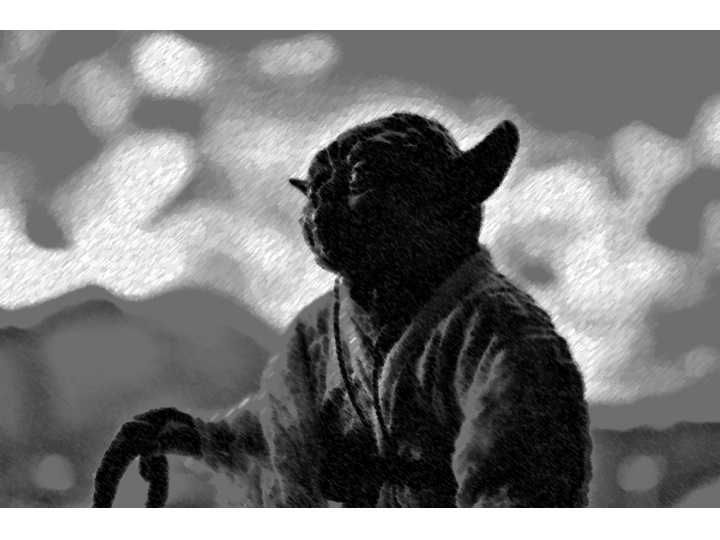
Would Yoda Have Made a Good Spiritual Director?

YodaBandWWhere would Cinderella be without her fairy godmother? Frodo without Gandalf? The English students without John Keating in Dead Poets Society?  The Karate Kid without Mr. Miyagi? Or Luke Skywalker without Yoda?

Great movie mentors, although often idealized, remind us how important mentors are in our own lives. Mentors are the people who have walked the difficult path before us, people who have shared or currently share in our situation or something similar. How they have walked their path ignites in us a longing to be like them. They approach challenges with a quality or grace that appeals to us. Sometimes it is simply their courageous example that shows us the way; at other times it might be their wisdom that gives us hope that we too can overcome the obstacles in our path. Although we don’t have to personally know someone for their words and example to mentor us, the ideal mentor not only knows us, but “gets” us, and offers us insight to help us see from a different perspective. A mentor can be encouraging, challenging, or even discouraging at times, but their wisdom and insight is the fruit of their life experience.

We can be mentored in many areas of our lives, from a career, to living our Catholic Faith, to a certain scientific or artistic discipline, to simply becoming a better human being. A mentor may be a parent, grandparent, or other relative, a teacher, an expert in a particular field, a boss, a co-worker, a pastor, a spiritual friend, or someone with vast life experience. The best mentors are those who are comfortable with themselves, who have integrated the various aspects of their lives, and are deeply spiritual human beings.

A spiritual mentor is wise in spiritual matters not just from study but from his or her lived experience. Consulting with someone wise in the ways of God can be invaluable for our discernment journey. We should seek advice when we are ready—after we have already been praying about our discernment and done whatever research we need to do—and are at a point where we need some insight as to how to proceed. Perhaps we are stuck in indecision or fear, or perhaps we simply lack the knowledge or insight needed take our next step forward. It’s important to be really open to what our mentor has to say.

One form of mentorship that is part of the Catholic spiritual tradition, as well as highly encouraged in discernments, is spiritual direction. If we are seriously engaged in our spiritual life, we may want to seek regular spiritual direction. But especially when we are discerning a larger matter (such as our vocation), we would be wise to seek a spiritual director, who is often the most helpful mentor in a discernment.

In an earlier post: https://coauthoryourlifewithgod.com/2015/03/04/spiritual-direction/, I talked about how to find a spiritual director. In my next couple posts, I’ll talk a little bit about what it is like to go for spiritual direction for the first time, and some tips for how to make the most of spiritual direction.

To get back to the title question, yes, I think Yoda would have made a good spiritual director for Luke and perhaps does offer him some spiritual direction. Above all, Yoda does what a good spiritual director does: to find God in the directee’s own experience. Yoda encourages Luke to get in touch with and trust his own experience of “the Force.” And while “the Force” seriously lacks as an image of God from a Christian worldview, for the fictional world of Star Wars “the Force” does seem to refer directly to God’s Providence at work in creation.

* * *

In the meantime, what questions do you have questions regarding spiritual direction? If you contact me with your questions, either below in the comments, or via email, I’ll answer them in an upcoming post.

Call out for prayer requests: what can I pray for you during my retreat?

IMG_20140722_081126629_HDRThis weekend, I begin my annual 8-day retreat. I won’t be blogging or posting these days.

My annual retreat has become one of my very favorite times of the year, after which I usually return home deeply refreshed, renewed, and recommitted to my journey towards Christification. Something about the silence, the intense focus on prayer and my relationship with God, and the lack of the daily hustle and bustle, really fills my soul. I have come to treasure this beautiful week when I can focus all of my attention on my Beloved Master.

I invite you to send in any prayer requests you’d like me to pray for during this week–via email,  in the comments below, or on Facebook! 

May your week be deeply blessed by the knowledge and embrace of Christ.

Three ways the Church helps us discern

06H Sr Margaret JosephBelonging to the Church and being active in the Church is one of the best ways to live and grow in our faith, and can be invaluable in helping us discern God’s call. Our faith community can be as small as a prayer group, as large as a parish, or a midsize group that centers around a form of ministry or nurturing our faith and spirituality in every day life. Virtual faith communities can also support us spiritually and help us to grow, although in more limited ways. We may belong to more than one faith community.

Faith communities that really nurture us can be difficult to find, and they take many shapes. If you do not have a faith community—for example, you go to Sunday Mass but are not more involved in living and sharing your faith in your parish or in other ways—I encourage you to actively seek one. Your own parish is a good place to start. (If you don’t feel that your parish is nurturing your faith deeply enough, there are many other ways to connect with the Church.)

Why is belonging to a faith community so important to our discernment?

1. Because we need to be actively involved in building the Church in order to fully live our faith. Jesus doesn’t call us as isolated individuals, but calls us into community, to serve one another and to live in communion with each other. How can we do that if we aren’t actively involved? An essential part of our baptismal call is to evangelize, to witness, and share our faith with others. And the first place that we can do that is within the Church.

We cannot nurture and grow in our faith alone; we need others to help us, to inspire us, to motivate us, to call us to greater self-giving. Finding a dynamic faith community where we are nurtured spiritually can be challenging, but it’s worth the search. If we cannot find a vibrant parish nearby, we can start looking for other kinds of Catholic faith communities. Retreats, lay movements, or connecting with religious communities of priests, brothers, or sisters, are three ways we can find people who are committed to growing in holiness in ways that we can identify with and share. In a dynamic faith community where we truly share the height and depths of our Faith, we can more easily hear and respond to God’s invitations to us—whether they are to a particular ministry or initiative, or a deeper relationship with Christ. Especially if we are discerning our vocation or ministry, Jesus will call us and affirm our call in and through the Church.

2. We often receive Christ’s call in and through his Church: through receiving the Word of God, through our sacramental life, through the Eucharist, in the homilies, in the calls of our pastors, in the service that we give, in the holy examples of the saints and perhaps in the inspiring lives of someone we know. For those discerning their vocations, the Church has the best understanding of how to receive, respond to, and live the call to marriage, single, priestly and religious life.

3. Usually it is in the Church that we can best learn how to serve with the mind and heart of Christ. Despite the reality that the Church is Christ’s Body, we will find many people in the Church whose humanity and sinfulness irritate, disturb, and perhaps even appall us. But we know that Christ died to redeem us and sanctify us, and that the Church’s holiness comes from Christ. If we look attentively, we will also find people in the Church who are truly holy: who are receptive to the Word of God in the Scripture and in the Eucharist, and who humbly serve—often without being acknowledged. We are called to build up the Church—sometimes the irritating or wounded part of the Church that would normally turn us away—with our faith and service. In turn, certain members of our faith community will invite and/or challenge us to serve. And they will also affirm us in our service.

As Catholic Christians, we are called to listen to the invitations the Church makes–because Christ speaks through his Church. Our last few popes have wisely and unapologetically called the Church to take specific actions. Coming from pastors who most clearly represent Christ on earth, these are calls from God. Today, Pope Francis sometimes startles us with the vividness of his invitations of how we are to called to love the world as Christ did. His wise and pastoral invitations to holiness and service are not just for the bishops and clergy, but for all of us Catholic Christians to bring to prayer and discernment.

Can God Speak to Us Through Others?

06G Pixabay choice 3Can God speak to us through others? Yes! Actually, an important part of listening to God is recognizing that sometimes God will speak or invite us through other people. As human beings, we are called to share life together in our family. But we also have other communities that we are part of: our circle of friends, school, work, and other groups of people we hang out with. Our parish as our faith-community is especially important.

We really do not know ourselves well nor mature fully until we experience ourselves as part of a community.

Others challenge us to give fully of ourselves. Without being stretched by others’ needs and demands, we cannot know our true strengths. And we do not truly know our weaknesses until we rub elbows with the people in our lives who push us to our limits and sometimes beyond. Our ego—with our false sense of ourselves—often blinds us to our greatest gifts and our greatest weaknesses. But others can see us clearly, without the blind spots.

I can think of a time when I fooled myself into thinking I was a pretty patient person…but then I found myself in a very irritating situation—and I suddenly discovered that I was not patient at all, it’s just that I hadn’t encountered a situation where my patience had really been tested. Living and working closely with others is one of the best ways to help us to get to know ourselves.

God often helps us to see and understand ourselves and our situation better by speaking through others—friends, co-workers, enemies, bosses, and acquaintances. Sometimes just a random comment from someone who doesn’t like us very much can help us to understand something about ourselves: how we come across, something we are particularly good or bad at, etc. If we are open, sometimes we will discover that God is speaking to us or inviting us through our conversation with someone.

When we are discerning, it can be really helpful to sort things out with someone we trust: a family member, friend, a mentor, or someone in our faith community.