6 Ways To Recognize God in Our Life

Several Christian artists have written songs that refer to God’s “fingerprints” in our lives. We may have to look for them, but our lives are covered with signs of God’s love at work in us, although sometimes these signs are hidden. How can we grow in awareness of God’s presence and saving love in our life? Here are four simple ways to get started:

1. List your life—all the big events of your life. Can you see a pattern of how God has been present in your life? Later, you may wish to bring one of the events on your list to prayer.

2. Choose one of the events in your life that has influenced you and journal about it. (You can also bring it to prayer.)

3. If there’s a time in your life that you feel God wasn’t present, simply bring that hurt to God in prayer and ask him to reveal to you, at the best moment, how God was with you.

4. Make it a practice to bring your day or week to a prayerful review with the examen. (I’ll post more on how to do this later. If you want to get started right away, you can visit Father Michael Denk’s website and download his Examen App.)

Follow-up

Sometimes it is easier to enter into a new awareness by actively doing or creating something helps us to reflect with images, craftsmanship, or physical activity. Try one (or both) of the following:

  • Make a timeline, patchwork, or scrapbook of your own life – which includes both the “outer” or visible significant events of your life, and the “inner” or invisible significant events.
  • Draw your life as a pathway. Has it gone up a mountain, or through a dark forest? What signposts have shown you the way? Have you crossed beautiful meadows? Hit any roadblocks? What are the landmarks or milestones on your path? Where did your path begin, and where does it lead?

Praying with Our Past: Lights and Thanksgiving

As we pray with our past, we may see with new eyes:

2) We may begin to see a pattern in certain events of our lives, or recognize how blessed we have been—a recognition we may not have had at the time. We may remember moments that we had dismissed where God touched us deeply.

As a sister, I make an annual retreat every year. People tell me that they admire sisters for making silent retreats—but making retreat is no hardship. Usually, my retreat is one my favorite weeks of the year because I get to spend quality time with my Beloved! Still, if I come to the retreat from a time that is busier or more distracted than usual, sometimes it can take me a couple of days to settle into the deep silence.

One particular year, I remember struggling a bit more than usual to get into the silence and deeper prayer of the retreat. As usual, I prayed with a passage of the Bible, and later in the day went to speak with the retreat director. I talked about what happened during my prayer time, and then moved on to how I was struggling to get into the retreat. After a few minutes, the director stopped me. “Tell more more about your prayer time with that passage,” he encouraged me. “It seems to me that God was speaking to you very powerfully there.”

Startled, I was quiet for a few minutes, then I recalled my prayer and spoke about it. As I spoke, I realized he was right. Several days later, I thanked him for helping me to pay attention to this profound moment where God spoke to me—a moment that I had overlooked because I was distracted by something else! That moment of prayer became the key to my entire retreat.

Praying with our past can be a powerful experience of God’s saving love:

  • We better realize how faithful and intimate God is in our life
  • We grow in trust
  • We come to understand our relationship with God better: how God seems to work in our lives
  • We grow in being able to recognize how God is working in our lives right now

When we pray with our past, we can always conclude our prayer with an act of thanksgiving for how God has revealed his faithful love in our lives.

To Pray With
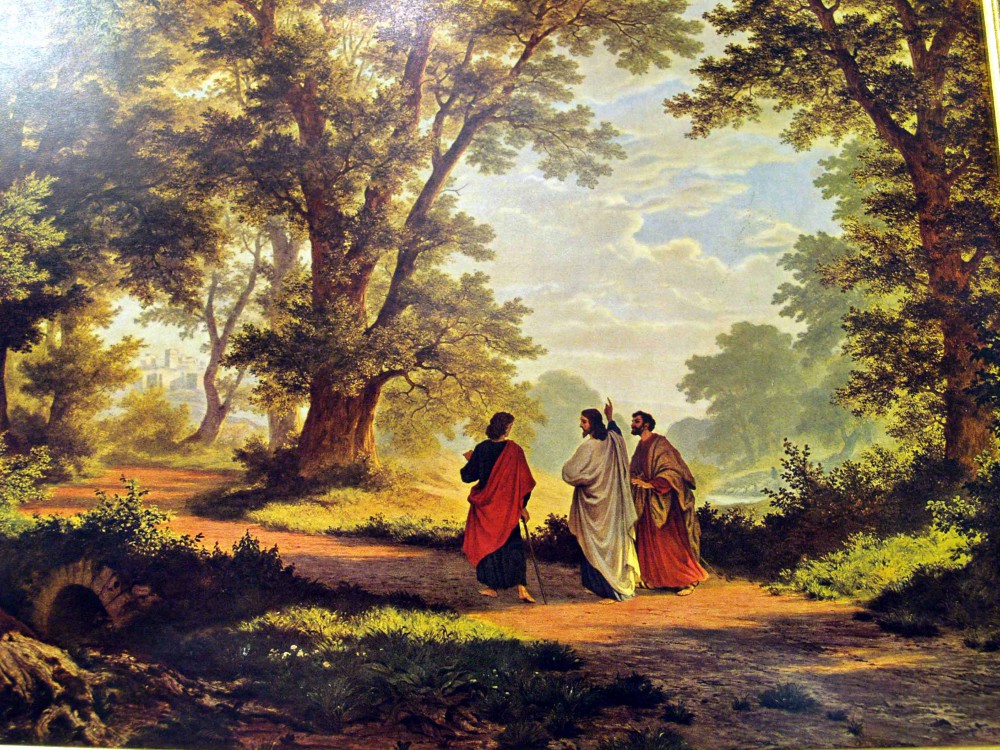
Luke 24:13-35

After Jesus’ death, the two disciples who left Jerusalem to go to Emmaus needed to share their sorrow and confusion with Jesus. As they unknowingly shared and retold their story to the Risen Jesus, Jesus opened their hearts to the mystery of grace at work in their lives to the point that they were able to understand their time with Jesus in a new way, and eventually recognize Jesus with them in the breaking of the bread.

Follow the steps for Lectio Divina in praying with the beautiful story of Jesus’ Resurrection appearance to the disciples on the way to Emmaus. After your prayer, you may find the following reflection questions helpful:

1. Imagine that you are one of the disciples walking on the road to Emmaus, and you are joined by a mysterious, trustworthy Stranger. Share with him your most recent experience of being angry, betrayed, discouraged, grieving, or lost. How does it feel to tell Jesus how you feel? Does Jesus say something to you?

2. Have you ever had an experience of prayer that set you on fire? How have you allowed that fire to burn, grow, and set your life alight?    

3. The disciples didn’t recognize Jesus on the road. When have you been surprised by God? Where might God be standing in your life right now, or walking alongside you, but unrecognized?

Praying with Our Past: Shadows & Mercy

“Salvation history” is how God is at work in the lives of the People of God. Each of us has our own personal salvation history. From time to time, we need to genuinely bring our history to God because our past is such an important part of who we we have become. Praying with our history is not about remembering our past for its own sake, but so that we can discover God’s faithful presence throughout our lives.

When we reflect on our personal history, two things are likely to happen: we experience resistance, and/or we begin to see patterns in our life.

1) We may experience resistance. Perhaps we fear we will be overwhelmed by the pain, suffering, or sinfulness of our lives. It may be too difficult to think about certain times in our lives. If we find great resistance, offer that resistance to the Lord. We need to be gentle with ourselves—we can do this a little at a time, or perhaps simply leave aside the most difficult part of our personal history until we feel ready to bring it to prayer.

Our favorite Old Testament story can be helpful at this point. Very often, the best stories from the Old Testament are about a time of failure, weakness, or infidelity on the part of God’s people. And yet in this darkness, God reveals over and over again his faithful love for his people.

When we have the courage to face the pain or darkness of our past, we receive the grace to experience God’s love, mercy, and forgiveness. Along with many spiritual writers, Father Rupnik agrees that the experience of God’s mercy is the foundational spiritual experience. It is God’s love that shapes us into his people, that places us in his story of salvation. When we recognize that we are truly unworthy, we can discover that God loves us as we are!

Looking back on our life’s journey can help us to see our past more clearly, but the goal isn’t to get lost—or stuck—in our past. Instead, we seek to discover and cherish the ways God has worked in our lives, our own sacred memories. Praying with our past—even the difficult moments—we can allow our  foundational experiences with God to take root in us, nurture our spiritual lives, and build our relationship with God.

When we are praying with difficult experiences in our past, it’s helpful to remember:

* Be gentle with ourselves. If something is too painful to remember, we can wait until we’re ready, until it’s the right time. We can also choose to pray with it with the help of someone we trust, whether a friend, mentor, or counselor.

* God doesn’t will evil for us or for anyone. If we were sinned against, or chose to sin against others—these were not and are not God’s direct will for us. But, just as God turned the most evil and tragic event in all of human history (the crucifixion of his only Son) into the means of the Redemption of all humanity, so God can take any circumstance of our lives—no matter how bad—and bring good out of it. When we pray with painful events from our past, we do so in the hope of discovering (or re-discovering) God’s faithful love. If we cannot see his love, we can make an act of trust in his love, and then pray for the grace to see how God has loved us.

* Focus not on the suffering but on God’s presence. We survived it—how? How we have healed or grown from it? How have we learned from it? Is God inviting us to heal further? Might God be inviting me to use that painful circumstance to remember that God is also mysteriously present in the pain or difficulty that we’re undergoing right now?

To Pray With

  • Pray with Psalm 139.
  • After you have prayed with Psalm 139, write your own version of the psalm. How would you describe how God has been with you and saved you in your life? (For an unusual example, read Francis Thompson’s famous poem, “The Hound of Heaven.”) What image would you use to describe how God acts in your life?

Praying with Your Story

Rembrandt [Public domain], via Wikimedia Commons. (One of my favorite stories from the Old Testament: Jacob Wrestling with the Angel)

Rembrandt [Public domain], via Wikimedia Commons. (One of my favorite stories from the Old Testament: Jacob Wrestling with the Angel)

Just as it is important to “begin where you are,” it can also be helpful from time to time to look back over your life and pray with where you have come from. Even if you are just starting to seek a relationship with God, God has been with you up to this point, even though you may not have recognized his presence. To understand God’s invitations, it is helpful to understand how he has been at work in your life so far.

Every day promises a new revelation of God’s love, yet our God of surprises is also consistent in the ways he works with us. God knows us better than we know ourselves, and so he works with us and within us in the ways that help us to grow, to live in always greater love and greater freedom.

In the powerful film, Freedom Writers, a new teacher at a poor inner-city high school tries to create a learning environment for the students whose worlds have been constantly rocked with racial violence. To help the recalcitrant students recognize their common humanity, she creatively has them share their stories by playing a simple “line game:” If something she says is true about them, they step toward the line that runs down the center of the classroom. Gradually, she leads them from the ordinary (who likes a particular song) to the painful: How many have lost a loved one to gang violence. As the students start to share bits of their stories with their teacher and with each other—simply by stepping toward the line—everything begins to change. The classroom is transformed from a tense potential war zone into a place of community, sharing, learning, and friendships.

Imagine how powerful it would be for us to share our stories with God. The next few posts will encourage us to do just that.

Pen_UncappedTo Journal

A) What is one of your favorite stories from the Old Testament? Why is it a favorite?

B) Can you see a connection between your story and the Old Testament story that you chose? How do you identify with the people in the story? What touches you about the action of God in the story?

How To Discover the Holy Spirit in the “Setting” of Our Lives

If God wants us to begin our discernment where we are, then another helpful thing we can do is to reflect a bit about the “setting” of our lives, our particular world—the concrete circumstances in which we live.

There will always be some things about the circumstances of our lives that we cannot change:

  • Aspects of our own  personality
  • Our families and the people we share our lives with—our primary commitments
  • Our history (although we can change the way we understand our past)

But even though we cannot change them, it’s helpful to consider our situation, to accept where we are, and to actively seek the Lord’s invitations within this “setting” of our lives that he shares with us.

Other circumstances of our lives may be relatively permanent, or we may be able to change them over time, if we want to or feel we are called to:

  • The responsibilities that we have committed to
  • Where we live
  • Our relationships with the people we share our lives with
  • Our training/the kind of work we do/our vocational commitments

Finally, there are many things in our lives that we can change—our behavior, attitudes, and choices; how we interact with others; how much time we spend in certain activities; what we give priority to each day, etc. But before making any changes, it’s helpful to first understand and acknowledge where we are, what’s going well and what we’re struggling with or longing for.

04G

When we pray to the Most Holy Trinity, we often do so by distinguishing the roles of the Persons of the Most Blessed Trinity in our world. If we praise the Father as Creative Love, the Son as the Beloved Word of the Father, then we might pray to the Holy Spirit as the Embrace between Father and Son. This holy, eternal Embrace, the Holy Spirit, extends outside the Trinity into the lives of God’s beloved people. The Holy Spirit embraces us in our lives, in the concrete situations in which we live. When Saint Paul tries to explain God’s presence in the world to non-believing Greeks, he speaks of God as the One in whom we live and move and have our being (Acts 17:28). Isn’t that an apt description of the Holy Spirit as the One embracing us, within and through the context of our lives?

A. To Pray With

Below is a series of questions about the setting or circumstances of your life that you may wish to journal about or pray with. As we pray with these questions, we want to remember that this setting of the story of our lives is the realm of the Holy Spirit, who works in and through all the particulars and details of our life. God is active in the moments, in the day-to-day, in the concrete details of our lives. These questions can help us to recognize how the Spirit is at work in our lives as they are—where are his invitations, his signs of faithful love, his challenges? As we begin to pray with the circumstances of our lives, we ask for the light of the Holy Spirit so that we can contemplate our lives with the eyes of Christ, with his loving gaze.

Here are some questions to pray over:

  • Where am I?
  • What are the circumstances in which I find myself?
  • What do I love about my life?
  • What do I struggle with or find not working for me?
  • What do I long for?
  • How is God present in my life?
  • How might God be speaking to me through the circumstances of my life?

B. To Pray & Journal About

While there are some things about my life that I cannot change, there are many ways that I can improve my circumstances to grow spiritually, to be healthier, to foster personal growth, to more fully live the mission God has entrusted to me. In another time of prayer, reflect on these two questions, praying the second question especially in the light of the Holy Spirit, and asking for his light and for clarity:

1. What insights have I received about myself and my life?

2. How is God speaking to me through the circumstances of my life right now: encouraging me, blessing me, inviting me, challenging me to grow?

“Supporting Characters” in Our Discernment

02K  (GSReduced)In any story, we find supporting characters. In our discernment—actually throughout our entire spiritual journey—we also have “supporting characters”—people in our lives who walk with us on our journey, even if just for a time. It’s important to remember that not everyone shares our same goals.

When we write a story, we are need to be reminded that each character has:

          Their own goals, wants, and needs

           Their own arc or story of growth

This means they may or may not share our goals, which will affect the support they are able to give us on our discernment journey. In some cases, someone who is important to us may not be able to offer us any direct support, but their input or their care for us may still help us in our discernment.

From a story perspective, here are some of the key roles that people take on a hero’s journey (which is akin to a discernment journey):

  • Mentor or guide. (Think: John Newton to William Wilberforce in Amazing Grace, or Jor-El—Superman’s father—to Superman in any Superman films. In the TV series Smallville, the very human Jonathan Kent is an awesome mentor to the teenaged Clark Kent, aka Superman-in-the-making.) A mentor with a lot of spiritual experience, who know how to share both human and spiritual wisdom, can be invaluable in our discernment: their guidance, their support of our pursuing a spiritual path, and the gift of their wisdom and insights as applied to our lives.  Ideally, when we realize that we are entering a period of discernment about something “big” in our lives—a career shift, a move, a vocation—we would seek out a spiritual director to accompany us. (I already posted some helpful tips when looking for a spiritual director here.) One of the best things about a mentor is the freedom from pressure and expectations that they offer because they do not have a vested interest in our decision. But others can also hold the role of mentor, offering us guidance and spiritual wisdom, such as our parents, a trusted teacher or counselor, or a wise friend.
  • Friend/Sidekick. (Think: the Scarecrow, Tin Man, and Lion to Dorothy in The Wizard of Oz.) We all need friends who support us. The ideal friend in our discernment would also be a person of faith, but any close friend who knows us well and wants our happiness can be a tremendous support to our discernment. Good friends can support us in so many ways: they encourage us to take a step forward when we feel intimidated, listen to our confidences without betraying our trust, or even “cover” for us if we go away for a weekend retreat. A true friend will put aside his or her own ego and needs and let our journey and needs take center stage for a while. (A good sidekick does the same, and actively helps us on our journey.)
  • Trickster. (Think: Captain Jack Sparrow in any Pirates of the Caribbean film; the monkey is a great trickster too!) This is someone whose response to us is unexpected, who doesn’t share our goals and doesn’t necessarily want our happiness. A trickster may seem to oppose us or our goals and may actually be an antagonist, but often the trickster simply has an agenda and point of view that’s very different from ours. We can usually learn something about ourselves from the trickster, who is usually different from what he or she appears to be, and can “stir things up” that we may find frustrating or annoying, but ultimately can help us to come to a better understanding of ourselves and our inner resistance, and can sometimes even help us move forward on our journey.
  • Threshold Guardian. (Think: the cave on Dagobah in The Empire Strikes Back where Luke faces Darth Vader, or Shifu in Kung Fu Panda.) Especially for stories that follow the pattern of the hero’s quest (which finds some of its roots in Christianity), the “threshold guardian” is sometimes a person, a test, or an obstacle that tests the protagonist’s resolve, preparing them for the challenges that he or she  will face during the rest of the journey. This “initial resistance” can even be interior.
  • Rival. (Think: Eric Liddell and Harold Abrahams in Chariots of Fire, or Woody and Bud Lightyear in Toy Story) If we are in a discernment situation with rivals (such as vying for the same position), our rival(s) can be very helpful in pushing us to do our best, to reach beyond our perceived limits. In a healthy rivalry, our rivals seek the same goals as we do and thus have a unique perspective about our situation. They may occasionally offer a valuable insight or appreciation of our efforts, and may even offer help. (Of course, rivalry is not always a healthy approach to achieving a goal, and is not usually a helpful approach to discernment. It’s always helpful to remember that rivalry is very different from enmity…and especially important to remember that as a follower of Christ.)

Pen_Uncapped

To Journal About

Take a moment to think about the people in your life.

  • Do you have support for your life of faith?
  • Who is supporting you on your discernment journey?
  • What kind of support might you still need to seek?


To Share or Not To Share? Finding Support for Our Discernment

04FCompressedAs we grow in the spiritual life, it’s important to find a community of people who can support us on our journey towards holiness. St. Paul’s image of the Church as the Body of Christ is relevant here—we make our journey towards heaven together. Discernment—coming to know God’s will for us—is a part of our journey, and it’s not easy. Friends or companions who also view life through eyes of faith, and who can share their discernment with us, can be invaluable.

That doesn’t mean we cut off our relationships with everyone else, but it does mean that we develop ways to support our discernment, which includes finding people who share our perspective of faith.

The  more important our discernment is to our life, the more thought we should give to whom we share it with and when. In early stages, we may wish to keep our discernment mostly to ourselves, sharing it only with a spiritual director or other trusted mentor, and perhaps a really close friend. Knowing that an important part of discernment is to become free—free of the pressures that could prevent us from hearing or following God’s call—should shape when and how we decide to share our discernment. Early on, everything feels very tentative. Because we haven’t “worked through” even our own desires and thoughts, we can be more easily influenced by the strong reactions of others. We may even be influenced to prematurely end our discernment.

Sadly, I’ve personally witnessed this when a young person expresses a desire to discern religious life or the priesthood. Parents—sometimes even faithful Catholics—immediately put pressure on their child to give up any idea of following a vocation to religious life or priesthood. In some cases, the parents might clearly see that their child isn’t called to the consecrated or priestly life. But most of the time, the parents are reacting because of their own desires, and this impinges on their child’s freedom. Ideally,  a young person would share their vocational discernment (or any other big discernment) with their parents at an early stage—because of their youth and need for guidance, and because of their parents’ knowledge of them. But sometimes,  to feel truly free, the young person has to discern without their parents’ support, and share their discernment journey only as they receive more clarity, as it nears its conclusion.

The further we go in our discernment, the stronger our desire grows to do God’s will in this particular regard. Even though we do not know how we are called, this time of strength and greater commitment to God’s will is a helpful time to share our discernment with a wider circle. Our friends and family know us well, and they may be able to articulate things about us or our situation that we find helpful to our discernment. Their expressions of support can also be invaluable as we come face-to-face to our own inner resistance.

If a friend or family member truly loves us, they will try to understand what is important to us. They won’t demand that we follow their path, but our own. A friend who truly loves us wants what’s best for us, and gives us the freedom to seek it. This kind of friend can be a tremendous support on our journey of discernment even if they don’t have any faith in God at all.

When we look back at people who have accomplished great things in history, we discover that they were often surrounded by other notable people. For example, great writers often hang out with other great writers. (Look at the Inklings.) Great artists know other great artists. And the more I’ve researched the lives of the saints, I’ve discovered how often great saints know—or are even good friends with—other great saints.

On our spiritual journey, we don’t want to underestimate the importance of spiritual friendship and spiritual support. We may find it at our parish, in a prayer group or lay movement, on a retreat, in a particular ministry, or in an affiliation with a religious community. Our spiritual director may be able to recommend a group that can nurture us spiritually. We all need spiritual support—not just for this discernment but for your entire spiritual journey.

What Makes Our Hearts Tick…

04A 3 choiceThe kind of “deep” desires that we refer to here doesn’t necessarily mean our strongest desires, but rather, the most urgent, the most all-encompassing of our identity. The deeper we go and the more personal our desires are, the more universal they usually are.

Being loved is hugely important to each of us—it’s a deep need and desire. But our deepest fulfillment is not found in being loved, but in loving. True love is giving one’s self away, a self that no longer clings to selfishness, but puts the beloved one(s) first. As we come to a fuller understanding of who we are, we also start to see our deepest needs and desires, in all their beauty, urgency and intensity—desires and needs that are not determined by sin and egoism but have been placed in our hearts by God. It is in these deepest needs and desires that we can glimpse God’s “dreams” for us, because God often speaks to us through them.

A popular paraphrase of Saint Augustine is: “Love, and do what you will!” Psalm 37:4 goes even further, “Take delight in the Lord, and he will give you the desires of your heart” (NRSV). When our hearts—and thus our entire beings—are directed towards God, then God can use our heart’s desire to draw us to himself.

Each of us is unique, unrepeatable, created out of love and for Love. Discovering and living fully God’s call for us is the key to our happiness—God knows the deep desires of our hearts better than we do. God calls us to be holy in a way that makes our hearts tick, and our personalities click.

Coming to understand ourselves and the true desires of our hearts are important parts of our “character arc” on our discernment journey. Growing in this self-understanding will help us to eventually respond to God wholeheartedly because we will see how our desires are in harmony with God’s desires for us.

Discerning with Deep Despires


04A 2As we explore how God might be speaking through our deep desires, it might be helpful to describe “deep desires” a little more, as compared to other kinds of desires:

  • a sudden sharp craving for ice cream on a hot day
  • a yearning to spend time with a loved one
  • a fancy for a new gadget
  • a pining for some peaceful moments in the midst of a busy day or week
  • a physical attraction to someone we find good-looking
  • an impulsive “itch” to clean the house or do something else we find immediately satisfying
  • a passionate love for our spouse
  • a longing to be immersed in creativity—writing, music, art
  • a yearning for a real, profound relationship with God
  • a devotion to someone(s) else; a dedicated giving of ourselves in love to someone(s) in need

We all have many kinds of desires every day. Because we are body and soul, our deepest desires often manifest themselves physically even when the desire isn’t for something material. We may say that we “ache” for something, or experience restlessness when a desire goes unfulfilled. Whenever we desire something, we perceive it as good. Eating unlimited chocolate feels good on some level, and so we might desire to eat two pounds of chocolate in one sitting, even though it is not actually good for us.

Our desires can be good and healthy, or they can be evil, disordered by original sin. The Catechism of the Catholic Church speaks about feelings, desires, and passions in #1768. If you are interested in exploring a bit more about the morality of feelings and desires, you may want to read up in the Catechism or other sources. (If you need references, send me an email or visit a Pauline Book & Media Center!)

Because in any discernment, we are discerning between good things (see my January 23 post on four essential principles for discernment), this blog isn’t the place to address evil desires that are sinful or lead to sin beyond the obvious fact that evil desires are to be avoided, and that God doesn’t “speak” through sinful desires.

However, for the purpose of discernment, we distinguish different kinds of desires. We look at their source, how lasting they are, how connected they are with our identity. If we feel a craving for chocolate (can you tell that I have the potential to become a choc-a-holic?), we know that is a physical desire that arises from our body—perhaps a need for certain nutrients, or a desire for the gratifying pleasure of a delicious bite. But a desire for chocolate has nothing to do with my God-given identity, and while it may arise periodically, it is not a lasting desire.

Our deep desires are longings that are profound, lasting, and entwined in our very identity. The reason that we look more carefully at how God might be speaking through deep desires is because we know that God wants our happiness, and fulfilling a deep desire often leads to happiness. Personally, the further I go in life, the more I see how my deepest desires are given to me by God.

A deep desire is something that we will long for and be passionate about for a long time…perhaps our entire lives. Many people would agree that the deepest desire of the human heart is to love and be loved. (This is definitely a God-given desire!) Since God is Love, this can be rephrased to say that the longing for God himself is the deepest desire of the human heart. In discernment, we acknowledge this deep desire for God, and we look for the specific, unique “how” God is calling me personally, to love and be loved in my daily life.

We all desire love, goodness, beauty, etc. Getting to know our deep desires and the unique “how” we feel called to fulfill them is really helpful and important to living God’s invitations. Here is a personal example from my own life. All human beings desire not only beauty, but to express beauty. For me, that desire to express beauty is specified in one way by my deep desire to write. I’ve wanted to write for a long time, but it took me years to discern that my desire to write was not just a personal desire but also a call from God. Eventually, my community confirmed my discernment when sisters and superiors affirmed my written works and gave me writing assignments.

I still love other forms of beauty, and I dabble in music, but writing seems to come from (and go back to) the core of who I am.

To Pray & Journal With

  • Pray with Psalm 63: “My soul thirsts for you.”
  • How do you experience your longing for God?
  • What are your deepest desires?

Key Discernment Questions: Who am I & What do I want?

We continue to use the storytelling lens to reflect on the importance of coming to know ourselves and our motivations.

hand-534867_1280Our God-given identity is often expressed in our deepest desires and needs, as well as by our choices and actions. Knowing that we are made in the image of God as well as weak and sinful, it’s crucial that we come to know ourselves and our inner life well. This includes knowing our motivations, too. For example, if we are kind to someone, we can have any of the following motivations—or a mix of them—for that one act of kindness:

  • trying to please the person who is with us
  • hope to get something back from the person we are being kind to
  • a sense of duty
  • the genuine virtue of love

Many times, if we are honest with ourselves, our motivations will be mixed. No matter how simple or complex they are, when we know our motivations, we are better able to freely choose what will make us deeply happy.

* * *

Here is a rather extreme example. In the Middle Ages, sometimes women entered religious life because it seemed a path to greater independence in a time when women’s equality with men was not commonly understood or respected, especially married women. Circumstances often pushed women to seek the relative freedom of religious life even if they weren’t called. And a woman in such a situation might feel attracted to life in the convent. If she didn’t know herself well, she might have thought her attraction to the convent was a call from God rather then her own need to escape a loveless marriage or oppressive circumstances. Trapped in difficult situations, many women who weren’t called opted for religious life. As a result, some convents became quite lax because many of the sisters were not following a call from God but seeking escape.

Our deepest needs and desires—the ones that have been placed in us by God—will motivate us and shape our entire lives.

* * *

My own personality was and still is shaped by a deep need for meaning and purpose in my life. I think I’ve always been this way, and to this day, my need for purpose and meaning continues to be very important to me. I know that this need can even make me see, a bit more serious than other people—at least on the surface. When I visited the sisters as a teenager, I was drawn to them partly because I thought that living their apostolate of contemplative prayer and active mission would give my life more meaning.  (When I got home, I tried to live a little bit of a convent schedule, and ended up frustrated and discouraged!)

Ultimately, my need for meaning and purpose in life became one of my main motivations for entering religious life, and I think it continues to influence me—even in difficult moments— because I can find joy as long as I continue to feel that I’m living my life’s purpose—drawing closer to Christ and sharing his love with the world.

Pen_Uncapped

To Journal About

Think back on some of the major choices you’ve made in your life. If you can, pick three. For each one, reflect on the following questions:

* What was the driving factor or motivation in each decision that you made?

* What inner needs or desires were you seeking to fulfill by making that decision?