Best Attitude for “Big” Discernments: Do Not Be Afraid!

Loantaka_Brook_Reservation_bikeway_horse_path_and_stream_and_reflectionsLiving in a spirit of discernment is a wonderful spiritual attitude to cultivate and grow in daily. One of the benefits of living with a discerning heart is that, when the time comes to make a big decision in our lives, we have the tools of discernment at hand to help us discover God’s will for us.

(Just a note: if you are jumping into this blog/book and starting directly here because you are in the midst of a big discernment, you may wish to go back and read a couple earlier posts, especially “Four Essentials Principles for Discernment,” which give a context to the exploration of specific kinds of discernment that follows.)

In books and classes about writing, writers are taught how every good story has key moments, or turning points, when the protagonist must make a choice that will change the direction of the entire story.

In our lives, we have—or will come to—the same kind of moments. Choosing a course of study, taking a new job, finding a place to live, following our vocation, committing to our marriage partner, or any other big change in our lives—these are key turning points that will affect our lives from this point on. As disciples of Christ, we want to seek God’s will at these important moments. But how do we do that?

Growing in our relationship with God and living in a spirit of discernment are the best long-term preparation we can make, but there are also concrete things we can do in the short-term that will help us at these key moments of life. Additional concerns or constraints bind us in these moments, especially when we are facing a big decision that could require big changes. In these next few posts, we’ll look at turning points of our lives, and then specifically at vocational discernment, since discerning our vocation is likely one of the most important discernments we will ever make.

* * *

Pope St. John Paul II often repeated Jesus’ words, “Do not be afraid!” We do not need to be afraid because, if we are seeking God’s will, God will guide us. In the Scriptures, God might seem to withdraw from his people but only to teach them a lesson. God never actually abandons his people who seek him. Certainly if we are trying to live God’s plan for us, God will be with us, giving us all the help that we need. We can take courage, knowing that God has a loving plan for us. When we are in the midst of the stress of making a big decision, the most important attitude to have is trust in the Lord. As we allow the Lord’s love for us to banish our fear, we become even more free to hear clearly God’s loving call.

Discernment Resources: For Further Reading

Several months ago, a reader noted that my favorite book about discernment, Discernment: Acquiring the Heart of God by Marko Ivan Rupnkik, SJ, is no longer available. Sadly, this is true—even used copies are quite expensive! None of the books I am going to recommend here—and there are many good ones—quite replace Father Rupnik’s book in scope and depth in one volume. However, there are some great resources out there that you can read (while waiting for my book, based on this blog, of course!)
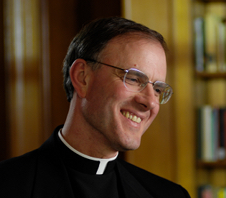
frtimsmallerFather Timothy Gallagher, OMV, shares his expertise on discernment and Ignatian spirituality in a style that is both lucid and deep. He is by far my favorite author on discernment! Father’s story-driven style makes it easy to understand how to apply Ignatian principles to our own lives, even when he is exploring more complex material. All of his books are excellent and helpful for growing in the spiritual art of discernment. The first book that I’d recommend is:

discerningthewillofgod_178.246Discerning the Will of God: An Ignatian Guide to Decision Making
by Father Timothy M. Gallagher, OMV
A wonderful source of practical wisdom for seeking God’s will, based on the writings of St. Ignatius of Loyola. Full of examples and stories, Father Timothy Gallagher makes the wisdom of Saint Ignatius of Loyola accessible to the everyday person. In this book, he goes through Ignatius’s three “modes” of discernment, which are extremely helpful for us to see how God works in our lives in different ways. Not only does Father take us through the process of discerning in each mode, he begins the book by spending a significant amount of time showing us how to prepare to discern: the “foundation” of God’s loving will for us, an openness to God’s will, and the means to use in our preparation, such as the Eucharist, the Word of God, and spiritual direction.

If you’re looking for another, deeply Ignatian perspective on much of the material covered here in this blog, Discerning the Will of God is a great choice. (Available at any Pauline Books & Media Center in the USA or Toronto, Canada, and online at frtimothygallagher.org)

Awareness that God has created us out of love and ceaselessly offers that love us; a consequent thirst for communion of wills with the one who so deeply loves us; the consciousness that each of us can say with John Henry Newman, ‘He has committed some work to me which He has not committed to another’; the desire to live like Jesus who always did the will of the One who sent him: This is the foundation of discernment. – Discerning the Will of God: An Ignatian Guide to Christian Decision Making, pp. 29-30

discernmentofspirits_178.246The Discernment of Spirits: An Ignatian Guide to Everyday Living
by Father Timothy M. Gallagher, OMV
The Discernment of Spirits takes a deeper look at discernment by exploring the Rules of Discernment developed by St. Ignatius of Loyola, which are foundational to living Ignatian spirituality. This material is more complex than Discerning the Will of God, but Father Timothy makes it accessible through his clear explanations and examples of contemporary stories. A good follow-up to the previous book for those interested in going deeper into discerning God’s will in daily life, and how God helps us to discern through desolation and consolation. I highly recommend The Discernment of Spirits, which the website states is Father’s most popular book.

Father Gallagher has  written a number of other books on Ignatian spirituality—including books on the Examen prayer, on praying with the Word of God, and further exploring of Ignatius’s Rules of Discernment He wisely provides a guide to all six of his books on Ignatian spirituality, which you can find by scrolling down this page: frtimothygallagher.org/books.

called-to-lifeCalled to Life by Father Jacques Philippe
This small book that provides a solid foundation for discerning one’s vocation and for discernment in every day life, especially developing our relationship with God, God’s desire for our happiness, our vocation as human beings, and listening to the call of God in the Word of God. This is a good start for someone on the path of discernment. Father Jacques Phillippe is a priest in the Community of the Beatitudes, and has become popular both in his accessible writings and retreats.

Every authentic vocation is a calling to live ever more fully. We should be wary of callings that may mask refusal to engage life, fear of love, flight from the body or feelings, or a lack of acceptance of human existence as it is. Accepting one’s calling should mean choosing a more intense, abundant way of life, not fear-driving flight, or a disguised choice of death, as can happen with some poorly discerned religious commitments.  – Called to Life, pp. 24-25
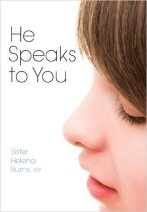
HeSpeaksToYouHe Speaks to You by Sr. Helena Burns, FSP
A daily meditation book that assists young women to enter into a daily conversation with Jesus about their lives, according to themes that draw the reader ever deeper into a personal relationship with Jesus. Monthly themes include: His Love, His Life, His Cross, His Will, His Family, His Majesty, His Ways, etc. The month of April (His Will), is dedicated to discernment, vocation and freedom. Sister Helena is a sister of my community, the Daughters of Saint Paul, and, in addition to her wonderful media work and her frequent presentations on the Theology of the Body, she has also dedicated years to assisting young women in discerning their call in life.

(From Jesus): My written word is your sure guide. It is enlightenment, consolation, and most of all, My love letter to you.

‘Thy word is a lamp to my feet and light to my path’ (Psalm 119:105).

God is always communicating. Always. If we can’t hear Him, perhaps we need to open our ears a little more! Perhaps we don’t like what He says and so we look for a different word from Him. Thus, He seems silent. The Apostle John says that all the books in the world couldn’t hold what God has done (and is doing and saying right now)!

‘I know the plans I have for you…to give you a future and a hope’ (Jer. 29:11). What clues do you have from God’s word about your future?

Dear Jesus, even Your “hard sayings” are good news because they have the power to heal and redeem me. Help me always experience Your word as good, helping me see the big picture. – He Speaks to You, p. 98 (April 5)

Two more titles that you might find helpful are:

The Art of Discernment: Making Good Decisions in Your World of Choices by Stefan Kiechle
A basic, practical, and easy-to-use book about discernment that is focused on decision-making. The approach is Ignatian and includes  many quotes from people in discernment or in the middle of making a decision.

Close to the Heart: A Practical Approach to Personal Prayer by Margaret Silf
Author Margaret Silf writes about Ignatian spirituality and Christian prayer for the every day person, from a “real life” perspective. Along with prayer, discernment is beautifully covered in this book that helps the reader who is just starting out in the spiritual life to grow in their relationship with Christ. (Note: Although Margaret Silf no longer considers herself Catholic but Christian, her way of making Ignatian spirituality accessible for the everyday person is still widely regarded.)

Will My Family Disapprove If I Discern Consecrated Life?

Ferguson Slide by Eeekster (own work) [CC by 3.0]

One response that came up high in the results of the poll, What’s the Biggest Obstacle to Considering Consecrated Life, was a written-in answer that had a common thread:

  • Fear of what others (especially family) will think of me
  • Fear of disappointing family or parents
  • Fear of disapproval or lack of understanding

All of these answers are about what others think and expect of us, especially family and loved ones. This fear is very understandable. But, being overly concerned or fearful about others’ opinions impinges on our freedom to discern. Yet in our discernments we are to consult with those who know us well. How are we supposed to take into account our family’s and friends’ advice when we are discerning something that they don’t expect, such as an unusual vocational choice? Should we even consult them?

Several Factors To Consider
1) Discerning our vocation is sacred, and if we truly feel that we might be called to religious life or priesthood, it’s important to discern it without letting our families’ or friends’ opinions prevent us from doing so. Our vocation is a sacred calling that is too important to let the resistance or disapproval of family and friends stand in the way of even exploring it. This doesn’t make it easy. But it is very freeing to seek our true calling, and if God is calling us to religious life or priesthood, he will give us the grace to work through our fears and all other obstacles.

2) When we are discerning, the people we seek advice from should above all be living a spiritual life, otherwise they may not understand or be able to support us in seeking God’s will. (Other qualities, such as wisdom and knowing us well, are helpful. But above all, they must also desire that we follow God’s will.)

3) Seeking advice or counsel is not the same as seeking approval. In consulting others, we are looking for greater knowledge and insight about ourselves, our situation, and how God is inviting us, but we are not seeking to please the person we are consulting with.

4) To know our fears when we discern is really helpful because fear can help us to reflect and to bring our discernment to prayer. However, fear in itself is not a sufficient motivation to decide whether or not to discern something, especially when it’s something as important as a vocation. Instead, we can make our fear part of our discernment by exploring why we are afraid, and then, offering our fears to the Lord and moving forward.

If we feel the need to discern something which we know someone important in our life (such as a parent or friend) is probably going to disapprove, then we need to seek greater interior freedom. Becoming free is the hardest part of discerning! In these cases, it is really important to detach ourselves from others’ opinions about our discernment, so that we don’t allow fear to control us and so that we can more freely listen to God’s invitation. This detachment is often a gradual journey that happens as we discern and God’s call becomes clearer to us.

Sorting Through Others’ Opinions
Sorting through others’ opinions—whether favorable or unfavorable to our discernment—can sometimes be helpful in detaching ourselves from them. We may want to ask ourselves a few questions:

A) Why do we think they would oppose a particular decision? Are we just unsure, or are we pretty certain that they will be disappointed? Will the lack of support be permanent, or is it just that what we are discerning is new, and they will need time to get used to the idea?

B) If we are pretty sure that this person(s) will not understand or be disappointed in our decision, do we know why? For example, some parents are hesitant about their daughter becoming a sister because they think they will never see her again, and they love their daughter and want to stay close to her. (Different congregations have different practices about their sisters visiting their families, so this particular concern may not even be real.) At other times, a parent might resist a child trying to follow a certain career (such as becoming an actor or an artist) because they know how hard it is to earn a living in the arts, and they want their child to have security.

These kinds of questions can help us to see past our own fears into the real concerns of our loved ones—concerns that we need to think about and perhaps address with them, if and when we tell them about our discernment.

Discerning Our Vocation Is Sacred
Ideally, we’d want to share our vocational discernment at least in part with our family, because we want our family’s understanding and support throughout our life. But sometimes a parent or family member will be so resistant to a particular vocation that we simply need to wait to tell them about it until after we have completed our discernment.

Our vocation is a sacred calling that is too important to let the resistance or disapproval of family and friends stand in the way. Countless priests, brothers, and sisters had to go against their parents’ wishes to follow their vocation. (The family of Saint Thomas Aquinas’s family kidnapped and imprisoned him to prevent him from following his vocation in the Dominican Order.) This is not an easy path to walk, but if we possess sufficient maturity and have discerned well, it is more important to follow God’s call than to give in to our family’s opinions. Jesus himself called his disciples to leave their parents and families behind to follow him.

St. John Paul II had this to say about following one’s vocation:

“Do not be afraid of the radicalness of Christ’s demands, because Jesus, who loved us first, is prepared to give himself to you, as well as asking of you. If he asks much of you, it is because he knows you can give much.”                                                                                                                – Sept. 8, 1992

Photo credit: Ferguson Slide by Eeekster (own work) used under Creative Commons Attribution 3.0 license

Odds & Ends & Discernment Tips

After posting about what to do when we feel unworthy about following our call, I came across the story of Sr. Marlyn Evangelina Monge, another Daughter of Saint Paul. Like me, she wondered if she was “worthy” to become a sister. I hope you enjoy it.

On her blog, Pursued by Truth, Sr. Theresa Aletheia highlights Sr. Alicia, who won on the show Chopped this week! Find out more about this wonderful sister, her community, the Franciscans of the Eucharist, and the good work that they do in Chicago. Soon, you will also find on this same blogpost a link to the Chopped! show in which Sr. Alicia won the cooking competition!

Here’s one more “Discernment Tip” Video from Sr. Margaret Michael. This tip is one that I don’t hear too often–and I think it’s a great one! (Hmm…another post for my blog/book.)


* * *

Although it’s probably hard to tell, I’ve reached the end of another chapter. This chapter was about “Helps and Obstacles Along the Way of Discernment.” Before I move on to specific moments of discernment (turning points in our lives), are there any other obstacles or helps to discernment that you’d like to see discussed here? Feel free to send me an email or post a comment.

I have only one more pending question to answer: the request for recommendations for books about discernment, since the favorite that I’d recommended has gone out of print. This answer is taking longer because I’m  working on several book reviews, which hopefully I can post soon. So, if you’ve sent me a question and I haven’t it answered it yet, I apologize because I’ve lost it! Please feel free to send it again. I recently reorganized my email, so hopefully I won’t lose any more questions or comments in the future!

Free To Discern

06P pixabay 3As an American, I consider freedom to be hugely important. How important to you is your freedom? Who is the freest person you know? How would you define freedom?

* * *

Freedom is not doing whatever we want, without any consequences. Unfortunately, this is often how people think of it today. Earlier in this blog in the Lectio Divina: Free in Christ, I tried to start unpacking what true freedom really is:

Sometimes we equate freedom with a lack of external constraints–such as rules, or walls, or consequences. But true freedom is really about a lack of inner constraints–from unhealthy attachments and addictions, from anger, from selfishness, from fear; above all, from sin.

Freedom is not an escape from, but an ability to choose for. Freedom truly is the ability to “Love, and do what you want,” but the key is that “what you want” is a pure desire, free from self-love and directed towards God.

Saints are truly free persons who are able to give themselves completely in love to others because they are confident in God’s love for them. In the Garden of Gethsemane, Jesus broke out of the prison of fear to be fully free: he freely chose to embrace the will of his Father, out of complete confidence in his Father and out of the love for humanity which he shared with his Father.

It is important to grow in freedom as we are discerning. Otherwise the voices of our own ego or selfish desires can drown out God’s voice, no matter how God speaks to us. But learning to live in a spirit of discernment—like any aspect of the spiritual life—is gradual. A good discernment doesn’t require perfect freedom. However, we should at least try to recognize what our desires and attachments are in the area of this particular discernment, so that we can strive to let go of them as much as humanly possible. Even healthy, good desires and attachments—such as our satisfaction in a particular aspect of the Church’s mission, or our love for our family—can become impediments to true freedom if we make them more important than the will of God.

Pen_Uncapped

To Journal About

What is your vision of freedom?

What are the biggest obstacles to freedom that you face in your current discernment?

After you have journaled about these questions, bring your answers and your desires to Jesus in prayer.

Discernment Tips for National Vocation Awareness Week

Sr. Margaret Michael Gillis, Vocations Director for the Daughters of St. Paul, is offering a daily discernment tip on video for National Vocations Awareness Week. Her first tip is an invitation to pray for vocations, and you may want to check out the rest through the week at the Daughters of St. Paul Facebook Page. (I’ll try to post them here as I can.)

Discerning with Mary, the Mother of Jesus

06_CC Sr Tracy

In Genesis, when God specifically promises to redeem humanity by sending the Savior, he speaks of Mary as “the woman” who is Satan’s enemy and whose Son will overcome the devil definitively. When we cultivate a relationship with Mary, the Mother of Jesus, we draw close not just to Mary but to Jesus. As our Mother, Mary wants us to be united to her Son, and she will clear the way of obstacles for us, most especially the devil’s temptations.

Many saints speak eloquently about Mary’s power over Satan and her ability to lead us to Christ. This is an excerpt from one of my favorite prayers to Mary by Blessed James Alberione:

“O Mary, grant that we may listen to, follow and love Jesus Christ the Divine Master! May sin never stain our souls consecrated to you. Immaculate Virgin, crush the head of that insidious demon of discouragement.

Live in our midst, Mary; blessed are they who dwell in your house.”
– Blessed James Alberione

In his beautiful apostolic letter On the Most Holy Rosary, Pope St. John Paul speaks about our entering into the “school” of Mary because “No one has ever devoted himself to the contemplation of the face of Christ as faithfully as Mary. The eyes of her heart already turned to him at the Annunciation, when she conceived him by the power of the Holy Spirit…. Mary lived with her eyes fixed on Christ, treasuring his every word” (On the Most Holy Rosary, nos. 10 & 11).

Mary is both a wonderful model for our discernment and a powerful intercessor so that we can receive the light of the Holy Spirit in order to “see” or contemplate Christ’s presence in our lives. Mary is not just the Mother of Jesus, but our Mother, too, and her greatest desire is to lead all of her children to her Son. Praying to Mary regularly is life-changing.

Countless Marian prayers and traditions can help us to grow in our relationship with the Blessed Mother. The Rosary is especially fruitful as a prayer to help us grow in a spirit of discernment because when we contemplate Jesus by praying the Rosary, we do so with Mary, the first and truest disciple of Jesus who most closely sought and lived the will of God. When we pray the Rosary, we meditate with Mary on Jesus’ life: how Jesus lived the will of his Father while on earth. We can also meditate on how Mary recognized and responded to God’s invitations in a spirit of faith and obedience. The subjects for meditating on the mysteries of the Rosary are endless.

The saints are eloquent about how devotion to Mary changes our lives. If you are looking for more resources on growing in your relationship with Mary, here is a short list of new titles that introduce devotion to Mary and the Rosary, and a few of the classic books on Mary that foster devotion to her.

How Does God See Us?

KONICA MINOLTA DIGITAL CAMERAA second way to grow in our true and deeper understanding of ourselves is to pray with Scripture passages that help us to understand who we are: who we are created to be, who we are called to be. From Genesis to Revelation, the Bible is full of God’s understanding of who we are, God’s love for us, God’s invitation for us to grow into “other Christs.”

If we have been praying with the Scriptures for several years or more, we might find it helpful to look back at our spiritual journey and make note of the Scripture passages that were foundational for our journey in Christ. These key Scripture passages resonated with us in part because they told us who we are in God’s eyes, and how God is inviting us to become our best selves in Christ. Picking 5 or 6 of these Scripture passages to go back to and pray with can be very helpful in reaffirming our true identity: as children of God, as disciples of Christ, as sent by the Spirit.

For those who’d like, here is a short list of passages from the Bible that affirm our identity in God, in Christ. Please add your favorite passage to this list in the comments below, and I’ll add them in!

  • Isaiah 43:1-7
    God speaks to us: “You are precious in my eyes, and honored, and I love you.”
  • Psalm 139
    “O Lord, you search me and you know me.”
  • Ephesians 1:3-10
    “He chose us in him before the world began.”
  • Ephesians 2:4-5
    “But God, who is rich in mercy, out of the great love with which he loved us, even when we were dead through our trespasses, made us alive together with Christ.”
  • Zephaniah 3:17
    “The Lord your God is in your midst,
         a warrior who gives victory;
    he will rejoice over you with gladness,
    he will renew you in his love;
    he will exult over you with loud singing.”
  • John 15:15
    “No longer do I call you servants, for the servant does not know what his master is doing; but I have called you friends, for all that I have heard from my Father I have made known to you.”
  • 1 Corinthians 6:19
    “Do you not know that your body is a temple of the Holy Spirit within you, which you have from God? You are not your own; you were bought with a price. So glorify God in your body.”
  • Ephesians 2:10
    “For we are his workmanship, created in Christ Jesus for good works, which God prepared beforehand, that we should walk in them.”
  • 1 Peter 2:9
    “But you are a chosen race, a royal priesthood, a holy nation, God’s own people, that you may declare the wonderful deeds of him who called you out of darkness into his marvelous light.”

SeeYourselfCoverFor guided meditations on discovering who we are in God’s eyes, you can check out my book, See Yourself Through God’s Eyes: 52 Meditations To Grow in Self-Esteem.  You can also check out the app (free on iTunes, .99 on GooglePlay) or other free resources here.

Discovering Our True Identity: Essential for Discerning

06 AA Sr EmmaualIf our “false self”—the self driven by sin and by a false identity—is sometimes our greatest obstacle on our discernment journey, our “true self” is one of our greatest allies in our discernment journey.

The closer we grow to Christ, the more we start to see the world, others, and ourselves, with the eyes of Christ. What is our true identity? As discussed earlier, we find our true identity in God. Two ways to come to a truer sense of ourselves immediately stand out: Seek self-knowledge and learn to see ourselves through God’s eyes.

1. Seek self-knowledge

Getting to know ourselves—without false vanity, without the shadow of sin—is true humility. Self-knowledge is often marred by two opposite tendencies—sometimes simultaneously. Either 1) we ignore our faults altogether and become prideful, attributing our gifts to ourselves rather than God, or 2) we fall into the slump of seeing ourselves too negatively, only seeing our faults and limitations.

Genuine self-knowledge comes through prayer, living reflectively (especially through the examen), and openness to discovering the truth about ourselves.

Humility is knowing ourselves as graced and weak, blessed and sinful. If we can become comfortable in this truth about ourselves, then we are much less likely to get in our own way on our discernment journey. Humility can be uncomfortable, especially when our illusory image of ourselves as overly powerful and in control is shattered. In these moments, it can be helpful to cling to God’s love, in which we can find the true anchor of our identity. Isaiah 43:4 is a great reminder: “You are precious in my sight, and honored, and I love you.”

We can pray for self-knowledge to the Holy Spirit, asking especially for the gifts of the Holy Spirit. In his Confessions, Saint Augustine offers a prayer for self-knowledge: “Let me know Thee, O Lord, who knowest me: let me know Thee, as I am known” (Confessions, Book X). The following Petitions of Saint Augustine is a beautiful and powerful prayer that is helpful to pray regularly. I’ve adapted it slightly for today’s usage.

LORD JESUS, may I know myself and know You, and desire nothing else but You.

May I hate my [false] self and love You.

May I do everything for the sake of You.

May I humble myself and exalt You.

May I think of nothing except You.

May I die to myself and live in You.

May I receive whatever happens as from You.

May I banish self and follow You, and ever desire to follow You.

May I fly from myself and fly to You, that I may deserve to be defended by You.

May I fear for myself and [be in awe of] You, and be among those who are chosen by You.

May I distrust myself and trust in You.

May I be willing to obey on account of You.

May I cling to nothing but to You.

May I be poor for the sake of You.

Look upon me that I may love You.

Call me that I may see You, and ever and ever enjoy You.  Amen.

What Do We Need To Be Freed from To Discern Well?

06Z Pixabay

One of our biggest obstacles in discerning God’s will in our life is ourselves. Because of original sin—the sin of Adam and Eve which has marked every human being—we are prone to sin. In our discernments, we want to “sort through” our desires, distinguishing between disordered desires which can lead to sin and genuine desires that well up from deep within and reflect our true identity.

Sometimes when we find ourselves in difficult situations, we’ll discover that our main difficulty is really ourselves. We might think that if we just didn’t have to deal with this situation, or this person, or this challenge, we’d be fine. And then we end up in a new situation and we find that it’s not the situation that was the problem, it’s ourselves and how we deal with the situation.

* * *

I remember one time as a younger sister when I found myself in what I thought was a really difficult situation. Another sister and I really clashed, and it made community life really challenging for me. At the end of the year, I was transferred to a new community. At first I was thrilled, thinking everything was great. Then I started running into the exact same difficulties that I had run into before!

Gradually, I realized that although the circumstances of life would never be perfect, what made them unmanageable was me. My particular faults—in this case my high expectations, my desires for perfection, and my impatience with others—were really at the root of my problem in getting along with the other sisters. It was a hard lesson to learn, but a wonderful opportunity to get to know myself better. I realized that sometimes—perhaps more often than I’d like to admit—I am my own worst enemy!

* * *

In discernment, we spend a lot of time seeking greater freedom. (This is why sometimes we need to take a longer time to discern.) In our discernments, we seek freedom:

  • from our ego
  • from our tendency to seek ourselves or to put ourselves ahead of God
  • from our disordered desires
  • from the world’s materialistic and secular perspective
  • from others’ expectations

When Saint John the Baptist was pointing to Christ as the Messiah, he made a wonderful statement that fits this aspect of discernment: “He [Christ] must increase, but I must decrease” (Jn. 3:30). Discernment is about giving Christ and his will for us more and more space in our life, so that our true identity as disciples of Christ can clearly emerge.